
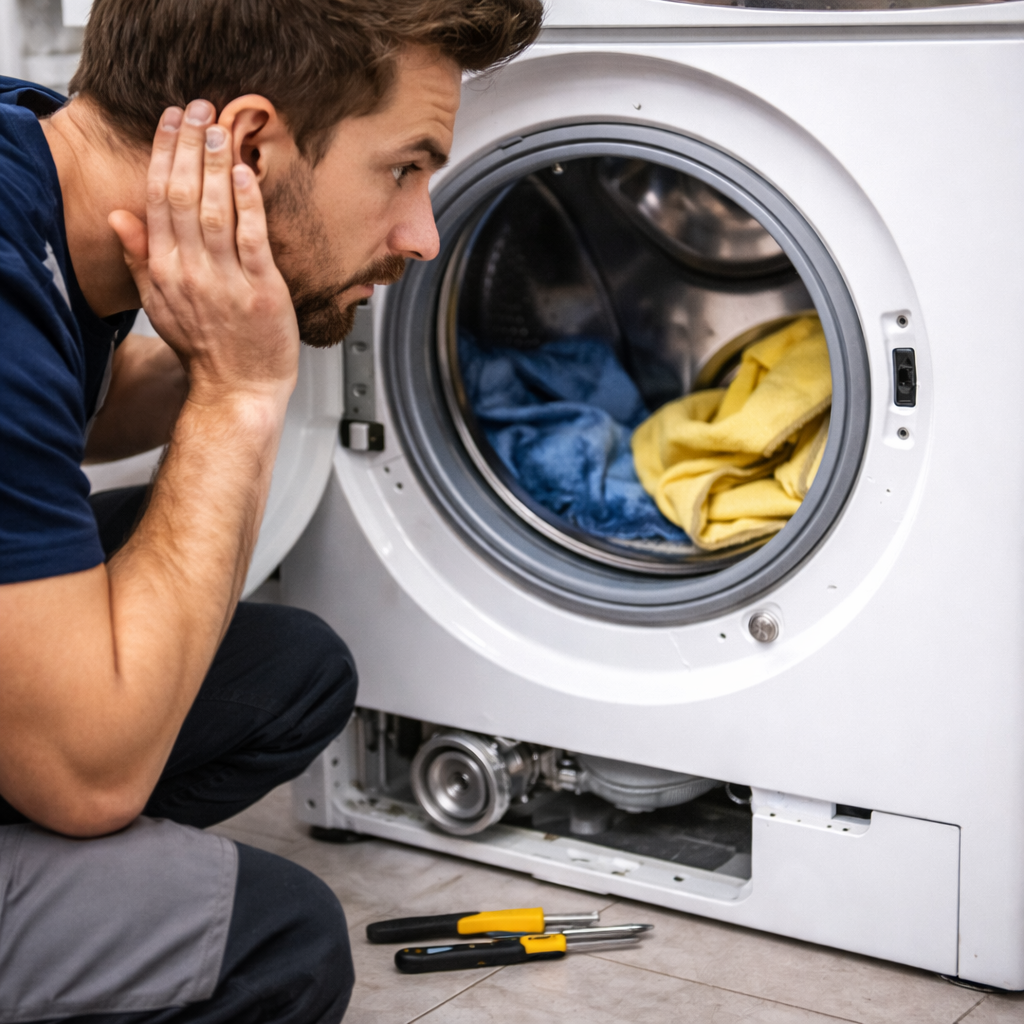
A washing machine that produces a grinding noise usually indicates that a mechanical component inside the appliance is encountering resistance. In many situations, the sound develops because of worn parts, trapped debris, or internal systems that have slowly shifted out of alignment during normal use
In this article
How a Washing Machine Normally Operates
Understanding unusual sounds begins with understanding how a washing machine functions during a typical cycle. Inside the appliance, several components work together in a coordinated system. The motor generates movement, the drive system transfers that motion to the drum, and suspension components stabilize the rotating tub.
When a cycle begins, water enters the tub and mixes with detergent while the drum rotates slowly. This stage allows clothing to move through the water so soil and detergent residue can be lifted away from fabric. Later in the process, the washer transitions into faster spinning phases designed to remove water from clothing.
Each phase places different levels of stress on the machine’s internal systems.
During the spin cycle, the drum rotates rapidly while holding several pounds of wet fabric. Bearings support the drum’s movement, while either a drive belt or a direct-drive mechanism transfers power from the motor. At the same time, suspension rods or springs absorb vibration and keep the drum balanced.
When these components operate as intended, the machine produces a steady hum with mild vibration. Grinding sounds tend to appear when a part begins to wear, when something blocks movement, or when internal surfaces lose the smooth contact that allows them to move freely.
When Mechanical Friction Begins to Appear
Grinding sounds often develop as friction increases inside the appliance. Surfaces that once moved smoothly against each other gradually wear down after years of repeated use. Rubber parts lose elasticity, and plastic connectors can become brittle. These changes occur slowly rather than all at once.
Bearings provide a clear example of this process. These small components allow the drum to rotate smoothly by minimizing friction between moving parts. Over time, moisture, detergent residue, and constant spinning can degrade lubrication and damage the internal surfaces of the bearings. As the wear progresses, the drum may still rotate normally, though it begins to produce a rough scraping sound.
Drive systems can develop similar problems. In many washing machines, a belt connects the motor to the drum pulley. If that belt stretches, cracks, or weakens, the connection between the motor and drum becomes inconsistent. The belt may slip slightly along the pulley surface, creating an irregular grinding or squealing sound.
Misalignment can also contribute to friction. A washing machine that gradually shifts position on the floor may place uneven pressure on its internal supports. When this occurs, the drum may tilt slightly, allowing parts that normally remain separated to rub against each other.
At first, the resulting sound may be subtle. As the cycle continues, it often becomes more noticeable.
Small Objects That Quietly Create Big Noise
Mechanical wear is not the only explanation for grinding sounds. Everyday objects sometimes find their way into areas where they do not belong.
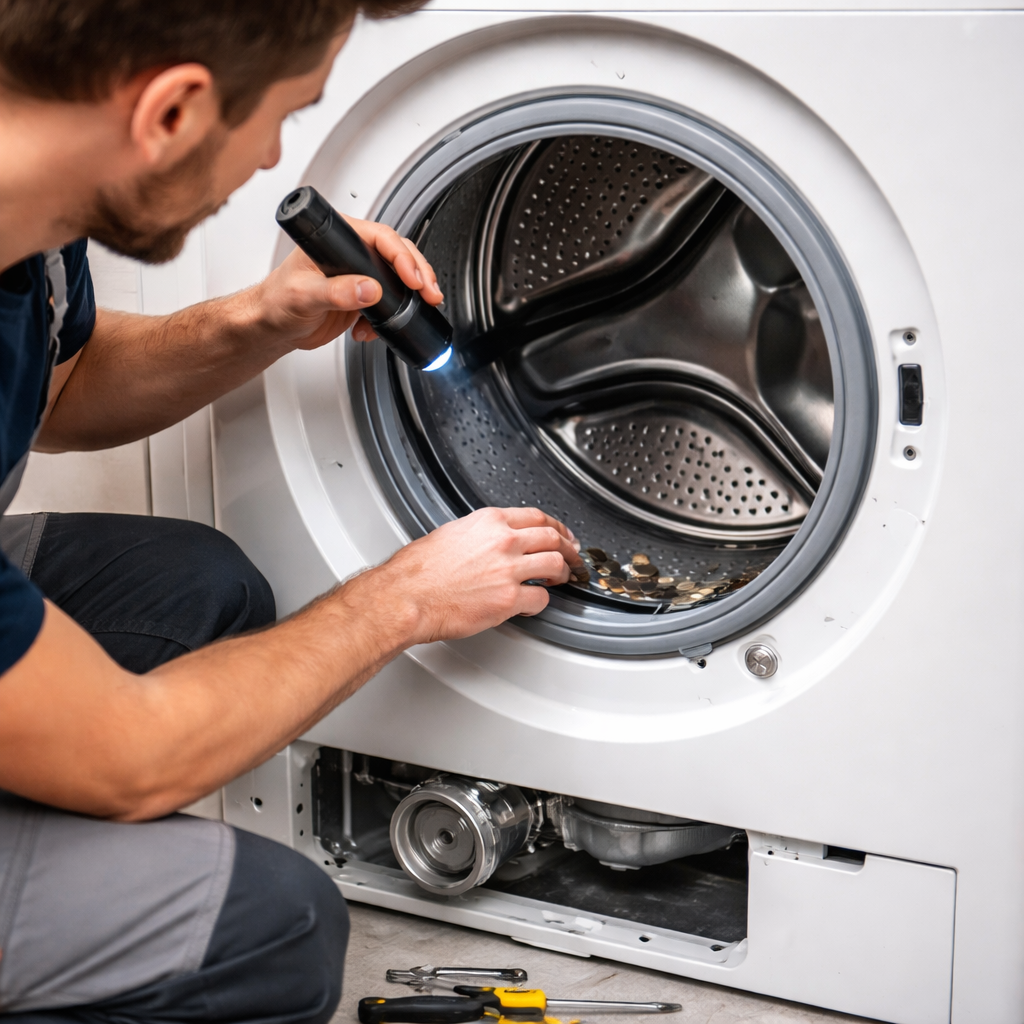
Coins, small screws, bra wires, and loose buttons occasionally slip through drum perforations or settle between the inner drum and the outer tub. Once trapped, these items move unpredictably as the drum rotates. Each spin cycle shifts their position slightly, and the object may scrape against metal surfaces.
Two everyday situations illustrate how this can occur.
In one household, a pair of jeans goes into the washer with a coin still inside the pocket. During the wash cycle, the coin slips out and falls into a narrow gap near the drum edge. The machine continues to operate normally, though a faint metallic grinding begins to appear during the spin cycle.
In another situation, a small wire from a garment gradually loosens after repeated washes. Eventually it slips through a drum opening and becomes lodged near the pump housing. As water drains from the machine, the wire brushes against the pump impeller and produces a rhythmic grinding sound.
These situations rarely signal serious mechanical failure. Once the object is removed, the machine typically returns to its normal sound pattern.
The Role of Suspension and Balance
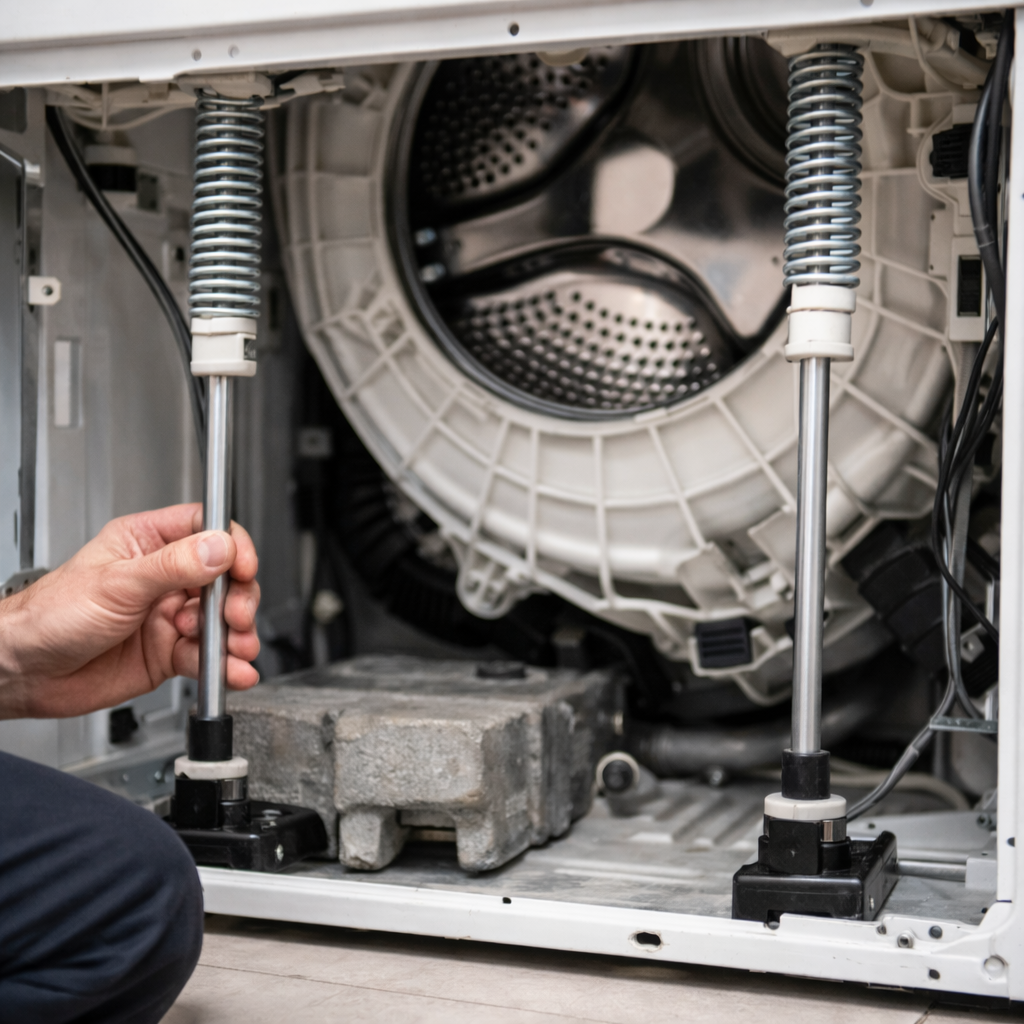
The drum inside a washing machine must remain balanced during spinning. Suspension rods, springs, or dampers help stabilize the drum and absorb movement as loads shift inside the machine.
Clothing rarely distributes itself evenly during a wash cycle. A heavy towel or blanket may collect on one side of the drum, creating temporary imbalance. The suspension system helps compensate for that uneven weight by absorbing vibration and keeping the drum centered.
When suspension components begin to wear, the drum may move more freely than intended. This extra movement allows internal parts to shift slightly during spinning. In some cases, the drum may brush against surrounding components, producing a grinding or scraping sound.
Machines that sit unevenly on the floor can make the situation worse. Even a slight tilt changes how weight distributes across the drum during high-speed spinning. Increased vibration can allow parts that normally remain separated to come into contact.
In many homes, leveling the washer and ensuring that all four feet rest firmly on the floor can significantly reduce vibration and noise.
Drain Pump and Water Movement
The drainage system plays a smaller but still meaningful role in washing machine noise. After the wash and rinse phases, the pump pushes water out of the tub through the drain hose. Inside the pump is a small rotating impeller that moves water through the system.
If lint, fabric fibers, or small objects accumulate near the pump, the impeller may encounter resistance. The motor continues trying to rotate, and the obstruction produces a grinding or clicking sound as the impeller brushes against debris.
This type of noise usually appears during the draining stage rather than during washing or spinning.
Routine cleaning of the pump filter can prevent many of these problems. Filters capture small debris before it reaches the impeller, though they require occasional inspection to maintain proper water flow.
What the Noise Does Not Always Mean
A grinding sound can seem alarming, though it does not automatically indicate serious damage. Washing machines naturally produce a range of mechanical noises as they operate.
Many machines sound louder during the spin cycle simply because the drum rotates faster and carries more weight. Heavy items such as blankets or thick towels can temporarily increase vibration without causing harm.
Some people assume that any grinding sound indicates a failing motor. In reality, the motor is often one of the most durable components in the appliance. Other parts—belts, couplings, bearings, or suspension components—usually wear out long before the motor shows signs of failure.
Occasionally, exaggerated claims suggest that a grinding noise always leads to immediate appliance breakdown. Real-world situations tend to be less dramatic. Many machines continue operating for a long time while the underlying issue gradually becomes more noticeable.
This does not mean the sound should be ignored indefinitely. It simply suggests that the presence of noise does not always signal an urgent mechanical emergency
Related : Loud grinding gears when agitating. Top load purchased last year
Practical Steps for Investigating the Sound
When unusual noise appears, the goal is to determine whether the cause is simple or mechanical.
A few practical checks can help narrow down the possibilities:
- Empty the drum and rotate it by hand to feel for rough movement
- Inspect the drum interior for visible objects
- Confirm that the washer sits evenly on the floor
- Clean the pump filter if the machine has an accessible one
These steps require no specialized tools and may help determine whether the issue involves trapped debris, imbalance, or deeper mechanical wear.
If the drum moves smoothly and no objects are visible, the sound may originate from internal components such as bearings or the drive system. At that point, professional inspection may provide clearer answers.
Technicians often listen to the machine during different stages of the cycle to identify exactly when the noise occurs. The timing of the sound can offer useful clues about which component may be involved.
The Role of Suspension and Balance
Household appliances combine moving parts, electrical wiring, and water connections. This combination requires careful handling during inspection or maintenance.
Unplugging the machine before examining internal areas is the safest first step. Even when a washer appears inactive, internal components may still carry electrical current.
Opening panels or removing mechanical parts without experience can sometimes cause additional damage or injury. Many internal components operate under precise tension and alignment. Improper removal can disturb those settings.
Professional technicians use specialized tools to access internal assemblies safely. They can also test electrical components that are difficult to evaluate without proper equipment.
For many households, the most practical approach involves performing simple external checks and then seeking professional assistance if the noise continues.
Why the Understanding of Appliance Wear Continues to Evolve
Modern washing machines continue to change as manufacturers develop new designs and materials. Some models rely on direct-drive motors, while others use belt-driven systems. Electronic sensors and digital control systems have also become increasingly common.
These changes influence how mechanical issues appear and how technicians diagnose them. Engineers continue studying appliance durability and component wear as they refine materials capable of withstanding repeated washing cycles.
At the same time, real-world usage varies widely. Some households run multiple loads each day, while others operate their machines only occasionally. Environmental conditions—such as humidity, detergent composition, and mineral content in water—can also influence how quickly components wear.
Because of these variables, identifying the precise cause of a grinding sound sometimes requires direct inspection rather than relying only on general explanations.
A Moment of Perspective on Everyday Machines
Household appliances quietly support everyday routines. They operate in the background for years, performing repetitive tasks that rarely attract attention until something changes.
A new sound can feel unsettling because it interrupts that familiar reliability. Yet unusual noise often reflects a simple reality: machines gradually experience wear as they perform their work.
Many grinding sounds originate from manageable issues, such as trapped objects or components slowly reaching the end of their service life. Once the internal workings of the appliance become clearer, identifying the cause tends to feel far less mysterious.
Even well-built machines eventually require maintenance, and the occasional unusual noise is often the first small signal that a system inside the appliance needs attention
Frequently Asked Questions
Why is my washing machine making a grinding noise during the spin cycle?
A grinding sound during the spin cycle often suggests wear in components that support drum rotation, such as drum bearings or the drive system. The spin cycle places the greatest mechanical stress on the machine, which can make existing wear more noticeable. In some cases, the noise may also come from an object trapped between the drum and outer tub
Can a foreign object cause a grinding noise in a washing machine?
Yes, small objects such as coins, bra wires, screws, or buttons can slip through drum openings or become lodged near the pump or drum housing. As the drum rotates, these items may scrape against internal surfaces and produce a grinding or rattling sound. Removing the object usually resolves the problem.
Is it safe to keep using a washing machine that makes a grinding noise?
A washer may continue to operate for some time while producing grinding sounds, particularly if the cause is minor. Still, persistent noise should not be ignored. Continued operation with worn parts or internal obstructions may gradually worsen the problem and lead to additional mechanical wear.
When should I call a professional technician for a grinding noise?
Professional inspection is usually advisable if the noise becomes louder over time, occurs during multiple parts of the cycle, or continues after basic checks such as removing debris and leveling the machine. A technician can examine internal components like bearings, belts, or the motor system to determine whether repair or replacement is necessary
Written by Muhammad Khalid
Muhammad Khalid is the founder of FixAppLab, a website that explains common washing machine, refrigerator, dryer, and dishwasher problems through clear troubleshooting guides. His work focuses on helping homeowners understand how everyday appliances operate and why mechanical or electrical issues may occur.
Learn more about the author →
Pingback: Washing Machine Motor Not Working? 8 Causes and Easy Fixes
Pingback: Washing Machine Not Draining After Spin Cycle 6 Common Causes