Do Washing Machine Suspension Rods Wear Out? 7 Warning Signs
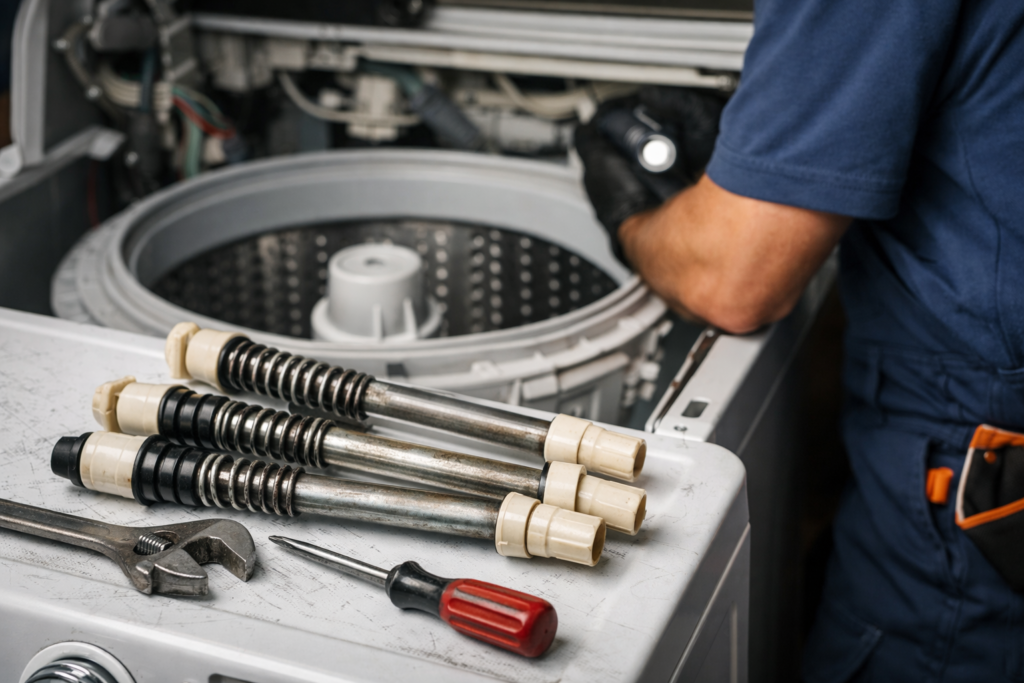
Do washing machine suspension rods wear out? Yes. Like other mechanical components, suspension rods gradually lose their effectiveness through repeated movement, vibration, heavy loads, and normal wear. When they weaken, a washer may begin shaking, making unusual noises, or struggling to maintain balance during the spin cycle.
Quick Answer
Washing machine suspension rods do wear out over time because they repeatedly control tub movement during wash and spin cycles. As the suspension system weakens, the washer may shake more than usual, produce banging or knocking sounds, become difficult to balance, or move across the floor during high-speed spinning.
Key Takeaways
- Suspension rods gradually weaken through repeated use and movement.
- Excessive shaking, banging, and unusual tub movement can indicate suspension problems.
- Overloading and frequent unbalanced loads can increase stress on the suspension system.
- An uneven washer or unstable floor can make vibration problems worse.
- Replacing suspension rods may not solve the problem if another underlying issue remains.
- Proper leveling and balanced loading can help reduce unnecessary suspension wear.
What Suspension Rods Actually Do Inside a Washer
Inside many top-load washing machines, the wash tub is designed to move slightly rather than remain completely rigid. This controlled movement allows the washer to absorb some of the forces created when the drum accelerates during the spin cycle.
Suspension rods are an important part of this support system. Depending on the washer design, each rod connects the cabinet structure to the tub assembly and works with spring and damping components to control movement.
During operation, the suspension system allows the tub to move while helping it return toward a stable position. This reduces excessive movement and helps protect the washer from unnecessary vibration.
Key point: Suspension rods are not designed to make the tub completely motionless. Their purpose is to control movement and help keep the washer stable during normal operation.
Why Suspension Rods Don’t Last Forever
Every wash cycle places some mechanical stress on the suspension system. Water-soaked clothing adds weight to the tub, while rapid drum rotation creates forces that the suspension components must repeatedly control.
Over months and years, repeated stretching, compression, movement, and vibration can reduce the effectiveness of springs and damping components. As this happens, the washer may gradually become less stable during spin.
Several conditions can increase the rate of wear:
- Frequent washing of heavy items such as blankets and towels
- Multiple loads every day
- Repeatedly running severely unbalanced loads
- An uneven or unstable washer installation
- A floor that flexes noticeably under the machine
Suspension wear often develops gradually. The washer may continue to clean clothes normally while small changes in vibration or noise become more noticeable.
Do Washing Machine Suspension Rods Wear Out Quickly?
Under normal conditions, suspension rods are not generally considered a rapidly wearing component. Their service life varies significantly between washer models and households because usage patterns, load sizes, installation conditions, and component design are different.
A washer used occasionally with properly balanced loads may place less stress on its suspension system than a machine that runs several heavy loads every day. Similarly, an improperly leveled washer can experience more movement than one installed correctly.
For that reason, there is no universal replacement interval that applies to every washing machine. Instead of replacing suspension rods based only on age, pay attention to changes in washer behavior and inspect the suspension system when symptoms appear.
Remember: Age alone does not prove that suspension rods are bad. Excessive movement, repeated imbalance, unusual noises, and abnormal tub behavior are more useful clues.
7 Warning Signs of Worn Suspension Rods
Early suspension problems can be easy to overlook because they often begin with small changes. The following signs do not automatically prove that the rods are worn, but they can indicate that the suspension system deserves closer attention.
1. Increasing Vibration During Spin
A washer that vibrates more than it used to, especially during high-speed spinning, may have a suspension problem. First confirm that the machine is level and the load is properly distributed.
2. Repeated Banging or Knocking
Loud banging during spin can occur when the tub is moving more than it should. An unbalanced load can cause similar symptoms, so the load and leveling should be checked before assuming the rods have failed.
3. The Washer Walks Across the Floor
A washer that shifts noticeably during spin may have excessive tub movement, poor leveling, an unstable floor, or another mechanical issue. Significant movement should not be ignored.
4. The Tub Bounces Excessively
A simple manual check can provide a useful clue. With the machine safely stopped, gently press down on the tub and observe how it responds. Excessive or repeated bouncing can indicate weakened suspension components.
5. The Drum Looks Off-Center
An unusual resting position can be a clue that something in the suspension system is not supporting the tub correctly. However, the exact appearance varies by washer design.
6. Clothes Remain Wetter Than Expected
If the washer repeatedly struggles to complete a stable high-speed spin, clothes may retain more water than usual. This symptom can have several causes, so it should not be used alone to diagnose suspension rods.
7. Vibration Returns After a Suspension Repair
If the washer becomes unstable again soon after new rods are installed, another problem may be contributing to the movement. Leveling, load distribution, flooring, and other suspension components should then be considered.
You May Also Find This Helpful
Related Guide: Washing Machine Shaking Too Much – Causes & Fixes
If your washer is vibrating or moving excessively during spin cycles, this related guide can help you explore other possible causes and practical solutions.
When the Problem Becomes Hard to Ignore
As suspension components continue to weaken, washer movement can become more obvious. The machine may shake aggressively during the final spin, produce loud clunking sounds, or shift across the floor.
At this point, the problem is more than a minor inconvenience. Excessive movement can place additional stress on hoses, fittings, cabinet components, and other parts of the machine.
For example, a washer may initially produce only a faint knocking sound when washing a load of towels. If the underlying issue is ignored, the same load may eventually produce severe vibration. In another situation, new suspension rods may temporarily improve the washer, but the vibration can return if the machine remains improperly leveled.
These situations show why identifying the underlying cause is often more useful than repeatedly replacing one component.
Why Replacing the Rods Doesn’t Always Solve Everything
It is easy to assume that worn suspension rods are the only cause of a vibrating washing machine. They can certainly be an important factor, but the suspension system works together with the rest of the washer.
If new rods do not restore stable operation, check for other possible contributors:
- The washing machine is not properly leveled.
- Loads are frequently unbalanced.
- The flooring beneath the washer flexes or shifts.
- Other suspension components, such as springs or supports, are worn.
- The washer is repeatedly overloaded or used outside its recommended capacity.
Replacing worn rods can temporarily restore stability because new components provide stronger resistance to tub movement. However, if the underlying conditions remain unchanged, the same stress can affect the replacement parts over time.
A better approach is to evaluate the suspension system together with the washer’s installation and operating conditions. This can help prevent the same vibration problem from returning.
What Causes New Suspension Rods to Fail Early?
New suspension rods can wear prematurely when they are repeatedly exposed to excessive movement. If a replacement set does not last as expected, the washer should be evaluated as a complete system rather than assuming the replacement parts were the only issue.
Conditions Worth Checking
- Improper leveling: Make sure the washer sits firmly and evenly on its feet.
- Repeated load imbalance: Avoid repeatedly running loads that collect heavily on one side of the tub.
- Unstable flooring: A floor that flexes can allow the entire washer to move during spin.
- Other worn components: Springs, mounts, supports, or attachment points may contribute to continued instability.
If excessive movement continues after these conditions are addressed, the washer may require a more complete inspection to determine whether another mechanical problem is involved.
How to Prevent Suspension Rods From Wearing Out Again
Washing machine maintenance does not always require advanced technical knowledge. Everyday operating habits can reduce unnecessary stress on the suspension system and help the washer remain stable.
- Distribute clothing evenly before starting a cycle.
- Avoid consistently overloading the drum.
- Wash very heavy items according to the washer manufacturer’s recommendations.
- Keep the washer properly leveled.
- Make sure the machine sits on a stable surface.
- Stop and rebalance a load if the washer repeatedly becomes severely unbalanced.
- Investigate new or increasing vibration instead of allowing it to continue for months.
These habits cannot prevent normal mechanical wear completely, but they can reduce unnecessary vibration and help protect the suspension system.
Related guide: If your washer is also making unusual sounds during operation, read Washing Machine Making Loud Noise When Spinning to explore other possible causes and solutions.
What Suspension Rods Cannot Realistically Fix
Suspension rods are designed to control and reduce tub movement, not eliminate every vibration. Some movement is normal in a washing machine, particularly during high-speed spin cycles.
A heavy or poorly distributed load can create forces that the suspension system cannot completely compensate for. Even a washer with new suspension components can become unstable if the load is severely unbalanced or the machine is not installed correctly.
This is why replacing suspension rods should not automatically be treated as a permanent solution to every vibration problem. The drum, suspension system, cabinet, base, flooring, and load all affect how stable the machine is during operation.
Realistic expectation: A properly working suspension system should control normal tub movement. It does not guarantee completely silent or motionless operation under every load.
When Suspension Rod Replacement Is Not Enough
Suspension rod replacement may not completely resolve a washer that continues to shake, bang, or move excessively. If the problem returns soon after installing new rods, another part of the machine or the installation environment may need attention.
Continued instability can be associated with worn suspension supports, damaged mounting points, incorrect leveling, an unstable floor, or repeated load imbalance. The exact cause depends on the washer design and the symptoms it shows.
If the washer remains severely unstable after basic checks and a suspension repair, a qualified appliance technician may be needed to inspect the machine more thoroughly.
Safety and Practical Considerations
A washing machine that shakes excessively should not be ignored. Severe movement can place additional stress on hoses, fittings, electrical connections, cabinet components, and the floor beneath the machine.
If the washer produces loud banging, moves significantly across the floor, or appears to be losing control during the spin cycle, stop the cycle and inspect the problem before continuing normal use.
Safety note: Severe vibration can contribute to mechanical damage, hose movement, leaks, or damage to surrounding surfaces. Disconnect power before performing any internal inspection or repair, and follow the manufacturer’s safety instructions.
A Note on Different Washer Designs
Washing machine designs vary by brand and model, and suspension systems are not identical across every top-load washer. Some machines use different combinations of springs, rods, dampers, supports, or other components.
Because of these differences, the exact symptoms, inspection procedure, and expected service life can vary. Always use the correct replacement parts and follow the repair instructions specified for the particular washer model.
This variation is also why there is no single fixed lifespan that applies to every suspension rod. Usage, environment, washer design, and maintenance all influence how quickly components wear.
A More Measured Perspective on Wear and Repair
Suspension rods wear because they continuously help control movement inside the washing machine. Their job exposes them to repeated mechanical stress, especially during high-speed spin cycles.
Replacing worn rods can restore stability when the rods are genuinely worn, but long-term results depend on more than the replacement parts themselves. Proper leveling, balanced loads, stable flooring, and healthy supporting components all play a role.
Understanding why suspension rods wear out makes it easier to recognize warning signs before the problem becomes severe. It also helps prevent repeated repairs caused by an underlying installation or operating problem.
Quick Final Checklist
- ☐ Washer is properly leveled
- ☐ Washer feet sit firmly on the floor
- ☐ Loads are distributed evenly
- ☐ Washer is not repeatedly overloaded
- ☐ Flooring beneath the washer is stable
- ☐ Suspension rods are inspected when symptoms appear
- ☐ Other suspension components are considered if the problem continues
- ☐ Severe vibration is not ignored
Conclusion
So, do washing machine suspension rods wear out? Yes, they can gradually wear down through repeated use, vibration, and mechanical stress. The most noticeable signs may include increasing vibration, banging during spin, excessive tub movement, or a washer that starts moving across the floor.
However, worn suspension rods are not always the only reason a washer becomes unstable. Before replacing parts, check the washer’s leveling, load distribution, flooring, and other suspension components. Correcting these underlying conditions can help prevent the same problem from returning.
If your washing machine continues to shake excessively even after basic troubleshooting, avoid repeated use until the cause is identified. Addressing severe vibration early can help protect the washer and reduce the risk of more extensive repairs.
Frequently Asked Questions
Do washing machine suspension rods wear out quickly?
Washing machine suspension rods normally wear gradually rather than quickly. Their service life depends on the washer model, frequency of use, load sizes, installation conditions, and maintenance. Frequent overloading, repeated unbalanced loads, and an uneven installation can increase stress and shorten component life.
How do I know if my washing machine suspension rods are bad?
Common signs include excessive shaking during the spin cycle, repeated banging or knocking, unusual tub movement, and difficulty keeping loads balanced. A tub that continues to bounce excessively after being gently pressed down may also indicate a suspension problem. These symptoms can have other causes, so further inspection may be necessary.
Can I use my washer with worn suspension rods?
It is better to avoid continued use when suspension rods are clearly worn and the washer is shaking severely. Excessive movement can place additional stress on other components and may make the original problem more expensive to repair. If the washer is violently moving or producing severe banging, stop using it until the cause is checked.
Should I replace all suspension rods or just one?
When a washing machine uses a matched set of suspension rods, replacing the complete set is generally preferable when the components are similarly worn. A complete set helps maintain consistent resistance across the suspension system. Always use the correct parts specified for your washer model.
Still Having Washer Problems?
Explore more practical washing machine troubleshooting guides to understand common problems and find the right next step.
Explore All GuidesWritten by Muhammad Khalid
Founder of FixAppLab • Appliance Troubleshooting Specialist
Muhammad Khalid is the founder of FixAppLab, where he explains real-world appliance problems in simple, practical language. His work focuses on helping readers understand how washing machines and other home appliances function, identify common problems, and approach troubleshooting without unnecessary complexity.
His approach focuses on practical troubleshooting scenarios, clear explanations, and useful information that helps readers make informed decisions about appliance maintenance and repair.


Comments