Washing Machine Vibration at Specific Speeds: Common Causes & Easy Fixes
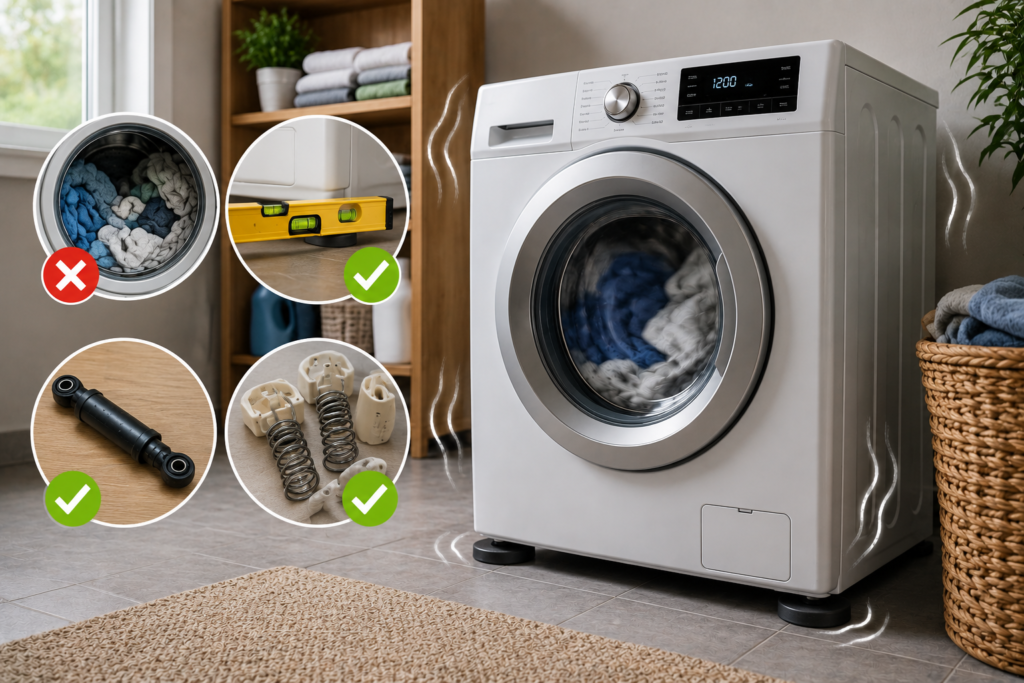
A washing machine is one of the most important household appliances, but excessive shaking and noise can quickly become frustrating. Many homeowners notice that their washer runs normally during part of the cycle and then suddenly starts vibrating aggressively at certain spin speeds. In most cases, this issue is linked to imbalance, installation problems, worn suspension components, or mechanical wear inside the machine.
Washing machine vibration at specific speeds is often referred to as a resonance or critical-speed problem. This happens when the drum rotation speed temporarily matches the natural vibration frequency of the washer’s suspension system. While a small amount of movement is normal, strong shaking, banging noises, or floor vibration usually indicate an underlying issue that needs attention.
The good news is that many washer vibration problems can be diagnosed and corrected without replacing the appliance. Understanding why the vibration occurs at certain RPM levels can help you identify the exact cause and prevent long-term damage to the machine
Quick Key Takeaways
Washing machine vibration at specific speeds is commonly caused by imbalance, suspension wear, uneven flooring, overloaded laundry, or damaged internal components. The issue often becomes noticeable during medium or high-speed spin cycles when the drum reaches certain RPM levels.
Table of Contents
Why a Washing Machine Vibrates at Specific Speeds
Modern washing machines operate at multiple drum speeds throughout the wash and spin cycles. During low-speed washing, the machine may appear stable, but vibration problems often become noticeable as the drum accelerates into medium or high-speed spinning. Certain components only fail under higher mechanical stress, which explains why the problem may occur during one part of the cycle but not another.
In many cases, the vibration develops when the washer reaches a “critical speed.” At this point, the movement of the drum aligns with the suspension system’s natural frequency, causing vibrations to intensify. If the washer already has an imbalance, worn shock absorbers, damaged bearings, or leveling problems, the shaking becomes much more severe during these speed transitions.
Several common issues can trigger washing machine vibration during spin cycle operation, including uneven flooring, overloaded laundry, damaged suspension systems, or loose internal parts. Identifying when the vibration occurs is often the first step toward diagnosing the real problem
Common Signs of Washer Vibration Problems

A washer with vibration issues usually shows warning signs before the condition becomes severe. Paying attention to these symptoms early can help prevent expensive repairs and internal damage. Excessive movement during spinning should never be ignored, especially if the machine becomes noisier over time.
Common signs include
- Washer shaking during high-speed spin cycles
- Loud banging or knocking noises
- Washing machine moving across the floor
- Excessive drum wobbling
- Vibration only at certain RPM ranges
- Rattling sounds inside the cabinet
- Floor vibration near the appliance
- Spin cycle imbalance warnings
- Washer stopping mid-cycle due to load imbalance
These symptoms often point to problems involving suspension components, drum support systems, or uneven weight distribution inside the drum. In some cases, continued use can damage bearings, counterweights, or internal structural parts
Uneven Flooring Is One of the Most Common Causes
One of the most overlooked causes of washing machine vibration at specific speeds is improper leveling or unstable flooring. A washer must sit evenly on a solid surface to maintain balance throughout the spin cycle. Even a slight tilt can become a major issue once the drum reaches higher RPM levels.
Uneven floors are especially problematic in laundry rooms with wooden or laminate flooring. Flexible surfaces can amplify vibration and cause the appliance to shake more aggressively during acceleration and deceleration. Over time, this movement may also loosen internal components or damage the machine’s suspension system.
Common signs of leveling problems include:
- Washer rocking when lightly pushed
- One foot not touching the floor properly
- Increased vibration during spin cycles
- Appliance shifting position over time
To fix the issue, place a spirit level on top of the washer and adjust the leveling feet individually. Once the machine is balanced, tighten the locking nuts securely. Anti-vibration pads can also help reduce movement and absorb excess vibration, particularly on flexible floors
Unbalanced Loads Can Trigger Speed-Specific Shaking
Unbalanced laundry loads are among the most common causes of washer vibration problems. Heavy items such as towels, blankets, rugs, and bedding can collect on one side of the drum during spinning. As the drum speed increases, the uneven weight distribution creates excessive centrifugal force, causing the washer to shake violently. A washing machine drum imbalance can quickly cause excessive movement once the spin cycle reaches higher RPM levels.
This issue often becomes worse during high-speed spin cycles because the drum rotates faster and generates more force. Some modern washers attempt to redistribute the load automatically, but severe imbalance may still trigger loud vibration, banging noises, or cycle interruptions.
Signs of an unbalanced washing machine load include:
- Thumping sounds during spinning
- Drum repeatedly slowing down
- Washer failing to reach full spin speed
- Clothes remaining clumped together after washing
To reduce the risk of imbalance, avoid washing bulky items alone. Mix heavy items with smaller garments to improve weight distribution inside the drum. Overloading the washer can also increase imbalance problems, so always follow the manufacturer’s load capacity recommendations
Worn Shock Absorbers Often Cause High-Speed Vibration
Front-load washing machines use shock absorbers to stabilize the tub assembly during spinning. These components absorb movement and help control drum motion as the machine reaches higher RPM levels. Over time, shock absorbers can wear out, weaken, or leak fluid, reducing their ability to manage vibration effectively.
When the shocks fail, the drum may bounce excessively inside the cabinet during the spin cycle. This often causes violent shaking, loud knocking sounds, and movement across the floor. In many cases, the washer appears stable at lower speeds but becomes highly unstable during high-speed spinning.
Common symptoms of worn shock absorbers include:
- Strong vibration during spin cycles
- Drum bouncing excessively
- Loud knocking or banging noises
- Washer “walking” across the floor
To inspect the shock absorbers, disconnect power to the appliance and remove the access panel. Look for leaking fluid, damaged mounting points, or visibly worn components. Replacing worn shocks in pairs is usually recommended to maintain balanced drum support
Suspension Springs May Be Stretched or Broken
Both front-load and top-load washers rely on suspension springs to support the tub assembly and reduce excessive movement. If a spring becomes stretched, weak, or detached, the drum may tilt unevenly during spinning, causing strong vibration at specific speeds.
Damaged suspension springs can place additional stress on other components, including shock absorbers, drum supports, and bearings. Continued operation with a broken spring may eventually lead to cabinet damage or internal structural failure.
Signs of suspension spring problems include:
- Drum sitting unevenly
- Washer leaning to one side
- Loud banging during acceleration
- Excessive side-to-side drum movement
Inspect the springs carefully for stretching, rust, or separation from mounting brackets. Any damaged suspension component should be replaced promptly to prevent further mechanical wear
Shipping Bolts Are Sometimes Accidentally Left Installed
New front-load washing machines are shipped with transport bolts that secure the drum during transportation. These shipping bolts prevent internal movement while the appliance is being moved, but they must be removed before the washer is used.
If the bolts remain installed, the suspension system cannot function correctly. As a result, the machine may vibrate aggressively during every spin cycle, especially at higher speeds. This is one of the most common installation mistakes with newly purchased washers.
Common symptoms of shipping bolts left installed include:
- Intense vibration during the first wash cycle
- Loud shaking throughout spinning
- Drum feeling rigid instead of flexible
- Severe movement during acceleration
Always check the installation manual and confirm that all transport bolts have been removed properly before operating the washer
Worn Drum Bearings Can Create Vibration and Noise
Drum bearings allow the tub to rotate smoothly during washing and spinning. Over time, moisture exposure, heavy loads, and general wear can damage these bearings. Once the bearings begin to fail, the washer often develops vibration and noise that become worse at higher spin speeds.
A damaged bearing may produce grinding, roaring, or rumbling sounds during operation. In more advanced cases, the drum may wobble noticeably or develop excessive play when moved by hand. Ignoring bearing failure can eventually damage the tub assembly and surrounding components.
Common signs of worn drum bearings include:
- Grinding noises during spinning
- Roaring or rumbling sounds
- Drum wobbling by hand
- Rust or water leakage near the rear tub area
To test the bearings, rotate the drum manually and listen for rough movement. Lift the drum slightly to check for excessive looseness. Bearing replacement can be labor-intensive, but delaying repairs may result in more serious appliance damage
Loose Counterweights Can Cause Aggressive Shaking
Many washing machines contain heavy concrete or metal counterweights that help stabilize the drum during spinning. These weights reduce vibration and maintain balance while the washer operates at high speeds. If a counterweight becomes loose or cracked, the machine may shake violently during certain RPM ranges.
Loose counterweights often create deep knocking sounds that worsen during acceleration. In some cases, the cabinet itself may vibrate heavily because the drum support system is no longer properly balanced. .Some washing machine suspension problems may also create loud internal banging and unstable drum movement during acceleration.
Symptoms of loose counterweights include:
- Strong cabinet vibration
- Deep knocking noises
- Internal banging during spinnin
Inspect the counterweight mounting bolts carefully for looseness or damage. Cracked weights or damaged mounts should be repaired immediately to prevent further internal damage
Drive System Problems Can Trigger Vibration
The drive system includes the motor, pulley, belt, and related mounting hardware that rotate the drum. Problems within this system can create uneven drum movement and abnormal vibration during operation. Mechanical wear in the drive assembly often becomes more noticeable as spin speeds increase.
A worn drive belt may slip unevenly, while a bent pulley or loose motor mount can create rhythmic vibration patterns. Some washers may also develop squealing sounds, inconsistent spin speeds, or burning odors when drive components begin failing.
Common drive system issues include:
- Worn or stretched drive belts
- Bent pulleys
- Loose motor mounts
- Damaged rotor bolts
If these symptoms appear, the washer should be inspected promptly. Continued operation with drive system problems can place additional strain on the motor and suspension components
Overloading the Washer Increases Vibration
Overloading places significant stress on the washing machine’s suspension and spinning system. When too many clothes are packed into the drum, the washer cannot distribute the weight evenly. This increases strain on bearings, shock absorbers, springs, and internal supports.
Excessive loads can also prevent proper drum movement, making it harder for the machine to balance itself during spinning. In some cases, the washer may repeatedly stop and restart as it attempts to correct the imbalance.
Overloading commonly causes:
- Excessive vibration
- Slow or incomplete spinning
- Drum imbalance
- Premature wear on suspension parts
To minimize vibration and extend appliance lifespan, follow the manufacturer’s recommended load capacity and avoid stuffing the drum beyond its limits
Top-Load vs. Front-Load Washer Vibration Problems
Top-load and front-load washing machines experience vibration differently because of their design and suspension systems. Understanding these differences can help narrow down the source of the problem more quickly.
Top-load washers commonly develop vibration due to:
- Worn suspension rods
- Off-balance loads
- Weak springs
- Uneven leveling feet
Front-load washers more commonly experience vibration because of
- Worn shock absorbers
- Shipping bolts left installed
- Drum bearing failure
- Loose counterweights
Although both designs can develop balance problems, front-load washers generally spin at higher RPM levels, which can make vibration issues more noticeable
How to Troubleshoot Washing Machine Vibration Step by Step

If your washer vibrates only at certain speeds, a systematic inspection process can help identify the cause. Diagnosing the issue carefully may prevent unnecessary part replacements and reduce repair costs. Proper troubleshooting can help identify the exact cause of washing machine vibration at specific speeds before the issue leads to more serious mechanical damage.
- Step 1: Check the Laundry Load: Open the washer and redistribute clothing evenly inside the drum. Remove some items if the machine appears overloaded.
- Step 2: Verify Proper Leveling: Use a spirit level on top of the appliance and adjust the leveling feet until the washer sits evenly on the floor.
- Step 3: Inspect the Floor Surface: Check for weak, flexible, or uneven flooring beneath the machine. Reinforcing the floor or adding anti-vibration pads may help reduce movement.
- Step 4: Examine Suspension Components: Inspect springs, suspension rods, and shock absorbers for wear, leaks, cracks, or detachment.
- Step 5: Test Drum Movement: Push the drum gently by hand and check for excessive looseness, wobbling, or unusual resistance.
- Step 6: Listen During the Spin Cycle: Pay attention to grinding, knocking, squealing, or rumbling noises that may indicate bearing or drive system problems.
- Step 7: Inspect Internal Hardware: Check counterweights, belts, pulleys, and mounting bolts for looseness or visible damage.
Following these troubleshooting steps can help identify the root cause of washing machine vibration at specific speeds before the problem becomes more serious
Samsung washer troubleshooting supportPreventing Washer Vibration Problems

Routine maintenance plays an important role in reducing washer vibration and extending appliance life. Small preventive measures can often stop minor balance problems from developing into expensive mechanical failures.
Helpful prevention tips include:
- Avoid overloading the machine
- Wash heavy items evenly
- Check leveling feet regularly
- Inspect suspension parts periodically
- Place the washer on a solid floor
- Clean the drum and filters routinely
- Avoid slamming the washer door or lid
Maintaining proper load balance and monitoring unusual noises can help preserve smooth operation over time
When Washer Vibration Becomes Dangerous
Severe washing machine vibration should never be ignored. Excessive movement can damage flooring, crack internal supports, loosen plumbing connections, or cause leaks around the appliance. In extreme cases, the washer may move across the room during operation.
Strong metal-on-metal noises, aggressive shaking, or repeated imbalance shutdowns often indicate significant mechanical problems. Continuing to operate the washer under these conditions may worsen the damage and increase repair costs.
Stop using the appliance immediately if you notice:
- Violent shaking
- Burning smells
- Water leakage
- Loud grinding noises
- Drum instability
- Repeated cycle failures
Professional inspection may be necessary if the issue involves damaged bearings, cracked drum supports, or broken suspension systems
Should You Repair or Replace the Washer?
The decision to repair or replace a vibrating washing machine depends on the failed component, repair cost, and appliance age. Some problems are relatively inexpensive to fix, while others may require extensive labor and replacement parts.
Repairs are often worthwhile for issues involving:
- Suspension rods
- Shock absorbers
- Leveling problems
- Loose counterweights
- Minor belt replacements
Replacement may be more practical when:
- Drum bearings fail in older machines
- The tub assembly is damaged
- Multiple major components are worn out
- Repair costs approach replacement value
A qualified technician can help determine whether repairing the appliance is financially reasonable
When to Call a Technician
Some washer vibration problems can be fixed with simple leveling adjustments or load balancing. However, certain symptoms may indicate serious mechanical failure that requires professional diagnosis and repair. Continuing to operate the machine under these conditions can increase internal damage and repair costs.
- The washer produces loud metal grinding or roaring noises
- The drum feels loose or unstable when moved by hand
- The appliance leaks water during spin cycles
- The washer repeatedly stops because of imbalance errors
- The machine violently shakes or moves across the room
- You notice burning smells or electrical odors
- Counterweights, bearings, or suspension mounts appear damaged
A qualified appliance technician can inspect the suspension system, drum bearings, drive components, and internal supports to determine whether repair or replacement is the most practical long-term solution.
Common Causes of Washing Machine Vibration
Unbalanced Loads
One of the leading causes of excessive washer movement is uneven laundry distribution. When clothes gather on one side of the drum, the machine struggles to maintain balance during high-speed spinning. Heavy items such as blankets, towels, and comforters are especially likely to create this problem. To reduce imbalance, distribute laundry evenly inside the drum and avoid washing large bulky items alone. Adding smaller garments can help stabilize the load and reduce vibration during the spin cycle. Many homeowners first notice washer shaking during spin cycle operation before the vibration becomes severe enough to affect nearby flooring or surrounding appliances.
Loose or Worn-Out Components
Over time, internal washer components may loosen or wear out from repeated use. Drum bearings, suspension rods, and shock absorbers are among the most common parts associated with excessive vibration and unusual noise. Routine washing machine maintenance can help identify these issues early. If you hear knocking, grinding, or excessive rattling, inspect the appliance promptly and replace damaged components before further wear develops.
Improper Installation
Improper washer installation frequently contributes to vibration issues. If the appliance is not leveled correctly or sits on an unstable surface, the suspension system must absorb additional movement during spinning. Most modern washers include adjustable feet that allow precise leveling. Placing the machine on a solid surface and using anti-vibration pads can significantly reduce movement and operational noise
Worn Drum Bearings Can Create Vibration and Noise
In many cases, washing machine vibration at specific speeds becomes more noticeable when worn drum bearings create uneven rotational movement during high-speed spin cycles
Overloading or Underloading the Machine
Both overloading and underloading can affect washer balance. Too many clothes place excessive strain on the suspension system, while very small loads may not distribute evenly during spinning. Following the manufacturer’s recommended load guidelines helps maintain stable operation and reduces unnecessary vibration.
Faulty Shock Absorbers
In front-load washers, shock absorbers control drum movement during high-speed spinning. Once these components weaken or fail, the washer may vibrate excessively and become unstable. Inspect the shock absorbers periodically for wear or leaks. Replacing damaged shocks can restore smoother operation and reduce stress on surrounding components.
Clogged Filters
Blocked filters or debris buildup inside the washer can interfere with water flow and force the machine to work harder during cycles. This added strain may contribute to increased vibration and reduced efficiency. Cleaning the washer filters regularly helps maintain proper operation and supports smoother wash performance
Haier HW105-B14959S8U1: A Solution Designed to Reduce Vibration
The Haier HW105-B14959S8U1 is a 10.5 kg front-load washing machine designed with features intended to minimize vibration and improve operational stability. Its engineering focuses on smoother drum movement, quieter performance, and more controlled spinning during wash cycles.
Direct Motion Motor
This model includes a Direct Motion Motor that connects directly to the drum instead of relying on a traditional belt system. By reducing the number of moving parts, the washer operates with less friction, lower noise levels, and improved vibration control. The direct-drive design also allows more precise drum movement during spinning. This can help reduce instability and improve overall efficiency during both washing and high-speed spin cycles.
Super Drum Design
The washer features a large 525 mm Super Drum that provides additional space for laundry movement. The larger drum capacity allows clothes to tumble more freely, helping reduce tangling and uneven load distribution. Improved load movement inside the drum can contribute to smoother spinning and lower vibration levels, particularly when washing heavier items or mixed loads.
Energy Efficiency and Controlled Operation
The machine is designed for energy-efficient performance while maintaining stable washing operation. More precise control over spin cycles helps reduce unnecessary movement and lowers stress on internal suspension components. Controlled operation may also reduce long-term wear on parts associated with vibration, including bearings, springs, and shock absorbers.
Puri Steam Technology
The washer also includes Puri Steam technology, which is designed to improve hygiene by reducing bacteria and refreshing clothing. The refresh function helps deodorize fabrics without requiring excessive wash cycles that may contribute to mechanical wear over time. This feature supports cleaner laundry while maintaining efficient and controlled washer performance
Final Thoughts
Washing machine vibration at specific speeds is usually a sign that the appliance is struggling with balance, suspension stability, or rotational support. While some cases are caused by simple load imbalance or uneven flooring, others involve worn mechanical components that require immediate attention.
Understanding exactly when the vibration occurs can help narrow down the source of the problem. Issues that appear only during high-speed spinning often point toward suspension wear, damaged bearings, loose counterweights, or floor instability.
By leveling the washer properly, avoiding overloaded laundry, inspecting suspension components regularly, and addressing mechanical wear early, homeowners can reduce excessive vibration and extend the life of their washing machine. Understanding the causes of washing machine vibration at specific speeds can help homeowners reduce appliance wear, improve washer stability, and prevent expensive repairs over time
home appliance maintenance guides


Comments