7 Easy Fixes for a Washing Machine Not Transitioning Between Cycles
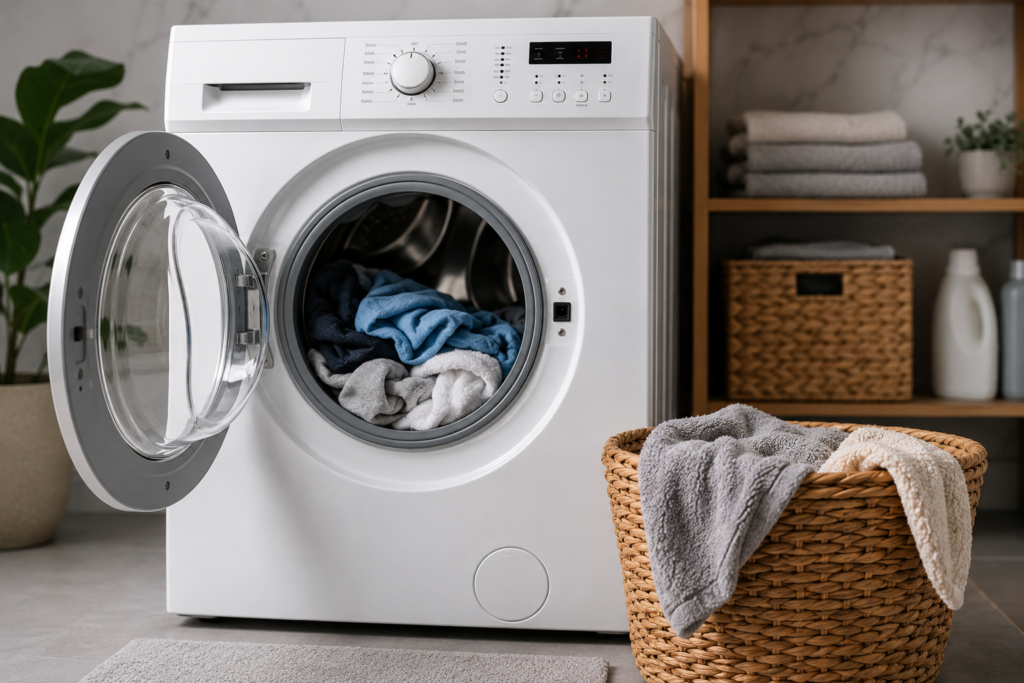
A washing machine not transitioning between cycles is usually caused by a drainage problem, a faulty lid switch or door lock, an unbalanced load, or a failing control board. In many cases, the washer pauses because it cannot safely complete the previous stage. The first thing to check is whether water is still sitting inside the drum, since that instantly points toward a drain-related issue.
There’s nothing more frustrating than thinking the laundry is finished, only to come back and find soaking wet clothes sitting in a silent machine. Sometimes the washer stops before the rinse cycle. Other times it drains but never spins. In some cases, the timer keeps counting while absolutely nothing happens inside the drum.
The good news is that this problem is often fixable without replacing the entire washer. The key is understanding how the machine moves through its cycle sequence and what typically interrupts that process in real-world situations
Why a Washing Machine Is Not Transitioning Between Cycles
Modern washers are built around a sequence of events that must happen in the correct order. A typical cycle looks something like this:
- Fill with water
- Begin agitation or tumbling
- Drain dirty water
- Refill for rinse
- Drain again
- Enter high-speed spin
- Finish the cycle
Every step depends on confirmation from sensors, switches, and control systems. If the washer doesn’t receive the expected signal from one stage, it usually refuses to continue into the next. That’s why a washing machine stuck between cycles doesn’t always mean something major has broken. Often, the machine is simply waiting for a condition that never happens.
For example
- If water doesn’t drain completely, the spin cycle may never start
- If the lid lock fails, the washer may pause indefinitely
- If the load becomes severely unbalanced, the washer may stop spinning for safety
- If the control board loses communication with a sensor, the cycle may freeze
Understanding this logic makes troubleshooting much easier.
Common Signs Your Washer Is Not Advancing Properly
The symptoms vary depending on where the failure occurs. Some washers freeze on the wash cycle for hours. Others complete washing but never spin. Certain machines repeatedly attempt to restart the same stage before finally giving up. Here are the most common warning signs
- Washer stuck on wash cycle
- Rinse cycle never starts
- Spin cycle will not activate
- Clothes come out soaking wet
- Washer pauses and never resumes
- Flashing cycle lights
- Humming sounds without draining
- Timer stops moving
- Washer shuts off mid-cycle
- Drum fills but never tumbles
The exact behavior matters because it often points directly toward the underlying problem.
Drainage Problems Are the Most Common Cause

If there’s one issue appliance technicians see repeatedly with washing machines not transitioning between cycles, it’s poor drainage. The washer must fully remove water before moving into spinning or rinsing. If the control board still detects water inside the tub, the machine will often pause indefinitely to avoid damaging internal components.
What Causes Drainage Problems?
Several things can restrict water flow:
- Clogged drain pump filter
- Kinked drain hose
- Debris stuck in the pump impeller
- Blocked household drain pipe
- Weak or failing drain pump
Small objects are usually the culprit. Coins, hair ties, lint, socks, and even pet hair gradually collect inside the drain system over time.
Quick Diagnostic Test
Open the washer after it stops. If you see standing water inside the tub, focus on the drain system first. That single observation eliminates many other possible causes immediately.
Pro Tip
Many front-load washers have a small drain pump filter hidden behind a lower access panel. Cleaning that filter alone fixes a surprising number of “washer stuck between cycles” complaints.
Faulty Lid Switch or Door Lock Problems

Washing machines are designed with safety systems that prevent spinning when the door or lid is open. Top-load washers use lid switches. Front-load machines use electronic door lock assemblies. When these components fail, the washer may behave strangely:
- It fills with water but never starts washing
- It drains but refuses to spin
- The machine pauses randomly
- Clicking sounds come from the latch area
- The door lock light flashes repeatedly
One of the biggest clues is intermittent behavior. If slamming the lid or pressing firmly on the door temporarily makes the washer continue, the switch or latch assembly is probably failing internally. This is especially common on older washers where repeated vibration slowly wears down electrical contacts inside the switch. In some situations, a washing machine not transitioning between cycles is simply reacting to a failed safety switch that prevents spinning or agitation.
Unbalanced Loads Can Completely Interrupt the Spin Cycle
A surprisingly high number of cycle transition problems are caused by load imbalance rather than broken parts. Modern washers monitor drum balance constantly during spinning. If the machine detects severe imbalance, it may repeatedly stop and redistribute the load before finally canceling the spin cycle altogether. This often happens with:
- Large blankets
- Heavy towels
- Rugs
- Single bulky items
- Overloaded drums
The washer may appear broken when it’s actually protecting itself from violent vibration damage.
Real-World Example
A common service call involves a washer that “won’t spin anymore.” After inspection, the issue turns out to be a single wet comforter bunching on one side of the drum during every cycle. Redistributing the load evenly fixes the issue immediately.
What to Check First
If the washer washes and drains normally but refuses to complete spinning:
- Pause the machine
- Rearrange the clothing evenly
- Remove a few heavy items
- Restart the spin cycle
Sometimes that’s all it takes
Control Board Failures and Electronic Glitches
Modern washing machines rely heavily on electronic control boards. The board controls: Modern control board failures can cause a washing machine not transitioning between cycles even when the motor and drain system still appear functional.
- Cycle timing
- Water levels
- Motor operation
- Drain functions
- Sensor communication
- Spin activation
When the board begins failing, the symptoms often seem random and confusing.
Signs of a Bad Washer Control Board
- Washer freezes mid-cycle
- Buttons stop responding
- Random restarting
- Flashing lights without operation
- Incorrect cycle timing
- Certain functions stop working completely
Power surges are one of the biggest hidden causes of control board damage. Even minor electrical fluctuations can weaken sensitive electronic components over time.
Try a Full Reset First
Before assuming the board is defective:
- Unplug the washer completely
- Wait at least 5 minutes
- Plug it back in
- Run a short test cycle
This can clear temporary software glitches in many machines. If the washer repeatedly freezes at the exact same point afterward, the board itself may be failing.
Water Level Sensor Problems Often Get Misdiagnosed
Washing machines use pressure switches or water level sensors to determine how much water is inside the tub. If the sensor sends inaccurate readings, the washer becomes confused about which stage it should be in. This can create strange behavior like: Sometimes a washing machine not transitioning between cycles is actually caused by inaccurate water level readings rather than a mechanical failure.
- Endless filling
- Continuous draining
- Cycle freezing after fill
- Incorrect water levels
- Rinse cycle failures
Soap residue buildup inside the pressure hose is more common than most people realize.
Quick Diagnostic Tip
Disconnect the pressure hose carefully and check for blockages. Sometimes clearing the hose restores normal operation without replacing any parts.
Older Washers Commonly Develop Timer Problems
Mechanical timers are still found in many older washers. Instead of electronic control boards, these machines use timer motors and rotating electrical contacts to move between cycles. As those parts wear out, the washer may become stuck at the same point during every load.
Signs of Timer Failure
- Timer knob stops moving
- Washer freezes consistently
- Clicking noises from timer assembly
- Manual advancement temporarily works
If manually turning the timer knob causes the machine to continue, the timer assembly is likely worn out.
Motor and Drive System Problems
Sometimes the washer cannot transition cycles because the drum itself isn’t moving correctly. Worn drive belts, damaged motor couplers, or failing clutch systems can interrupt washing and spinning. If the drum cannot rotate correctly, the washing machine not transitioning between cycles may simply be responding to incomplete drum movement detection.
Common Symptoms
- Washer fills but doesn’t agitate
- Burning rubber smell
- Weak spin performance
- Grinding noises
- Drum refusing to rotate
When the control system detects that expected drum movement isn’t happening, it may freeze the cycle to prevent further damage.

Preventive Maintenance That Helps Avoid Cycle Problems
A little maintenance goes a long way toward preventing washer issues.
Helpful Prevention Tips
- Clean the drain pump filter monthly
- Avoid overloading the washer
- Check pockets before washing
- Inspect hoses regularly
- Wash bulky items separately
- Use the correct detergent amount
- Leave the door slightly open after cycles
- Run periodic washer cleaning cycles
These simple habits reduce strain on pumps, sensors, motors, and control systems.
When to Call a Professional Appliance Technician
Some washer problems are realistic DIY fixes. Others require proper electrical testing and disassembly. You should contact a professional if:
- The washer smells like burning wires
- Water is leaking into electrical areas
- The control board needs replacement
- The motor fails completely
- Persistent error codes remain
- The machine trips circuit breakers
- Internal wiring damage is suspected
Modern washers contain complex electronics that are difficult to diagnose accurately without specialized tools.
Typical Repair Cost Range
Depending on the issue, repairs may include:
- Drain pump replacement: moderate cost
- Lid switch replacement: relatively inexpensive
- Control board replacement: more expensive
- Motor replacement: often costly enough to consider replacement of the washer itself
If the washer is older and facing multiple major repairs, replacing the machine sometimes makes more financial sense
Simple Habits That Help Prevent Washer Cycle Problems
Most washing machine cycle problems develop gradually over time. A few simple maintenance habits can reduce strain on the drain system, sensors, motor, and control board while helping the washer operate more reliably.
- Clean the drain pump filter regularly
- Avoid washing oversized items by themselves
- Use the correct amount of HE detergent
- Check pockets for coins and small objects before washing
- Inspect drain hoses periodically for bends or restrictions
- Leave the washer door slightly open after cycles to reduce moisture buildup
Frequently Asked Questions
Why is my washing machine stuck on the wash cycle?
A washing machine usually gets stuck on the wash cycle because of drainage problems, a faulty lid switch, an unbalanced load, or a malfunctioning control board. If the washer cannot complete one stage correctly, it may refuse to move into the next cycle.
How do I reset a washing machine that won’t change cycles?
Unplug the washer from the power outlet and leave it disconnected for about 5 minutes. After reconnecting power, run a short test cycle. This reset can clear temporary electronic glitches in many modern washers.
Can a clogged drain cause a washer to stop spinning?
Yes. Most washing machines will not enter the spin cycle if water remains inside the drum. A clogged drain hose, blocked pump filter, or failing drain pump can prevent proper draining and stop the washer from advancing.
Is it expensive to fix a washing machine that won’t transition between cycles?
The repair cost depends on the failed component. Simple problems like clogged filters or lid switches are usually inexpensive to fix, while control board or motor replacements can cost significantly more. Early troubleshooting often prevents larger repair bills later
Final Thoughts
A washing machine not transitioning between cycles usually means the machine detected a problem and intentionally stopped itself from continuing. Drainage failures, lid lock problems, overloaded drums, sensor issues, and electronic faults are all common causes behind this behavior. In many cases, a washing machine not transitioning between cycles can be fixed without replacing the entire appliance.
The most effective approach is to diagnose the issue logically instead of guessing randomly. Start with the simplest possibilities first especially standing water, clogged filters, and unbalanced loads. before assuming major component failure. In many cases, careful troubleshooting restores normal operation without expensive repairs. And when the problem does require professional service, catching it early usually prevents even bigger damage later. With the right troubleshooting approach, many washer cycle problems can be identified early before they turn into expensive repairs. Diagnosing a washing machine not transitioning between cycles becomes much easier once you identify whether the interruption happens during draining, rinsing, or spinning.


1 comment
[…] Washing Machine Not Transitioning Between Cycles […]