7 Washing Machine Lid Switch Problems: Causes, Symptoms, and Easy Fixes
A washing machine that won’t spin or drain often points to washing machine lid switch problems, especially in top-load washers. When this small safety component fails, the appliance may stop mid-cycle, refuse to start, or leave clothes soaking wet. These are some of the most common signs of a faulty washer lid switch that should not be ignored
Quick Overview
- Washing machine lid switch problems can stop spinning or draining
- Common signs include mid-cycle stops and wet clothes
- Most issues are caused by misalignment, wiring, or wear
- Simple fixes include cleaning, adjusting, or replacing the switch
Table of Contents
Why This Small Part Matters More Than It Seems
Most users rarely think about the lid switch until something goes wrong. This component sits quietly beneath the top panel, performing a straightforward task—confirming that the lid is closed before allowing key operations such as spinning and draining. Despite its simplicity, it plays a central role in how a washing machine functions.
This confirmation is not just about operation; it is also about safety. During high-speed spin cycles, the drum rotates with enough force to create potential hazards if the lid is open. The lid switch acts as a safeguard, ensuring the washer only runs when conditions are safe. In this way, it functions as a bridge between user input and the machine’s internal control system.
When washing machine lid switch problems occur, the appliance is not necessarily experiencing a major failure. Instead, it is often responding as designed—halting operation because it detects the lid as open, even when it appears closed
What Actually Happens When the Lid Switch Fails
A faulty lid switch does not always result in a complete shutdown. In many cases, the washing machine will still fill with water and agitate clothes before stopping unexpectedly. This partial operation can make the issue harder to identify.
Different cycles rely on different signals within the washer. While agitation may proceed without interruption, spinning and draining typically require confirmation from the lid switch. Without that signal, the machine pauses or refuses to continue the cycle
Common signs include
- The washer completes part of the cycle, then stops indefinitely
- Clothes remain wet at the end of the wash
- A clicking sound occurs when closing the lid, but no further action follows
These patterns illustrate how washing machine lid switch problems tend to interrupt the process rather than shut the system down entirely, which often leads to confusion during troubleshooting
If your washer refuses to start, you can also read why is washing machine not starting . Clothes remain soaked at the end, which may also be related to washing machine not draining water issues. Clothes remain soaked at the end, which may also be related to washing machine not draining water issues. Clothes remain soaked at the end, which may also be related to washing machine not draining water issues.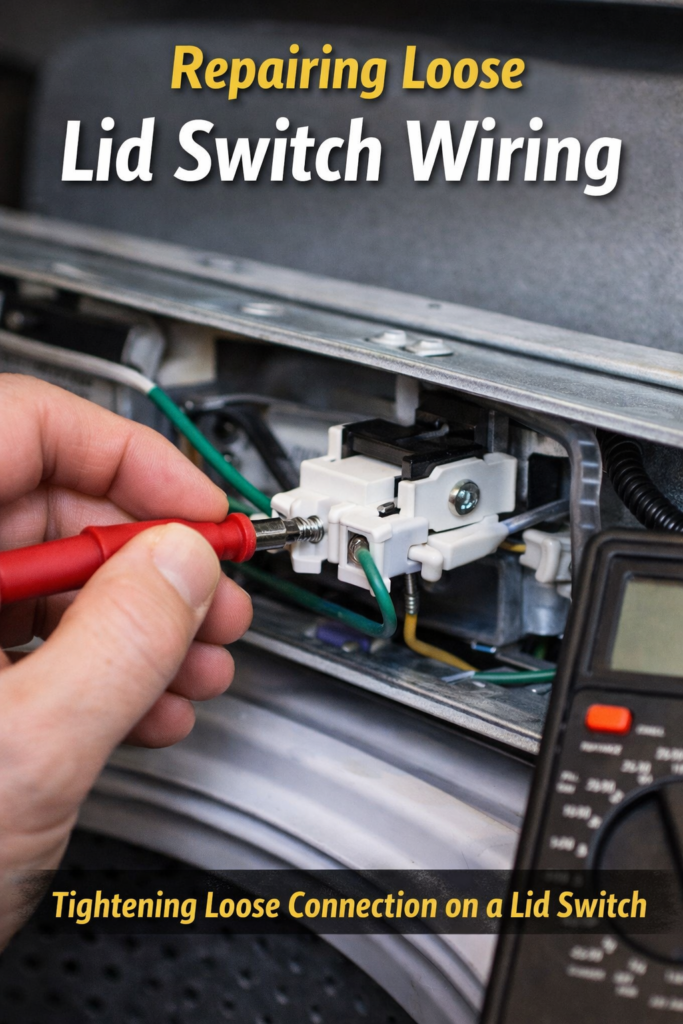
Recognizing Patterns Instead of Guessing
Focusing on patterns rather than isolated symptoms provides a clearer path to diagnosis. A washer that never starts behaves differently from one that stops midway through a cycle, and those differences matter.
Several recurring patterns often point to a lid switch issue:
- The machine starts normally but stops before entering the spin cycle
- It only operates when downward pressure is applied to the lid
- Draining performance varies between loads
Each of these situations suggests a communication breakdown between the lid mechanism and the washer’s control board. The problem is rarely random; instead, it follows consistent behavioral patterns. Understanding these patterns makes it easier to identify washing machine lid switch problems without unnecessary trial and error
How the Lid Switch System Works in Plain Terms
Inside the washer, the lid switch connects to the control board through a wiring system. When the lid closes, a small actuator commonly called a lid strike—presses against the switch. This contact completes an electrical circuit. Once the circuit is closed, the control board receives the signal needed to proceed with operations such as spinning or draining. If the circuit remains open, the system interprets the lid as unclosed.
Any interruption in this chain—whether due to misalignment, broken plastic, or loose wiring—prevents the signal from reaching the control board. As a result, the washer may stop or fail to start altogether. This explains why washing machine lid switch problems can feel inconsistent. The issue may not always lie within the switch itself but could involve surrounding components such as alignment or wiring connections.
Common Causes That Develop Over Time
In most cases, lid switch issues develop gradually rather than appearing suddenly. Regular use and environmental factors contribute to wear and tear over time. Frequent opening and closing of the lid places repeated stress on the switch assembly. Over time, plastic components may weaken, shift, or lose alignment. Even slight changes in positioning can prevent proper contact between the lid strike and the switch.
Mechanical misalignment is another common cause. If the lid strike no longer aligns correctly, the switch may fail to engage even when the lid is fully closed. In addition, internal wiring can loosen due to vibration during wash cycles, or wires may become damaged. Debris accumulation also plays a role. Detergent residue, lint, and dust can build up around the switch, interfering with its movement. In many situations, washing machine lid switch problems result from a combination of these factors rather than a single fault.

A Practical Way to Check What’s Going On
Before replacing any parts, confirming the issue is essential. A careful inspection can help determine whether the problem is mechanical or electrical. Start by disconnecting the washing machine from its power source. Once it is safe to proceed, locate the lid switch under the top panel. Examine the area closely for visible damage, loose components, or misalignment.
A basic inspection includes
- Checking for broken plastic parts or loose mounting
- Pressing the switch manually to assess resistance
- Ensuring the lid strike aligns properly with the switch
For a more precise diagnosis, a multimeter can be used to test continuity. If the switch fails to show continuity when pressed, it is likely defective. Identifying the root cause makes it easier to resolve washing machine lid switch problems efficiently.
Fixes That Often Work Without Professional Help
Not all lid switch issues require immediate replacement. In many cases, simple adjustments can restore normal function. Cleaning the switch area can remove debris that blocks movement. Adjusting the lid strike may improve alignment and allow proper contact with the switch. Tightening or reconnecting loose wiring can also resolve signal interruptions.
Replacement becomes necessary when:
- The switch fails continuity testing
- Plastic components are visibly damaged
- The issue persists despite cleaning and adjustments
Most lid switch replacements are straightforward and can be completed with basic tools. Addressing washing machine lid switch problems early can prevent further disruption and reduce repair costs
What This Component Cannot Do
It is common to assume that the lid switch is responsible for a wide range of washing machine issues. This assumption can lead to incorrect diagnoses and unnecessary repairs.
The lid switch does not control water intake levels or regulate how much water enters the drum. It also does not determine cycle duration or manage agitation patterns. Its role is limited to confirming that the lid is closed and safe for operation. If a washer experiences unusual noises, fails to agitate, or shows inconsistent water levels, the cause likely lies elsewhere. Washing machine lid switch problems specifically affect starting, spinning, and draining functions not the entire system.
Safety and Real-World Considerations
Some users attempt to bypass the lid switch as a temporary solution. While this may allow the washer to operate, it removes an essential safety mechanism. Running a washing machine without this protection increases the risk of injury, particularly during high-speed spin cycles. It also exposes internal components to potential damage if the lid is opened unexpectedly.
Handling the washer carefully can extend the life of the switch. Avoiding excessive force, such as slamming the lid, reduces stress on the mechanism. Preventive care is often more effective than repeated repairs when dealing with washing machine lid switch problems
appliance safety guidelines
People Also ReadFixing washing machine lid switch problems? These related guides will help you diagnose and solve other common washer issues.
|
Two Everyday Situations That Make This Easier to Understand
Consider a situation where you start a load before leaving home. The washer fills with water and begins agitating, but when you return, the clothes are still soaking wet. The cycle never reached the spin phase due to a failed lid switch signal. In another case, the washer only starts when firm pressure is applied to the lid. Although this may temporarily restore operation, the issue continues to recur. This behavior reflects inconsistent engagement of the switch.
Both scenarios illustrate how washing machine lid switch problems can disrupt normal operation in subtle yet persistent ways.
A Closer Look at Overstated Claims
Some advice suggests that quick fixes—such as tapping the lid or forcing it shut—can permanently resolve the issue. While these methods may appear effective in the short term, they do not address the underlying cause.
Temporary improvements often occur because the switch briefly makes proper contact. Over time, the problem returns, sometimes more frequently than before. Relying on these approaches can delay proper repair and increase frustration. A more practical approach involves identifying and addressing the root cause. Treating washing machine lid switch problems at their source leads to more reliable and lasting results.
Where Knowledge Is Still Evolving
Modern washing machines are becoming increasingly complex, integrating advanced sensors and electronic controls. In newer models, the lid switch may be part of a larger locking mechanism that communicates with multiple system components. As these designs evolve, diagnosing issues becomes less straightforward. What was once a simple mechanical switch may now interact with software-based controls, making troubleshooting more nuanced.
This ongoing development means that approaches to resolving washing machine lid switch problems may vary depending on the appliance model. General guidance remains useful, but specific solutions may differ.
A Quiet Reminder About Maintenance
Routine use naturally leads to wear, but small habits can significantly reduce the likelihood of failure. Keeping the lid area clean, avoiding unnecessary force, and observing early warning signs can help maintain proper function. Subtle changes such as delayed spinning or inconsistent draining .often appear before a complete failure occurs. Recognizing these early indicators allows for timely intervention.
In most cases, washing machine lid switch problems develop gradually, offering an opportunity to address the issue before it becomes a major inconvenience. A machine that pauses unexpectedly is often pointing to a minor issue that simply requires closer attention
Frequently Asked Questions
How do I know if my washing machine lid switch is bad?
Common signs of washing machine lid switch problems include the washer not spinning, not draining, or stopping mid-cycle. You may also notice a clicking sound when closing the lid without any action starting. A multimeter continuity test is the most reliable way to confirm if the switch is faulty.
Can a washing machine run with a broken lid switch?
In most cases, the washer will not run properly if the lid switch is broken. It may fill and agitate but will usually stop before spinning or draining. Some people bypass the switch temporarily, but this is unsafe and not recommended because it removes an important safety feature.
How much does it cost to replace a washing machine lid switch?
Replacing a lid switch is usually affordable. The part typically costs between $20 and $50, depending on the washer model. Many homeowners fix washing machine lid switch problems themselves, as the replacement process is simple and requires basic tools.
Still facing washing machine lid switch problems? Explore our complete washing machine repair guides to find step-by-step solutions for all common washer issues.


3 comments
[…] Machine Not Starting – Causes & Fix Guide Washing Machine Lid Switch Problems Explained Washer Turns On But Does Nothing – Easy […]
[…] Washing Machine Lid Switch Problems – Causes and Fixes […]
Love it