Washer Timer Stuck or Won’t Advance? Fast DIY Diagnostic
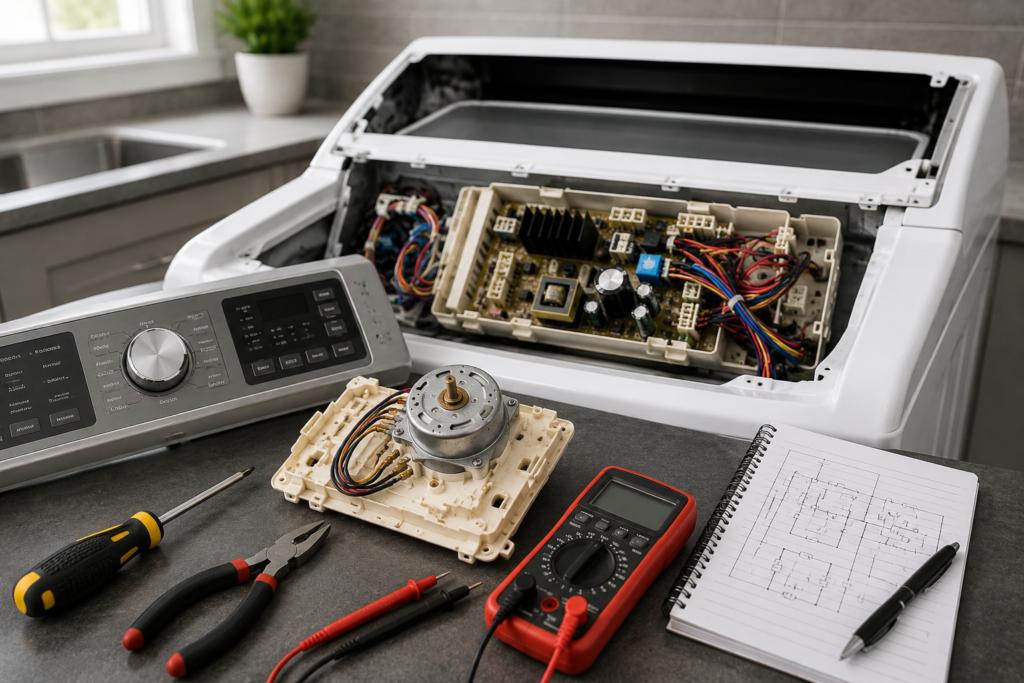
Quick Troubleshooting Guide
| Problem | Possible Cause | What to Check |
|---|---|---|
| Timer not advancing | Faulty timer motor | Inspect timer assembly |
| Stops before spin | Broken lid switch | Test lid latch click |
| Stuck full of water | Drain blockage | Clean filter and hose |
| Display frozen | PCB board issue | Check error codes |
Quick Answer: Why Is Your Washing Machine Timer Not Working?
A washing machine timer not working usually means the washer cannot move from one stage of the wash cycle to the next. Instead of completing the program normally, the machine may become stuck during washing, rinsing, draining, or spinning. In many cases, homeowners assume the timer has failed immediately, but the timer itself is not always the real cause.
The most common reasons include a worn timer motor, damaged timer contacts, a faulty lid switch, drainage problems, or an electronic control board malfunction. Because these components all work together, a failure in one system can prevent the timer from advancing even when the timer is still functioning correctly.
Before spending money on a replacement timer, begin with a few simple checks. Verify that the washer is receiving stable power, make sure the drain hose and pump are free from blockages, and confirm that the lid switch or door lock operates properly. These quick inspections often reveal the real problem and can save both repair costs and unnecessary parts replacement.
Key Takeaway
If your washing machine timer is not working, don’t replace the timer immediately. Most timer-related symptoms are actually caused by safety switches, drainage restrictions, or electrical faults that prevent the washer from progressing through the cycle. Following a logical troubleshooting process helps identify the true cause faster and avoids replacing expensive components unnecessarily.
Common Signs Your Washing Machine Timer Is Failing

Before diving into causes, it helps to recognize the patterns that typically point to a timer problem rather than a random one-off glitch. Many homeowners notice a washing machine timer not working issue when the washer repeatedly freezes at the same stage of the cycle.
- The washer stops at the same point in the cycle every time
- The timer knob does not advance automatically and requires manual turning
- Certain cycles. wash, rinse, or spin .consistently fail to begin
- The machine fills with water but never moves to the next stage
- The washer runs much longer than the selected cycle time
- The display freezes or becomes unresponsive mid-cycle
If you’re seeing one or more of these consistently, the timer or a component interfering with it deserves a closer look
Symptoms of a Washing Machine Timer Problem and Their Most Likely Causes
A washing machine timer not working can produce several different symptoms depending on which part of the wash cycle is affected. Some washers become stuck before spinning, while others never leave the wash cycle or continue running much longer than expected. Although these signs often point toward a faulty timer, they can also indicate problems with the lid switch, drain system, motor, or electronic control board.
The comparison table below helps you match the symptom you’re seeing with the component that should be inspected first. Using this approach makes troubleshooting faster and reduces the chances of replacing the wrong part.
| Observed Symptom | Most Likely Cause | Check First |
|---|---|---|
| Timer knob never advances | Worn timer motor or internal timer contacts | Inspect the timer assembly for wear or electrical failure. |
| Washer stops before the spin cycle | Faulty lid switch or door lock | Test the lid switch and listen for a proper clicking sound. |
| Machine remains full of water | Blocked drain pump or clogged drain hose | Clean the pump filter and inspect the drain hose. |
| Display freezes during a cycle | Electronic control board malfunction | Check for stored error codes and reset the washer if recommended. |
| Cycle takes much longer than normal | Weak timer motor or sensor-related interruption | Inspect timer operation and verify sensor performance. |
Professional Tip
If the washer stops at exactly the same point during every cycle, the problem is usually related to the component used during that stage rather than the timer itself. Identifying where the cycle consistently freezes is one of the fastest ways to narrow down the real cause and avoid unnecessary repairs.
Why the Washing Machine Timer Stops Working
There’s rarely a single clean explanation. In most cases, a washing machine timer not working results from a combination of mechanical wear, electrical issues, or a failed safety component that’s preventing the cycle from advancing. In most cases, a washing machine timer not working problem is caused by worn internal contacts, failed timer motors, drainage interruptions, or electronic control board faults.
Worn Timer Motor or Internal Contacts
The most common mechanical failure is a burned-out or weakened timer motor. This small motor physically drives the timer assembly through its rotation. When it starts to fail, the timer advances slowly, stalls partway through, or stops moving entirely. You might notice the washer pausing unusually long at one point in the cycle before things get worse. Eventually, it stops advancing at all.
Worn electrical contacts inside the timer are equally common. These contacts open and close the circuits to each component. After years of use, they corrode or wear down to the point where they can no longer make a reliable connection. When this happens, certain cycles may fail while others seem perfectly fine. a pattern that’s easy to misread as a motor or valve problem rather than a timer issue.
The Lid Switch A Frequently Missed Culprit
Beyond the timer itself, the lid switch is one of the most common reasons a washer appears stuck. Most top-load machines are designed to pause and stop advancing if the lid switch doesn’t signal that the lid is properly closed. A failed lid switch can leave the washer frozen before the spin cycle every single time, mimicking a timer failure almost perfectly. This is one of the most important things to rule out early, especially if the washer consistently stops at the same stage.
Drain System Blockages
A clogged drain system causes something very similar. If the washer can’t pump water out, it won’t move forward. The machine is waiting for the water level sensor to confirm the drum is empty before it continues .and if water is still sitting inside, the timer appears frozen even though it’s functioning exactly as designed. Checking the drain pump filter and drain hose before opening the control panel can save a significant amount of unnecessary work.
Electronic Control Board Failures

On modern machines, a failing control board produces some of the most unpredictable symptoms. The cycle might behave differently each time. Error codes may appear on the display, buttons may become partially unresponsive, or the machine might skip stages without any clear pattern. Power surges are a common cause, though gradual component degradation on the board itself is equally likely over time
How to Diagnose a Washing Machine Timer Problem Step by Step
The most useful thing you can do early on is observe exactly where the cycle breaks down. Run a complete cycle and watch it closely. Note the specific stage where the machine stops or gets stuck. because each pattern points in a different direction. Diagnosing a washing machine timer not working issue becomes much easier when you carefully observe exactly where the cycle stops or freezes.
If the washer stops before spin every time, check the lid switch first. Open the lid and look for the small plastic tab that presses the switch when the lid closes. If it’s broken or missing, the switch never receives the correct signal. Slowly closing the lid while listening for a faint click is a quick way to test this. No click usually means the switch is bad.
If the washer fills but never agitates, check whether the drum is actually turning. A failed motor or broken drive belt can stop agitation entirely while the timer circuit remains unaffected. The timer looks frozen simply because it’s waiting for motor feedback before moving on.
If the washer stalls and won’t drain, start with the basics:
- Check the drain hose at the back for kinks or blockages
- Make sure the hose isn’t pushed too far into the standpipe, which can create a siphon effect
- Clean the pump filter, which on most front-loaders is accessible through a small access panel near the bottom front of the machine
A clogged filter is one of the most commonly overlooked causes of mid-cycle stalling, and it takes about ten minutes to clear.
If none of these checks reveal anything obvious, the timer assembly or control board becomes the next logical focus. On older machines with mechanical timers, testing the timer motor with a multimeter .checking continuity and comparing resistance to the manufacturer’s specification. is a straightforward next step. On electronic machines, pulling the error codes from the service manual often narrows the problem down quickly without guesswork
You May Also Like
If your washing machine timer is not working, these related FixAppLab repair guides can help you diagnose similar cycle, control, and electrical problems more accurately.
- Washing Machine Timer Symptoms: Early Warning Signs You Should Never Ignore
- How to Reset a Washing Machine Timer Step by Step
- Washing Machine Not Transitioning Between Cycles: Causes and Fixes
- Washer Cycle Timing Incorrect: Common Reasons and Solutions
- Washing Machine Selector Not Working: Easy Troubleshooting Guide
When the Washing Machine Timer Is NOT the Problem
One of the biggest mistakes homeowners make is replacing the timer before confirming that it has actually failed. While a washing machine timer not working is a common complaint, the timer itself is often not the component responsible for the problem. Modern washing machines rely on multiple sensors, safety switches, and electrical systems that must all work together before the cycle can continue.
If one of these supporting components stops sending the correct signal, the washer may pause indefinitely even though the timer is operating exactly as designed. This is why professional appliance technicians usually inspect the entire wash system before recommending a timer replacement.
Components That Commonly Mimic a Timer Failure
- Lid Switch or Door Lock: A failed safety switch prevents the washer from progressing to the spin cycle, making it appear as though the timer has stopped.
- Drain Pump or Drain Hose: If water cannot drain properly, the washer waits for the water level to drop before advancing to the next stage.
- Water Level Pressure Switch: Incorrect water level readings can prevent the control system from moving to the next cycle.
- Drive Motor or Belt: If the drum cannot rotate correctly, the cycle may pause while waiting for motor feedback.
- Electronic Control Board (PCB): On newer washers, the control board performs many of the same functions as a traditional timer. A failing PCB can create nearly identical symptoms.
- Loose Wiring or Electrical Connections: Damaged connectors or broken wires can interrupt communication between the timer and other components.
The easiest way to narrow down the real cause is to observe exactly where the wash cycle stops every time. If the machine always freezes before spinning, inspect the lid switch first. If it remains full of water, focus on the drain system. If the display becomes unresponsive or behaves differently during each cycle, the electronic control board is a more likely suspect than the timer itself.
Expert Recommendation
Replacing a timer without confirming the actual fault can lead to unnecessary expense and wasted repair time. Always eliminate simple causes such as drainage problems, faulty safety switches, power interruptions, and wiring issues before purchasing a new timer assembly. A systematic diagnosis is almost always faster, less expensive, and far more accurate than replacing parts based on symptoms alone.
What You Can Fix at Home and What You Probably Can’t

Some of these repairs are well within reach for most homeowners. Others are better left to someone with hands-on experience. Some washing machine timer not working repairs are manageable at home, while others require professional electrical testing and advanced diagnostic tools.
Manageable DIY repairs:
- Replacing a damaged timer knob. If the knob has cracked or lost its grip on the shaft, the washer won’t respond to your cycle selections properly. Knobs are inexpensive and usually attach with no special tools.
- Cleaning the drain filter and clearing the drain hose .Straightforward, quick, and often overlooked. Most manufacturers include access instructions in the owner’s manual.
- Replacing the lid switch. Typically held by one or two screws and connected via a wire harness that unplugs cleanly. Matching the part number to your specific model is the most important step.
- Replacing the mechanical timer assembly. More involved, but realistic on most older top-loaders. The timer is usually mounted in the control console and accessible after removing a few screws. Wiring connections are typically color-coded and transferred one at a time from the old unit to the new one
When to Call a Technician
Some washing machine timer problems are simple enough for homeowners to diagnose safely, but others require advanced electrical testing and specialized tools. Calling a technician is usually the safer option when the issue involves wiring, control boards, or repeated power failures.
- The washer repeatedly trips breakers or loses power
- Burning smells or visible wire damage appear
- The control board shows multiple random symptoms
- You are uncomfortable testing live electrical components
- Replacing the timer does not solve the problem
Safety Warning
Always unplug the washing machine from the wall outlet before inspecting any internal components, including the timer, lid switch, wiring, or drain pump. Washing machines run on high-voltage electricity, and working on a live machine carries serious risk of electric shock. If you’re not confident working around electrical components, stop and contact a qualified appliance technician
When Repair Doesn’t Make Financial Sense
If your washer is more than ten or twelve years old and showing signs of multiple component failures. a failing timer, a leaking hose, a rumbling bearing. the repair math often doesn’t work in your favor. A mechanical timer assembly can run anywhere from forty to over a hundred dollars depending on the brand, and a control board replacement can easily exceed two hundred dollars before labor. On an aging machine that’s likely to need further repairs soon, that money may be better applied toward a replacement.
That said, if the washer is otherwise in solid shape and the problem is clearly isolated to one component, repair is almost always the smarter call. A well-maintained washing machine can last fifteen to twenty years, and a single timer replacement at the ten-year mark is entirely reasonable
Estimate Your Washer Repair Cost in Minutes
Not sure whether repairing your washing machine is worth the cost? Before replacing expensive parts like the timer, control board, or motor, compare the estimated repair cost with the value of your washer.
Our free FixAppLab Washing Machine Repair Cost Calculator provides a quick repair cost estimate based on your washer’s brand, age, and the component that may have failed. It can help you decide whether repairing or replacing your appliance is the smarter financial choice.
The Calculator Helps You Estimate:
- Estimated repair cost based on the reported problem
- Average replacement part price
- Typical technician labor cost
- Repair vs. replacement recommendation
- Whether the repair is likely to be cost-effective
👉 Try our Washing Machine Repair Cost Calculator before purchasing replacement parts.
How to Prevent Timer Problems Going Forward
A few consistent habits make a real difference over the life of the machine. Regular maintenance greatly reduces the chances of a washing machine timer not working problem developing over time.
Avoid overloading. Consistent overloading is one of the fastest ways to stress the motor and drive system. The machine struggles longer at each stage, generates excess heat, and accelerates wear on the timer components that coordinate everything.
Use a surge protector. Power surges are an underappreciated threat to electronic control boards. An appliance-rated surge protector is inexpensive insurance, especially in areas with unstable power or frequent storms.
Clean the drain filter regularly. Doing this every few months keeps the drainage system clear, reduces mid-cycle stalling, and removes one of the most common reasons a timer appears to stop working when it’s actually waiting for proper drainage.
Inspect hoses annually. A kinked or partially blocked drain hose is easy to miss and easy to fix before it becomes a recurring problem
Timer problems are genuinely fixable in most cases, and working through the possibilities in a logical order almost always leads to the real answer. The most important thing is resisting the impulse to replace the timer immediately just because it’s the most visible suspect. More often than not, the actual problem is somewhere else in the system. and finding it first saves both time and money. A properly diagnosed washing machine timer not working issue is usually far easier and less expensive to repair than most homeowners initially expect.
Frequently Asked Questions
Why is my washing machine timer not working or advancing?
A washing machine timer stops advancing most often because of a worn timer motor, corroded internal contacts, or a failed lid switch preventing the cycle from moving forward. In some cases, a clogged drain system or a failing electronic control board can produce the exact same symptom. Start by checking the lid switch and drain system before assuming the timer assembly itself needs replacement.
Can a bad lid switch cause the washing machine timer to stop?
Yes, absolutely. A faulty lid switch is one of the most common reasons a washing machine timer appears frozen, particularly before the spin cycle. Most washers are designed to stop advancing if the lid switch fails to send the correct closed signal. The machine interprets this as an open lid and holds the cycle in place as a safety measure. Replacing the lid switch is usually inexpensive and straightforward.
How do I know if my washing machine timer needs to be replaced?
The clearest signs that the timer itself needs replacement include the washer stopping at the same point every cycle, the timer knob requiring manual advancement to continue, certain cycles consistently failing to start, and a multimeter test showing no continuity through the timer’s internal contacts. If the lid switch, drain system, motor, and wiring all check out fine, the timer assembly is the logical next suspect.
Is it worth replacing a washing machine timer, or should I just buy a new washer?
For a washer that is otherwise in good condition and less than ten years old, replacing the timer is almost always worth it. Mechanical timer assemblies typically cost between forty and one hundred dollars depending on the brand, which is far less than the cost of a new machine. However, if the washer is older, showing multiple component failures, or requires an expensive electronic control board replacement, buying a new machine often makes better financial sense.
Can I reset a washing machine timer without replacing it?
On electronic washing machines, a simple reset sometimes resolves a frozen cycle caused by a temporary software glitch rather than a true hardware failure. Unplug the washer from the wall, wait five full minutes, then plug it back in and run a test cycle. If the problem returns consistently, the reset is only masking the underlying issue and the actual faulty component still needs to be identified and repaired.
What should I check first when my washing machine timer is not working?
Begin with the simplest and most common causes before touching any internal components. Check whether the drain hose is kinked or the pump filter is clogged, since a washer that can’t drain will appear stuck even though the timer is functioning normally. Next, test the lid switch by listening for a click when the lid closes. After that, inspect the power supply and visible wiring for any obvious damage. Only after ruling out these external factors should you focus attention on the timer motor or control board itself
About the Author

Muhammad Khalid
Founder of FixAppLab | Appliance Troubleshooting Writer | Home Appliance Research Publisher
Muhammad Khalid is the founder of FixAppLab, where he publishes practical appliance troubleshooting guides, maintenance tutorials, and repair resources for washing machines, dryers, refrigerators, dishwashers, and other household appliances. His goal is to simplify complex appliance problems into clear, step-by-step solutions that help homeowners diagnose issues confidently and make informed repair decisions.
Every article on FixAppLab is carefully researched, regularly updated, and written to provide accurate, easy-to-understand guidance focused on real-world appliance problems.
Expertise: Appliance Diagnostics • Washing Machine Repair • Dryer Troubleshooting • Preventive Maintenance • Home Appliance Education


Comments