Automatic Washing Machine Problems and Solutions: 7 Common Issues Fixed
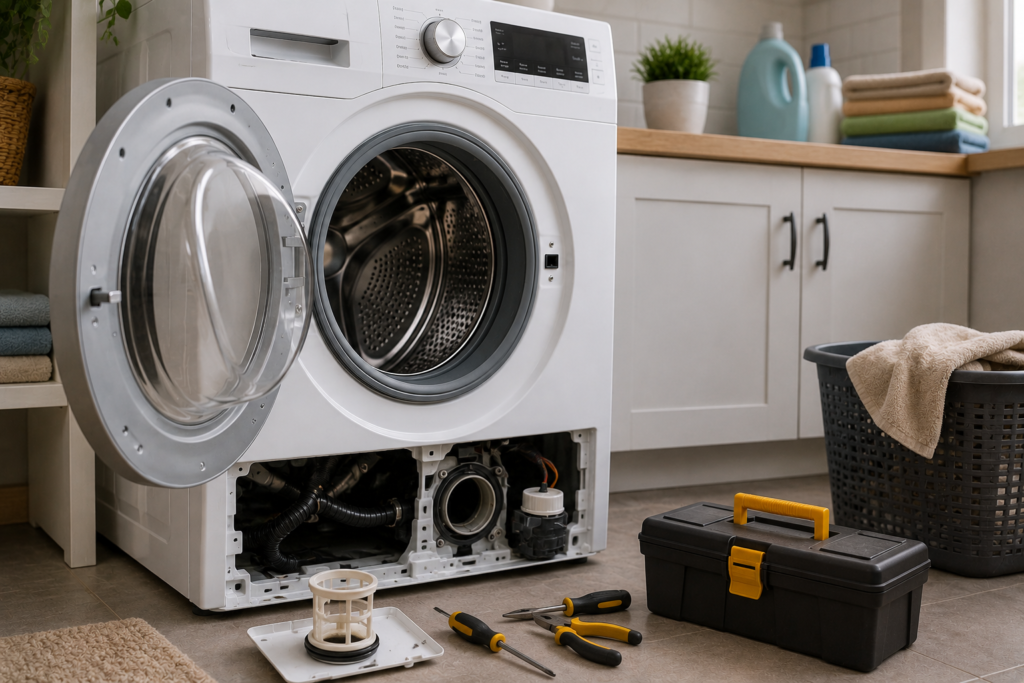
Automatic washing machine problems and solutions are among the most common appliance issues homeowners deal with today. When your automatic washing machine acts up, the problem usually comes down to a few familiar culprits — drainage issues, spin failures, leaks, strange noises, or a machine that simply won’t start. Most of these faults have straightforward causes, and many can be diagnosed and fixed without calling a technician. Knowing where to look first saves you time, money, and the frustration of wet laundry piling up with nowhere to go.
Quick Key Takeaways
- Most automatic washing machine problems are caused by drainage restrictions, overloaded drums, worn components, or poor maintenance habits.
- A washer that will not spin properly often has either a drainage issue or an unbalanced laundry load.
- Loud grinding, burning smells, repeated breaker trips, or severe leaking are warning signs that should never be ignored.
- Cleaning the drain filter regularly is one of the simplest ways to prevent expensive washing machine repairs.
- Many common washer problems can be diagnosed at home before calling a technician, especially issues related to filling, draining, spinning, or vibration.
Table of Contents
Why Automatic Washing Machines Break Down More Than People Expect
People tend to treat washing machines like they’re indestructible. Load them up, press start, walk away. And for years, that approach works just fine. But automatic washers are surprisingly complex systems. they combine electrical controls, water inlet valves, drain pumps, motors, drum bearings, and electronic sensors, all working in a precise sequence. When even one of those components starts to degrade, the entire wash cycle can fall apart.
The truth is, most breakdowns don’t happen suddenly. They build slowly over time. Lint quietly accumulates in the drain filter over months. The rubber door seal never gets wiped down and starts growing mold. Hoses loosen gradually from constant vibration. The drum gets routinely overloaded until the motor or bearings wear down faster than they should. Understanding this pattern helps you approach troubleshooting more confidently .you’re usually dealing with wear, buildup, or imbalance, not some catastrophic internal failure. Some automatic washing machine problems and solutions are simple maintenance-related issues, while others may point toward worn mechanical or electrical components.
Automatic Washing Machine Won’t Start
This is one of the most alarming problems because it feels absolute. Nothing happens when you press start, and it’s easy to jump to the worst conclusion. In reality, the cause almost always falls into one of three categories.
Check power first. A loose plug, a tripped circuit breaker, or a faulty wall outlet accounts for a surprising number of “dead washer” service calls. Test the outlet with another appliance before assuming the machine is the problem. If the breaker has tripped, reset it. but if it trips again immediately after you plug the washer back in, there’s likely an internal electrical fault that needs professional attention.
Inspect the door or lid next. Automatic washers have safety interlocks that prevent the machine from running unless the door is fully closed and latched. On front-loaders, the door lock mechanism can wear out or jam, tricking the machine into thinking the door is open even when it isn’t. On top-loaders, the lid switch performs the same function. A healthy latch produces a clear click when the door engages. if that click is missing, the latch or interlock likely needs replacement.
Try a soft reset if everything else checks out. Modern washers run on electronic control boards, and like any computer, they occasionally freeze. Unplugging the machine for two to three minutes and plugging it back in clears temporary errors and restores normal operation more often than most people expect
Water Problems: Not Filling, Not Draining, or Both
Water-related issues make up the largest category of automatic washing machine problems, and they often show up together in ways that confuse people. A machine that won’t drain, for instance, will frequently also refuse to spin. because most washers are programmed to hold the spin cycle until the drum has drained below a set water level.
Washing Machine Won’t Fill With Water
If the drum stays dry after a cycle starts, begin with the basics: confirm that both the hot and cold water supply taps behind the machine are fully open. It sounds almost too obvious, but it’s a surprisingly common oversight. Then check the inlet hoses for kinks .a hose that got pinched when the machine was pushed back against the wall can restrict flow enough to stop filling entirely.
Where the inlet hoses connect to the machine, small mesh filter screens trap sediment and debris from the water supply. Over time, these screens clog completely and block water from entering. Removing and rinsing them takes about five minutes and frequently solves the problem. If the screens are clean and the taps are open but water still won’t enter, the inlet valve itself has likely failed electrically and needs to be replaced. Water-related issues are one of the biggest automatic washing machine problems and solutions homeowners search for online because drainage and filling failures often happen together.
Washing Machine Won’t Drain

A machine that leaves standing water in the drum after the cycle ends almost always has either a blocked drain filter or a kinked drain hose. The filter .typically accessed through a small panel at the front bottom of the machine collects lint, coins, buttons, hair ties, and everything else that escapes from pockets and clothes during a wash. When it’s fully clogged, water simply can’t pass through. Cleaning this filter once a month is one of the best maintenance habits you can build.
If the filter is clear, inspect the drain hose at the back of the machine. Make sure it isn’t sharply bent or inserted too deeply into the standpipe, which can create a siphoning effect that interferes with draining. As a general rule, the end of the hose should sit no more than about five inches down into the drain opening. Here’s a quick way to tell what’s actually wrong when the machine won’t drain . Drainage failures are one of the most searched automatic washing machine problems and solutions because standing water often prevents the washer from completing its cycle properly.
- You can hear the pump running but water isn’t moving. there’s a blockage somewhere in the drain path, possibly a sock or fabric piece wrapped around the pump impeller.
- The pump is completely silent during the drain cycle. the pump motor has likely failed and needs to be replaced.
Spinning Issues: Why Clothes Come Out Soaking Wet
A washing machine that goes through a full cycle but leaves clothes dripping is one of the most frustrating outcomes. You’ve waited the whole time and still have sopping laundry to deal with.
The most common cause is an unbalanced load. When heavy items. towels, jeans, or a single large blanket. cluster on one side of the drum during spinning, the machine detects the imbalance through its sensors and automatically reduces spin speed or stops the cycle entirely. This is a safety feature, not a malfunction. Redistributing the clothes evenly and rerunning the spin cycle almost always resolves it.
Before assuming a mechanical problem, also verify the machine is actually draining. A washer won’t spin effectively if water is still trapped in the drum. the added weight prevents proper centrifugal action. Clear any drain blockages and test the spin cycle again. If balancing the load and clearing the drain don’t help, the issue is likely mechanical. Among all automatic washing machine problems and solutions, failed spin cycles are one of the most frustrating because clothes remain heavy, wet, and difficult to dry properly.
- Drive belt. If the drum spins with very little resistance when you turn it by hand, the belt has probably broken or slipped off.
- Motor fault. Less common, but older machines do develop motor problems that cause inconsistent or failed spinning. This typically requires a technician to diagnose.
Washing Machine Leaking Water: Finding the Source
A leaking washer can quietly damage floors, walls, and cabinets, so even a minor drip deserves attention. The tricky part is that water on the floor doesn’t always originate where it appears — it can travel along hoses or the machine’s base before pooling somewhere unexpected.
Start with the hose connections at the back. Supply hoses loosen over time from vibration, and the rubber washers inside the connectors degrade and flatten. Tighten any loose connections and replace cracked or flattened washers. As a general rule, hoses should be replaced every five years regardless of outward appearance, since rubber deteriorates internally before showing visible damage.
On front-loaders, inspect the door gasket carefully. This rubber seal flexes with every load, collects moisture and soap residue, and eventually tears or pulls away from the drum rim. Check the entire circumference of the gasket — small tears near the bottom are easy to miss but will cause steady leaking during every wash. Regular cleaning prevents premature failure; replacing a torn gasket is a manageable DIY repair with the right part.
Don’t overlook detergent. Using too much, or using a non-HE formula in a high-efficiency machine, creates excess suds that can overflow the drum and appear as leaks near the door or detergent drawer. If you’re seeing soap bubbles at the door seal mid-cycle, cut your detergent amount in half and switch to an HE-rated product.
If water appears only during the spin cycle and seems to come from underneath the machine, internal pump connections or the drum seal are more likely at fault. These require more disassembly to access and are generally worth having a qualified technician handle. Water leaks are another major part of automatic washing machine problems and solutions because even small leaks can eventually damage flooring, walls, and nearby cabinets.
You May Also Like
If your automatic washing machine is showing problems like poor spinning, drainage failures, loud noises, cycle interruptions, or water leaks, these detailed troubleshooting guides may help you identify closely related causes and fix them more effectively:
- Washing Machine Not Spinning Properly – 9 Causes and Easy Fixes
- Washing Machine Not Draining Water – Common Causes and Fixes
- Washing Machine Stops Mid-Cycle Full of Water – What to Check First
- Washing Machine Making Loud Noise When Spinning – 9 Common Causes
- Washing Machine Stuck on Sensing Cycle – Easy Troubleshooting Guide
- Washing Machine Water Leaking From Bottom – 10 Causes and Easy Fixes
- How to Maintain a Washing Machine for Long Life
Strange Noises and What They’re Actually Telling You
Every washer produces some normal sound. the hum of the motor, water moving through hoses, the click of the door lock. What matters is catching sounds that are new, louder than usual, or appearing at unexpected points in the cycle. Loud noises and vibration issues are another major category of automatic washing machine problems and solutions that homeowners frequently deal with over time.
Grinding or rumbling during spin is the most serious noise to pay attention to. This typically points to worn drum bearings. the components that support the drum shaft and allow it to rotate smoothly. As bearings fail, the drum wobbles and creates a low, metallic groan that worsens over time. Bearing replacement requires partial machine disassembly, but it’s usually far cheaper than buying a new washer if the machine is otherwise in good condition.
Banging or thumping during spin is usually less serious. The most common causes are an unbalanced load or a machine that isn’t sitting level on the floor. Check that all four feet make solid contact with the floor. use a spirit level if you’re not sure. If the machine is level and the load is balanced, the shock absorbers or suspension rods that cushion the drum’s movement may be worn out, causing the drum to strike the cabinet during high-speed spinning.
High-pitched squealing, especially in the early part of a cycle, often points to a slipping drive belt or a struggling pump. If you notice the drum spinning inconsistently alongside the squealing, the belt is the most likely culprit
Washing Machine Smells Bad: Mold, Mildew, and Buildup

A musty or sour-smelling washer isn’t just unpleasant. it actively transfers odors to your clean laundry. The cause is almost always the same: mold and bacteria growing in areas that trap moisture and never fully dry between cycles.
On front-loaders, the door gasket is the primary offender. Its folded rubber edges trap water, lint, and detergent residue in exactly the kind of warm, damp environment where mold thrives. Wiping it down after every wash and leaving the door ajar between loads makes a noticeable difference. For machines that already smell, run a hot cycle with two cups of white vinegar poured directly into the drum and a quarter cup of baking soda in the detergent drawer. follow it with a rinse cycle to flush out residue.
The detergent drawer is the second most common problem area. Fabric softener and detergent build up in the compartments, turning into a thick residue that grows mold over time. Pull the drawer out completely and scrub it with warm water monthly. While it’s out, clean the recess it sits in, particularly the small holes in the top of the housing that control water flow into the drawer.
If your machine has a dedicated drum-clean cycle, run it once a month with a washing machine cleaner tablet. It takes almost no effort and consistently prevents the kind of buildup that leads to persistent odors
Quick Troubleshooting Reference
If you need a fast starting point, here’s where to look based on the symptom:
| Symptom | Check First |
|---|---|
| Won’t start | Power supply, door latch, control board reset |
| Won’t fill | Water taps, kinked hoses, inlet filter screens |
| Won’t drain | Drain filter, drain hose position, pump |
| Won’t spin | Load balance, drainage, drive belt |
| Leaking | Hose connections, door gasket, detergent amount |
| Loud noise | Load balance, machine level, drum bearings |
| Bad smell | Door gasket, detergent drawer, drum-clean cycle |
Important Safety Note
Always disconnect power before inspecting internal washing machine components, especially when checking drain pumps, electrical connections, wiring, or motor-related problems. Water and electricity together create serious safety risks. If you notice burning smells, sparks, exposed wiring, or repeated electrical breaker trips, stop using the machine immediately and contact a qualified appliance technician.
Warning Signs You Shouldn’t Ignore
Some symptoms are easy to put off. The machine still sort of works, so the problem gets pushed to the back of the mind. These are the ones that shouldn’t wait:
- A burning smell. whether electrical or rubber. means stop the machine immediately and unplug it. This can indicate a failing motor, a seized bearing creating friction against the door seal, or an electrical fault inside the control system. None of these are safe to run through.
- Water near electrical components. any leak that appears to be running toward the motor or control board area needs immediate attention.
- Repeated circuit breaker trips. the machine is drawing abnormal current, which usually points to a motor, pump, or wiring problem.
- Error codes that return after every reset a persistent code means the machine has identified a specific fault that a simple restart won’t resolve
When to Call a Professional Technician
Most of the problems in this guide are genuinely fixable by a careful homeowner. But some situations call for professional diagnosis, and recognizing them early prevents bigger damage. Call a technician when you’re dealing with any of the following:
- Burning smells or any sign of electrical arcing
- A drum that won’t rotate at all despite the motor running
- Water leaking continuously after you’ve addressed all visible sources
- Repeated circuit breaker trips when the machine runs
- Persistent error codes that return after multiple resets
- Suspected motor, control board, or bearing failure
Attempting to repair these without proper tools and experience can make the problem worse. and in the case of electrical faults, creates a genuine safety risk
Common Washing Machine Mistakes That Cause Bigger Problems
Many washing machine failures are not caused by defective appliances alone. In real-world situations, repeated usage habits slowly create extra stress on the motor, drum, pump, and suspension system until larger problems begin appearing during normal wash cycles.
- Overloading the drum regularly, especially with heavy bedding or towels
- Ignoring small leaks, unusual noises, or vibration changes for long periods
- Using too much detergent or the wrong detergent type in high-efficiency washers
- Never cleaning the drain filter, detergent drawer, or rubber door gasket
- Continuing to run the washer after burning smells, grinding noises, or drainage failures appear
How to Keep Your Washing Machine Running Longer
Prevention really does matter with automatic washers, and it doesn’t require much effort. Clean the drain filter monthly. Wipe the door gasket after loads and leave the door open between washes. Use the correct amount of high-efficiency detergent. Don’t make overloading a habit. Run a maintenance wash every four to six weeks. Inspect inlet and drain hoses annually and replace them proactively every five years.
These aren’t dramatic steps. they’re small, consistent habits that stop wear from accumulating into real problems. A clogged filter is a ten-minute fix. A burned-out motor caused by months of drainage strain is a much more expensive repair conversation. Most automatic washers, given reasonable care, will deliver ten to fifteen years of reliable performance. The ones that fail early almost always have a history of small warning signs that were noticed but ignored. Pay attention to what your machine is telling you, address issues early, and it’ll keep running reliably for a long time. Many automatic washing machine problems and solutions are directly connected to maintenance habits, overloaded cycles, and ignored warning signs.


Comments