Washing Machine Not Draining Water
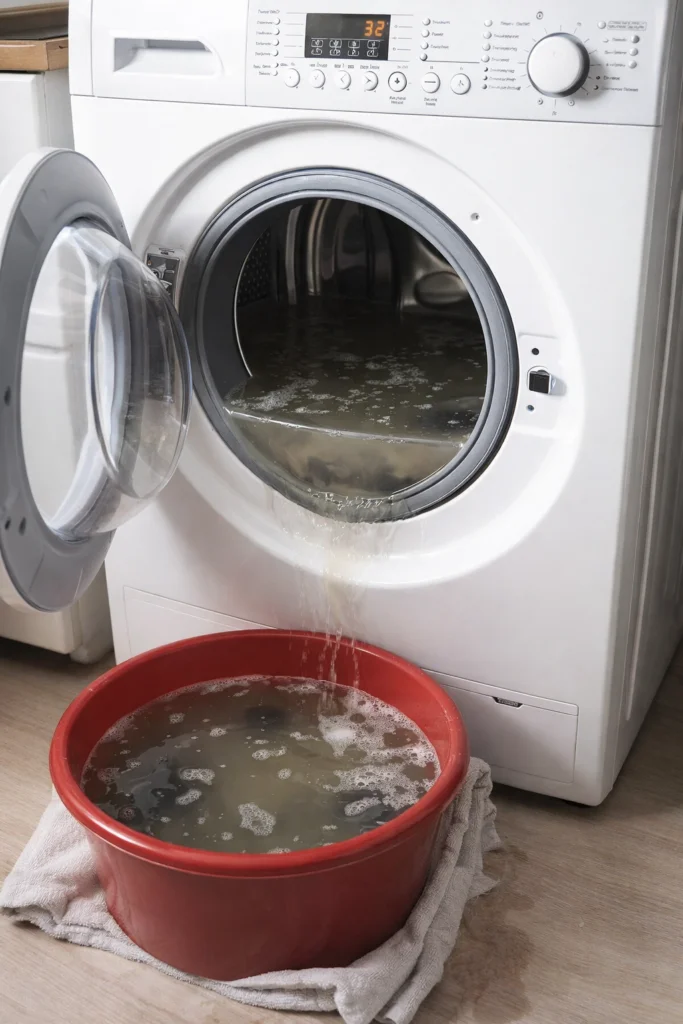
A washing machine not draining water is a common issue that usually points to a blockage in the drainage system or a minor mechanical fault. When your washer is not draining, it often means water cannot flow out properly due to a clogged pump filter, a bent or blocked drain hose, or a drain pump that is no longer working efficiently.
In most cases, this washing machine drain problem develops gradually and can be fixed without professional repair. Understanding the cause early helps prevent bigger issues and ensures your washer continues to run smoothly without interruption.
Quick Key Takeaways
- Most drainage problems are caused by clogged filters, blocked hoses, or restricted water flow.
- A washer that will not drain does not automatically mean the appliance needs replacement.
- Checking the drain hose and pump filter are often the fastest troubleshooting steps.
- Unusual noises during draining may indicate pump-related problems.
- Routine maintenance can significantly reduce future drainage issues.
Table of Contents
Laundry routines depend on a quiet assumption: clothes go in dirty and come out clean and damp, ready for drying. When the drum remains filled with murky water at the end of a cycle, the interruption can feel unexpectedly frustrating. The machine may appear stuck between stages, and it is not always obvious whether the issue is minor or a sign of a deeper mechanical problem .Understanding what occurs inside a washer during the drain cycle helps clarify why this issue arises and why it can often be resolved without complicated repairs
What the Drain System Actually Does Inside a Washer
Inside every washing machine is a relatively simple but carefully timed system that moves water through the appliance. During the wash stage, the drum fills with water and detergent while the drum agitates clothing to remove dirt and residue. Once that phase is complete, the machine must remove the dirty water before the spin cycle begins.
This is the role of the drain system. At the bottom of the washer sits a pump designed to push water out of the tub and into a drain hose. That hose then carries the water out of the machine and into the household drainage system. Several components work together to make this process possible:
- Drain pump – pushes water out of the tub
- Pump filter – captures debris before it reaches the pump
- Drain hose – carries wastewater into the home’s plumbing
- Control system – signals the pump when to activate
When the pump switches on, water travels upward through the hose and then flows downward into the drain pipe. The loop in the hose helps prevent wastewater from flowing back into the washer. If any part of this pathway becomes blocked—even by something small such as lint or a coin—the water may remain trapped inside the drum
Why Drain Problems Happen More Often Than People Expect

A washing machine handles more than just fabric and water. Each load introduces small particles that gradually accumulate in areas most people rarely see. Over time, washers may collect items such as
- Loose threads and lint
- Hair from towels or clothing
- Sand or fine dirt from
- Small objects like coins, paper, or hair clips
The pump filter is designed to capture these items before they reach the pump and cause damage. As debris gathers in the filter, water begins moving more slowly through the drainage system. Eventually, the flow may slow enough that the washer cannot empty the drum.
The physical position of the appliance can also play a role. When a washer is pushed tightly against a wall, the drain hose may bend or collapse slightly. Even a small restriction in the hose can limit water flow enough to interrupt the cycle. Mechanical wear also contributes over time. Washing machines run through hundreds of cycles each year, and moving parts gradually lose efficiency. Importantly, these situations do not necessarily mean the appliance is failing. In many cases, they are simply the result of regular use
You May Also Like
If your washing machine is not draining water properly, these related troubleshooting guides may help you identify blocked filters, drain pump problems, spin cycle issues, and other common causes:
- Washing Machine Water Not Pumping Out – Common Causes & Fixes
- Washing Machine Not Draining After Spin Cycle – What to Check First
- Washing Machine Stops Mid Cycle Full of Water – Troubleshooting Guide
- Washer Drain Filter Blockage Fix Guide
- Washing Machine Water Pump Motor Failure – Symptoms & Solutions
- Washing Machine Not Spinning Properly – 9 Causes and Easy Fixes
- Washing Machine Error Codes Explained
Early Signs That the Drain System Is Struggling
A washer rarely stops draining without warning. In most situations, subtle signals appear several cycles before the problem becomes obvious. One early indication is water remaining in the drum after a wash cycle finishes. The washer may technically complete the program but leave clothing wetter than usual.
Sound can provide another clue. When the pump begins to struggle, the machine may produce a faint humming noise during the drain stage without actually removing water. You might also notice the spin cycle taking longer than usual. The washer may repeatedly attempt to remove water before spinning clothes at full speed. Some indicators worth noticing include:
- Water still visible inside the drum after the cycle ends
- Clothes that feel unusually heavy and soaked
- A low humming sound during draining
- Longer pauses between wash stages
These signals do not always indicate a major malfunction. Often they suggest a developing blockage that can be addressed early
Practical Areas to Check Before Assuming a Major Failure
When a washing machine stops draining, it is easy to assume the appliance has broken down. In many situations, the explanation is far simpler. One of the first components worth checking is the pump filter. Most modern washers include a small access panel near the bottom front of the machine. Inside sits a cylindrical filter that can usually be unscrewed by hand. Removing lint, coins, or debris from this filter frequently restores proper drainage.
The drain hose also deserves attention. Because it sits behind the appliance, it is easy to overlook. When examining the hose, look for:
- A sharp bend restricting water flow
- Pressure from the wall compressing the hose
- Visible debris buildup inside the hose
In some cases, simply straightening the hose allows water to flow normally again. Another possibility involves the household drain. If the washer empties into a standpipe or sink connection, a clog in that plumbing line can cause water to back up into the appliance. In this situation, the washing machine itself may function correctly, yet it cannot empty because the home’s drainage system cannot accept more water
How to Fix a Washing Machine Not Draining Water
When dealing with a washing machine not draining water, start by checking the drain hose, cleaning the pump filter, and inspecting the drain pump for debris or damage. These simple checks often solve the problem without requiring professional repair.
What This Problem Cannot Realistically Mean

Online discussions about appliance problems sometimes create unnecessary concern. It is not uncommon to see claims suggesting that a washer failing to drain means the machine has reached the end of its life. In reality, this assumption is rarely accurate.
A washer that refuses to empty does not automatically indicate a failing motor or a need for replacement. In many homes, the issue is simply a small obstruction that can be cleared within minutes. Detergent alone is also unlikely to prevent a washer from draining unless unusually large quantities are used over long periods. While detergent buildup can slow water flow, it more often causes residue on clothing rather than a complete drainage failure.
Another exaggerated claim suggests that a single overloaded cycle can permanently damage the drainage system. Overloading can strain a washer, yet most machines tolerate occasional heavy loads without immediate mechanical damage. A more realistic interpretation is that drainage problems typically arise from routine maintenance needs rather than catastrophic failure
Everyday Situations Where the Problem Appears
Washing machines operate in ordinary household environments, which means problems often develop in everyday ways. Consider a household with children who frequently leave coins or small toys in their pockets. During one wash cycle, a coin slips through the drum openings and settles in the pump filter. Over several weeks, lint gathers around the object and gradually restricts water flow.
Eventually, the washer stops draining altogether. Another common scenario occurs when someone cleans behind the washing machine and pushes it back into position. The drain hose becomes slightly pinched between the appliance and the wall. The restriction may be subtle, allowing the washer to operate normally for a few cycles before water begins collecting inside the drum. Neither situation indicates a major mechanical failure. Both develop slowly through ordinary household activity
Safety and Practical Considerations When Troubleshooting
Appliances that combine electricity and water require careful handling during maintenance. Before inspecting any internal component, the washing machine should always be disconnected from its power source. Unplugging the unit or switching off the circuit breaker removes the risk of accidental electrical contact.
It is also advisable to remove water from the drum before opening the filter compartment. Towels and a shallow container can help catch any water that spills during the process. Avoid forcing parts that resist movement. Filters and access panels are designed to unscrew or release with moderate pressure. Applying excessive force can damage the component or the surrounding housing. Certain situations clearly call for professional assistance, particularly if:
- The washer leaks during operation
- Electrical burning smells are present
- The pump produces grinding or harsh noises
- Internal components are difficult to reach
Technicians have the tools and experience needed to diagnose issues involving pumps, wiring, and internal control systems. Routine maintenance remains the most effective preventive approach. Emptying pockets before washing, cleaning the filter periodically, and ensuring the drain hose remains unobstructed can significantly reduce the likelihood of drainage problems
When to Call a Technician
Many drainage problems can be resolved through basic inspection and maintenance. However, professional diagnosis may be necessary when symptoms suggest internal mechanical or electrical faults.
- The drain pump makes grinding or unusually loud noises.
- The washer repeatedly stops with water inside after multiple troubleshooting attempts.
- Electrical burning smells are present.
- Error codes continue appearing after cleaning the filter and drain hose.
- Internal components require disassembly to access safely.
A Note on Ongoing Understanding of Appliance Reliability
Modern washing machines are far more complex than earlier models. Digital control systems, energy-efficient motors, and built-in sensors influence how the appliance manages water levels and spin cycles. Because of these technological changes, washers may respond differently to drainage problems depending on the model. Some machines display error codes when drainage slows, while others simply pause during the cycle.
Manufacturers continue refining pump designs and filtration systems in an effort to reduce clogging and improve reliability. At the same time, ongoing research into energy efficiency shapes how quickly washers remove water during the spin stage
Even with these improvements, everyday use still introduces unpredictable factors. Fabric lint, small objects, and variations in household plumbing can affect drainage performance in ways no design can fully eliminate
Prevention Tips
Simple maintenance habits can help reduce the likelihood of future drainage problems and keep the washer operating efficiently.
- Check clothing pockets before every wash cycle.
- Clean the pump filter periodically according to manufacturer recommendations.
- Inspect the drain hose occasionally for bends or restrictions.
- Avoid overloading the washer with excessively heavy loads.
- Address slow drainage symptoms early before they develop into larger problems.
Taking a Moment to Observe Before Taking Action
Laundry appliances often operate quietly in the background of daily life, and their problems can seem sudden when they finally appear. When water remains in the drum, the natural reaction is to assume the worst. In many situations, the most helpful step is simply pausing to observe what the machine is doing. Listening for the pump, checking the position of the hose, and considering whether the problem developed gradually can reveal important clues.
A few minutes of careful observation often provides more useful insight than immediate frustration. And in many homes, that brief moment of attention is all it takes for the washer to return to its usual, dependable rhythm. If your washing machine not draining water problem continues after checking the filter, drain hose, and drain pump, professional assistance may be required. Identifying the cause early can help prevent further appliance damage and restore normal washing performance.
❓ Frequently Asked Questions
Muhammad Khalid
Founder of FixAppLab • Appliance Troubleshooting Writer • Home Appliance Research Publisher
Muhammad Khalid is the founder of FixAppLab, an independent appliance troubleshooting website focused on helping homeowners understand common washing machine, dryer, and refrigerator problems. His articles simplify technical appliance issues into practical, easy-to-follow guides that help readers diagnose faults, understand potential causes, and make informed repair decisions.
Through FixAppLab, he publishes detailed troubleshooting resources covering drainage problems, spin cycle failures, electrical faults, motor issues, control board symptoms, maintenance practices, and appliance performance optimization.
Explore More Resources
Learn more about the site’s background, publishing approach, and mission on the About Page. You can also browse the Services Page, review the Privacy Policy, or read the Disclaimer.


7 comments
[…] Related : Washing Machine Not Draining Water […]
[…] Washing Machine Not Draining Water: Common Causes & Solutions […]
[…] Washing Machine Not Draining Water: Causes and Fixes […]
[…] Washing Machine Not Draining Water […]
[…] Read Full Guide → […]
[…] ➤ Washing Machine Not Draining Water: Common Causes & Solutions […]
[…] Washing Machine Not Draining Water: 9 Common Reasons […]