How to Avoid Washing Machine Breakdown (15 Proven Ways That Work)
A washing machine rarely fails all at once .it usually develops small issues that build up over time. These problems happen because of everyday habits like overloading, poor cleaning, or ignoring early warning signs. If you understand how to avoid washing machine breakdown through proper use and simple maintenance, you can stop most failures before they start
Quick Key Takeaways
If you want to understand how to avoid washing machine breakdown, focus on everyday usage patterns rather than occasional fixes. Most issues develop gradually due to repeated stress, not sudden failure.
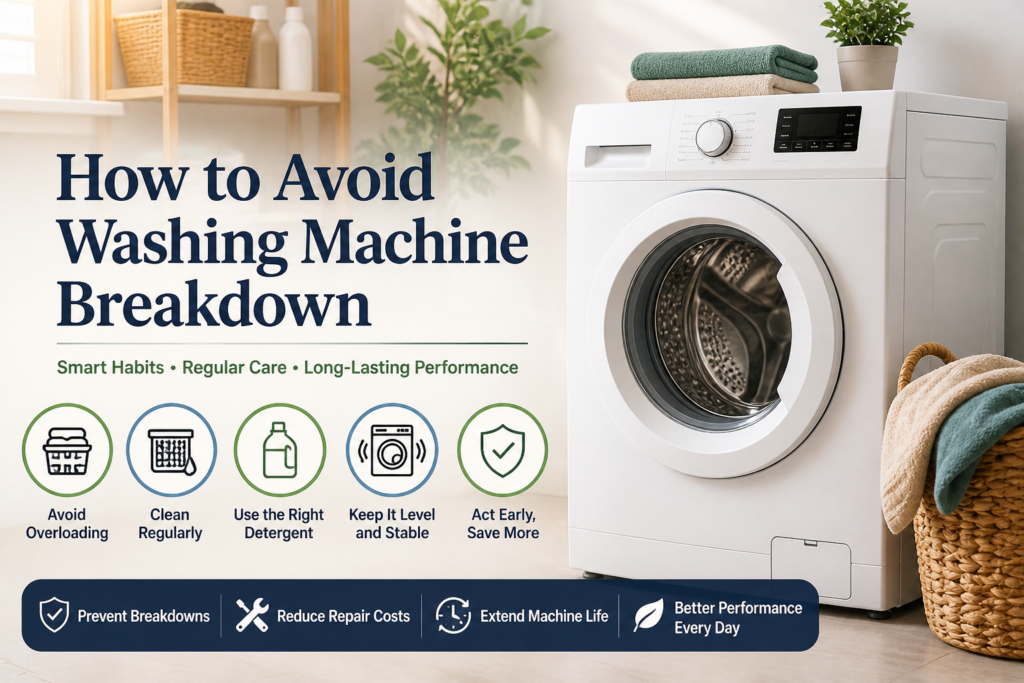
- Keep loads balanced and avoid overloading the drum
- Clean filters and run maintenance cycles regularly
- Use the correct detergent amount to prevent buildup
- Ensure the machine is level to reduce vibration damage
- Act early when you notice unusual sounds or behavior
Table of Contents
Why Washing Machines Fail in Real Life
In real household use, a washing machine is constantly under stress. It deals with heavy, wet loads, shifting weight during spin cycles, and continuous exposure to detergent, dirt, and moisture. Over time, even small inefficiencies begin to affect how the system behaves.
For example, a slightly blocked drain filter might not stop the machine immediately, but it slows down water flow. This forces the pump to work harder than normal. After weeks or months of this extra strain, the pump can burn out. This is how most breakdowns happen .not suddenly, but gradually.
Understanding this pattern is the key to learning how to avoid washing machine breakdown. It’s less about reacting to problems and more about preventing them from developing in the first place.
The Hidden Impact of Overloading
Overloading is one of the most common habits that quietly damages washing machines. It often feels efficient to wash everything in one go, but the internal system isn’t designed for that kind of pressure.
When the drum is overloaded, clothes don’t move freely. This creates uneven weight distribution, especially during the spin cycle. The machine starts to shake, and the suspension system has to absorb that force. Over time, this repeated stress wears down shock absorbers, bearings, and even the motor.
You may notice the machine becoming noisier or struggling to spin properly. These are not random issues. they’re direct results of overloading. Keeping the drum about three-quarters full allows the system to work as intended and significantly reduces long-term damage.
How Detergent Misuse Leads to Breakdown
Using more detergent than necessary seems harmless, but it often creates problems that are not immediately visible. Excess detergent doesn’t fully rinse away. Instead, it builds up inside hoses, filters, and even the outer drum. This residue traps dirt and moisture, creating a sticky layer that restricts water flow. In some cases, it interferes with sensors that control water levels and cycle timing. Over time, this leads to poor performance, drainage issues, and unpleasant odors.
In real-life situations, machines with detergent buildup often show signs like longer cycle times or incomplete rinsing. Using the correct type and amount of detergent helps maintain internal cleanliness and is a simple way to support long-term reliability.
Why Regular Cleaning Is Not Optional

Many users assume that because a washing machine cleans clothes, it stays clean itself. In reality, the opposite is true. Every wash leaves behind lint, soap residue, and microscopic dirt particles.
These materials settle in hidden areas such as the drum edges, rubber seal, and drainage system. In front-load machines, the door gasket is especially prone to mold growth because it traps moisture. Running a monthly hot cycle with a cleaning agent or white vinegar helps dissolve buildup before it becomes a problem. Wiping the rubber seal and leaving the door slightly open after use allows moisture to escape, reducing the risk of mold and odor.
Drainage Problems Start Small
Drainage issues are rarely sudden. They usually begin with minor blockages caused by lint, coins, or small objects left in pockets. At first, the machine may still drain, but more slowly than usual.
This delay forces the drain pump to run longer and harder. Over time, the pump motor overheats and weakens. Eventually, it fails completely, leaving water stuck in the drum. A simple habit like checking pockets and cleaning the drain filter regularly can prevent this entire chain of events. It’s one of the most practical ways to understand how to avoid washing machine breakdown in everyday use.
The Role of Machine Balance and Placement
A washing machine must remain stable during operation, especially during high-speed spinning. If the machine is not level, even a normal load can cause excessive vibration.
This vibration doesn’t just create noise .it affects internal components. The drum can shift slightly off alignment, putting uneven pressure on bearings and suspension parts. Over time, this leads to mechanical wear and potential failure. In real homes, this often happens when machines are placed on uneven floors or when the adjustable legs are not properly set. Ensuring the machine sits flat and stable can prevent unnecessary strain and extend its lifespan
Related Washing Machine Guides
How to Maintain Washing Machine for Long Life
Learn simple maintenance habits that reduce wear and keep your washing machine running efficiently.
How to Improve Washing Machine Performance
Fix slow washing, weak spinning, and performance issues with practical steps.
Washing Machine Not Spinning Properly
Discover why spinning fails and how imbalance or drainage problems cause it.
Washing Machine Not Draining Water
Learn how blockages develop and how to fix drainage issues before damage.
Washing Machine Making Loud Noise
Understand vibration, banging sounds, and internal damage causes.
Washer Voltage Fluctuation Problem Fix
Protect your washer from electrical damage and unstable power issues.
Electrical Fluctuations and Silent Damage
Electrical issues are often overlooked when discussing how to avoid washing machine breakdown, but they are a significant factor. Voltage fluctuations can damage the control board, which acts as the machine’s brain. Unlike mechanical problems, electrical damage may not show immediate symptoms. The machine might start behaving unpredictably .skipping cycles, stopping mid-wash, or failing to start altogether.
Using a voltage stabilizer or avoiding operation during unstable power conditions can protect sensitive components. This is especially important in areas where power supply is inconsistent.
Recognizing Early Warning Signs
Most washing machines give subtle warnings before a major failure occurs. The problem is that these signs are often ignored until the machine stops working completely.
Common signs include
- Unusual noises during spinning or draining
- Slower cycle completion
- Water not draining fully
- Mild burning smell or overheating
These symptoms usually indicate developing issues such as worn bearings, clogged pumps, or motor strain. Addressing them early is far easier and cheaper than dealing with a full breakdown
Quick Troubleshooting Guide
When your washing machine starts acting differently, a quick diagnosis can help you decide whether it’s a simple fix or something more serious. This real-world troubleshooting guide helps you identify the issue faster and take the right action.
| Problem | What It Usually Means | What You Should Do |
|---|---|---|
| Machine not draining | Clogged filter or blocked hose | Clean the filter and inspect drainage path |
| Loud vibration or shaking | Unbalanced load or uneven floor | Rebalance load and adjust machine level |
| Burning smell | Motor overheating or electrical issue | Stop using immediately and inspect |
| Cycle stops midway | Sensor or control issue | Restart machine or check power stability |
Real-Life Scenario: Small Issue, Big Consequence

Consider a situation where a user notices a slight rattling noise during the spin cycle but continues using the machine as usual. Over time, that noise becomes louder, and the machine starts vibrating more. What’s actually happening is that the drum is becoming unbalanced, and the suspension system is weakening. Eventually, the internal components can no longer handle the stress, leading to a complete failure.
This is a typical example of how ignoring small signs leads to major problems. Understanding these patterns helps reinforce how to avoid washing machine breakdown in practical terms.
Using the Machine According to Its Design
Every washing machine is built with specific limits, including load capacity, cycle types, and water usage. Ignoring these limits puts unnecessary pressure on the system.
For instance, using a quick wash cycle for heavily soiled or bulky items forces the machine to work inefficiently. It may not clean properly, and residue can build up inside. Similarly, washing a single heavy item like a blanket can create imbalance during spinning. Following the machine’s intended usage guidelines ensures that each component operates within its designed capacity, reducing wear and tear over time.
Simple Habits to Avoid Washing Machine Breakdown
You don’t need complex maintenance routines to keep your washing machine in good condition. Small, consistent habits can prevent most common problems.
Some of the most effective practices include
- Checking pockets before washing
- Cleaning the filter every few weeks
- Leaving the door open after use
- Avoiding back-to-back heavy loads
- Inspecting hoses periodically
These actions take very little time but significantly reduce the risk of breakdown.
When a Problem Needs Professional Attention
While many issues can be prevented or managed at home, some problems require technical expertise. If the machine stops spinning completely, makes grinding noises, or shows electrical faults, it’s best to consult a professional. Attempting to fix complex internal components without proper knowledge can cause further damage. Knowing when to step back is just as important as knowing how to maintain the machine
When to Call a Technician
While many small issues can be handled at home, some problems go beyond basic maintenance and require professional attention. Knowing when to step back can prevent further damage and avoid higher repair costs.
If your washing machine consistently fails to complete cycles, produces grinding or metallic noises, or gives off a burning smell, these are strong signs of internal component damage. Issues like motor failure, worn bearings, or electrical faults should not be ignored or handled without proper expertise.
Calling a technician at the right time doesn’t just fix the problem—it often prevents a complete breakdown. Acting early can save both time and money while extending the overall life of your machine.
Frequently Asked Questions
How often should I clean my washing machine to avoid breakdown?
To avoid washing machine breakdown, it’s best to run a maintenance cleaning cycle once a month. In real use, detergent residue, lint, and dirt slowly build up inside the drum and pipes. If ignored, this buildup can affect drainage and performance. Regular cleaning prevents internal strain and keeps the system working efficiently.
What is the most common cause of washing machine breakdown?
The most common cause is overloading combined with poor maintenance. In real-life situations, users often fill the drum beyond capacity, which puts stress on the motor and suspension system. Over time, this leads to imbalance, noise, and eventual failure of key components like bearings or the motor.
Can using too much detergent damage a washing machine?
Yes, excessive detergent can lead to internal problems. It creates residue that clogs pipes, affects sensors, and reduces washing efficiency. In practical scenarios, machines with detergent buildup often develop drainage issues and bad odors. Using the correct amount helps prevent these long-term issues.
How can I tell if my washing machine is about to break down?
Early warning signs include unusual noises, slow draining, incomplete cycles, or excessive vibration. These symptoms usually indicate developing issues like pump blockage or motor strain. Recognizing these signs early is key to understanding how to avoid washing machine breakdown and fixing problems before they become serious.
Final Thoughts
Learning how to avoid washing machine breakdown comes down to understanding how daily use affects the machine over time. Small actions, repeated consistently, have a bigger impact than occasional repairs. When you pay attention to how the machine behaves and respond early, you can keep it running smoothly for years without major issues .These small steps are essential if you want to truly understand how to avoid washing machine breakdown in daily use.
About the Author
Muhammad Khalid
Founder of FixAppLab • Appliance Troubleshooting Specialist
Muhammad Khalid is the founder of FixAppLab, a platform focused on real-world appliance troubleshooting. He explains how washing machines, refrigerators, and dryers behave in everyday use, helping users understand why problems happen and how to fix them with practical steps.
Explore detailed guides on washing machine problems, refrigerator issues, and dryer troubleshooting.
Learn more on the About page, browse the latest articles, or contact directly.


Comments