How to Improve Washing Machine Performance (Simple Tips for Better Results)
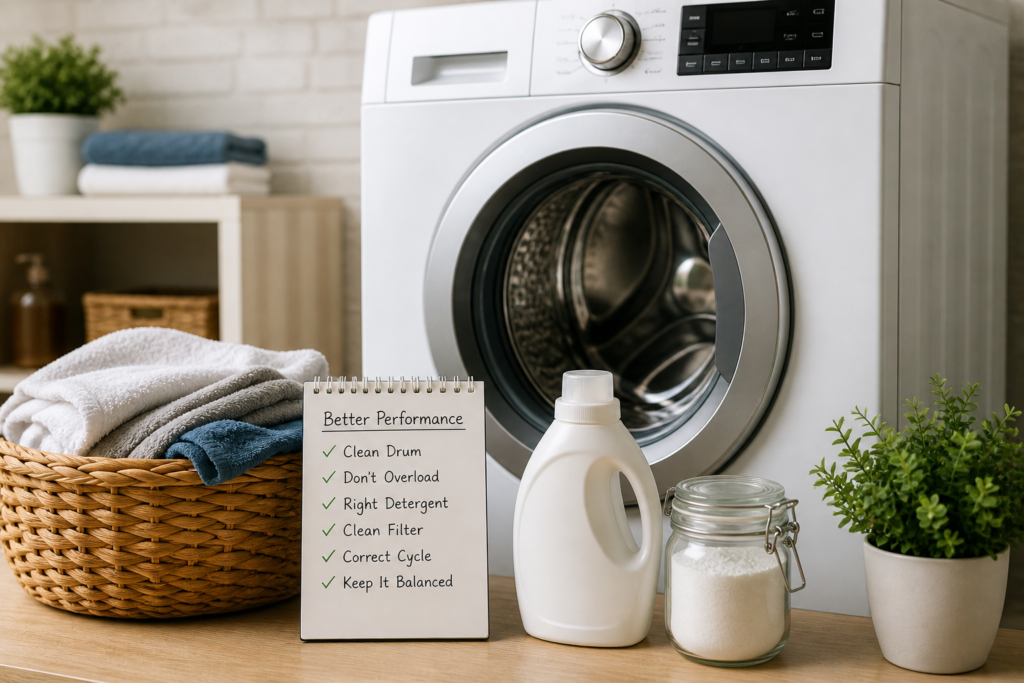
How to improve washing machine performance becomes important when your washer no longer delivers clean results or takes too long to finish cycles. Over time, detergent residue, improper loading, and poor maintenance can reduce efficiency and affect how the machine works. The good news is that with a few simple changes and regular care, you can improve performance and keep your washing machine running smoothly.
Quick Ways to Improve Washing Machine Performance
- Clean the drum monthly using vinegar or washer cleaner
- Avoid overloading — keep drum about 75% full
- Use correct amount of HE detergent
- Clean filter and drain pump regularly
- Keep door slightly open after washing
Table of Contents
How a Washing Machine Works Behind the Scenes
Most people treat a washing machine like a sealed box: load clothes, press a button, and expect clean results. In reality, the machine depends on a precise interaction between water, detergent, drum movement, and time. When all four elements are balanced, cleaning happens efficiently without putting unnecessary strain on internal parts. Understanding how your washer operates is the first step if you want to improve washing machine performance effectively.
Inside the drum, clothes need space to move freely so water can carry detergent through the fabric. At the same time, sensors and valves regulate water levels and timing based on the load. When something interferes—like excess detergent or poor water flow—the entire process becomes less effective. That’s often the starting point when people begin looking for ways to improve washing machine performance.
Why Washing Machine Performance Declines in Real Life
Performance doesn’t drop overnight. It usually fades slowly due to habits that seem harmless at the time. Repeated overloading, skipping cleaning cycles, or using too much detergent creates buildup that affects how the machine operates internally.
In many homes, laundry routines are rushed. Clothes are stuffed into the drum to save time, and extra detergent is added with the assumption that it will clean better. Over weeks or months, this leads to residue forming inside the drum, hoses, and even the pump. The machine still runs, but it’s no longer working at full efficiency.
Hard water is another common factor. Minerals in the water leave behind scale that sticks to heating elements and internal surfaces. This reduces water flow efficiency and can make the machine take longer to complete cycles. Understanding these real-world causes makes it easier to approach how to improve washing machine performance in a practical way.
Signs Your Washer Is Not Performing Properly

You don’t need technical knowledge to notice when something is off. Washing machines tend to show clear signs when performance starts declining, though they’re often ignored until the issue becomes more serious.
Look for these common indicators
- Clothes come out with a dull or slightly musty smell
- Wash cycles take longer than usual to finish
- The machine vibrates more or sounds louder during spinning
- Detergent residue appears on clothes or inside the drum
- Water doesn’t drain completely after a cycle
Each of these signs points to a disruption in the machine’s normal operation. Recognizing them early helps prevent bigger problems and makes troubleshooting more effective. Regular maintenance is one of the best ways to improve washing machine performance over time. Many common issues can be avoided once you understand how to improve washing machine performance with simple daily habits.
Common Mistakes That Reduce Washing Machine Performance
One of the biggest challenges in improving washer performance is unlearning habits that feel normal. Many people unknowingly create conditions that reduce efficiency. Overloading is at the top of the list. When the drum is packed tightly, clothes can’t move properly, which limits cleaning action. The motor and suspension system also work harder, increasing wear over time.
Using too much detergent is another frequent issue. Instead of rinsing away cleanly, excess detergent forms a sticky layer that traps dirt and bacteria. This not only affects cleaning results but also contributes to odors.
Ignoring the filter is equally problematic. The pump filter collects lint, coins, and debris, and when it becomes clogged, water flow is restricted. This leads to incomplete draining and longer cycles. These mistakes don’t seem serious individually, but together they gradually reduce how well the machine performs
Expert Tips for Better Washing Results
For long-term performance, avoid switching detergents frequently and stick to one type that suits your machine. Always match wash cycles with fabric type, and don’t rely on heavy cycles for every load. Consistency in usage habits plays a bigger role than most people realize.
Step-by-Step Approach to Improve Washing Machine Performance
Improving performance doesn’t require advanced tools or technical repairs. It’s about restoring the machine to a clean and balanced working condition while adjusting how it’s used.
Start by focusing on cleaning and resetting the internal environment. Run an empty hot cycle with white vinegar or a dedicated cleaner. This helps break down residue and removes hidden buildup inside the drum and pipes. Next, clean the detergent drawer and rubber seal. These areas often trap moisture and detergent, creating the perfect environment for mold. Wiping them regularly prevents odors and keeps the machine hygienic.
Check the filter and remove any debris that may be blocking water flow. This step alone can make a noticeable difference in drainage and cycle time. After cleaning, adjust your usage habits. Load the drum only about three-quarters full, use the recommended detergent amount, and choose the correct cycle for each type of laundry. These small changes directly support how to improve washing machine performance in everyday use .Understanding how to improve washing machine performance helps prevent long-term damage.
Helpful Guides to Improve Washing Machine Performance
If your washing machine is not cleaning properly, taking longer than usual, or showing signs of reduced efficiency, these detailed guides will help you understand the root causes and fix performance-related issues step by step.
How Water Supply and Balance Affect Performance
A washing machine relies heavily on consistent water flow. When water pressure is low or hoses are partially blocked, the machine struggles to fill properly. This affects how detergent dissolves and how clothes are cleaned. Even something as simple as a kinked hose can slow down the entire process. Checking hoses regularly ensures that water enters and exits the machine without restriction.
Balance also plays a critical role. If the machine is not level, it vibrates excessively during the spin cycle. Over time, this can loosen internal components and reduce efficiency. Adjusting the machine’s feet so it sits evenly on the floor helps maintain stable operation. These factors are often overlooked, yet they directly influence how effectively the washer performs during each cycle. These simple adjustments can significantly improve washing machine performance without repairs.
Real-Life Scenario: When Small Habits Cause Bigger Problems
Consider a household where laundry is done almost daily. To save time, loads are often packed full, and extra detergent is added for heavily soiled clothes. At first, everything seems fine. After a few months, clothes start coming out with a slight odor, and the machine begins taking longer to finish cycles.
The issue isn’t a mechanical failure. it’s buildup. Residue has accumulated inside the drum and filter, and water flow is partially restricted. After a deep cleaning and adjusting load size and detergent use, the machine gradually returns to normal performance. This scenario highlights how everyday habits directly influence efficiency, often without immediate warning signs.
Troubleshooting Tips to Improve Washing Machine Performance

Sometimes, even after cleaning and adjusting usage, the machine still doesn’t perform as expected. In these cases, a deeper look is necessary. Start by checking the water inlet valve and ensuring it’s not clogged. If the machine isn’t filling properly, cleaning will not solve the issue alone. Next, inspect the drain pump for blockages that may be preventing proper water removal.
If unusual noises persist, the problem could involve worn internal parts such as the drive belt or motor components. These issues require more attention and may not be fixable through basic maintenance. Troubleshooting should always follow a logical process. start with the simplest causes and move toward more complex ones only if needed .These troubleshooting steps are designed to improve washing machine performance without requiring professional repair.
Common Mistakes That Reduce Washing Machine Efficiency
- Using too much detergent
- Overloading the drum
- Ignoring filter cleaning
- Using wrong wash cycle for clothes
- Leaving door closed after wash
Safety Considerations During Maintenance
Working on a washing machine involves both water and electricity, so safety should never be overlooked. Always unplug the machine before cleaning filters or inspecting internal parts. This prevents accidental operation while you’re handling components.
Water spills are another concern, especially when removing hoses or opening the filter compartment. Keeping towels nearby and working slowly helps avoid unnecessary mess and potential damage to surrounding areas.
It’s also important not to force parts open or use sharp tools inside the machine. Many components are designed to be removed easily, and forcing them can cause damage that leads to more expensive repairs.
Basic Troubleshooting Guide
If your washing machine performance is still poor, check water pressure, inspect hoses for blockages, and ensure the machine is level. If issues like noise, drainage failure, or incomplete cycles continue, deeper mechanical problems may be involved.
When It Makes Sense to Call a Technician
There’s a point where improving performance goes beyond basic maintenance. If the machine continues to struggle after cleaning, proper loading, and troubleshooting, it may need professional attention.
Persistent issues like loud grinding noises, failure to spin, or repeated drainage problems often indicate internal wear or mechanical faults. Attempting to fix these without the right tools or experience can make the situation worse. Calling a technician allows for a proper diagnosis and ensures that repairs are done safely. In some cases, especially with older machines, it may be more practical to consider replacement rather than ongoing repairs.
A More Realistic Way to Think About Performance
Many people expect their washing machine to deliver perfect results every time, regardless of how it’s used. In reality, performance depends on consistent habits and proper care. Even the most advanced machines cannot compensate for poor usage over time.
Improving washing machine performance is less about quick fixes and more about understanding how small actions affect the system as a whole. When the machine is clean, balanced, and used correctly, it operates smoothly without needing constant attention. A washing machine doesn’t need complicated solutions to perform well .it simply needs to be used in a way that supports how it was designed to work .If you consistently follow these tips, you will notice a clear improvement in washing machine performance over time.
Explore More Washing Machine Fix Guides
Browse detailed troubleshooting guides to fix common washing machine problems and keep your appliance running efficiently.
View All GuidesMuhammad Khalid
Founder of FixAppLab • Appliance Troubleshooting Specialist
Muhammad Khalid is the founder of FixAppLab, where he explains real-world appliance problems and practical repair solutions. His content focuses on how washing machines, refrigerators, and home appliances behave during daily use — helping readers understand both the cause and the fix without technical confusion.


Comments