Washer Cycle Timing Incorrect: Why Wash Cycles Run Too Long or Get Stuck
A washer cycle timing incorrect problem usually means the machine is struggling to complete one part of the wash process normally. The timer may suddenly add extra minutes, freeze during rinsing, or take far longer than expected because the washer is reacting to drainage issues, load imbalance, sensor readings, or water flow problems. In many cases, the machine itself is not .guessing wrong. it is delaying the cycle because something inside the system is slowing it down
Table of Contents
Why Washer Cycle Timing Incorrect Problems Happen in Modern Machines
Many homeowners expect the washer timer to behave like a microwave countdown. Once a cycle starts, they assume the displayed time should steadily decrease until the load is finished. Modern washers do not really work that way anymore.
Older machines used mechanical timers with fixed cycle patterns. If the wash cycle was set for 45 minutes, the machine simply moved through each stage at a preset speed regardless of load conditions. Newer washers constantly monitor what is happening inside the drum. The control board checks water levels, spin balance, draining speed, temperature, and even detergent conditions while recalculating the remaining time throughout the cycle.
This is why a machine may start at 52 minutes, jump to 1 hour and 12 minutes, then suddenly drop again later. The washer is adjusting based on real operating conditions. Small changes are normal. Large or repeated timing problems usually point to something interfering with the wash process.
A lot of users become concerned when the timer pauses for several minutes without visibly doing anything. In reality, the washer may be trying to rebalance the drum or waiting for water to drain completely before moving to the next stage
The Most Common Real-Life Causes Behind Timing Problems

The causes behind a washer cycle timing incorrect issue are often simpler than people expect. Most machines are designed to protect themselves from damage, so when something prevents smooth operation, the control system slows down the cycle instead of immediately shutting the washer off.
Overloading is one of the biggest causes. A tightly packed drum prevents clothes from moving properly, which affects balance during spinning. The washer senses uneven movement and repeatedly pauses to redistribute the load. Each correction attempt adds extra time to the cycle. Drainage restrictions are another major factor. If water leaves the drum too slowly, the machine cannot safely enter the next stage. Even partial clogs inside the drain filter or hose can create long delays without completely stopping the washer.
Detergent also plays a surprisingly important role. Too much soap creates excessive suds, especially in high-efficiency washers. The machine may respond by adding extra rinse cycles because sensors detect leftover foam inside the drum.
Water supply problems can produce similar behavior. Weak water pressure or partially blocked inlet screens slow down the filling process, forcing the timer to extend automatically while the washer waits for enough water to enter. Electronic components can contribute as well. Faulty pressure switches, damaged temperature sensors, or unstable control boards sometimes send incorrect information to the system, causing confusing timing behavior that seems random from the outside
washing machine problemsHow the Washer Actually Behaves During a Timing Issue
One reason these problems frustrate people is because the symptoms rarely look consistent. The washer may behave normally one day and act completely differently during the next load.
For example, a washer struggling with balance problems may work fine with lightweight shirts but become stuck during loads containing towels or blankets. The timer may repeatedly pause at the spin cycle because the machine cannot stabilize the drum properly. Drainage-related timing problems often appear near the end of the wash cycle. The machine may sit at “9 minutes remaining” for a very long time because it cannot fully remove the water before spinning. Many users assume the timer itself is defective when the actual problem is slow draining.
A faulty sensor creates even more confusing behavior. The washer may suddenly add time, skip parts of the cycle, or restart rinsing without explanation. Since the system relies heavily on sensor feedback, one inaccurate reading can affect the entire wash process. This is why two machines showing the same symptom may actually have completely different underlying causes
Simple Troubleshooting Steps

People often start replacing parts too quickly when dealing with washer timing issues. A better approach is to check the simpler causes first before assuming the control board has failed. Start by running a smaller load. If the cycle suddenly finishes normally, the issue may be related to overloading or imbalance rather than electronics. Large comforters, rugs, and heavy jeans commonly create spin delays because they hold uneven water weight.
Next, inspect the drain system carefully. Remove lint or debris from the drain filter if the machine has one. Check behind the washer for kinked drain hoses or partial blockages. Even small restrictions can slow draining enough to confuse the timer. Water supply should also be checked. Make sure both supply valves are fully open and that hoses are not bent sharply behind the appliance. Sediment buildup inside inlet screens can quietly reduce water flow over time.
It is also worth reviewing the selected wash settings. Steam cycles, extra rinse options, deep-clean modes, and eco settings naturally increase wash duration. Some users accidentally activate these settings without realizing how much time they add. If the machine continues showing major timing problems after basic checks, unplugging the washer for several minutes may help reset temporary electronic glitches. This will not repair damaged components, but it can clear minor software errors in some models.
Real-Life Timing Problems
A common scenario happens after homeowners begin washing larger winter items. Someone washes a thick comforter by itself, and the washer suddenly takes nearly two hours to finish. The machine repeatedly attempts to rebalance the heavy wet fabric during spin cycles, adding more and more time.
Another example involves detergent buildup. A family switches to concentrated detergent but continues using the same amount as before. The washer begins extending rinse cycles every load because excess suds remain inside the drum. Since the machine still technically completes the cycle, the problem may continue for weeks before anyone realizes the soap itself is causing the delay.
There are also situations where the washer appears broken but is functioning normally. Many energy-efficient models intentionally use longer cycles with lower water levels and slower agitation to reduce electricity and water usage. Owners transitioning from older washers sometimes mistake these longer runtimes for mechanical problems. Understanding how the system reacts under different conditions makes troubleshooting much easier and prevents unnecessary repairs. This type of washer cycle timing incorrect problem commonly appears when heavy laundry loads repeatedly become unbalanced during spin cycles.
Why Some Timing Problems Keep Returning
Temporary timing issues are fairly common. Repeated timing problems usually mean the washer is compensating for a condition that never fully gets resolved. For instance, cleaning the drain filter may improve performance temporarily, but if the drain pump itself is weakening, the problem eventually returns. The same thing happens with overloaded washing habits. Reducing one oversized load helps for the moment, but frequent overloading continues stressing the suspension and balance systems.
In some homes, low water pressure contributes to ongoing timing changes. Older plumbing systems or partially closed shutoff valves can slow filling enough to affect cycle calculations regularly.
Electronic issues can behave inconsistently as well. A failing control board may work normally during one cycle and freeze during the next. Heat, moisture, and vibration gradually affect appliance electronics over time, especially in laundry rooms with poor ventilation. This unpredictability is what makes washer timing problems difficult for homeowners to diagnose confidently without observing patterns across multiple loads
Common Mistakes That Make the Problem Worse
One of the biggest mistakes people make is interrupting the washer repeatedly during long cycles. Opening the door frequently or canceling cycles midway can confuse some control systems and create additional recalibration problems. Using too much detergent remains another major issue. Many users assume more soap means cleaner clothes, but high-efficiency washers are designed for low-suds operation. Excess foam often extends rinse times dramatically.
Ignoring small drainage problems also causes bigger repairs later. A partially clogged filter may seem harmless at first, but over time it forces the drain pump to work harder and increases wear on the system.
Some homeowners continue washing oversized loads because the machine still technically runs. Constant strain on the suspension system and motor eventually creates more serious balance and spinning problems. Power supply mistakes are often overlooked too. Washing machines should be plugged directly into grounded wall outlets. Extension cords and unstable connections can interfere with electronic controls and contribute to erratic behavior.
When a Professional Diagnosis Makes More Sense
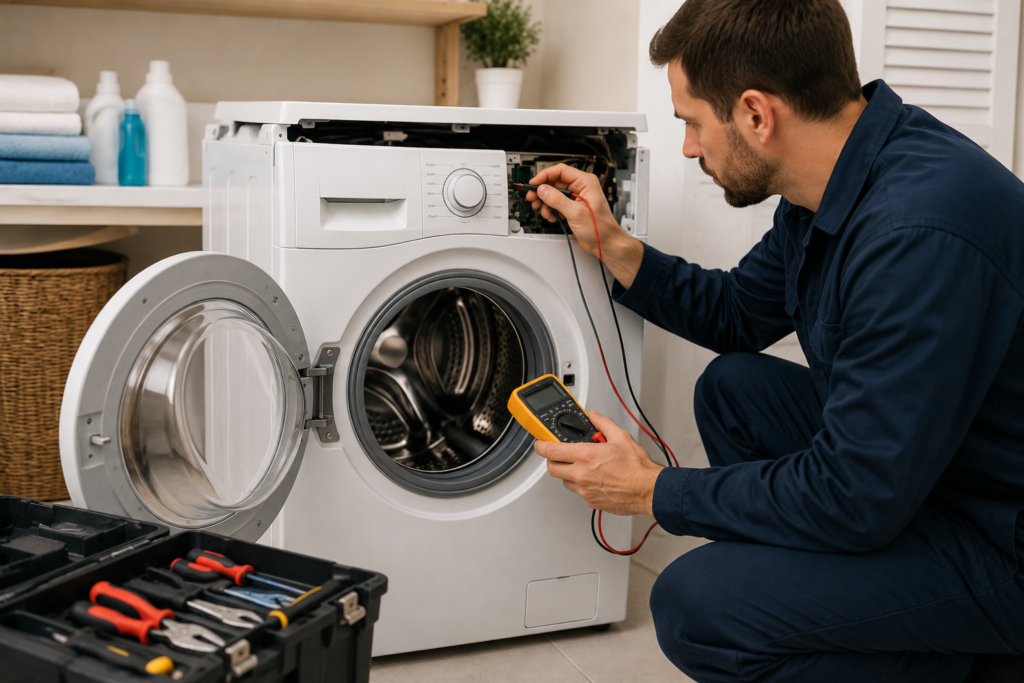
There comes a point where basic troubleshooting stops being practical. If the timer repeatedly freezes at the exact same stage, the issue may involve internal electrical or sensor failures that require testing equipment. Professional repair is usually worthwhile when the washer also shows symptoms like:
- Water remaining inside after draining
- Burning smells
- Loud grinding noises
- Failure to spin properly
- Repeated error codes
- Random restarting during cycles
Control boards, pressure switches, and sensor systems are difficult to diagnose accurately without proper tools. Replacing parts based only on guesswork often becomes more expensive than paying for a correct diagnosis upfront.
Repair costs vary widely depending on the component involved. Minor issues like clogged filters or inlet valve cleaning may cost very little if handled early. Electronic control board replacements are usually far more expensive, particularly on newer smart washers. Age matters too. A machine approaching ten years old with multiple developing problems may not justify major electronic repairs compared to replacement.
Reducing the Chances of Future Timing Problems
Most washer timing problems develop gradually rather than appearing overnight. Small maintenance habits make a noticeable difference in long-term performance. Keeping the drain filter clean prevents many slow-drain issues before they affect the timer. Avoiding overloaded cycles reduces stress on balance sensors and suspension parts. Using the correct amount of HE detergent helps prevent unnecessary rinse extensions and soap buildup inside the machine.
It also helps to pay attention to changes in behavior early. A washer that suddenly starts taking slightly longer than usual is often giving early warning signs before larger problems develop. Many people ignore those small changes until the machine begins freezing completely or leaving water in the drum. By that stage, the repair is often more complicated than it would have been earlier.
A washing machine does not need perfectly identical cycle times to operate normally, though large repeated delays usually mean the system is trying to compensate for something that should not be ignored . Persistent washer cycle timing incorrect symptoms may indicate a failing sensor, control board issue, or internal electrical fault. In many homes, a washer cycle timing incorrect issue starts slowly before becoming more noticeable over time.


1 comment
[…] Washer Cycle Timing Incorrect – Common Reasons […]