Fridge Internal Fan Airflow Weak
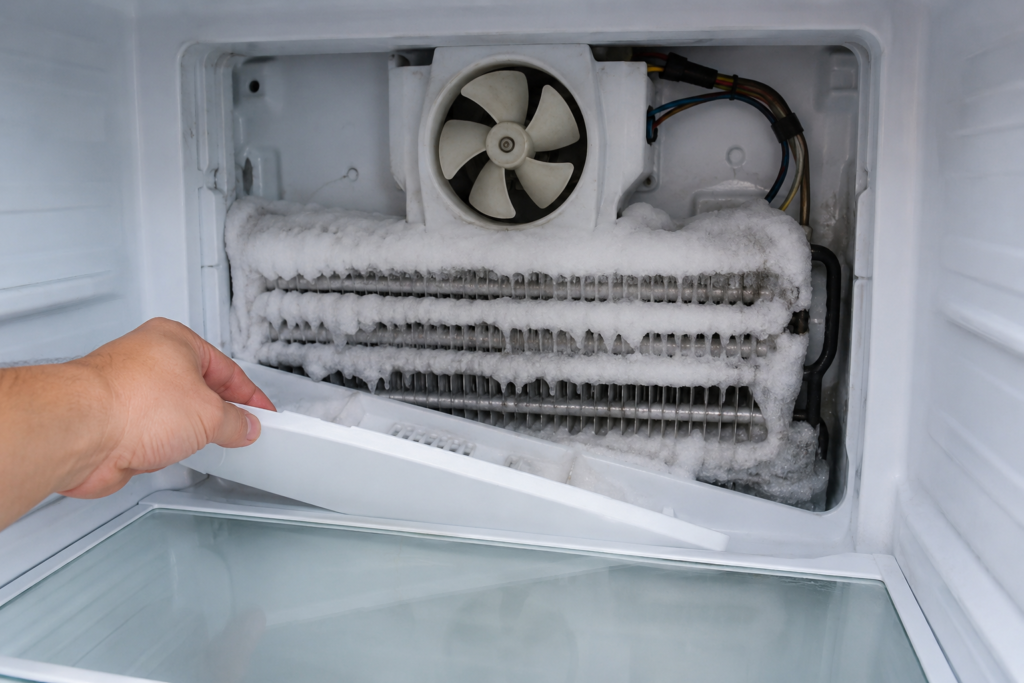
Fridge internal fan airflow weak problems almost always mean cold air isn’t circulating properly through the compartments, and the most common reason is either frost buildup blocking the evaporator area or a gradually failing fan motor. Before assuming the compressor is the problem, check whether your freezer feels cold while the fresh food section runs noticeably warmer. That single observation points directly toward a fridge airflow problem, and it’s one you can often diagnose and resolve without an expensive service call.
🔑 Key Takeaways
- Weak fridge airflow is most commonly caused by frost buildup on the evaporator coils — not a failing compressor.
- If the freezer is cold but the fresh food section is warm, the problem is almost always airflow-related.
- A simple 24-hour manual defrost can confirm whether a defrost system failure is causing the issue.
- Blocked internal vents from overpacking are an often-overlooked but easy-to-fix cause of poor circulation.
- Fan motors degrade gradually — catching early warning signs prevents a small issue from becoming a costly repair.
- If cooling returns after a manual defrost but the problem comes back within weeks, a defrost component needs replacement.
Table of Contents
Why Internal Airflow Is the Heart of Your Refrigerator’s Cooling System
Most homeowners don’t think about internal air circulation until food starts spoiling or temperatures become inconsistent. But airflow is what holds the entire cooling system together. The compressor creates the cold .the evaporator fan is what distributes it.
In a frost-free refrigerator, the evaporator fan pulls air across the evaporator coils and pushes it through internal ducts into both the freezer and fresh food compartments. When that circulation weakens, cold air gets trapped near the evaporator while the rest of the refrigerator gradually warms. The compressor responds by running longer and longer cycles trying to compensate. Energy consumption rises, food quality drops, and the refrigerator keeps running. which is exactly what makes this problem so easy to overlook in the early stages.
The particularly tricky part is that the fan may still be spinning the entire time. A motor turning at reduced speed, fighting ice obstruction, or pushing air through a partially blocked duct still sounds like it’s working normally. Recognizing what weak cold air circulation actually looks like in daily use is what allows you to catch the problem early
Common Signs Your Refrigerator Isn’t Circulating Air Properly

These symptoms tend to appear gradually rather than all at once. If you’re seeing two or more of the following, the internal airflow system is worth investigating. Most fridge internal fan airflow weak problems start gradually before cooling failure becomes obvious.
- Refrigerator section feels warmer than usual while the freezer stays cold
- Food spoiling faster than expected. especially dairy, produce, and leftovers
- Uneven cooling across shelves, with one area cold and another barely chilled
- Weak or barely perceptible air movement near the interior vents
- Compressor running almost continuously without the temperature recovering
- Frost or ice visible around the rear panel inside the freezer
- Grinding, scraping, or intermittent humming sounds from the freezer wall
- Moisture or condensation accumulating inside the fresh food compartment
What this usually means: When the freezer works normally but the refrigerator section runs warm, the cooling system is generating cold air just fine — it’s simply not reaching where it needs to go. That’s a circulation problem, not a refrigerant or compressor failure.
💡 Expert Tips
- Do the manual defrost test first. Before spending money on parts, unplug the refrigerator for 24 hours and monitor whether normal cooling returns. This one step confirms or rules out frost buildup as the cause.
- Check the fan at night. Refrigerator fans are easier to hear and assess in a quiet environment. Intermittent motor faults that disappear during the day often become obvious after hours.
- Don’t overlook the damper. A stuck air baffle between the freezer and refrigerator section is one of the most frequently missed causes of weak cold air circulation in the fresh food compartment.
- Replace gaskets in pairs. If one door seal is worn, the other is likely close behind. Replacing both at the same time saves a repeat repair visit within months.
- Clean coils before diagnosing the fan. Dirty condenser coils create heat buildup that mimics airflow problems. Rule this out first — it takes ten minutes and costs nothing.
The Real Causes of Weak Evaporator Fan Airflow
Most cases of poor refrigerator airflow trace back to a handful of root causes. Understanding each one helps you troubleshoot logically instead of replacing parts by guesswork.
Frost Buildup Blocking the Evaporator and Fan
If one single cause accounts for the majority of weak internal airflow complaints, it’s ice accumulation around the evaporator coils and fan blades. This happens when the automatic defrost system begins to fail .partially or completely. In many cases, a fridge internal fan airflow weak condition starts with minor frost buildup before progressing into a more serious airflow restriction problem.
Under normal operation, the refrigerator runs a scheduled defrost cycle every several hours. A defrost heater melts accumulated frost from the coils, the water drains away, and the cooling cycle continues cleanly. When the heater, thermostat, or defrost timer fails, that cycle either runs too briefly or stops altogether. Frost builds slowly. day after day, week after week until the evaporator compartment is packed solid with ice and the fan blades are physically scraping against it. At that point, airflow doesn’t just weaken. It nearly stops.
Removing the rear panel inside the freezer tells you everything. Light frost on the coils is normal. A solid block of ice covering the entire evaporator assembly is not .and it confirms the defrost system needs attention.
A manual defrost . unplugging the refrigerator and leaving both doors open for 24 hours — will restore airflow temporarily. But if the problem returns within two to three weeks, the underlying defrost components need to be properly tested and replaced. The most commonly failed parts include the defrost heater, defrost thermostat, defrost timer, and in newer models, the adaptive defrost control board
A Gradually Failing Evaporator Fan Motor

Fan motors rarely fail suddenly. They degrade over years of continuous operation, and the symptoms build slowly enough that it’s easy to dismiss early warning signs as normal appliance behavior.
As the motor bearings wear down, the fan begins turning slower than it should. Even a modest reduction in speed produces a noticeable drop in airflow throughout the refrigerator. The motor may still run and sound relatively normal, but it simply isn’t pushing enough air to maintain even temperatures across all compartments. Some motors develop an intermittent fault — running normally for a while, stopping briefly, then restarting — which creates the kind of inconsistent cooling that’s genuinely difficult to diagnose without watching the fan directly over an extended period. If your fridge internal fan airflow weak symptoms continue even after cleaning the vents and manually defrosting the freezer, the evaporator fan motor may be failing internally.
Signs the fan motor is weakening
- Fan starts and stops randomly rather than running steadily through cooling cycles
- Weak, low humming instead of consistent operation
- Motor housing feels unusually hot during a cooling cycle
- Blade spins with noticeable resistance when turned by hand with power off
- Airflow seems slightly better right after a defrost cycle, then gradually weakens again
If the blade rotates smoothly but the motor runs rough or hot, the bearings are worn. If the housing shows discoloration or carries a faint burned smell, replacement is the only practical fix. Fan motors are generally inexpensive parts, and on most refrigerator models, swapping one out is a manageable DIY repair
Blocked Internal Vents and Overpacking
Not every airflow issue involves a mechanical failure. Sometimes the problem is simply how the refrigerator is being used day to day — and this is more common than most people expect.
Refrigerators are engineered with specific internal airflow channels. Cold air exits through vents — typically along the rear wall or near the top of the compartment — circulates across the shelves, and returns through a lower vent back toward the evaporator. Push a large container flush against the rear vent and you’ve disrupted that entire circulation path. The fan keeps running, but the air it’s moving can’t travel where it needs to go.
Large flat containers spanning the full shelf width act like a physical dam across the airflow path. Overpacking immediately after a manual defrost can recreate a warm-section problem within hours, which leads many homeowners to incorrectly conclude that the defrost didn’t help. Leaving two to three inches of clearance from the rear wall and avoiding stacking items tightly against the back often restores temperature balance within a few hours — at zero cost
Damaged Door Seals Creating Chronic Frost Problems
A failing door gasket doesn’t directly block the fan, but it creates conditions that lead to the same result over time. When warm, humid kitchen air enters the refrigerator each time the door closes, that moisture finds the coldest surface inside — the evaporator area — and freezes there. Over weeks and months, this adds to frost accumulation around the fan and coils in exactly the same way a defrost failure does, just through a slower and less obvious mechanism.
Small gasket problems seem harmless but silently drive frost buildup, fan restriction, and compressor overwork simultaneously. Closing the door on a dollar bill is a quick test — if it slides free easily, the seal isn’t providing adequate compression. Replacing a worn gasket is inexpensive and often prevents far more serious repairs down the line
Other Causes Worth Checking
A cracked or warped fan blade reduces airflow even when the motor runs at full strength. Physical impact from ice pressure or long-term vibration can fracture plastic blades, and even a hairline crack disrupts the airflow pattern enough to affect cooling performance noticeably.
The air damper or baffle between the freezer and fresh food section is another overlooked culprit. This component controls how much cold air flows through from the freezer into the refrigerator compartment. If it sticks in a partially closed position — which can happen due to ice, wear, or a failed actuator — the refrigerator section suffers even when the evaporator fan itself is working perfectly.
Dirty condenser coils, while not directly part of the internal airflow system, force the entire refrigerator to work harder. Heavy dust accumulation on the coils creates heat buildup that stresses the compressor and creates temperature instability that can look deceptively like an airflow problem from the outside
⚠️ Safety First
Always unplug the refrigerator before removing any internal panels, touching the fan blade, or inspecting the evaporator area. Even with the power on, pressing the door switch manually to activate the fan keeps the motor live — keep fingers clear of the blade. If you smell burning, see discolored wiring, or notice any signs of electrical damage, stop immediately and call a qualified appliance technician.
How to Diagnose the Problem Without Replacing Parts Blindly
Working through a logical diagnostic sequence saves time, money, and the frustration of swapping components that weren’t the actual cause. If the fridge internal fan airflow weak issue continues after manual defrosting, the fan motor or airflow system likely needs further inspection.
Start by listening. Open the freezer and press the door switch manually to keep the fan running. Strong, steady airflow is normal. A grinding or scraping sound points to ice obstruction around the blades. A weak hum with minimal airflow suggests a failing motor. Complete silence indicates the fan isn’t running at all — which points toward a wiring fault, control board issue, or burned-out motor.
Next, hold your hand near the interior vents with the refrigerator running. Healthy airflow should feel steady and noticeably cool. Barely perceptible movement with the fan audibly running confirms a circulation problem somewhere in the system.
Remove the rear panel inside the freezer. This step is often skipped, but it’s the single most informative thing you can do. Heavy ice covering the evaporator coils tells you immediately that the defrost system has failed. It also tells you that manual defrosting is the next step, and that you’ll need to address the root defrost component afterward to prevent recurrence.
With the power off, spin the fan blade by hand. It should rotate smoothly with no resistance, no wobbling, and no scraping. Any drag indicates a worn bearing. Any wobble suggests a loose or cracked blade. If the blade moves freely but the motor has been running hot, the motor itself is failing internally.
Finally, check the air damper and door seals. The damper should open and close freely without sticking. The gaskets should press firmly against the cabinet with no gaps, cracks, or hardened sections
🔍 Quick Diagnostic Checklist
Work through these checks in order before replacing any parts.
| Check | What to Look For | Likely Cause |
|---|---|---|
| Fan sound | Scraping, humming, or silence | Ice buildup, worn motor, or wiring fault |
| Vent airflow | Weak or barely noticeable | Fan motor or blockage issue |
| Evaporator coils | Heavy ice covering coils | Defrost system failure |
| Fan blade | Resistance or wobble when spun by hand | Worn bearing or cracked blade |
| Air damper | Stuck or not moving freely | Frozen or failed damper actuator |
| Door seals | Dollar bill slides out easily | Gasket wear causing humidity infiltration |
What Homeowners Frequently Get Wrong
A few common mistakes consistently delay diagnosis or make the underlying problem worse. Adjusting the temperature setting repeatedly is the most frequent one. Turning the dial colder when the fridge feels warm just makes the compressor run longer. it doesn’t address the circulation issue causing uneven temperatures in the first place.
Ignoring early fan sounds is another. Scraping, intermittent buzzing, or clicking from the freezer wall are early warnings that ice is building around the fan assembly. Most homeowners dismiss these as routine appliance noise until cooling failure becomes obvious weeks later, at which point the ice buildup is severe.
Perhaps the most costly mistake is replacing the compressor before properly checking the airflow system. A refrigerator with severely restricted cold air circulation can look almost identical to one with a failing compressor from the outside. Many compressors that get replaced were functioning normally — the real problem was a frozen evaporator compartment blocking all airflow
When the Problem Needs a Professional
Many airflow problems are genuinely manageable for a careful homeowner with basic tools. But certain situations are worth handing to a technician with proper diagnostic equipment.
If manual defrosting restores cooling but the problem returns within two to three weeks, the defrost system needs component-level testing not just another defrost cycle. If replacing the fan motor doesn’t noticeably improve airflow, there’s a secondary issue that requires proper diagnosis. If the refrigerator is displaying error codes, running the compressor continuously without temperature recovery, or showing signs of electrical faults, professional assessment is the right call.
A technician can test defrost heater continuity, thermistor resistance, and control board output voltage in sequence — identifying exactly what’s failed rather than working through parts by elimination. For complex defrost system failures or control board issues, that systematic approach is what actually solves the problem efficiently
Keeping Airflow Strong Over the Long Term
Refrigerators that develop chronic airflow problems are almost always the ones that receive the least routine attention. Cleaning condenser coils every three to four months removes the dust accumulation that quietly stresses the entire cooling system. Inspecting door gaskets seasonally catches wear before it accelerates frost buildup. Allowing hot food to cool before placing it inside reduces the steam that contributes to internal frost formation over time. Understanding what causes a fridge internal fan airflow weak problem helps prevent unnecessary part replacement and expensive repair costs.
None of these habits require significant effort, but they have a real cumulative impact on how long the fan motor lasts, how reliably the defrost system operates, and how consistently the refrigerator holds temperature across years of daily use.
Weak internal refrigerator airflow builds quietly slightly warmer shelves, food that doesn’t keep as long, a compressor that seems to run more than it used to. Recognizing those early signals, understanding what they actually mean, and tracing them back to their real source is what turns a potentially expensive repair into a straightforward, manageable fix
🛡️ How to Prevent Weak Fridge Airflow
Most internal airflow problems are preventable with basic routine habits.
Clean Condenser Coils
Every 3–4 months. More often in homes with pets or dusty conditions.
Inspect Door Seals
Check gaskets every season. Replace at the first sign of cracking or gaps.
Don’t Overpack
Keep 2–3 inches of clearance from rear vents at all times.
Cool Food Before Storing
Hot food releases steam that accelerates internal frost buildup over time.
Act on Early Fan Noises
Scraping or intermittent sounds are warnings — not background noise. Address them early.
Schedule Annual Checks
A yearly inspection of the fan, coils, and defrost system catches problems before they escalate.


1 comment
[…] Fridge Internal Fan Airflow Weak […]