Fridge Temperature Overshooting Issue
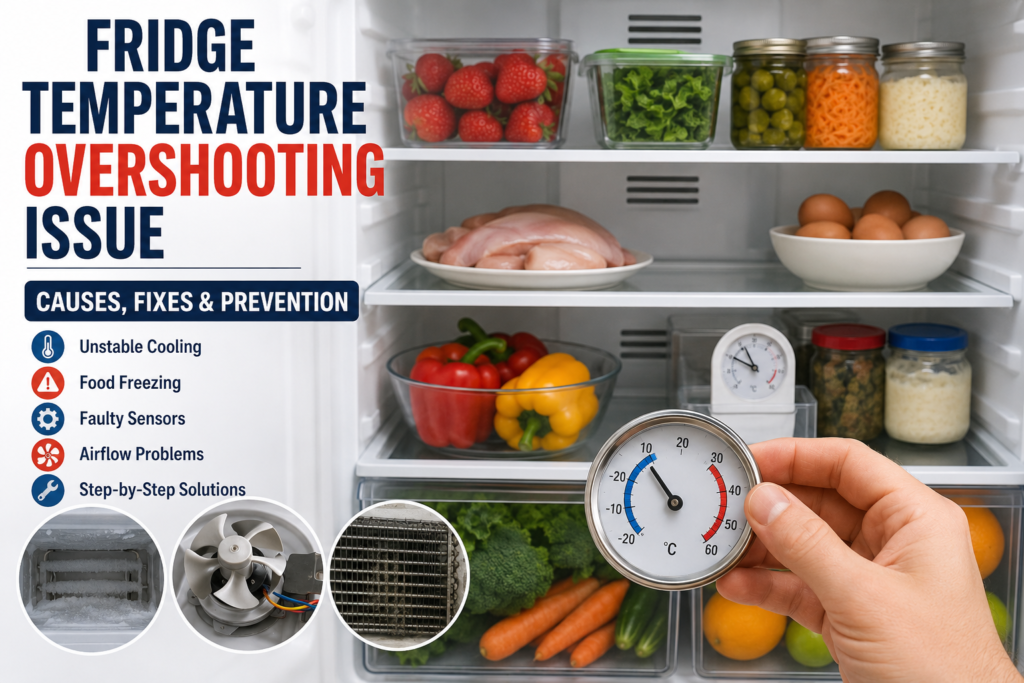
A fridge temperature overshooting issue happens when the refrigerator cools past the target temperature before correcting itself later. Instead of maintaining steady cooling, the appliance swings between overly cold and warmer conditions, which can freeze food unexpectedly or create uneven temperatures across shelves. In many cases, the problem starts with airflow, sensors, or cooling regulation behaving inconsistently rather than a complete system failure
Table of Contents
The Problem Usually Starts Gradually
Most refrigerators do not suddenly become unstable overnight. The early signs are often subtle enough that people ignore them for weeks. A bottle of juice develops slushy ice near the back wall, vegetables freeze in one drawer but not another, or milk feels colder some days than others. Since the refrigerator still appears to be cooling, many homeowners assume everything is working normally.
A fridge temperature overshooting issue tends to become noticeable during regular daily use rather than during a direct inspection. You may wake up one morning and find eggs partially frozen, then notice the appliance behaving normally again later in the afternoon. This inconsistency is what makes the issue frustrating to diagnose. The refrigerator still runs, but the cooling behavior no longer feels predictable.
Modern refrigerators constantly adjust cooling cycles based on temperature readings, airflow conditions, and compressor operation. When one part of that process becomes inaccurate, the entire system can start overreacting. The refrigerator cools longer than necessary, overshoots the desired temperature, then slowly warms back up before repeating the same unstable pattern again.
Why Airflow Problems Create Bigger Temperature Swings
One of the most overlooked causes of refrigerator instability is poor airflow inside the compartment. Refrigerators depend on circulating cold air evenly across shelves. When airflow becomes restricted, temperature sensors stop receiving accurate readings from the overall compartment.
This often happens in real homes where refrigerators are packed tightly with groceries, leftovers, and large containers. A family preparing for the week may load the refrigerator heavily after grocery shopping without realizing they blocked the rear vents completely. Cold air then becomes trapped in certain areas while other sections remain warmer.
The appliance reacts to this imbalance by continuing to cool longer than necessary. Food near the vents freezes first because the refrigerator believes the entire compartment has not cooled sufficiently yet. Meanwhile, the sensor may sit in a slightly warmer area receiving delayed temperature feedback. You can often recognize airflow-related overshooting through uneven cooling patterns such as:
- Ice crystals forming near the back wall
- One shelf feeling much colder than others
- Vegetables freezing while drinks remain normal
- Strong cold airflow concentrated in one section
This type of problem is especially common in French-door refrigerators and bottom-freezer models because they rely heavily on controlled air circulation between compartments
Common Mistakes That Make Cooling Instability Worse
Many refrigerator temperature problems become worse because of everyday habits that seem harmless at first. Inconsistent cooling is often tied to airflow and heat management, so small mistakes can gradually push the refrigerator into wider temperature swings and longer cooling cycles.
Blocking Rear Air Vents
Large containers placed directly against the rear wall can trap cold air and create freezing zones near vents while other areas remain warmer.
Setting the Temperature Too Low
Lowering the setting repeatedly does not improve unstable cooling. It often causes the refrigerator to overshoot even more aggressively and freeze food unnecessarily.
Ignoring Dirty Condenser Coils
Dust buildup underneath the refrigerator increases compressor workload and slowly affects cooling consistency over time.
Storing Hot Food Immediately
Placing steaming leftovers directly inside the refrigerator forces the appliance into aggressive cooling recovery cycles that may temporarily destabilize temperatures.
Temperature Sensors Do Not Always Fail Completely
People often assume a sensor either works or does not work. In reality, refrigerator thermistors commonly become inaccurate gradually. A partially failing sensor may still send readings to the control board, but those readings no longer represent the true internal temperature consistently.
This creates confusing behavior because the refrigerator appears normal part of the time. During lighter cooling cycles, the sensor may perform adequately. Once the compressor runs longer during warmer afternoons or after repeated door openings, the inaccurate readings become more noticeable.
A fridge temperature overshooting issue caused by sensor drift often follows a repeating pattern. The refrigerator cools excessively overnight, then stabilizes temporarily during the day. Since the temperature display may still show normal numbers, many homeowners suspect airflow or thermostat settings first.
Electronic refrigerators depend heavily on sensor communication. If the control board receives delayed or inaccurate information, it cannot regulate compressor timing properly. Cooling continues too long, and the appliance overshoots the target temperature before finally shutting off.
Older refrigerators with mechanical thermostats behave differently. Instead of inaccurate readings, the thermostat may physically stick in the cooling position. This causes extended compressor runtime and wider temperature swings throughout the compartment.
Dirty Condenser Coils Affect Cooling Stability More Than People Think
Many homeowners associate condenser coil cleaning with energy efficiency alone. In reality, dirty coils can directly contribute to unstable refrigerator temperatures. The condenser system removes heat from inside the appliance. When dust, grease, or pet hair covers the coils, heat release becomes less efficient. The refrigerator compensates by running longer cooling cycles, which changes how temperature regulation behaves inside the cabinet.
This extra runtime can gradually create overshooting conditions. Instead of maintaining balanced cooling intervals, the refrigerator starts overcompensating because it struggles to manage heat efficiently.
Homes with indoor pets commonly experience this issue faster because fur collects underneath refrigerators surprisingly quickly. Kitchens with poor ventilation or heavy cooking grease buildup can create similar problems over time. Cleaning condenser coils will not solve every fridge temperature overshooting issue, but it often improves cooling stability significantly when airflow and runtime problems are involved.
Real-Life Behavior Often Reveals the Underlying Cause
The way a refrigerator behaves during daily use usually provides valuable clues about the actual problem. For example, if food freezes only near one vent, airflow imbalance is more likely than a complete control board failure. If temperature swings become worse after loading groceries, restricted circulation may be affecting sensor readings. If the refrigerator behaves unpredictably during hot afternoons but stabilizes overnight, condenser performance or compressor stress may be contributing factors.
One homeowner may notice the refrigerator becoming extremely cold after children repeatedly open the door throughout the evening. Another person may experience unstable cooling only after storing large pots directly against the rear interior wall.
These patterns matter because refrigerator systems react dynamically to changing conditions. The appliance is not simply turning cold randomly. It is responding incorrectly to airflow, temperature feedback, or heat load changes happening inside the system. Understanding how the problem behaves in real life often leads to better troubleshooting decisions than replacing parts immediately
How to Fix a Fridge Temperature Overshooting Issue

The best approach is to start with the simplest possibilities before assuming major component failure. Many refrigerators develop unstable cooling because several smaller issues combine together rather than one catastrophic problem. Begin by checking airflow throughout the compartment. Move food away from rear vents and avoid overpacking shelves tightly. Refrigerators need open circulation paths to maintain balanced temperatures.
Next, inspect the door gaskets carefully. Worn or loose seals allow warm air to enter continuously, forcing the appliance to overcompensate during cooling cycles. In many kitchens, refrigerator doors also become slightly misaligned from years of heavy use, creating small air leaks that go unnoticed.
Cleaning the condenser coils is another important step. Unplug the refrigerator first, then remove dust using a vacuum or coil brush. Many people are surprised how heavily coated the coils become after only a year or two. If the problem continues, monitor actual temperatures using an internal refrigerator thermometer rather than relying only on the digital display. Place the thermometer in different areas for twenty-four hours and observe how much the readings fluctuate. Large swings between freezing and warming temperatures often point toward:
- Faulty thermistors
- Thermostat issues
- Damaged air dampers
- Defrost system problems
- Electronic control board errors
At that stage, electrical testing may be required to confirm which component is behaving incorrectly
Quick Troubleshooting Guide
Before replacing parts or scheduling service, it helps to rule out the most common causes of unstable cooling. Many refrigerators develop temperature overshooting problems because of airflow restrictions, poor maintenance, or minor component issues that gradually affect cooling behavior.
1. Check Internal Airflow
Move large food containers away from rear vents and avoid overcrowding shelves. Poor airflow can trap cold air in certain areas and confuse temperature regulation.
2. Inspect Door Seals
Check the door gasket for gaps, cracks, or loose edges. Warm air entering through damaged seals can force the refrigerator into unstable cooling cycles.
3. Clean the Condenser Coils
Dust-covered coils reduce heat release efficiency and may cause longer compressor runtime. Cleaning the coils often improves cooling stability noticeably.
4. Monitor Actual Temperature
Use a refrigerator thermometer instead of relying only on the digital display. Temperature swings become easier to identify when readings are tracked over several hours.
Some Refrigerators Overcool Because the Defrost System Is Struggling
Defrost problems do not always create obvious ice buildup immediately. In some refrigerators, partial frost accumulation around the evaporator coils slowly interferes with airflow long before thick visible ice appears. When airflow becomes restricted inside the evaporator section, cold air distribution changes throughout the appliance. Certain areas become excessively cold while other sections warm unevenly. The refrigerator attempts to compensate by adjusting compressor runtime, which can create unstable cooling cycles.
A fridge temperature overshooting issue linked to defrost problems often develops gradually over several weeks. At first, you may only notice slight temperature inconsistency. Eventually, airflow weakens enough that freezing and warming patterns become more dramatic. Unusual fan noises, frost near vents, or inconsistent airflow from the refrigerator ducts can sometimes indicate developing defrost system trouble.
Related Refrigerator Troubleshooting Guides
Temperature overshooting problems are often connected to airflow restrictions, cooling failures, thermostat issues, or unstable compressor behavior. If your refrigerator is showing additional symptoms alongside inconsistent temperatures, these detailed guides may help you diagnose the problem more accurately.
When the Problem Requires Professional Diagnosis
There comes a point where basic troubleshooting reaches its limit. If the refrigerator continues overshooting after airflow corrections, coil cleaning, and temperature monitoring, deeper mechanical or electrical problems may exist. Professional service becomes more important when symptoms include:
- Constant compressor operation
- Repeated freezing despite correct settings
- Error codes on the display
- Loud clicking during cycling
- Weak cooling combined with overshooting
- Intermittent shutdown behavior
Modern refrigerators contain multiple interconnected systems, and advanced failures can mimic simpler issues surprisingly well. A failing control board may appear identical to a faulty sensor. Low refrigerant pressure can sometimes imitate airflow imbalance. Accurate diagnosis matters because unnecessary part replacement becomes expensive quickly. Many homeowners replace thermostats or sensors first only to discover the real issue involves sealed system performance or electronic communication problems
Safety and Practical Considerations
Refrigerator troubleshooting is usually safe when limited to cleaning, airflow adjustments, or visual inspection. Still, some cooling problems involve electrical components, moving fan blades, or sealed refrigeration systems that should not be handled casually without proper experience.
Always unplug the refrigerator before cleaning condenser coils or inspecting internal components near wiring and fan assemblies.
Avoid forcing ice buildup off evaporator covers or vents with sharp objects. Damaging hidden refrigerant lines can create expensive sealed-system problems.
Repeatedly lowering the temperature setting is not a reliable fix for unstable cooling. In many cases, it increases freezing problems and places additional stress on the compressor.
If burning smells, clicking sounds, or constant compressor operation appear alongside temperature overshooting, discontinue troubleshooting and arrange professional inspection.
Preventing Future Temperature Instability

Refrigerators generally maintain more stable cooling when airflow and heat management remain consistent. Simple maintenance habits reduce stress on the system and help prevent future overshooting problems. Keeping vents clear, cleaning coils regularly, and avoiding overloaded shelves all support smoother cooling behavior. Allowing hot food to cool slightly before refrigeration also reduces sudden heat stress inside the compartment.
Door habits matter too. Frequent long openings introduce warm humid air repeatedly, forcing the refrigerator into aggressive cooling cycles afterward. Over time, that repeated strain can exaggerate existing sensor or airflow weaknesses. Most refrigerators give early warning signs before major cooling failures occur. Paying attention to changing behavior, unusual frost patterns, or unstable shelf temperatures often prevents more serious repairs later.
A refrigerator does not need perfectly fixed temperatures to work properly, though stable cooling should still feel consistent enough that you stop thinking about it during normal daily life
Frequently Asked Questions
Why is my refrigerator freezing food even when the temperature is set correctly?
This usually happens because of unstable airflow, a faulty temperature sensor, blocked vents, or a damper that is stuck open. Cold air may continue circulating longer than necessary, causing certain areas inside the fridge to become too cold.
Can dirty condenser coils cause a fridge temperature overshooting issue?
Yes. Dirty condenser coils make it harder for the refrigerator to release heat properly. As a result, the compressor may run longer than normal, creating unstable cooling cycles and uneven temperatures inside the appliance.
How do I know if the refrigerator temperature sensor is bad?
A failing sensor often causes random temperature swings, frozen food, inconsistent cooling, or inaccurate display readings. In many cases, the refrigerator works normally for a while before suddenly becoming too cold or too warm.
Is it normal for refrigerator temperatures to fluctuate slightly?
Small temperature changes during normal cooling and defrost cycles are completely normal. Most refrigerators naturally move a few degrees up or down throughout the day. Large swings that freeze food or spoil items usually indicate a problem.
How can I fix a fridge temperature overshooting issue at home?
Start by checking airflow inside the refrigerator, cleaning the condenser coils, inspecting door seals, and making sure vents are not blocked by food containers. If the issue continues, the thermistor, thermostat, fan motor, or control board may need testing.
When should I call a refrigerator repair technician?
You should contact a technician if the refrigerator continues freezing food, temperatures remain unstable after basic troubleshooting, the compressor runs constantly, or electronic errors appear on the display panel


Comments