Refrigerator Loses Cooling After Few Hours
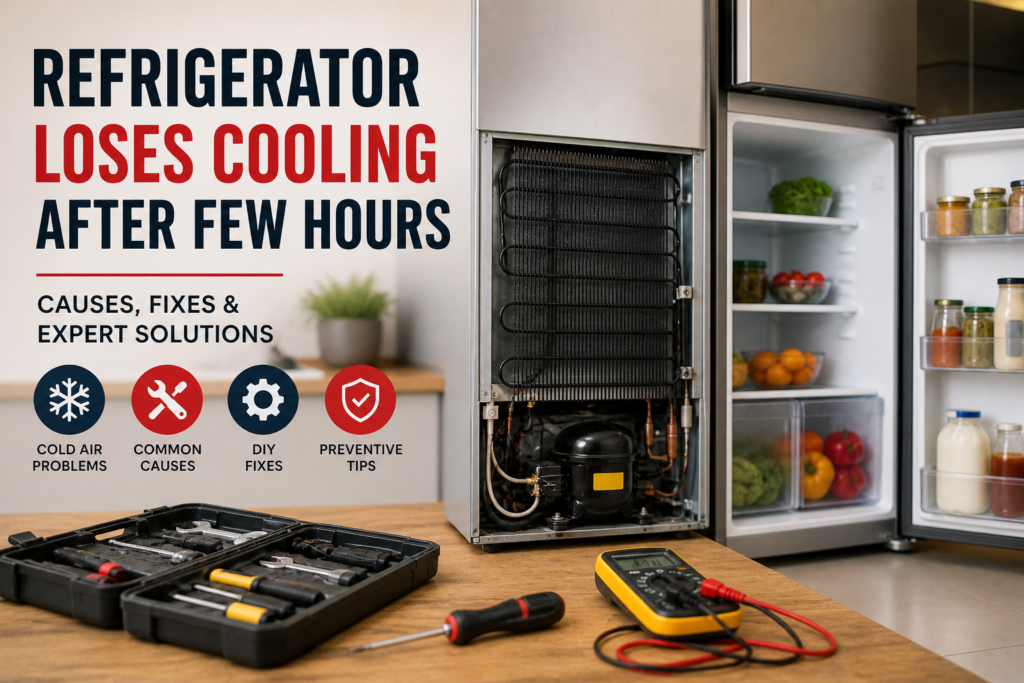
When a refrigerator loses cooling after a few hours, it usually means the system starts normally but something interrupts airflow or shuts down the cooling cycle. In most real-world cases, the issue builds up gradually .often due to frost, heat, or airflow restriction .rather than an instant failure. The solution depends on identifying what stops the cooling after it begins, not what prevents it from starting .This issue becomes serious when your refrigerator loses cooling after few hours repeatedly.
Quick Answer
If a refrigerator loses cooling after a few hours, it usually means airflow is blocked or the system is overheating. The most common cause is frost buildup on the evaporator coils, which stops cold air from reaching the fridge section. In many cases, cleaning coils, checking airflow, or performing a full defrost can temporarily restore cooling.
Table of Contents
Why This Problem Behaves Differently Than a Completely Dead Fridge
A refrigerator that never cools is a very different problem from one that cools and then stops. When you see normal cooling for the first few hours, it tells you something important: the compressor, refrigerant, and basic system are still working.
What’s happening instead is a breakdown in consistency. The refrigerator begins its cooling cycle, lowers the temperature, and then loses its ability to maintain it. This usually points to airflow issues, overheating, or a system that fails mid-cycle .rather than a complete mechanical failure. In real homes, this often shows up overnight. You put food in a perfectly cold fridge, and by morning, it feels warm. even though the freezer may still seem fine. That pattern is a key clue
The Most Common Real-World Cause: Frost Blocking Airflow

In practical repair work, the most frequent reason a refrigerator loses cooling after a few hours is frost buildup on the evaporator coils. These coils sit behind the freezer panel and are responsible for generating cold air.
Here’s how the problem develops in real time. The refrigerator starts cooling normally, and air flows freely from the freezer to the fridge section. But if the defrost system fails, ice slowly forms on the coils. At first, airflow is only slightly restricted, so you don’t notice anything.
After a few hours, the ice thickens enough to block the air passages. Cold air can no longer move into the refrigerator section, even though the freezer still feels cold. From the outside, it looks like the fridge suddenly stopped cooling. but in reality, airflow has been choked off
Pro Tips From Real Appliance Experience
If your refrigerator works again after unplugging but fails within a few days, it almost always indicates a defrost system issue—not a compressor failure. Also, avoid overloading shelves near vents, as even small airflow restrictions can cause uneven cooling over time.
How Air Circulation Affects Cooling More Than You Think
Many people assume cooling depends only on the compressor, but airflow is just as important. A refrigerator does not create cold air separately for each section. Instead, the freezer produces cold air, and a fan distributes it throughout the appliance. If that airflow is interrupted, the refrigerator section warms up quickly .even while the freezer appears normal. This is why a refrigerator loses cooling after a few hours even though some parts still feel cold.
In real kitchens, blocked airflow often comes from simple habits. Overloading the fridge, pushing food against vents, or covering internal air channels can gradually reduce circulation. The system may cope for a while, but once the internal temperature rises, cooling becomes unstable .Many users notice that their refrigerator loses cooling after few hours even though it works perfectly at the start. This usually points to airflow restriction or a component that fails during operation.
When the Problem Is Heat, Not Ice
Another common real-life scenario involves heat buildup rather than frost. Refrigerators release heat through condenser coils, usually located at the back or underneath the unit. If these coils are covered in dust or debris, the heat cannot escape properly.
At first, the fridge works fine. But as the compressor runs longer to compensate, it starts to overheat. Modern refrigerators have safety mechanisms that shut the compressor down when it gets too hot. This is when you notice that the refrigerator loses cooling after a few hours. After some time, the compressor cools down and starts again, repeating the cycle. This creates an inconsistent cooling pattern that confuses many users because the fridge seems to .fix itself. temporarily
The Role of the Evaporator Fan in Real Situations

The evaporator fan is responsible for pushing cold air from the freezer into the refrigerator section. If this fan fails or slows down, airflow becomes weak or stops entirely. In real-world conditions, this issue often shows up as uneven cooling. The freezer may remain cold, but the refrigerator warms up gradually. Sometimes, you may hear unusual noises, or the fridge may become unusually quiet.
What makes this tricky is that the fan can fail intermittently. It might work when the fridge is first turned on and then stop later, causing the refrigerator to lose cooling after a few hours. This kind of behavior can easily be mistaken for a thermostat or compressor issue
Recommended Guides
If your refrigerator loses cooling after a few hours, the issue often relates to airflow, temperature control, or system interruptions. These related guides can help you understand similar appliance behavior and fix problems more effectively.
A Simple Reset That Often Reveals the Truth
One of the most telling tests is a full manual defrost. Unplugging the refrigerator for 24 to 48 hours with the doors open allows all hidden ice to melt completely.
If the refrigerator works perfectly for a few days after this, you’ve confirmed a defrost system problem. The cooling system itself is fine—the issue is that frost keeps coming back and blocking airflow. This is one of the clearest cause-and-effect patterns in appliance troubleshooting. Temporary improvement after defrost almost always points to a deeper issue with the defrost heater, sensor, or timer
Real-Life Example: A Common Household Scenario
A homeowner notices that their refrigerator cools properly in the evening but struggles by morning. Milk feels slightly warm, while frozen items remain solid. They unplug the fridge, clean it, and it works again .for a few days.
This cycle repeats. The key detail here is the temporary fix. The fridge is not permanently broken; it’s slowly losing efficiency due to ice buildup. Each reset clears the problem temporarily, but the underlying issue remains. In many cases like this, replacing a small defrost component solves what appears to be a major problem Learn more about how refrigerators work from
Practical Troubleshooting Steps That Actually Work

When dealing with a refrigerator that loses cooling after a few hours, it’s important to follow a logical process rather than guessing. The goal is to identify what changes between the time it works and the time it stops.
Start with these steps
- Check airflow inside the fridge and freezer. Make sure vents are not blocked by food.
- Clean the condenser coils thoroughly, especially if they haven’t been cleaned in months.
- Listen for the evaporator fan when the fridge is running.
- Perform a full manual defrost and observe how long the fix lasts.
- Inspect door seals for gaps or looseness that could allow warm air inside.
Each of these steps targets a real cause, not just a surface symptom
Step-by-Step Fix for Cooling Loss After a Few Hours
- Unplug the refrigerator for 24–48 hours to remove hidden ice buildup
- Clean condenser coils to prevent overheating
- Check internal vents and remove any food blocking airflow
- Listen for evaporator fan operation inside the freezer
- Inspect door seals to prevent warm air leakage
Why Door Seals and Loading Habits Matter More Than Expected
It’s easy to overlook door gaskets and storage habits, but they play a significant role in long-term performance. A worn or dirty gasket allows warm air to enter continuously, increasing moisture inside the fridge.
That moisture eventually freezes on the coils, contributing to airflow blockage. Over time, this leads to the same issue: the refrigerator loses cooling after a few hours. Similarly, overloading the fridge restricts airflow and traps cold air in certain areas. The system becomes unbalanced, and temperature fluctuations become more noticeable
When the Problem Points to a Bigger Mechanical Issue
If you’ve ruled out airflow, frost, and cleanliness, the issue may involve deeper components like the compressor or refrigerant system. These problems behave differently.
A failing compressor may start normally but lose efficiency as it heats up. A refrigerant leak may allow initial cooling but fail to maintain it over time. These cases are less common but more serious. Unlike airflow or defrost issues, these problems usually require professional tools and expertise. Attempting to fix them without proper knowledge can lead to further damage.
When It’s Time to Call a Technician
There comes a point where troubleshooting at home is no longer enough. If the refrigerator continues to lose cooling after a few hours despite cleaning, defrosting, and checking airflow, it’s time for a professional diagnosis.
You should seek help if
- The compressor repeatedly shuts down or makes loud clicking sounds
- Cooling does not return even after a full defrost
- The fridge shows signs of refrigerant leakage
- Electrical components fail to respond properly
A trained technician can pinpoint the issue quickly and prevent unnecessary part replacements .This problem becomes worse when the refrigerator loses cooling after few hours repeatedly.
Common Mistakes That Make Cooling Problems Worse
- Ignoring early warning signs like weak airflow
- Using sharp tools to remove ice manually
- Overloading the refrigerator and blocking vents
- Skipping coil cleaning for long periods
- Delaying repairs after temporary fixes
Preventing the Problem Before It Starts
Most cases of inconsistent cooling are preventable with basic maintenance and awareness. A refrigerator is not a .set and forget. appliance .it requires occasional care to perform reliably.
Regular coil cleaning, proper food arrangement, and checking door seals can make a significant difference. Keeping the fridge in a well-ventilated space also helps prevent overheating. These small actions reduce stress on the system and keep cooling stable over time .Regular maintenance is essential if your refrigerator loses cooling after few hours, as small issues like dust or blocked vents can gradually affect performance.
Final Thoughts
When a refrigerator loses cooling after a few hours, it’s rarely a mystery once you understand how the system behaves. The issue usually develops gradually, not suddenly, and leaves clear clues if you know where to look. Paying attention to airflow, frost buildup, and heat management can turn a frustrating problem into a manageable fixIf your refrigerator loses cooling after few hours, early diagnosis can save repair cost.


Comments