Fridge Works After Restart but Stops Again: What’s Causing It and How to Fix It
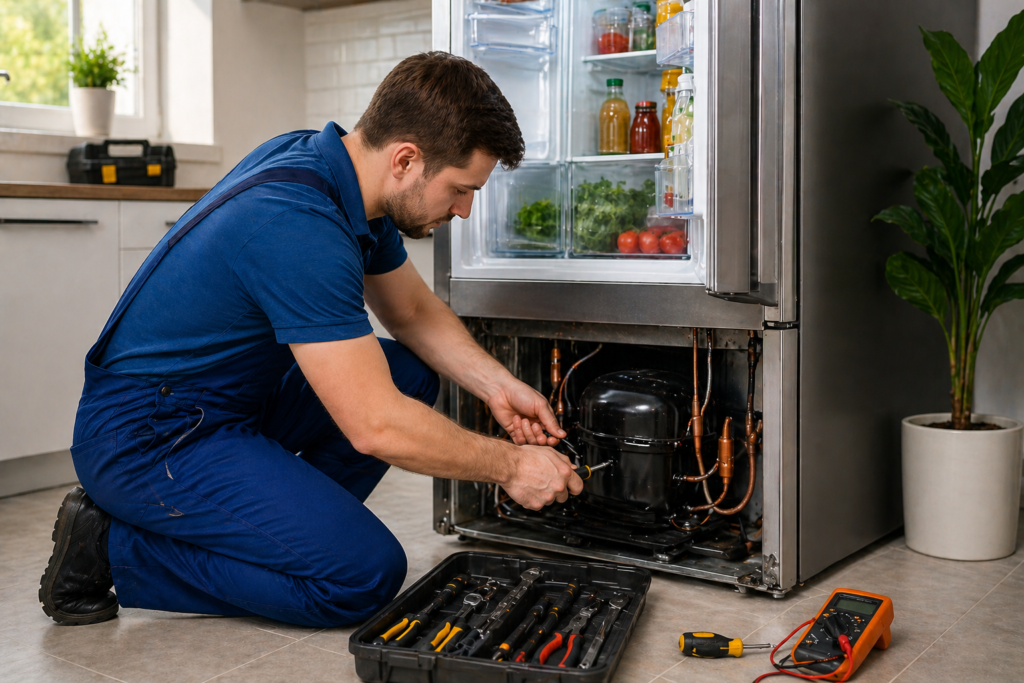
If your fridge works after restart but stops again, it usually means the system can start but cannot sustain normal operation. The restart temporarily clears stress on components, but once heat builds up or load increases, the weak part fails again. Fixing it requires identifying what breaks down after those first few minutes of running
Quick Insight
When a fridge works after restart but stops again, it usually means the system can start but fails under normal operating conditions. This often points to overheating, airflow issues, or weak electrical components.
Table of Contents
What’s Actually Happening Inside the Fridge
A refrigerator doesn’t cool continuously .it cycles. The compressor turns on, pushes refrigerant through the system, and then shuts off once the desired temperature is reached. Fans move air, sensors monitor conditions, and control systems coordinate everything in the background.
When this balance is disrupted, the fridge may still start normally. That’s why many people notice their fridge works after restart but stops again .it’s not completely dead. It simply cannot maintain the cycle once internal conditions stabilize. Think of it like a car that starts fine when cold but stalls once it warms up. The initial function is there, but something fails under normal operating stress
Why This Problem Shows Up in Real Life
In real homes, refrigerators don’t operate in perfect conditions. They deal with dust, fluctuating temperatures, heavy usage, and inconsistent power supply. Over time, these factors wear down parts in subtle ways.
This issue often develops slowly. At first, you might notice slightly weaker cooling or longer running times. Eventually, the fridge begins shutting off unexpectedly. Restarting it seems to. fix. the problem, but only briefly. The key detail here is timing. If the fridge stops after a few minutes or after an hour, that tells you the issue is not random .it’s triggered by heat, load, or electrical strain
The Most Common Causes Behind This Behavior

Repeatedly restarting the fridge can damage internal components over time. If the issue continues, avoid forcing it to run and inspect the root cause.
Instead of listing every possible fault, it’s more useful to understand the types of failures that lead to this pattern.
- Heat Buildup That Triggers Shutdown The compressor generates heat while running. If that heat isn’t released properly, the system shuts down to protect itself. Dirty condenser coils blocked airflow, or a weak fan can all contribute
- Electrical Components That Fail Under Load : Parts like the start relay or control board may work when cold but fail once they heat up. This creates a pattern where the fridge starts, runs briefly, then stops.
- Cooling System Restrictions : Ice buildup or blocked vents can prevent proper airflow. The fridge may technically be running, but cooling becomes uneven, causing the system to shut off prematurely.
- Power Supply Instability : In many homes, voltage fluctuations can interrupt operation. The fridge may restart fine but shut down again when voltage drops or spikes. Each of these causes explains why the fridge works after restart but stops again .it’s not a startup problem, it’s a sustainability problem.
| Symptom | Likely Cause |
|---|---|
| Stops after 5–10 minutes | Overheating compressor |
| Click then stops | Bad start relay |
| Cooling fades slowly | Airflow restriction |
| Random shutdowns | Electrical instability |
How to Read the Signs Before It Stops
A refrigerator usually gives small clues before shutting down completely. Paying attention to these signs can help you narrow down the cause.
You might notice
- A clicking sound from the back before it stops
- The fridge getting unusually warm on the outside
- Cooling that starts strong but fades quickly
- Silence after a short running period
These are not random symptoms. They point to a system that is trying to operate but hitting a limit it cannot overcome
Related Refrigerator Troubleshooting Guides
If your fridge works after a restart but stops again, the problem is often connected to cooling performance, compressor stress, unstable temperatures, or electrical component failures. These related guides can help you identify the exact cause and fix it more effectively.
Step-by-Step Troubleshooting You Can Actually Do

Before assuming a major repair, there are practical steps you can take that often reveal the root issue. First, unplug the fridge and give it a few minutes to reset. When you plug it back in, listen carefully. If you hear a click followed by a short hum and then silence, the start relay is a strong suspect.
Next, check the back or bottom of the fridge. If it feels excessively hot, airflow is likely the issue. Cleaning the condenser coils can make a noticeable difference, especially if dust has built up over months.
Then, open the fridge and look at how it’s loaded. Overpacking can block vents and disrupt airflow. Rearranging items may seem simple, but it often improves performance more than expected. Finally, observe how long it runs before stopping. A shutdown after a few minutes usually points to electrical or compressor issues, while longer run times may suggest airflow or cooling inefficiency
Pro Tips
- Keep at least 2 inches of space behind the fridge for proper airflow.
- Clean condenser coils every 2–3 months.
- If you hear clicking sounds, check the start relay.
- Avoid overloading shelves to maintain airflow.
A Real-Life Example That Explains It Clearly
Consider a small apartment kitchen where the fridge is pushed tightly against the wall. Over time, dust accumulates on the coils, and airflow becomes restricted.
The owner notices that the fridge works after restart but stops again after about 30 minutes. Initially, it seems like a random fault. In reality, the system is overheating. After a restart, it runs while still cool, but once heat builds up, it shuts down again. Cleaning the coils and creating space behind the fridge often resolves this type of issue without replacing any parts .If your fridge works after restart but stops again, it usually points to overheating.
Another Scenario: Electrical Weakness Over Time
In another case, a household experiences frequent power fluctuations. The fridge starts normally each time it’s restarted, but shuts off within minutes.
Here, the problem isn’t airflow .it’s electrical stress. The start relay weakens over time due to inconsistent voltage. It can initiate the compressor, but cannot keep it running. Replacing the relay is a relatively simple fix, but the pattern .start, run briefly, stop .remains the same until the faulty part is addressed .Many users report that their fridge works after restart but stops again after a few minutes.
Common Mistakes People Make
Many people respond to this issue by repeatedly restarting the fridge. While it seems logical, it doesn’t address the underlying cause. Another mistake is ignoring airflow. People often focus on electrical problems while overlooking something as simple as blocked vents or dirty coils.
There’s also a tendency to assume the worst immediately, like a failed compressor. While that’s possible, many cases are resolved with much simpler fixes. Understanding how the system behaves helps avoid unnecessary repairs and frustration
Safety and Practical Awareness
Avoid repeatedly restarting the fridge if it keeps shutting off. This can increase stress on the compressor and electrical components, potentially causing permanent damage.
A fridge that repeatedly shuts down isn’t just inconvenient .it can lead to food spoilage and higher energy use. It also puts extra strain on components, which can accelerate wear.
If you notice strong heat, burning smells, or very frequent stopping, it’s best not to keep forcing restarts. Letting the system cool down and investigating the cause is safer than pushing it to keep running. Electrical issues, in particular, should be handled carefully. If you’re unsure, it’s better to step back than risk further damage
When It’s Time to Call a Technician
Some issues are straightforward, but others require proper tools and testing. If the fridge continues to stop shortly after restarting despite cleaning and basic checks, professional diagnosis becomes necessary.
Signs that you need expert help include:
- The compressor gets extremely hot
- The fridge stops within minutes every time
- No consistent sound or operation pattern
- The problem worsens over time
A technician can test components individually and confirm whether the issue lies in the compressor, relay, or control system
When to Call a Technician
If your fridge stops within minutes after restarting or becomes extremely hot, it likely needs professional repair. Compressor and electrical issues should be handled with proper tools.
Preventing This Problem from Coming Back
Most cases of this issue are preventable with basic maintenance and awareness. Refrigerators are reliable, but they still depend on proper conditions to function well.
Keeping the coils clean, allowing space around the fridge, and avoiding overloading go a long way. In areas with unstable electricity, using a stabilizer can also protect internal components. These small habits reduce stress on the system and help it maintain stable operation over time .Understanding why a fridge works after restart but stops again helps diagnose the issue faster.
A Clear Way to Think About the Problem
When a fridge works after restart but stops again, it’s not failing randomly. It’s showing you exactly when and why it struggles .usually after heat builds up or load increases. Instead of focusing only on the restart, pay attention to what happens between start and stop. That short window often reveals more about the problem than the shutdown itself
A refrigerator that behaves this way isn’t beyond repair .it’s simply signaling that one part can no longer keep up with normal operation
Need More Refrigerator Repair Help?
Explore more refrigerator troubleshooting guides covering cooling failures, compressor problems, temperature issues, airflow faults, and electrical component failures.
Author
Muhammad Khalid
Founder of FixAppLab • Appliance Troubleshooting Specialist
Muhammad Khalid explains real appliance problems in simple language, helping users understand how refrigerators and washing machines behave and how to fix common issues effectively.


Comments