Refrigerator Trips Circuit Breaker: 9 Easy Fixes and Complete Troubleshooting Guide
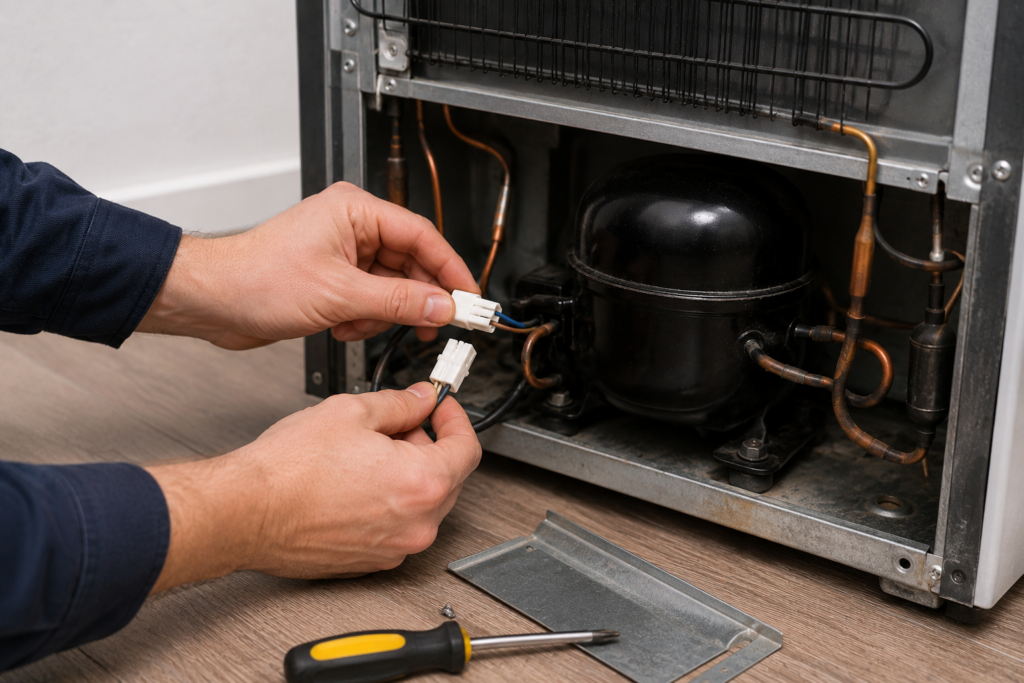
When a refrigerator trips a circuit breaker, it’s easy to assume the worst. a dead compressor, an expensive repair, or a full replacement. In most cases, though, the problem is more manageable than it first appears. The breaker tripping is actually a good sign in one sense: the electrical system is working as designed, cutting power before a dangerous overload can damage wiring or start a fire. The real job is figuring out why it’s happening.
Whether the breaker pops the moment you plug in the fridge or cuts out after running for 30 minutes, the timing alone narrows down the cause significantly. This guide walks through every common reason a refrigerator trips a circuit breaker, how to diagnose each one safely, and what it takes to fix it for good
Table of Contents
Start Here: What the Trip Timing Tells You
Before touching any components, pay attention to exactly when the breaker trips. This single observation is the most useful diagnostic clue you have.
- Trips immediately on plug-in — Points to a hard electrical fault: shorted power cord, damaged internal wiring, failed compressor with shorted windings, or a faulty control board.
- Trips a few seconds after startup — The compressor is struggling to start and drawing excessive current. A defective start relay or a seized compressor motor is the likely cause. Listen for a click-buzz-click pattern repeating.
- Trips 20 to 45 minutes into the run cycle — This timing strongly suggests the defrost heater. Most refrigerators activate a defrost cycle after a set period of compressor run time. A shorted heater trips the breaker the moment that cycle kicks on.
- Trips randomly throughout the day — Harder to pin down. Could be a weak aging breaker, a shared circuit that’s overloaded, moisture in the wiring, or an intermittently shorting fan motor.
Write down when the trip occurs before you do anything else. That information is worth more than any single test
Quick Troubleshooting Guide
| Symptom | Most Likely Cause |
|---|---|
| Trips immediately after plugging in | Power cord, wiring fault, or shorted compressor |
| Trips a few seconds after startup | Defective start relay or compressor issue |
| Trips after 20–45 minutes | Shorted defrost heater |
| Trips randomly throughout the day | Weak breaker, moisture, overloaded circuit, or fan motor fault |
The Most Common Causes of a Refrigerator Trips Circuit Breaker Problem
Overloaded Circuit
This is the most overlooked cause, and it’s also the easiest to rule out. Refrigerators are designed to operate on a dedicated circuit. most manufacturers actually require it in their installation instructions. If a microwave, toaster, coffee maker, or any other high-draw appliance shares the same breaker, the combined load can push past the circuit’s 15 or 20 amp limit.
To test this: unplug everything else on that circuit, reset the breaker, and run the refrigerator alone. If it runs without tripping, you’ve found your answer. The fridge itself is fine. the circuit is just carrying too much.
Faulty Compressor
The compressor is the most electrically demanding part of the refrigerator. It pulls a significant current surge every time it starts, and as it ages, the internal motor windings can develop shorts or mechanical resistance that cause it to draw far more power than normal.
Signs of a failing compressor:
- Repeated click-buzz-click sounds as the overload protector kicks out
- Compressor shell that feels extremely hot after just a few minutes
- Refrigerator not cooling despite the compressor attempting to run
- Breaker trips consistently right at startup
With the refrigerator unplugged, a multimeter can confirm whether the compressor windings have shorted to the casing. Continuity between a compressor terminal and the metal body means the winding is grounded. and the compressor likely needs replacement. A Refrigerator Trips Circuit Breaker issue is commonly linked to a failing compressor that draws excessive current during startup.
Defective Start Relay
The start relay is a small, inexpensive component that helps the compressor motor start cleanly. When it fails, the compressor labors through every startup attempt instead of firing up efficiently, drawing excessive current in the process.
Shake the relay after removing it. a rattle inside means the internal piece has broken loose and the relay is done. Burn marks or a burnt smell confirm the same. This is one of the cheapest repairs in refrigerator troubleshooting, and it’s worth checking early.
Shorted Defrost Heater
No-frost refrigerators use a heating element to melt frost off the evaporator coils during timed defrost cycles. When this heater develops an internal short, it creates an unintended ground path that trips the breaker the moment the defrost cycle activates.
The 20-to-45-minute trip timing is the key clue here. Secondary signs include heavy frost buildup on the evaporator coils and water pooling inside the refrigerator compartment.
disconnect the defrost heater wires and use a multimeter to check resistance between each heater terminal and the heater’s metal casing. Any continuity reading where there should be none confirms a shorted heater that needs replacing
Damaged Power Cord

The power cord takes more abuse than most people realize. pinched behind the appliance, exposed to floor heat, or in some homes, damaged by rodents. Exposed conductors can arc against each other or against grounded metal, producing a hard fault that trips the breaker immediately.
Pull the refrigerator away from the wall and inspect the full length of the cord: look for cuts, crushed sections, melted insulation, or any discoloration at the plug end. If there’s visible damage, replace the cord before reconnecting anything
Fan Motor Faults
Both the condenser fan at the rear of the refrigerator and the evaporator fan inside the freezer compartment can develop winding failures as they age. A motor with a shorted winding draws too much current. A mechanically seized motor creates the same problem as the electrical system tries and fails to spin it.
With the refrigerator unplugged, check whether each fan blade spins freely by hand. Any stiff resistance suggests a seized motor. Unusual buzzing or grinding during normal operation are early warning signs worth catching before a full failure occurs
Moisture in the Electrical System
Water and refrigerator wiring are in uncomfortably close proximity. A blocked defrost drain that overflows, condensation buildup, or high ambient humidity can allow moisture to reach wiring connectors, terminal strips, or the control board. Wet conductors create partial ground faults that show up as intermittent, unpredictable breaker trips.
Check the defrost drain pan for overflow, look for internal water pooling, and inspect wiring connectors for corrosion or water residue. Sometimes simply allowing components to dry out. after the moisture source is addressed. stops the tripping entirely
You May Also Like
If your refrigerator keeps tripping the circuit breaker, these related troubleshooting guides may help you identify the root cause and fix the issue faster:
Weak or Failing Circuit Breaker
It’s worth remembering that the refrigerator isn’t always the problem. Breakers wear out over decades of use. The internal bimetal strip becomes hypersensitive and starts tripping at current levels that should be well within its rated capacity.
A breaker that feels warm at rest, trips under light loads it should handle easily, or feels physically loose and hard to reset is a strong candidate for replacement. An electrician can test it directly. If the breaker fails at a load the refrigerator should comfortably handle, replacing the breaker solves the problem without any appliance repair needed. In some cases, a Refrigerator Trips Circuit Breaker complaint is caused by the breaker itself rather than the refrigerator.
⚠ Safety Note
Always unplug the refrigerator before inspecting internal components, wiring, fan motors, or electrical connections. Never bypass a circuit breaker or replace it with a higher-rated breaker, as doing so can create a serious fire hazard. If you notice sparks, smoke, melted wiring, or a burning smell, disconnect power immediately and seek professional service.
If your Refrigerator Trips Circuit Breaker repeatedly, avoid resetting the breaker multiple times without diagnosing the root cause.
How to Troubleshoot a Refrigerator Trips Circuit Breaker Step by Step

Work through these in order. Skipping ahead often leads to misdiagnosis. If your Refrigerator Trips Circuit Breaker repeatedly, following a systematic troubleshooting process can help identify the exact fault more quickly.
- Unplug the refrigerator and reset the breaker. Confirm it holds with nothing connected.
- Inspect the power cord along its full length before reconnecting anything. Replace it if there is any visible damage.
- Eliminate circuit load. unplug all other appliances on the same circuit and run only the refrigerator.
- Note the trip timing precisely. Immediate versus 20–45 minutes versus random tells you where to look next.
- Listen at startup. a click-buzz-click pattern points to the start relay or compressor. A clean startup with a later trip points to the defrost heater or a fan motor.
- Test components with a multimeter (refrigerator unplugged). Check the start relay for continuity, the defrost heater terminals against its metal casing, and compressor windings against the compressor body. Continuity where there should be none confirms a short.
- Spin the fan blades by hand. any stiff mechanical resistance points to a seized motor.
When to Stop and Call a Professional
Some causes are safe to investigate yourself. Others involve components and voltages that require professional handling.
Call an appliance technician if:
- There is a burning smell from inside the refrigerator or at the outlet
- The compressor shows shorted windings on a multimeter test
- The control board has visible burn marks or corrosion
- The breaker continues tripping on a dedicated circuit with no obvious component fault
Call a licensed electrician if:
- The outlet shows arcing damage or burn marks
- The circuit breaker itself shows signs of overheating or premature failure
- The home has older wiring that has not been recently inspected
Never ignore a burning smell or sparking near the cord or outlet. Unplug the refrigerator immediately and arrange service before reconnecting it
How to Prevent a Refrigerator Trips Circuit Breaker Problem
Routine maintenance reduces the chance of a refrigerator tripping a circuit breaker significantly.
Clean the condenser coils at least twice a year. Dirty coils force the compressor to run longer and work harder, increasing its current draw and the risk of overheating over time. Inspect the power cord and door gaskets annually. a weak door seal quietly raises compressor run time and electrical demand without any obvious symptoms.
Always plug the refrigerator directly into a properly grounded, dedicated outlet. Extension cords are not a permanent solution, even heavy-duty ones, because they introduce resistance that increases current draw under load.
Address moisture and water leak issues promptly. Condensation near electrical components is one of the more insidious causes of intermittent breaker trips. easy to overlook, harder to diagnose once it becomes persistent.
If the refrigerator is more than 15 years old and has experienced compressor or motor issues, factor that age honestly into repair decisions. An aging compressor that has partially failed will continue tripping breakers even after other components are replaced
Prevention Tips
- Clean condenser coils every 6 months to reduce compressor strain.
- Use a dedicated outlet whenever possible.
- Inspect the power cord periodically for damage or wear.
- Fix water leaks and condensation issues before moisture reaches electrical parts.
- Keep adequate airflow around the refrigerator to prevent overheating.
- Address unusual clicking, buzzing, or overheating symptoms early.
Regular maintenance and early diagnosis can help prevent a Refrigerator Trips Circuit Breaker problem from returning in the future.
The Bottom Line
A Refrigerator Trips Circuit Breaker problem is almost always a diagnostic problem before it becomes a repair problem. before it’s a repair problem. The timing of the trip tells you where to look. Start with the simplest checks .circuit load, power cord condition, and the breaker itself. before moving to internal components. Work through the start relay, defrost heater, fan motors, and compressor in order based on what the timing and symptoms suggest.
Most causes behind a refrigerator tripping a circuit breaker are repairable without replacing the entire appliance. Catching the problem early, staying methodical, and not skipping the basic checks first will get most refrigerators back running safely without unnecessary expense.
About the Author
Muhammad Khalid is the founder of FixAppLab and an appliance troubleshooting writer focused on helping homeowners diagnose and solve common refrigerator, washing machine, and dryer problems. Through detailed repair guides, practical troubleshooting steps, and easy-to-follow explanations, he aims to make appliance repair information accessible to everyone.
FixAppLab publishes educational content covering appliance maintenance, troubleshooting, repair costs, cooling issues, drainage problems, electrical faults, and performance-related appliance concerns.


Comments