13 Quick Solutions for Dryer Not Turning On But Has Power
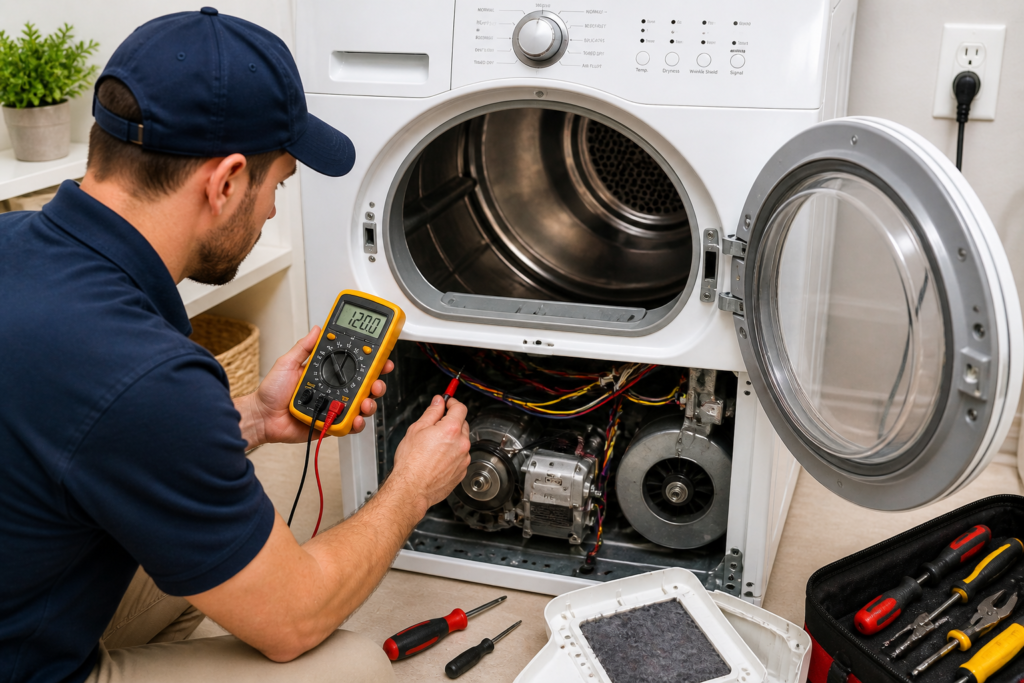
A dryer not turning on but has power usually means electricity is reaching the machine, but something is preventing the motor from running. This problem often happens due to a safety switch issue, restricted airflow, or a failed internal component that blocks the dryer from starting even though it appears to be working. The solution depends on identifying which part is interrupting the start cycle and fixing it step by step
Table of Contents
Understanding This Problem in Real Life
When people say their dryer not turning on but has power, they’re usually describing a confusing situation. The control panel lights up, the drum light may come on, and sometimes the buttons even beep or respond. Yet when the Start button is pressed, nothing happens. No movement, no spinning, and often no sound at all.
This behavior is important because it tells you the dryer is not completely dead. Power is reaching the control system, but the machine is refusing to engage the motor. That refusal is almost always intentional . built into the dryer’s safety design.
Modern dryers are not designed to run unless certain conditions are met. If even one safety signal is missing, the machine will simply do nothing. This is why the issue often feels like the dryer is ignoring you
Why a Dryer Can Have Power but Still Not Start
At a glance, it seems like if a dryer has electricity, it should run. But dryers actually split power into different functions. One part of the circuit powers the lights and control panel, while another part powers the motor and heating system.
So when your dryer not turning on but has power, it usually means one of two things: either the motor circuit isn’t receiving full power, or a safety component is blocking it. In real-world cases, the problem often comes down to a failed signal. The dryer is waiting for confirmation . like a closed door or a safe temperature . and when it doesn’t receive it, it refuses to start
Step-by-Step Check to Identify the Exact Problem
Once you understand how the dryer behaves, the next step is to narrow down the cause logically. Instead of replacing parts randomly, follow this step-by-step approach to pinpoint the failure.
- Check door response: Open and close it firmly. No click usually means a faulty switch.
- Observe panel behavior: If lights work but Start does nothing, signal failure is likely.
- Reset power fully: Even partial breaker trips can block motor operation.
- Listen carefully: Silence = switch/fuse issue, humming = motor problem.
- Think about recent usage: Overheating or long cycles often point to airflow problems.
This method helps avoid unnecessary repairs and leads you directly to the root cause.
The Door Switch: A Small Part That Stops Everything

One of the most common reasons behind a dryer not turning on but has power is a faulty door switch. This tiny component tells the dryer whether the door is securely closed. If it fails, the dryer behaves as if the door is open, even when it isn’t. In real use, this often shows up as complete silence. You press Start, and absolutely nothing happens. No hum, no click, no attempt to run. It can feel like the button isn’t working at all.
A quick way to test this is by opening and closing the door firmly and listening for a clicking sound. If the click is missing or inconsistent, the switch may not be engaging properly. Sometimes, pressing the switch manually while starting the dryer can confirm the issue
Thermal Fuse: The Silent Shutdown Trigger
Another very common cause of a dryer not turning on but has power is a blown thermal fuse. This component is designed to shut down the dryer completely if it overheats. It doesn’t warn you or fail gradually . it simply cuts off the ability to start. What makes this tricky is how sudden it feels. One day the dryer works fine, and the next day it refuses to start. There’s no noise, no spinning, and no clear sign of damage.
In most real-life situations, the fuse doesn’t fail on its own. It blows because airflow inside the dryer is restricted. Lint buildup in the vent system, a clogged filter, or a blocked exhaust can cause overheating. Replacing the fuse without fixing airflow usually leads to the same problem happening again

⚠️ Safety Note
Never bypass the door switch, thermal fuse, or any other safety device just to make your dryer start. These components are designed to protect both the appliance and your home from overheating, electrical faults, and potential fire hazards.
If a thermal fuse has blown, don’t simply replace it and continue using the dryer. In most cases, the fuse fails because of an underlying problem such as a clogged vent, restricted airflow, or excessive heat buildup. Failing to correct the root cause can cause the new fuse to fail again.
Before replacing any parts, always unplug the dryer from the power outlet and allow it to cool completely. If you’re unsure how to test electrical components safely, it’s best to contact a qualified appliance technician.
Start Button and Control Response Issues
Sometimes the issue is simpler than expected. The dryer has power, but the Start button itself isn’t sending the signal. This is especially common in older machines or units that see heavy daily use.
You might notice that other buttons respond normally, but pressing Start does nothing. In some cases, holding the button longer or pressing harder temporarily works, which is a sign the internal contacts are wearing out. This type of problem develops gradually. At first, the dryer may start after multiple attempts, but over time, it stops responding completely. When this happens, the start switch usually needs replacement
When Power Isn’t Actually Full Power
A situation many people overlook is partial power supply. The dryer may appear to have power because lights and controls are working, but the motor circuit isn’t getting enough voltage. This often happens when a circuit breaker is partially tripped. It doesn’t fully shut off electricity, but it disrupts the higher-power side needed for the motor. That’s why the dryer looks alive but won’t run.
Resetting the breaker completely . turning it off and then back on . can sometimes solve the issue instantly. It’s a simple step, but surprisingly effective in many cases
Related Dryer Troubleshooting Guides
If you’re troubleshooting a dryer that has power but won’t turn on, these related guides may help you diagnose similar problems and find the right solution.
Mechanical Problems That Prevent Startup
In some dryers, internal mechanical failures can stop the machine from starting altogether. A broken drive belt is a good example. In certain models, if the belt snaps, the dryer won’t allow the motor to run. This is a built-in protection feature. Running the motor without the belt can cause further damage, so the system blocks operation entirely.
In real situations, you might hear a faint click when pressing Start, but the drum never moves. Unlike electrical issues, this one requires opening the dryer to inspect the belt condition
Motor Problems: When the Dryer Tries but Fails
A failing motor behaves differently from other issues. Instead of complete silence, you may hear a humming sound when trying to start the dryer. It’s as if the machine is attempting to run but can’t fully engage.
This often happens when the motor is overheating or wearing out internally. Sometimes, letting the dryer cool down for 20-30 minutes allows it to start again briefly. However, this is usually temporary. Over time, the motor struggles more frequently until it stops working altogether. When a dryer not turning on but has power and you hear humming, the motor is often the root cause
Control Board and Electronic Failures
In newer dryers, the control board acts as the brain of the entire system. When it malfunctions, the dryer can behave unpredictably. You might see the display working normally, but pressing Start does nothing. In some cases, the dryer responds inconsistently . working one day and failing the next.
Electrical surges, moisture exposure, or internal wear can damage the control board. While resetting the dryer by unplugging it for a few minutes can sometimes help, persistent issues usually require replacing the board
Real-Life Scenario: Sudden Failure After Heavy Use
Imagine running multiple back-to-back loads of laundry. The dryer works fine for hours, but suddenly it refuses to start again. The lights are on, everything looks normal, but it won’t run.
This is a classic thermal fuse situation. The extended use causes heat buildup, especially if airflow is already restricted. The fuse blows as a safety measure, and the dryer shuts down completely. Without understanding this behavior, many people assume the dryer has a major electrical problem. In reality, it’s often just a response to overheating
Real-Life Scenario: Intermittent Start Problems
Another common situation involves a dryer that sometimes starts and sometimes doesn’t. You press Start, and nothing happens . but after a few tries, it suddenly works.
This usually points to a failing start switch or control issue. The inconsistency is the key clue. Unlike a blown fuse, which stops the dryer completely, this type of problem gets worse over time. Catching it early can prevent being completely stuck later when the dryer refuses to start at all
A Simple Troubleshooting Approach That Works
Instead of guessing, it helps to follow a logical process when dealing with a dryer not turning on but has power:
- Check if the door is fully closing and the switch clicks
- Reset the circuit breaker completely
- Try pressing and holding the Start button
- Listen for any sound (click, hum, or silence)
- Consider airflow issues if the problem appeared suddenly
This approach narrows down the issue quickly without unnecessary part replacements
Signs Your Dryer Has Power but Won’t Start
When a dryer has power but refuses to start, it usually gives warning signs before the problem becomes serious. Recognizing these symptoms can help you narrow down the cause much faster and avoid replacing parts unnecessarily.
- The control panel lights up normally.
- The interior drum light turns on.
- Pressing the Start button does nothing.
- You hear a clicking or humming sound but the drum never spins.
- The dryer suddenly stopped after several loads.
- The display works, but the motor never starts.
- The dryer occasionally starts after several attempts.
- The dryer stopped working after overheating.
If your dryer shows one or more of these symptoms, the issue is usually related to the door switch, thermal fuse, start switch, motor, or power supply rather than a complete electrical failure.
Common Mistakes That Delay the Fix
Many dryer issues become harder to fix because of incorrect assumptions. Avoiding these common mistakes can save both time and money.
- Replacing the thermal fuse without fixing airflow problems
- Ignoring a partially tripped circuit breaker
- Assuming the dryer is completely broken when it’s a safety lock issue
- Overlooking the door switch because the door “looks” closed
- Continuing to use the dryer after overheating signs
Most problems repeat because the root cause is not addressed — especially airflow and heat buildup.
Common Mistakes That Make the Problem Worse
One of the biggest mistakes people make is replacing parts without understanding the cause. For example, changing a thermal fuse without cleaning the vent system often leads to repeated failure.
Another common issue is ignoring airflow. A dryer that overheats once is likely to do it again if the root cause isn’t fixed. Lint buildup is often hidden inside ducts, not just in the filter. Overlooking simple things like a partially tripped breaker or a loose door latch can also lead to unnecessary repairs
When It’s Time to Call a Technician
While many issues can be diagnosed at home, some situations require professional help. If the motor needs replacement, or the control board is suspected, it’s usually best handled by a technician.
Electrical testing, internal wiring checks, and complex part replacements can be risky without proper tools and experience. If the dryer shows no clear signs after basic troubleshooting, getting expert help saves time and prevents further damage
Preventing This Problem in the Future
Most cases of a dryer not turning on but has power are preventable with basic maintenance. Regularly cleaning the lint filter and ensuring proper airflow can significantly reduce the risk of overheating.
Avoid overloading the dryer, as it puts extra strain on both the motor and airflow system. Also, occasionally checking the vent hose and exhaust outlet helps keep everything running efficiently. Simple habits like these not only prevent sudden failures but also extend the overall life of the dryer
Frequently Asked Questions
Why is my dryer not turning on but has power?
When a dryer not turning on but has power, it usually means electricity is reaching the control panel but not the motor. This often happens due to a blown thermal fuse, faulty door switch, or a problem with the start button. In many real-life cases, airflow issues cause overheating, which triggers a safety shutdown. Checking these components step by step helps identify the exact cause quickly.
How do I fix a dryer that has power but won’t start?
To fix a dryer not turning on but has power, start with simple troubleshooting. Make sure the door is fully closed and the switch is working. Reset the circuit breaker, even if it doesn’t look tripped. If the issue appeared suddenly, check the thermal fuse and airflow system. If the dryer makes no sound at all, the start switch or control board may need replacement.
Can a blown thermal fuse stop a dryer from starting completely?
Yes, a blown thermal fuse is one of the most common reasons a dryer not turning on but has power. When this fuse fails, it cuts off power to the motor as a safety measure. The dryer will appear normal (lights and display working), but it won’t start at all. This usually happens due to overheating caused by lint buildup or blocked vents.
Why does my dryer have lights but no response when I press Start?
If your dryer not turning on but has power and shows lights but no response, it often indicates a failed door switch or start switch. The dryer is not receiving the signal to begin operation. In some cases, it can also be a control board issue or a partially tripped breaker that isn’t supplying full power to the motor.
Is it worth repairing a dryer that won’t start but has power?
In most cases, repairing a dryer not turning on but has power is worth it, especially if the issue is a fuse, switch, or belt. These are relatively inexpensive fixes. However, if the motor or control board is faulty and the dryer is older, the repair cost may be higher. Evaluating the age of the appliance and repair cost helps decide whether to fix or replace it
Final Thoughts
A dryer that has power but won’t start is usually protecting itself from a deeper issue rather than failing completely. Once you understand how the system behaves, the problem becomes much easier to diagnose. With the right approach, most causes can be identified quickly without unnecessary guesswork
About the Author
Muhammad Khalid
Founder of FixAppLab • Appliance Troubleshooting Expert
Muhammad Khalid is the creator of FixAppLab, a knowledge-driven platform focused on real-world appliance troubleshooting. His work explains how dryers, washing machines, and refrigerators behave in everyday situations — and why problems occur beyond basic theory.
His content is built on practical understanding, helping homeowners diagnose issues like airflow failures, electrical faults, and mechanical wear — without relying on guesswork.


1 comment
[…] Dryer Not Turning On But Has Power – Common Causes & Fixes […]