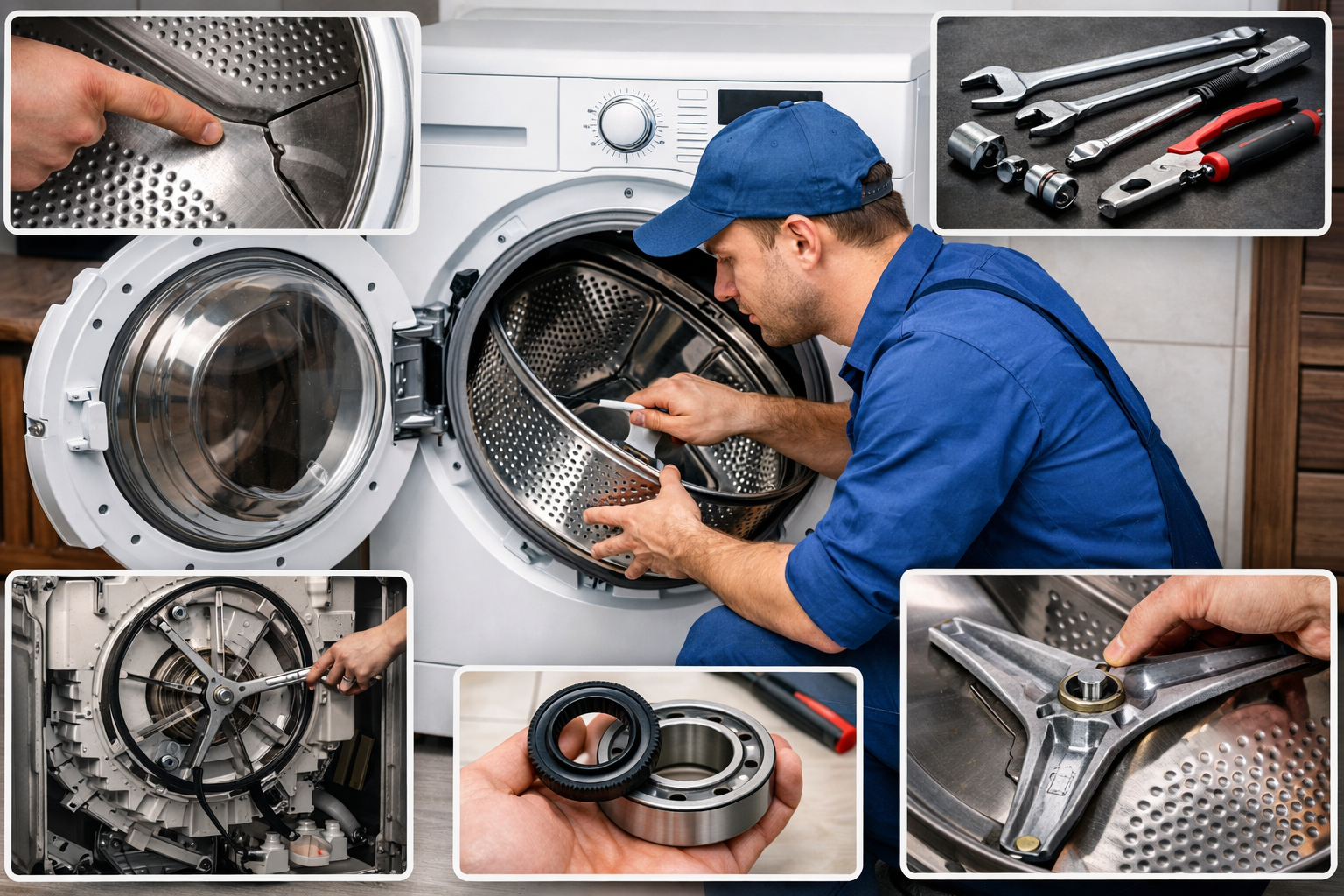
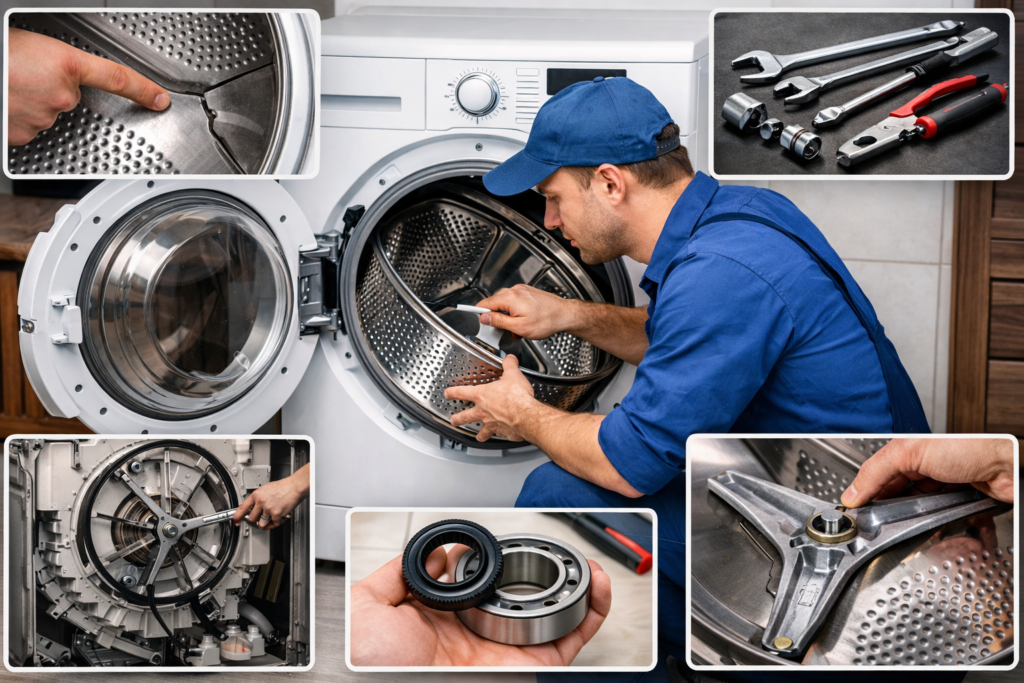
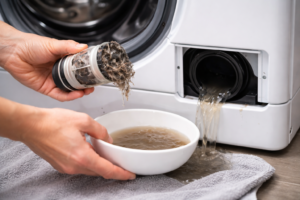
Fixing a broken drum in a washing machine starts with identifying the exact issue—whether it’s worn bearings, damaged suspension components, or a faulty drive system—and applying the correct repair method. Some problems can be resolved with basic tools at home, while others require deeper disassembly and careful judgment to determine if repair is truly worth the effort.
Quick Overview
If you’re searching for how to fix a broken drum in washing machine systems, the solution depends on the root cause. In most cases, the issue is linked to internal components rather than the drum itself.
Inspect suspension springs for damage or disconnection
Check drum bearings for grinding or noise
Look for objects stuck between inner and outer drum
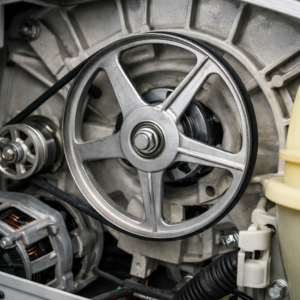
Test drive belt condition and motor performance
Pro Insight
Many users assume the drum itself is damaged, but in reality, most problems come from supporting components such as bearings, suspension systems, or the drive mechanism. Proper diagnosis before replacing parts can significantly reduce repair costs and effort.
Quick Fix Checklist
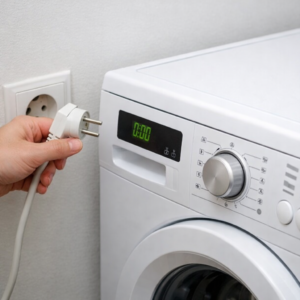
Disconnect power supply before inspection
Rotate the drum manually to detect resistance
Listen carefully for grinding, knocking, or scraping sounds
Check for visible imbalance or looseness
Start with simple fixes before attempting major repairs
How to Fix a Broken Drum in Washing Machine: Understanding the Drum System
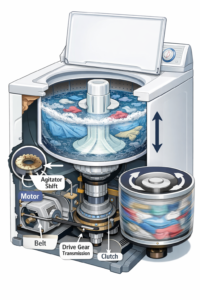
It is easy to think of the drum as just a spinning container, yet its function is far more precise. The inner drum rotates at controlled speeds to lift and drop clothes through water and detergent, while the outer tub holds water and absorbs movement. These two parts work together through a system of bearings, a central shaft, and structural supports that maintain alignment and stability.
When people research how to fix a broken drum in washing machine systems, they often focus only on what is visible. In reality, most failures occur in hidden internal components that are not immediately accessible. A drum may appear intact from the inside, yet still be misaligned, unsupported, or disconnected from the drive mechanism.
The quiet operation of modern washing machines depends on a careful balance between motion and stability. Once this balance is disrupted—even slightly—the appliance begins to signal the issue through noise, vibration, or reduced washing performance
When a Drum Problem Becomes Obvious
Drum-related issues rarely appear suddenly without warning. They usually develop gradually and are often dismissed at first as normal wear or minor noise. Over time, these small changes become more noticeable and harder to ignore. Several common signs indicate a potential drum problem:
A deep knocking or banging sound during the spin cycle
A drum that feels loose or unstable when pushed by hand
Clothes coming out wetter than usual after a cycle
A scraping or grinding noise when rotating the drum manually
In many cases, the washing machine continues to operate, which makes it easy to delay action. For example, a homeowner might notice a light thumping sound and continue using the machine for weeks, only to find the drum eventually stops spinning. In another situation, a grinding noise may be mistaken for a small obstruction when the real issue is worn bearings. Understanding how to fix a broken drum in washing machine units begins with recognizing these early warning signs and addressing them before the damage becomes more severe
What Usually Breaks and Why It Matters
The drum itself is not always the primary point of failure. More often, the surrounding support components wear out and create the impression that the drum is broken. Identifying the exact cause is essential for effective repair
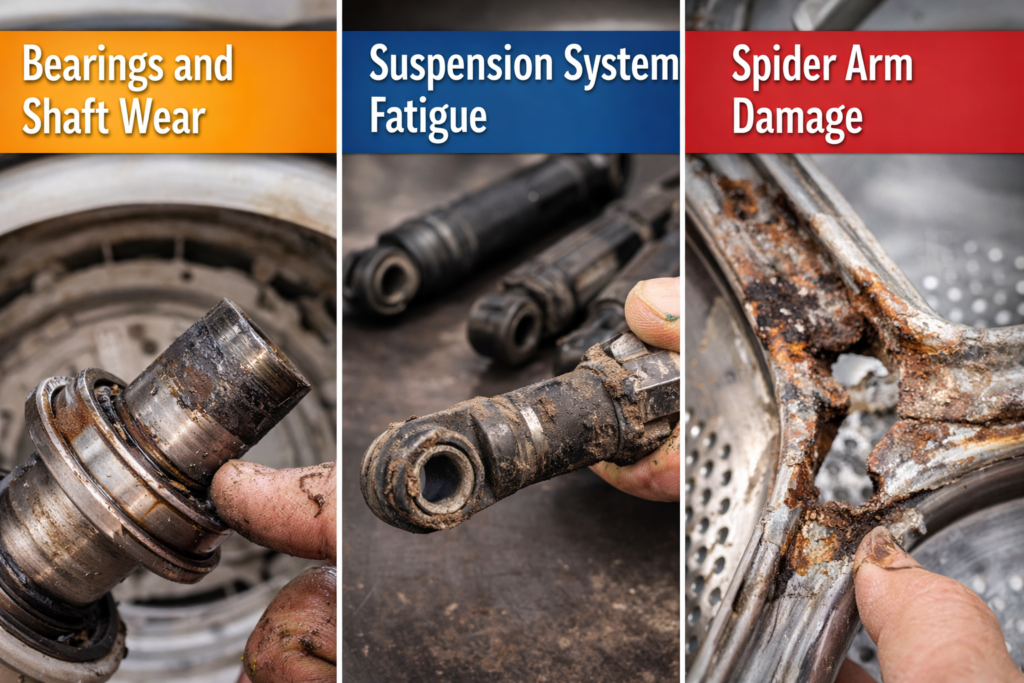
Bearings and Shaft Wear
Bearings allow the drum to rotate smoothly during wash and spin cycles. Over time, exposure to moisture and constant friction can cause them to deteriorate. When bearings wear out, the drum may wobble or produce a grinding sound. This is one of the most common reasons people search for how to fix a broken drum in washing machine models.
Suspension System Fatigue
Suspension springs and shock absorbers stabilize the drum during high-speed operation. When these components weaken or fail, the drum can swing excessively. This leads to loud banging noises and may even cause the washing machine to move across the floor.
Spider Arm Damage
The spider arm connects the drum to the motor shaft and provides structural support. Typically made of metal, it is exposed to moisture and detergent residue, making it vulnerable to corrosion. If the spider arm cracks or breaks, the drum loses proper alignment.
Drive System Problems
A faulty drive belt or motor can prevent the drum from spinning altogether. In such cases, the issue may appear to be with the drum, even though the actual problem lies within the drive system. Each of these failures affects drum performance differently, which is why accurate diagnosis is critical before attempting repairs.
Opening the Machine and Making a Real Assessment
Before starting any repair, it is essential to disconnect the power supply and turn off the water source. This not only ensures safety but also allows you to approach the repair process with focus and care. Accessing the drum typically requires removing the top or back panel of the washing machine. Once inside, the goal is not to immediately fix the problem but to carefully observe the internal components.
Rotate the drum by hand and pay close attention to how it behaves. Notice whether it spins smoothly, feels resistant, or appears off-center. Listen for unusual sounds such as grinding or scraping. A common mistake is replacing parts without fully diagnosing the issue. For instance, someone might replace a drive belt only to discover later that the real problem was worn bearings underneath. Learning how to fix a broken drum in washing machine systems depends more on accurate assessment than speed.
Understanding how to fix a broken drum in washing machine systems requires identifying whether the issue is mechanical or structural before attempting any repair.
If you’re trying to learn how to fix a broken drum in washing machine units at home, always start with simple checks before moving toward complex repairs.
Practical Repairs That Are Often Within Reach
Not every drum issue requires advanced tools or professional expertise. Many common problems can be resolved with basic tools, patience, and careful attention to detail.
Replacing a Drive Belt
If the drum does not spin, the drive belt is often the first component to check. It is usually accessible from the back panel and can be replaced without dismantling the entire machine.
Tightening Counterweights
Loose counterweights can cause heavy thumping sounds during operation. Tightening these components often resolves the issue quickly and restores stability.
Removing Obstructions
Small items such as coins, buttons, or wires can become trapped between the inner and outer drum. Removing these obstructions can immediately restore smooth rotation without requiring replacement parts.
Adjusting or Replacing Suspension Components
If the drum bounces excessively, worn shock absorbers or suspension springs may be the cause. These components are often accessible and replaceable without removing the drum assembly. These types of repairs make the process of how to fix a broken drum in washing machine units more approachable, especially for beginners handling appliance troubleshooting for the first time.
Where Repair Becomes Complex
Some drum-related issues require more advanced repair work and a deeper understanding of the machine’s internal structure. These repairs often involve significant disassembly. Replacing bearings or a damaged spider arm typically requires removing the entire drum assembly. This process may involve separating the outer tub, handling tightly fitted components, and carefully reassembling everything to maintain proper alignment. While it is possible to complete such repairs, they demand time, specialized tools, and attention to detail.
Another important consideration is whether the repair is worth the effort. If multiple components are worn or damaged, the cost of parts and labor can quickly increase. In such cases, replacing the washing machine may be more practical than continuing repairs. Anyone exploring how to fix a broken drum in washing machine systems eventually reaches this decision point, where technical capability must be balanced with cost and convenience
What Fixing the Drum Cannot Solve
There is a common assumption that repairing the drum will restore the washing machine to perfect working condition. In reality, this is not always the case. A washing machine with an aging motor, worn electrical components, or internal corrosion may continue to experience issues even after the drum is repaired. Addressing one problem does not automatically resolve all underlying wear and tear.
It is also important to recognize that some level of noise and vibration is normal, particularly in older machines. Attempting to eliminate every minor sound can lead to unnecessary repairs. Understanding the limitations of repair helps set realistic expectations and prevents unnecessary frustration during the process.
Safety, Care, and Everyday Judgment
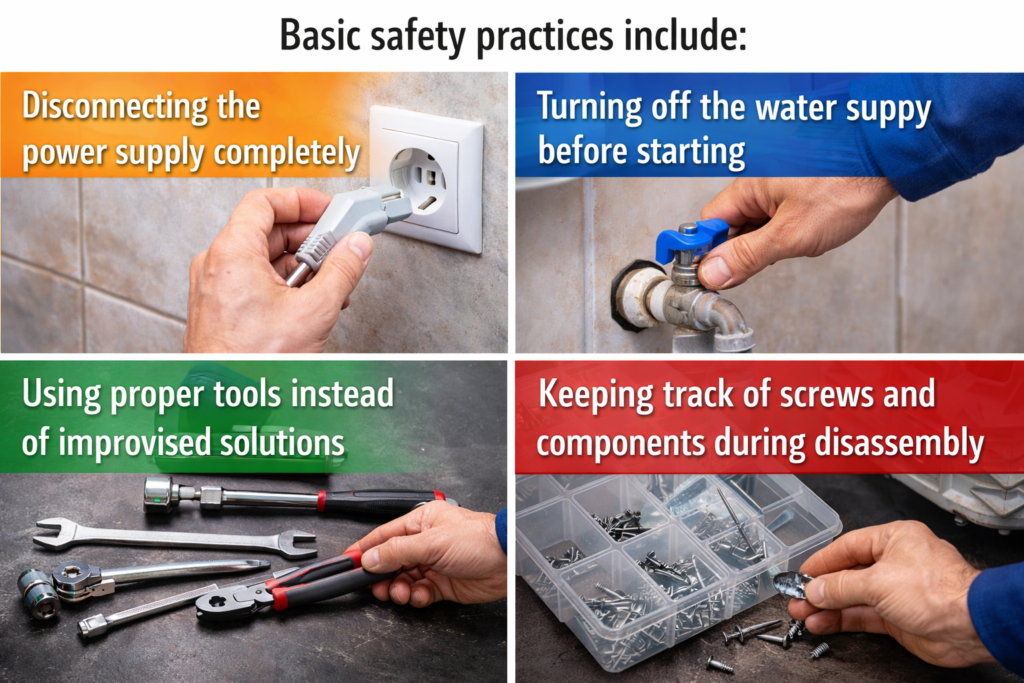
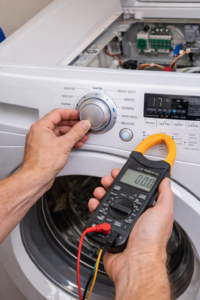
Repairing a washing machine involves both mechanical and electrical components, which makes safety a top priority. Even simple repairs require careful handling and attention to detail. Basic safety practices include:
Disconnecting the power supply completely
Turning off the water supply before starting
Using proper tools instead of improvised solutions
Keeping track of screws and components during disassembly
Beyond technical precautions, personal judgment plays an important role. If a repair feels uncertain or involves electrical systems such as the motor, seeking professional assistance is a sensible choice. One person may feel confident replacing a drive belt after reviewing the process, while another may prefer not to proceed after opening the machine. Both decisions reflect responsible judgment based on individual comfort levels.
Everyday Situations That Show How These Problems Develop
Drum issues often develop through everyday use rather than sudden failure. Small habits can gradually lead to larger problems over time. For example, a household that regularly overloads the washing machine may not notice any immediate issues. Over time, the suspension system weakens, and the drum begins to strike the sides during spin cycles. Eventually, the problem becomes severe enough to require repair.
In another situation, a faint scraping noise may be ignored for weeks. As the condition worsens, the drum begins to resist movement, and what started as a minor obstruction or bearing issue turns into a more complex repair. These real-life scenarios illustrate how minor warning signs can develop into significant mechanical problems if left unaddressed.
A Measured View on DIY Repairs
There is a widely held belief that nearly any appliance issue can be fixed at home with the right instructions. While this is sometimes true, it can also be overstated.
Not every repair is practical for every individual. Time, available tools, and personal experience all influence the outcome. Attempting a complex repair without a clear understanding of the process can lead to further damage.
A balanced approach is to evaluate each situation individually. Some repairs are straightforward and manageable, while others are better handled by a trained technician with specialized knowledge
What We Still Don’t Fully Know
Washing machine design continues to evolve, and so do the ways in which these appliances fail. Newer models often use different materials and construction techniques, which can influence both durability and repair methods.
There is ongoing discussion around the longevity of certain components, particularly spider arms and drum bearings. Some designs appear to wear out faster than expected, while others perform reliably for many years. Because of these variations, guidance on how to fix a broken drum in washing machine models cannot always be applied universally. What works for one machine may not be suitable for another, making model-specific understanding increasingly important.
A Slower Way to Look at the Problem
Taking the time to understand how a washing machine functions can change the way repairs are approached. Rather than viewing it as a broken appliance, it becomes a system of interconnected parts that can often be restored with careful attention.
Opening the machine, observing how each component interacts, and tracing the source of the problem creates a more thoughtful repair process. Not every issue needs to be solved immediately, and not every repair requires urgency. Sometimes, stepping back and examining the situation more deliberately leads to clearer decisions and more effective outcomes.
Continue Your Repair Learning
If you’re working through how to fix a broken drum in washing machine systems, these advanced troubleshooting guides will help you understand deeper mechanical issues and avoid misdiagnosis.
A washing machine drum usually doesn’t break on its own. The problem often comes from worn bearings, damaged suspension springs, a broken spider arm, or a faulty drive belt. Overloading the machine and poor maintenance can speed up wear and lead to drum-related failures.
Can I fix a broken drum in a washing machine myself?
Yes, in many cases you can learn how to fix a broken drum in washing machine systems at home. Simple repairs like replacing a drive belt, tightening loose parts, or removing stuck objects are manageable. More complex issues, such as bearing or spider arm replacement, may require advanced tools or professional help.
How do I know if my washing machine drum bearings are bad?
Common signs of bad drum bearings include
Grinding or rumbling noise during spinning Drum wobbling or moving unevenly Resistance when turning the drum by hand
If you notice these symptoms, bearing replacement is often necessary.
Is it worth repairing a broken washing machine drum?
It depends on the extent of the damage. If the issue is minor, such as a loose belt or worn shock absorber, repair is usually cost-effective. If multiple parts are damaged or the drum assembly needs replacement, buying a new washing machine may be the better option.
Why is my washing machine drum not spinning but the machine runs?
This problem is often linked to a broken or loose drive belt, motor issues, or a faulty door switch. In such cases, the drum itself may not be broken, but the system that powers it is not working properly.
How can I prevent washing machine drum damage in the future?
To avoid future problems
Do not overload the washing machine
Check pockets for coins or small objects
Keep the machine level to reduce vibration
Perform regular maintenance and cleaning
Following these steps can significantly extend the life of your appliance and reduce the need to learn how to fix a broken drum in washing machine units again.
Still Facing Washing Machine Issues?
If your problem isn’t fully solved yet, explore more expert guides to fix common washing machine issues quickly and effectively.
Founder of FixAppLab • Appliance Troubleshooting Writer
Muhammad Khalid is the founder of FixAppLab, a website dedicated to explaining common appliance problems and practical troubleshooting solutions. His work focuses on helping homeowners understand how washing machines, dryers, refrigerators, and dishwashers operate and why common mechanical or electrical issues occur in everyday use.