
Washing machine making loud noise when spinning is a common problem in many homes. The issue often appears during the spin cycle and may be caused by worn bearings, unbalanced loads, or loose internal components. In many situations, identifying the source of the noise early can help prevent further mechanical damage and keep the appliance running smoothly.
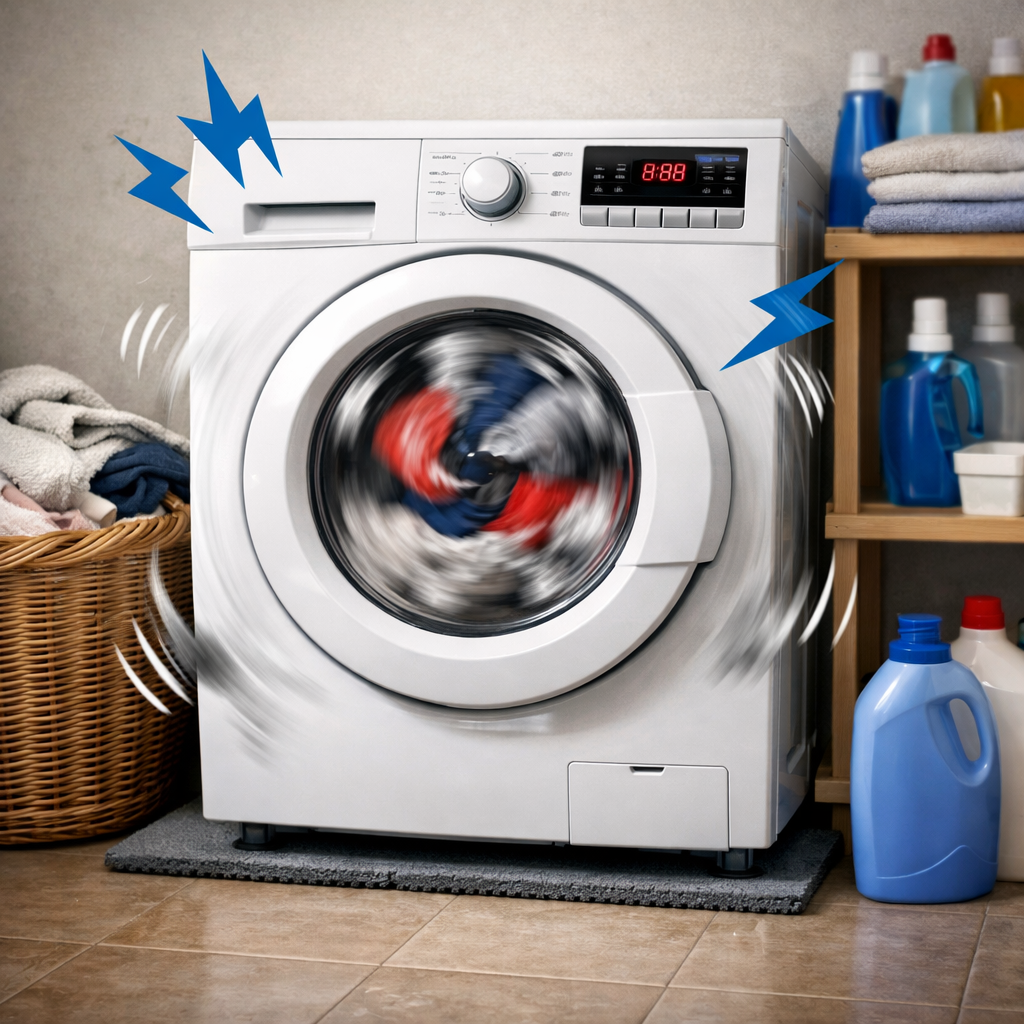
Table of Contents
Why the Spin Cycle Is the Noisiest Part of Washing
During most of the wash cycle, the drum moves slowly back and forth. The spin cycle functions very differently. At this stage, the washer accelerates to a much higher speed in order to force water out of the fabric. Depending on the model, the drum may rotate hundreds or even more than a thousand times per minute.
This speed places pressure on several components at the same time. Bearings support the drum’s rotation, suspension parts stabilize the tub, and the drive system transfers power from the motor. When these elements are functioning properly, the movement remains balanced and the machine produces only a steady, low hum.
Noise tends to appear when one of these parts can no longer handle the mechanical stress effectively. The result might be a rumbling vibration, a metallic grinding sound, or a heavy thumping noise that echoes through the laundry area.
Understanding how these parts interact helps explain why a washer may sound quiet during the wash phase but become noticeably louder once the spin stage begins
Related : 10 Common Washing Machine Problems and How to Fix Them
The Most Common Reasons Noise Develops Over Time
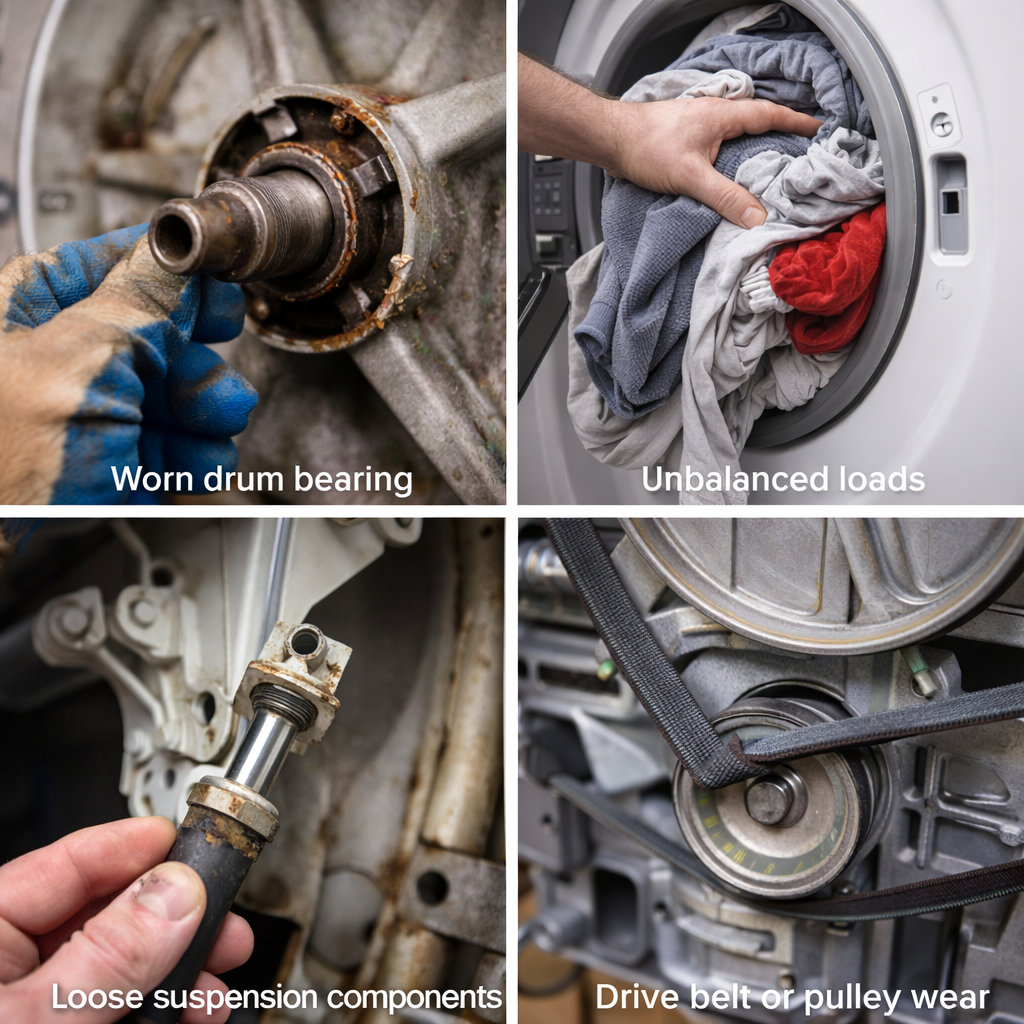
In many cases, a noisy washer does not appear suddenly. The issue often develops gradually. A machine that operated quietly for years may begin producing faint sounds that slowly grow louder over time. Several causes appear frequently in household washing machines:
- Worn drum bearings – Bearings allow the drum to rotate smoothly. As they wear down, friction increases and produces a deep rumbling or grinding sound.
- Unbalanced loads – Heavy items collecting on one side of the drum can disrupt the machine’s balance during spinning.
- Loose suspension components – Springs or shock absorbers help stabilize the tub. If they weaken, the drum can move more than intended.
- Drive belt or pulley wear – A stretched belt or misaligned pulley may produce squealing or knocking sounds.
- Debris in the drain pump – Small objects such as coins or buttons can reach the pump and create clicking or buzzing noises during draining.
Each issue tends to produce a slightly different sound pattern. A steady roaring noise often points to bearing wear, while sharp banging usually relates to balance problems. Paying attention to the type of noise can help narrow down the possible cause.
When the Load Inside the Drum Is the Real Problem
A loud washer does not always mean that something inside the machine is broken. In many situations, the laundry itself creates the issue. Large fabrics absorb water and become extremely heavy. By the time the spin cycle begins, a soaked towel or blanket can weigh several kilograms. If these items cluster on one side of the drum, the washer struggles to maintain balance.
Most modern machines attempt to correct this automatically. They pause briefly and rotate the drum slowly to redistribute the load before spinning again. When the imbalance remains too strong, the washer may shake aggressively or produce loud thumping sounds.
A simple adjustment often resolves the situation
- Pause the cycle.
- Redistribute the clothing evenly inside the drum.
- Remove extremely heavy items if necessary.
Many households experience this when washing bedding or thick towels. The noise can sound alarming for a moment, even though nothing inside the washer is actually damaged
Related : 7 Easy Ways to Fix a Washing Machine Shaking Too Much
Mechanical Wear Inside the Washer
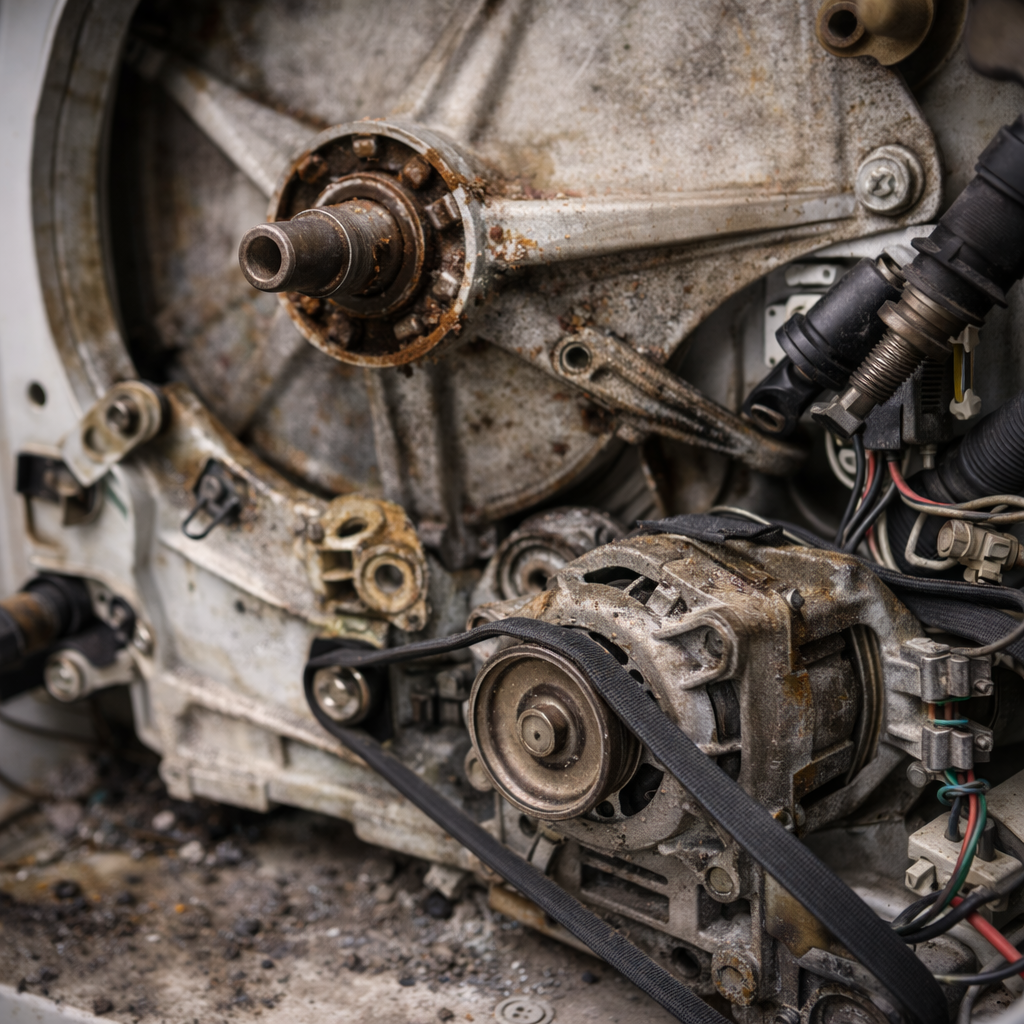
Household appliances operate under repeated stress for many years. Over time, internal components naturally begin to wear down in ways that are not visible from the outside.
Bearings represent one of the most common long-term failure points. These metal rings contain small balls that roll along a track, supporting the drum while allowing it to rotate smoothly. Gradually, moisture and friction degrade the bearing surfaces. When that happens, the washer may produce a low roaring or grinding sound during the spin cycle.
Suspension components experience a different type of strain. Each spin cycle pushes the drum outward due to centrifugal force. Springs, dampers, or shock absorbers absorb that motion and keep the drum centered. When these parts weaken, the drum may strike the cabinet, producing banging sounds.
Drive components also deteriorate over time. Belts can stretch, pulleys may loosen, and couplings can crack after years of vibration. The resulting noise may resemble squealing or irregular knocking that appears primarily during high-speed rotation. Problems like these rarely occur overnight. Most machines show subtle warning signs long before a significant failure develops.
A Look at What the Machine Cannot Correct on Its Own
Modern washing machines include sensors and control systems designed to detect imbalance or resistance. Because of this technology, some owners assume the appliance will automatically resolve every noise problem.
In practice, the internal electronics can only respond to certain conditions. They cannot repair worn bearings, tighten loose hardware, or remove objects trapped inside the pump. They also cannot compensate indefinitely for mechanical wear
Related : Washing Machine Keeps Pausing? 8 Troubleshooting Tips That May Help
Even advanced washers ultimately depend on physical parts—metal supports, springs, belts, and rotating components. Once those parts deteriorate, software alone cannot restore proper operation. Recognizing this limitation helps create realistic expectations about the lifespan of household appliances.
Practical Checks Homeowners Often Try First
Before assuming a serious mechanical failure, a few simple checks can help clarify the situation.
First, confirm that the washing machine sits level on the floor. Adjustable feet underneath the appliance allow minor corrections. If one corner sits slightly higher than the others, the washer may rock during spinning.
Second, pay attention to when the noise occurs. If it appears only while the washer drains water, debris inside the pump may be responsible. Cleaning the pump filter or housing often resolves that type of sound
Related : 5 Quick Fixes When Your Washing Machine Stops Mid Cycle
Third, run a short spin cycle with an empty drum. If the noise disappears, the earlier load may simply have been unevenly distributed. These checks require no specialized tools. They help distinguish between temporary issues and genuine mechanical wear.
If a washing machine continues making loud noise when spinning even after balancing the load, internal components such as bearings or suspension parts may require inspection.
Safety and Practical Considerations
A loud washer can be unsettling, especially when the machine begins to shake or shift across the floor. Operating an appliance under those conditions may carry certain risks.
Strong vibration places strain on hoses and electrical connections. Over time, this stress may loosen fittings or lead to small leaks. Severe imbalance can also damage internal components if the drum repeatedly strikes the cabinet.
When the machine produces heavy grinding sounds or intense shaking, stopping the cycle and inspecting the situation is often the safest response.
Flooring can also influence vibration levels. Washing machines installed on flexible wooden floors may amplify movement during spinning. Anti-vibration pads or a more stable base can sometimes reduce the noise. Minor environmental adjustments can improve performance even when the machine itself remains unchanged.
A washing machine making loud noise when spinning should always be inspected early, because ignoring the problem can sometimes lead to further internal damage.
Two Everyday Situations Many Households Experience
Consider a household washing a large blanket for the first time. The blanket absorbs water unevenly and gathers along one side of the drum. When the spin cycle begins, the washer shakes loudly and bangs against the cabinet. After redistributing the blanket inside the drum, the next spin cycle runs normally
Related : Washing Machine Water Not Pumping Out? 7 Causes and Easy Fixes
Another common scenario involves a small coin left in a pocket. During washing, the coin travels through the drum and eventually becomes lodged near the pump. When the machine begins draining, a repetitive clicking sound appears. Removing the object from the pump filter restores normal operation. Examples like these illustrate that unusual sounds do not always indicate serious damage
Many homeowners first notice a washing machine making loud noise when spinning during situations like these, especially when heavy items become unevenly distributed inside the drum.
If your washing machine is making loud noise when spinning, identifying the cause early can help prevent serious mechanical damage. Explore more appliance troubleshooting guides on FixAppLab to learn how to diagnose common washing machine problems and keep your appliances working properly.
A Note on Exaggerated Claims About Noisy Washers
Online discussions sometimes describe noisy washing machines as catastrophic failures that demand immediate replacement. This view often overlooks simpler explanations. Many machines that become noisy continue operating normally after minor adjustments or routine maintenance.
Mechanical wear can certainly lead to expensive repairs in some cases. A completely failed bearing or damaged transmission may justify replacing the appliance. These situations do occur, but they are not the inevitable outcome every time a washer becomes loud. Careful observation usually provides a more accurate understanding than assuming the worst.
What Research and Appliance Design Are Still Learning
Home appliances have advanced significantly over the past several decades. Manufacturers continue to experiment with quieter motors, improved suspension systems, and more responsive sensors.
Engineers are also studying how vibration travels through machine frames and household flooring. New materials and mounting designs aim to reduce noise while maintaining energy efficiency and durability. The field continues to evolve, and washing machines produced in the future may manage imbalance and mechanical stress differently from today’s models. For now, though, washers remain mechanical devices that rely on moving parts exposed to water, weight, and constant motion.
Living With the Sounds Household Machines Make
Laundry appliances operate quietly most of the time, though they rarely become completely silent. A washer spinning at high speed naturally produces some vibration and sound. When the noise becomes noticeably louder than usual, it often signals a minor imbalance or a component beginning to wear. Paying attention to these changes can help prevent larger problems later
Related : 6 Reasons Washing Machine Stops Before Spin Cycle: What It Means and How to Fix It
Sometimes the solution is as simple as redistributing a load of laundry or adjusting the machine’s feet. And sometimes the sound simply reflects the complex rhythm of ordinary household machines steadily performing their work in the background
If a washing machine keeps making loud noise when spinning, inspecting the drum balance and suspension system can help identify the source of the problem.
Ignoring a washing machine making loud noise when spinning can sometimes lead to additional wear on internal components.
Frequently Asked Questions
Why is my washing machine making loud noise when spinning?
A washing machine making loud noise when spinning is often caused by worn drum bearings, an unbalanced load, loose suspension components, or a damaged drive belt. When the washer reaches high spin speeds, these issues can cause grinding, banging, or rumbling sounds. In some cases, the problem may simply be unevenly distributed laundry inside the drum
Is it safe to use a washing machine that makes loud noise during the spin cycle?
It may be safe temporarily if the noise is caused by an unbalanced load or minor vibration. However, continuous loud noises—especially grinding or heavy banging—can indicate worn bearings or suspension damage. Running the washer in this condition can lead to further mechanical problems, so it is best to inspect the machine and address the issue as soon as possible.
Can an unbalanced load cause a washing machine to spin loudly?
Yes. An unbalanced load is one of the most common reasons a washer becomes loud during the spin cycle. Heavy items like towels, blankets, or jeans can collect on one side of the drum and create strong vibrations. Redistributing the laundry evenly or reducing the load size often solves the problem
When should I repair or replace a noisy washing machine?
Repair is usually recommended if the problem involves smaller components such as belts, suspension springs, or pump blockages. However, if the loud noise is caused by severe drum bearing failure or a damaged transmission, repair costs may be high. In older machines, replacing the washer may sometimes be more practical than performing a major repair
Pingback: Washing Machine Door Not Locking? 7 Common Causes and Easy Fixes - fixapplab.com