
If your washing machine smells bad, the problem usually develops because moisture, detergent residue, and bacteria collect in hidden areas inside the appliance. Over time, these conditions allow mold and microorganisms to grow, especially when the washer is frequently used on lower temperature cycles.
Many homeowners first notice the issue when freshly washed clothes start to smell unpleasant. Understanding why a washing machine smells bad makes it easier to remove the odor and prevent it from returning.
Quick Answer
If your washing machine smells bad, the most common cause is moisture and detergent buildup inside the drum, rubber door seal, or detergent drawer. These areas create an environment where bacteria and mold can grow. Running a hot cleaning cycle, cleaning the gasket, and leaving the washer door open after use can help eliminate odors and prevent them from returning.
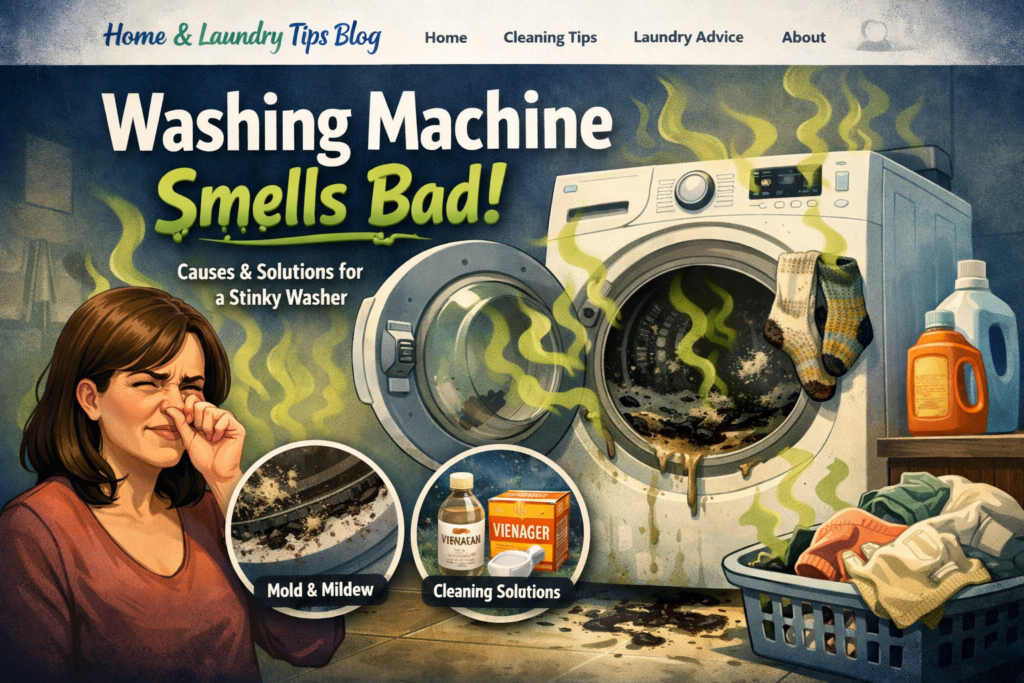
Table of Contents
Why a Washing Machine Smells Bad Over Time
A washing machine is built to clean clothing, yet the environment inside the appliance can unintentionally support odor formation. Warm water, leftover detergent, and persistent dampness create conditions in which microorganisms can grow.
After a wash cycle ends, the interior rarely dries immediately. Small amounts of water may remain in the drum, hoses, rubber seals, and detergent drawer. Residual detergent and fabric softener also linger in these areas. These substances provide nutrients that bacteria and other microbes can use to multiply. Over time, this mixture can form a thin film along interior surfaces. In the early stages, this layer is often invisible. The smell usually becomes noticeable well before visible buildup appears.
Frequent use of low-temperature wash cycles can make the problem more likely. Many households prefer cooler settings to reduce energy use or protect delicate fabrics. While these cycles clean clothing effectively, they do not always eliminate microorganisms living inside the washer. As weeks and months pass, residue and moisture accumulate gradually until the machine begins producing an unpleasant odor
Common Causes of Washing Machine Odors
| Cause | What Happens |
|---|---|
| Detergent buildup | Residue remains inside the drum and hoses and traps bacteria. |
| Mold growth | Moisture around the door seal and drawer allows mold to develop. |
| Blocked drain | Water does not drain properly and becomes stagnant. |
| Low temperature washing | Cool water cycles fail to kill bacteria inside the washer. |
Places Inside the Washer Where Smells Often Start
When cleaning a washer, people usually focus on the drum. In reality, odors often originate in other parts of the machine
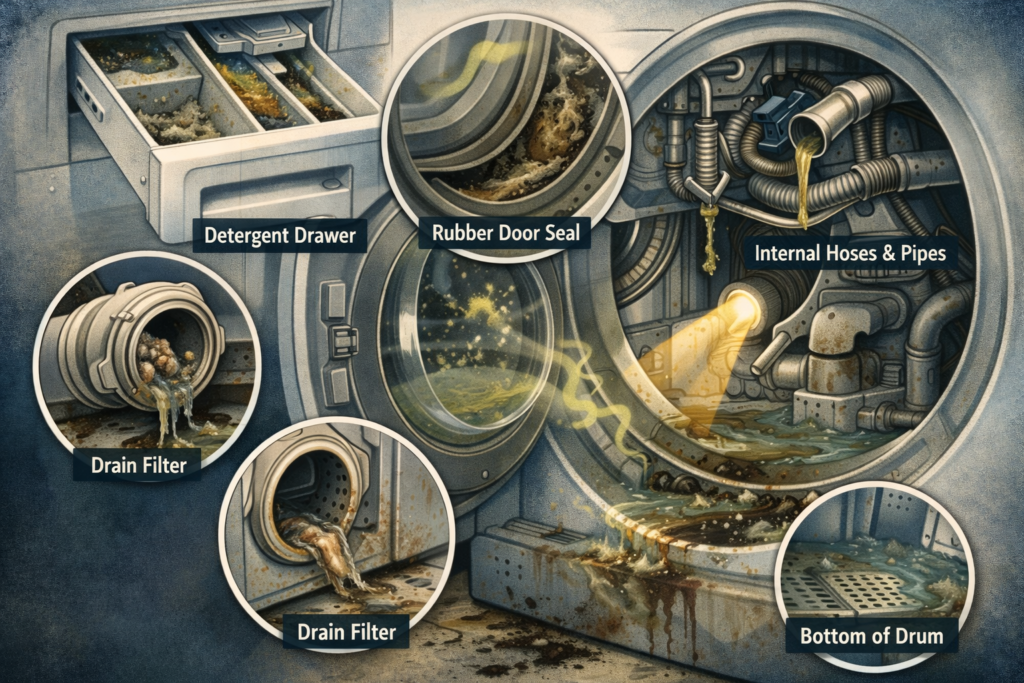
Several areas commonly collect moisture and residue
- The detergent drawer
- The rubber door seal on front-load washers
- The drain filter
- Internal hoses and pipes
- The bottom of the drum where water may settle
Detergent drawers are particularly prone to mold growth because liquid detergent and fabric softener leave behind sticky deposits. If moisture remains in this area, dark mold may appear along the edges or inside the compartments.
Front-loading washers have another vulnerable location: the rubber gasket around the door. Water can collect in the folds of this seal after each wash. Without occasional wiping or cleaning, mildew may begin to grow there. In some situations, a washing machine smells bad even when the drum appears clean because the odor is developing in these less visible parts of the appliance
If these areas are not cleaned regularly, a washing machine smells bad because moisture and detergent residue remain trapped inside hidden parts of the appliance.
When the Smell Changes: Different Types of Washer Odors
The type of odor often provides clues about what is happening inside the machine. A musty smell typically suggests mold or mildew growth. This odor resembles the scent of damp towels left in a laundry basket for too long.
A sour or stale smell often indicates bacterial activity. These bacteria feed on detergent residue, body oils from clothing, and other organic material that collects inside the washer. A sulfur-like smell, sometimes described as resembling rotten eggs, may point to bacteria in the water supply or a drainage issue. In certain cases, the odor may originate from plumbing rather than from the washer itself.
Another possibility involves stagnant water trapped in the drain line. When water does not fully drain after a cycle, microorganisms can multiply quickly. Recognizing these differences can help narrow down the most likely source of the problem
Practical Ways to Clean the Machine
Addressing washer odors usually requires removing residue and reducing microbial buildup inside the appliance. The process does not necessarily require specialized products. Many households rely on simple cleaning materials. One widely used method involves running an empty hot wash cycle with two cleaning agents:
- White vinegar, which helps dissolve mineral deposits and detergent residue
- Baking soda, which can help neutralize lingering odors
During this process, the vinegar cycle helps loosen buildup inside the drum and hoses. A second cycle using baking soda can further reduce remaining smells. Some people choose to use bleach when visible mold is present. Bleach can disinfect heavily affected areas, though it should never be mixed with vinegar because the combination produces harmful fumes.
Physical cleaning is also important. Wiping the rubber door seal, scrubbing the detergent drawer, and rinsing removable parts help remove the slimy buildup that wash cycles alone may not eliminate. When cleaning is done thoroughly, many washer odors fade after one or two hot cycles
According to appliance maintenance recommendations from Energy Star , running regular hot cleaning cycles helps prevent detergent buildup and reduces odor problems inside washing machines.
Two Everyday Situations Where the Problem Starts
Many washer odor problems begin through completely routine habits.
One common example occurs in busy households where laundry is washed frequently throughout the week. Loads run back-to-back, yet the washer door remains closed between cycles. Without airflow, moisture becomes trapped inside the machine. After some time, the interior begins to develop a damp smell.
Another situation occurs when someone regularly washes delicate clothing. Cold or warm cycles are used almost all the time to protect fabrics. The washer continues functioning normally, though bacteria gradually accumulate because high-temperature cycles are rarely used.
Neither of these habits is unusual. Both simply allow moisture and residue to build up gradually over time
What Cleaning Methods Cannot Realistically Fix
Routine cleaning can resolve many odor problems, though it does not address every possible cause. If the smell originates from plumbing rather than from the washer itself, cleaning the drum will not solve the issue. Sewer gas entering through the drain line can create a strong odor that resembles sewage or rotten eggs.
Mechanical issues can also contribute to the problem. Damaged components may allow water to remain trapped inside the machine. A clogged pump filter or partially blocked drain hose can hold stagnant water between cycles.
In these situations, repeated cleaning cycles may temporarily reduce the smell without addressing the underlying cause.
There are also exaggerated claims suggesting that a single cleaning product can permanently eliminate washer odors. In reality, most washing machines require occasional maintenance because residue gradually accumulates again. Machines that are heavily affected by mold may require several cleaning cycles before the smell disappears
Everyday Habits That Help Prevent the Problem
Several small habits can make a noticeable difference in preventing odors from returning. Allowing air to circulate inside the washer is one of the most effective steps. Leaving the door slightly open after a wash cycle helps moisture evaporate naturally.
Using the recommended amount of detergent also matters. Excess detergent can create thick residue that traps bacteria and dirt. High-efficiency washers are particularly sensitive to detergent overuse. Another useful practice involves running a hot wash cycle occasionally. Even if most laundry is done with cooler water, periodic hot cycles help break down residue inside the machine.
Removing clothes promptly after a wash cycle finishes also helps. Damp clothing left sitting inside the drum can contribute to odor development. None of these steps require special tools or products, yet they can significantly reduce the chances that a washing machine smells bad again.
These habits reduce the chances that a washing machine smells bad over time.
Common Signs Your Washing Machine Needs Cleaning
These are early signs that a washing machine smells bad due to internal buildup.
Some signs clearly indicate that a washing machine requires cleaning and maintenance.• Musty smell coming from the drum • Clothes smell unpleasant after washing • Visible mold around the rubber door seal • Black residue inside the detergent drawer If you notice these signs, it may indicate that the washing machine smells bad because of residue and bacterial buildup inside the appliance.
- Run a hot cleaning cycle once every month.
- Leave the washer door open after each wash.
- Clean the detergent drawer regularly.
- Use the correct amount of detergent.
Safety and Practical Considerations
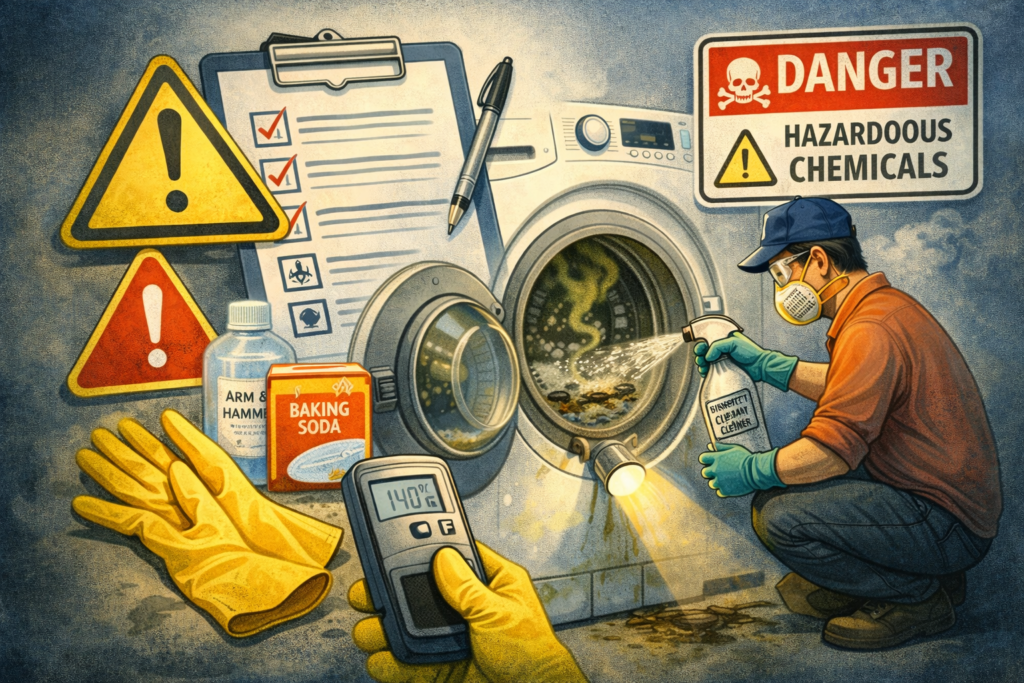
Cleaning a washing machine involves water, electricity, and sometimes chemical products. A few basic precautions can reduce potential risks.
Ventilation is important when using bleach or other strong cleaning agents. Opening a window or running a fan helps disperse fumes. Cleaning chemicals should never be mixed. Combining bleach with vinegar or other cleaners can produce hazardous gases.
When inspecting the drain line or moving the washer, unplugging the appliance first reduces electrical risk.
Some people attempt aggressive cleaning using harsh chemicals designed for bathrooms or kitchens. These products may leave residues that later transfer to clothing during wash cycles. In many cases, milder cleaning methods are safer for both the appliance and fabrics.
The U.S. Environmental Protection Agency also recommends proper ventilation when using strong cleaning chemicals to reduce indoor air exposure risks. Learn more about indoor air safety.
Never mix bleach with vinegar or other cleaning chemicals when cleaning a washing machine. The reaction can produce harmful gases. Always ventilate the laundry area when using strong cleaning products.
What Research and Experience Continue to Reveal
Household appliances have changed significantly in recent decades. Many modern washing machines are designed to use less water and energy than earlier models.
These improvements provide clear environmental and efficiency benefits. At the same time, lower water levels sometimes allow detergent film to remain inside the machine after a cycle finishes. Engineers and appliance manufacturers continue studying how washer design affects hygiene and maintenance needs.
Some newer machines include dedicated self-clean cycles designed to remove buildup automatically. Even with these features, regular maintenance habits still play an important role in keeping washers clean. Research into microbial growth inside appliances is ongoing as specialists examine how moisture, detergent residue, and machine design interact over time
For additional appliance maintenance advice, you can also review the washing machine care recommendations provided by Consumer Reports .
Questioning the Idea of a “Maintenance-Free” Washer
Advertising sometimes suggests that modern washing machines require little to no maintenance. In reality, washing machines operate in conditions where moisture and residue naturally accumulate. Expecting any appliance to remain perfectly clean without occasional care may not be realistic.
Some cleaning products are promoted as permanent solutions that eliminate odors indefinitely. These claims often overlook the basic chemistry of laundry detergents and the environment inside the washer drum. Clothing introduces oils, dirt, and microorganisms into the machine with every load. These materials do not disappear entirely when the wash cycle ends. For that reason, periodic cleaning remains a normal part of maintaining the appliance.
A Practical Way to Think About the Problem
A washing machine functions much like any other frequently used household tool. It tends to perform best when small maintenance tasks are handled regularly rather than postponed until a noticeable problem appears. Checking the detergent drawer, wiping moisture from the door seal, and occasionally running a hot cleaning cycle help keep the machine in good working condition.
For many households, the moment when a washing machine smells bad simply signals that the appliance requires attention. Regular care usually takes only a few minutes, yet it allows the washer to continue doing its intended job—cleaning clothing without leaving behind an unpleasant odor
Sometimes the quiet routines that maintain everyday appliances are the ones we only notice after something begins to smell different
This is often the point when a washing machine smells bad and clearly needs attention.
Understanding this helps explain why a washing machine smells bad over time.
Running an empty hot cycle once a month helps remove detergent film and microbial buildup that slowly forms inside washing machines. This small habit significantly reduces the chances of odor problems.
You May Also Like
- Washing Machine Not Spinning Properly – Causes and Fixes
- Why Your Washing Machine Is Shaking Too Much
- Washing Machine Not Filling With Water – Causes Explained
Was this article helpful?
Your feedback helps us improve our appliance troubleshooting guides.
Frequently Asked Questions
Why does my washing machine smell bad even after cleaning it?
If your washing machine still smells bad after cleaning, bacteria or mold may be hiding in areas that are difficult to reach. Common places include the rubber door seal, drain filter, hoses, or detergent compartment. Running multiple hot cleaning cycles and thoroughly cleaning removable parts may help remove the remaining odor.
Can using too much detergent make a washing machine smell bad?
Yes. Using more detergent than recommended can leave behind residue inside the washer. This buildup traps moisture and dirt, creating an environment where bacteria and mold grow, which eventually leads to unpleasant odors.
How often should I clean my washing machine to prevent smells?
Most experts recommend cleaning your washing machine at least once a month. Running an empty hot wash cycle and wiping the detergent drawer and door seal regularly can prevent residue buildup and keep the machine smelling fresh
Is a rotten egg smell from a washing machine dangerous?
A rotten egg smell may indicate bacteria in the washer, stagnant water in the drain system, or sometimes a plumbing issue. In rare cases, it could be related to gas leaks from nearby appliances. If the smell is strong or persistent, it is best to check the drainage system or contact a professional technician.
Pingback: Washing Machine Drum Not Turning? 9 Causes and Easy Fixes (Complete Guide) - fixapplab.com