
A washing machine that stops before the spin cycle usually signals that something is preventing the drum from safely reaching high speed. In many homes, the cause turns out to be relatively simple—an uneven load, a drainage issue, or a door sensor that fails to register correctly. Understanding how a washer determines when it is safe to spin makes the problem much easier to identify and resolve
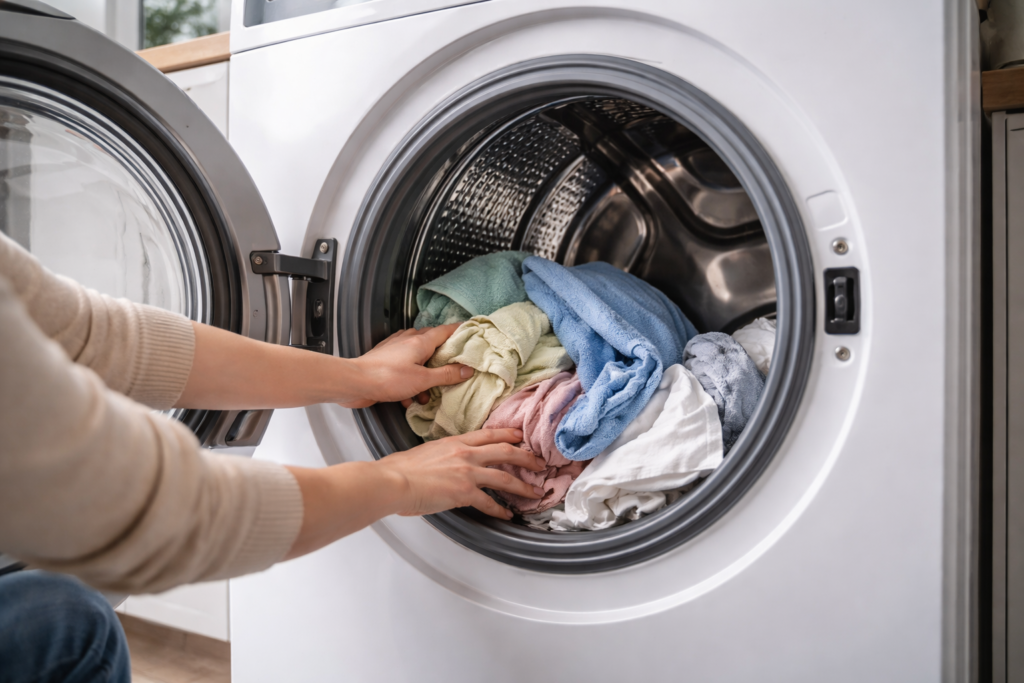
Table of Contents
Why the Spin Cycle Matters More Than People Realize
Many people view the spin cycle as the final step that removes excess water from clothing. In practice, it plays a broader role in how the entire wash process concludes. During spinning, the drum accelerates quickly, pushing water outward through small perforations in the drum. At the same time, the pump removes that water through the drain hose.
If the machine determines that conditions are not safe or stable enough for high-speed rotation, it simply halts the program. From the washer’s perspective, stopping early is a protective action rather than a malfunction.
Several built-in safeguards can interrupt the cycle, including:
- Sensors that detect an unbalanced drum
- Systems that verify whether water has drained correctly
- Door or lid safety switches
- Electronic controls that manage the washing sequence
When one of these signals appears abnormal, the machine pauses before spinning instead of risking mechanical strain or internal damage
Related : Washing Machine Not Draining After Spin Cycle
How Modern Washers Decide When to Start Spinning
Before the drum begins rotating at full speed, the washer quietly runs through a series of checks. Water must drain properly. The drum must rotate evenly. The door must remain securely locked. Electrical power must remain stable.
Older washing machines relied more heavily on mechanical timers. As a result, they sometimes attempted to spin even when conditions were less than ideal. Modern machines behave differently. Sensors monitor balance and drainage, while internal software determines whether the cycle should continue.
A simplified sequence typically unfolds like this:
- The washer completes the rinse phase.
- The drain pump removes water from the drum.
- The drum rotates slowly to evaluate balance.
- If the load appears stable, the machine increases speed and begins spinning.
If any of these steps fail, the machine may stop before reaching the final stage.
This interruption can be frustrating for users, although the washer is essentially protecting itself from excessive vibration or unnecessary strain on the motor
Everyday Causes That Interrupt the Spin Stage
When someone searches for the reason a washing machine stops before spin cycle, the explanation often lies in routine laundry habits rather than damaged parts.
Unbalanced laundry loads
Bulky items such as blankets, jackets, or thick towels can shift toward one side of the drum. When the washer checks for balance, the sensor detects uneven weight distribution and cancels the spin attempt.
This situation commonly occurs when:
- A single heavy item is washed alone
- Several large towels bunch together during the cycle
- A small load sits unevenly inside the drum
Redistributing the clothing typically resolves the problem quickly
Related : Washing Machine Not Draining Water
Drainage problems
A washer cannot begin spinning if water remains inside the tub. The machine must first remove the water; otherwise, spinning would force water outward uncontrollably.
Common drainage interruptions include:
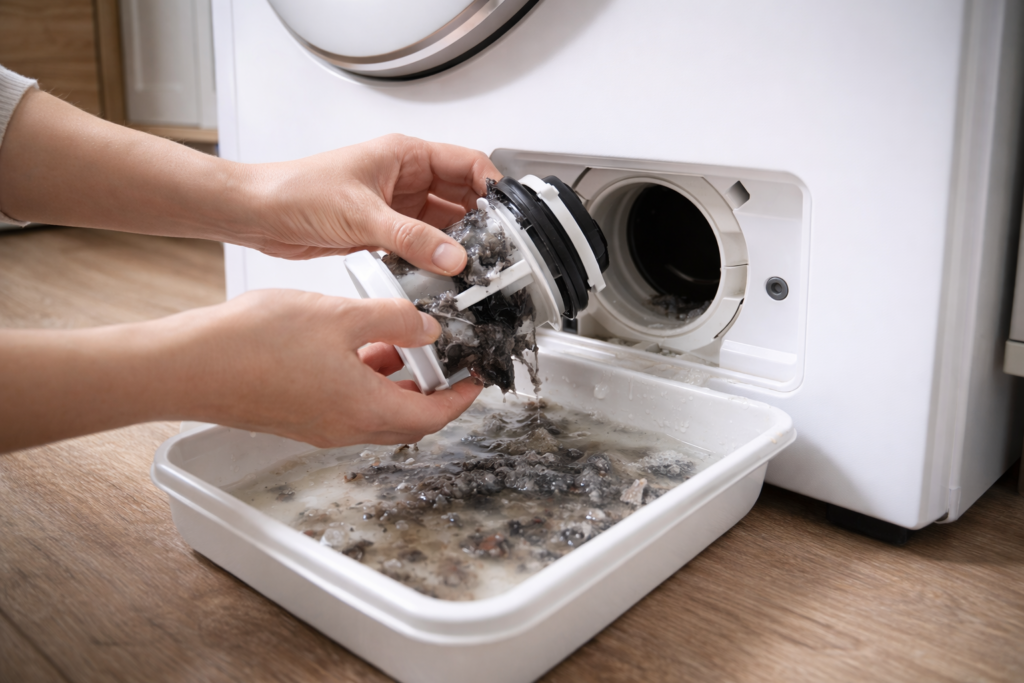
- A clogged pump filter
- Coins, lint, or small debris trapped in the pump
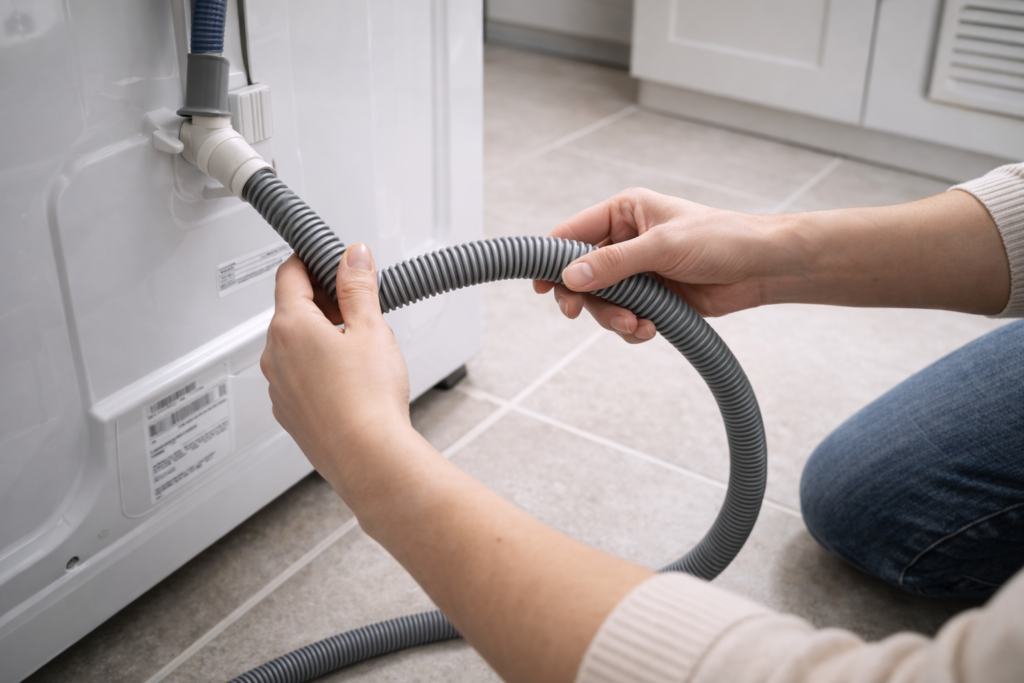
- A twisted or compressed drain hose behind the washer
Even a partial blockage can slow water flow enough to interrupt the spin stage.
Door or lid sensors
Washing machines are designed to prevent spinning when the door or lid is open. If the latch mechanism or sensor malfunctions, the control system may interpret the door as unlocked.
In that situation, the washer refuses to start spinning even though the door appears fully closed
Two Real-Life Situations That Often Lead to the Problem
Laundry issues frequently arise from everyday situations rather than serious mechanical failures.
One common example occurs when someone washes a large comforter by itself. As the washer begins to accelerate, the blanket shifts to one side of the drum and stays there. The machine detects the imbalance and stops the cycle. From the user’s perspective, the program appears to end unexpectedly
Related : Washing Machine Shaking Violently During Spin 7 Possible Reasons and Easy Fixes
Another situation develops when small items such as lint, coins, or socks gradually accumulate in the pump filter. The washer still drains, but more slowly than usual. Eventually, the machine stops before spinning because water remains in the drum longer than the system allows.
In both cases, the machine itself is functioning normally. The interruption simply reflects conditions that prevent the spin cycle from operating safely
Mechanical Problems That Can Prevent Spinning
If the simpler explanations do not apply, the issue may involve internal mechanical components.
Several parts contribute directly to the spinning process.
Drive belt wear
Many washers use a belt to transfer power from the motor to the drum. Over time, the belt may stretch, crack, or lose tension. When that occurs, the drum may struggle to reach the necessary speed or fail to spin entirely.
Motor coupling failure
Some top-loading washers rely on a motor coupling that connects the motor to the transmission. If this component breaks, the motor may continue running while the drum remains motionless.
Worn bearings
Drum bearings allow the drum to rotate smoothly during spinning. As bearings wear down, the washer may produce grinding or rumbling noises. In some cases, the machine avoids entering the spin cycle altogether.
Repairs involving these parts usually require opening the washer cabinet, which is why many homeowners prefer to contact a technician at that stage
Related : Washing Machine Motor Not Working 8 Causes and Easy Fixes
What the Problem Cannot Realistically Mean
When a washer stops before spinning, some people assume that the entire appliance is failing. In most situations, that conclusion is premature.
Stopping before the spin cycle does not automatically mean:
- The motor has burned out
- The control board has failed completely
- The washer is permanently damaged
In fact, many machines are designed to stop specifically to prevent these outcomes.
A large number of spin interruptions originate from external factors such as uneven laundry loads, clogged filters, or incorrectly positioned drain hoses. Replacing expensive components without first identifying the underlying cause can lead to unnecessary repairs and additional costs
Safety and Practical Checks Worth Doing First
Before considering mechanical repairs, several basic checks often reveal the source of the issue.
Start with a few practical steps:
- Unplug the washer for several minutes to reset its electronic controls
- Open the drum and redistribute the clothing evenly
- Inspect the drain hose behind the machine for twists or compression
- Clean the pump filter if the washer includes one
- Confirm that the washer stands level on the floor
These simple actions resolve many situations in which a washer stops mid-cycle.
Another helpful habit is avoiding overly packed loads. When clothes have enough space to move freely, the washer can balance itself more effectively during the spin stage
Related : washing machine will not drain or spin, agitates fine.
A Measured Look at Maintenance Advice
Advice about appliance problems often promises quick and universal solutions. Some guides suggest that a simple reset or setting adjustment will solve the issue every time.
In reality, washing machines behave differently depending on their design, age, and usage patterns. A clogged filter might explain one problem, while another washer struggles because its bearings have worn down.
Treating every spin issue as identical ignores the complex interaction of components inside a washing machine.
Routine maintenance still plays an important role. Cleaning filters, avoiding excessive loads, and ensuring proper installation can prevent many interruptions. Even so, no maintenance routine can completely eliminate the possibility of mechanical wear
Why Knowledge About Appliance Behavior Keeps Changing
Household appliances continue to evolve as manufacturers introduce sensors, electronic controls, and new safety features. A washer manufactured twenty years ago operates very differently from one produced today.
Because of this shift, troubleshooting advice that applied to older machines may not always translate perfectly to modern models. Early washers relied heavily on mechanical timers, while newer machines depend more on electronic control boards and programmed logic.
Technicians and manufacturers continue to refine their understanding of how these systems behave over time. As more long-term data becomes available, maintenance recommendations gradually evolve.
This ongoing process means that knowledge about appliance behavior remains dynamic rather than fixed
Living With Small Appliance Problems
Household appliances occupy a quiet but essential place in everyday routines. When everything works properly, they fade into the background. When something goes wrong, even a small interruption can disrupt daily tasks
Related : 6 Reasons a Washing Machine Is Making Grinding Noise
Laundry piles begin to grow. Clothes remain damp. A cycle that normally runs unnoticed suddenly demands attention.
Sometimes the solution takes only a moment—redistributing clothing, clearing lint from a filter, or adjusting a hose behind the washer. In other situations, the problem reflects the gradual wear of internal components.
Either way, a washer stopping before the spin cycle often represents the machine’s effort to protect itself rather than a sudden breakdown.
In many homes, resolving the issue begins with a brief pause to listen to the washer and notice the small signals it provides during the cycle.
Frequently Asked Questions
Why does my washing machine stop before the spin cycle?
A washing machine may stop before the spin cycle if it detects an unbalanced load, a drainage issue, or a problem with the door lock. Modern washers are designed to pause the cycle when conditions are not safe for high-speed spinning.
Can a clogged drain pump stop the spin cycle?
Yes. If the drain pump or filter is clogged, water cannot leave the drum properly. Since washing machines must drain completely before spinning, the cycle may stop until the blockage is cleared.
How do I fix a washer that stops before spinning?
Start by redistributing the laundry load and checking the drain hose for twists or blockages. Cleaning the pump filter and resetting the machine by unplugging it for a few minutes can also help resolve the problem
Written by Muhammad Khalid
Muhammad Khalid is the founder of FixAppLab, a website that explains common washing machine, refrigerator, dryer, and dishwasher problems through clear troubleshooting guides. His work focuses on helping homeowners understand how everyday appliances operate and why mechanical or electrical issues may occur.
Learn more about the author →
Helo my name m Khalid hy