
A washing machine that fills too slowly is usually dealing with restricted water flow or a control issue that limits how quickly water enters the drum. In many cases, the cause is simple and can be fixed without replacing major components or calling a technician
🔹 Quick Answer
A washing machine fills too slowly mainly due to clogged inlet screens, low water pressure, or a faulty inlet valve. Cleaning the filters and checking your water supply often solves the problem quickly.
📌 Key Takeaways
- Clogged inlet screens are the most common cause
- Low water pressure affects washer performance
- Most issues are easy DIY fixes
- Inlet valve may need replacement
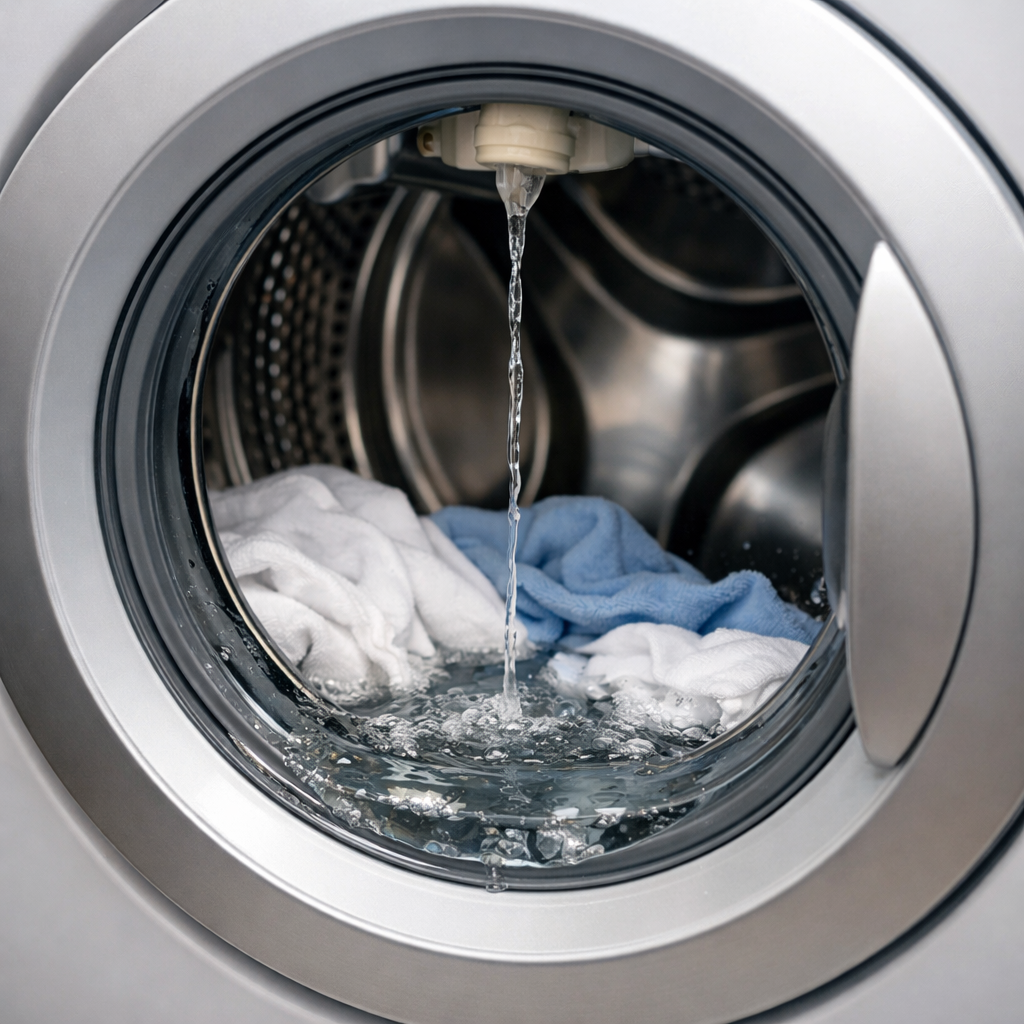
Table of Contents
How a Washing Machine Actually Fills With Water
Inside every washer is a compact but essential system that controls water intake. When you start a wash cycle, the machine sends a signal to the water inlet valve to open. Water then travels through supply hoses, passes through a small filter screen, and flows into the drum until the pressure sensor detects the correct water level.
While the process appears simple, it depends on several components working together efficiently. Household water pressure must be strong enough to maintain steady flow. The inlet valve must open fully, and the mesh screens must remain clear of debris. Sensors also need to accurately detect water levels to regulate the fill cycle.
When a washing machine fills too slowly, one or more of these elements is not functioning properly. The appliance may still operate, but the reduced efficiency can disrupt the entire wash cycle and extend overall run time.
Related : Washing Machine Agitator Not Working Properly
What Slow Filling Feels Like in Real Use
Slow water filling often begins subtly before becoming obvious. You may notice that the drum takes longer than usual to fill, or the machine pauses more frequently between cycle stages. The timing may feel inconsistent, even though the washer eventually completes the cycle.
In everyday situations, this can become frustrating. For example, someone might start a quick load before leaving for work, expecting it to finish promptly. Instead, the washer is still filling long after it should have progressed to the next stage.
During a busy weekend, the delay becomes more noticeable. Multiple loads begin to pile up because each cycle takes longer than expected. These experiences often lead people to assume a serious malfunction, even though the underlying issue is usually minor and manageable.
This clearly shows that your washing machine fills too slowly and needs proper inspection.
⚠️ Signs Your Washing Machine Is Filling Too Slowly
- The drum takes longer to fill
- The wash cycle becomes longer
- Water flow is weaker
- Machine pauses during filling
The Most Common Reason: Restricted Flow at the Entry Point
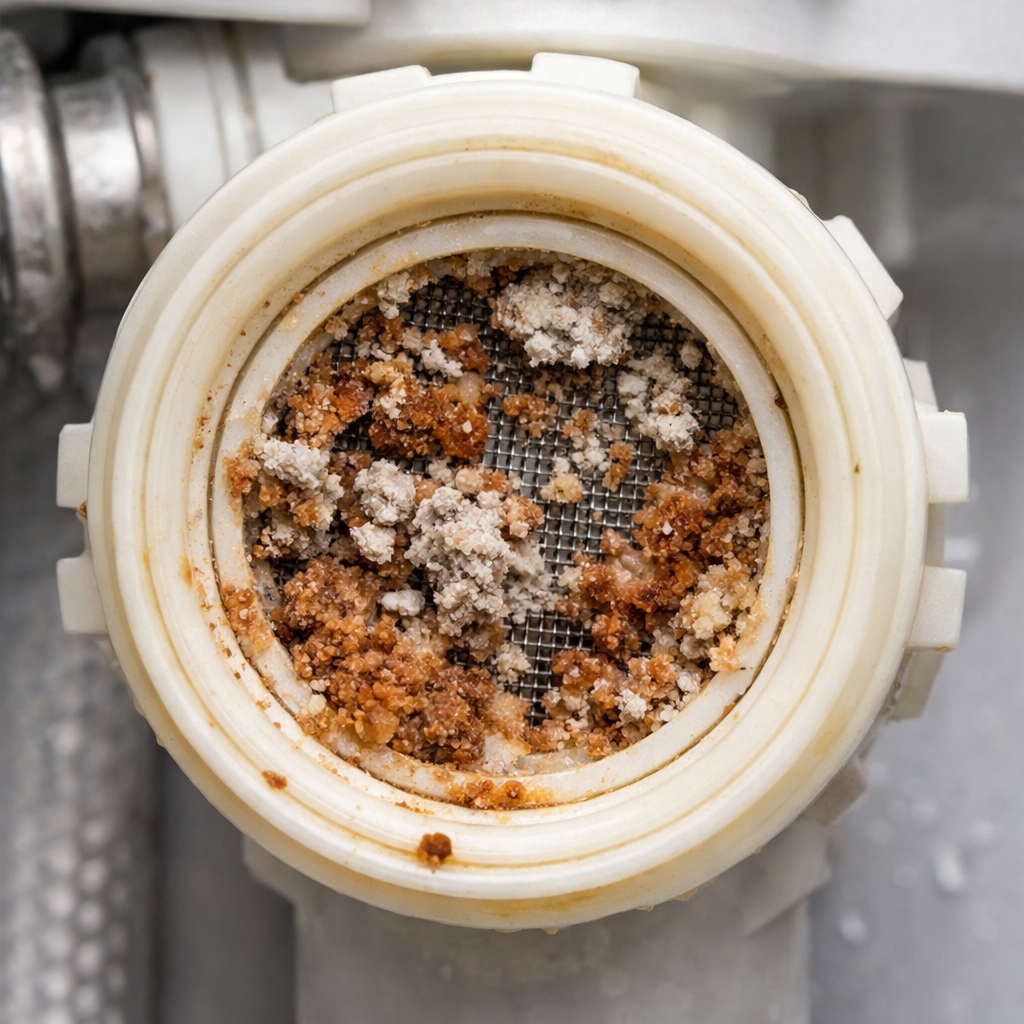
Water entering the washing machine must pass through a small inlet screen designed to trap debris such as sediment, rust particles, and mineral buildup from the plumbing system. Over time, these particles accumulate and gradually restrict water flow.
This is the most common reason a washing machine fills too slowly. The restriction develops gradually, often without noticeable warning signs, until the water flow becomes significantly reduced. As a result, the washer takes longer to reach the required water level.
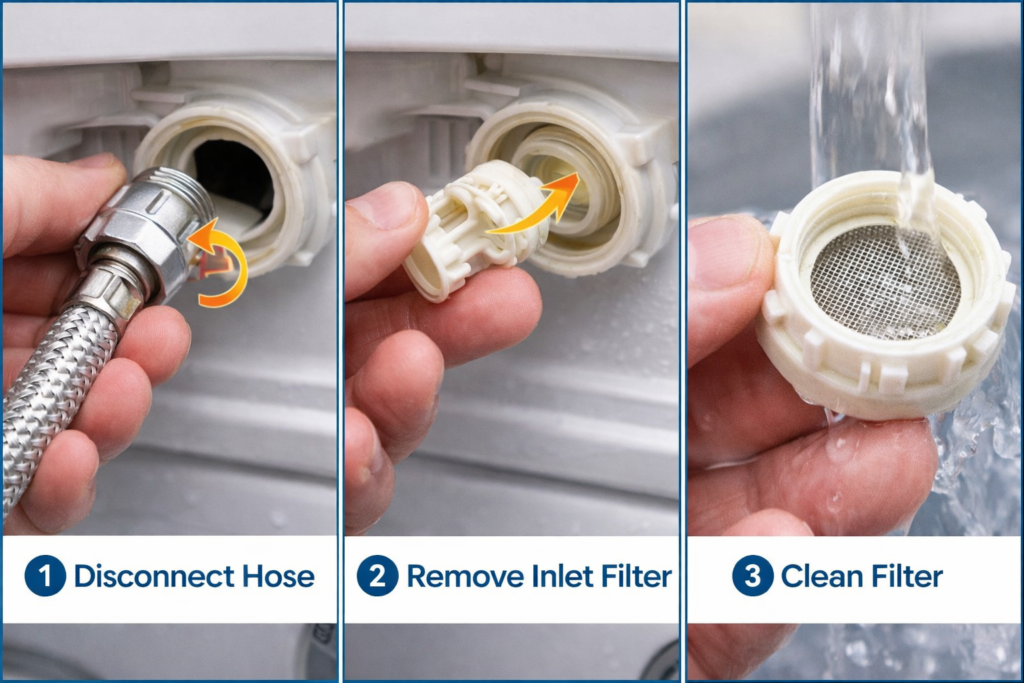
Cleaning the inlet screen often restores normal performance. Despite being a simple fix, it is frequently overlooked because the screen is hidden behind the hose connection. Regular inspection of this component can prevent recurring slow-fill issues.
This is one of the main reasons why a washing machine fills too slowly in many homes.
🔍 Quick Troubleshooting Guide
🧰 Tools You May Need
- Bucket
- Pliers
- Old toothbrush
- Towel
When the Problem Isn’t Inside the Machine
Not every slow-fill issue originates within the washing machine. In some cases, the appliance is functioning correctly, but the external water supply is insufficient. This can occur when household water pressure is low across multiple fixtures, when supply valves are only partially open, or when hoses are bent or restricted. Any of these conditions can limit the volume of water reaching the washer.
A quick way to identify this is by testing nearby faucets. If water flow is weak throughout the home, the issue lies with the plumbing system rather than the washer. Understanding this distinction is important, as replacing internal washer parts will not resolve a supply-related problem.
In such cases, the washing machine fills too slowly due to external water supply issues.
Related : 7 Easy Fixes for Washing Machine Won’t Agitate but Spins
The Role of the Inlet Valve and Why It Matters
The water inlet valve plays a critical role in regulating how water enters the machine. It opens when the washer begins filling and closes once the desired level is reached. This component ensures that water flow is both controlled and consistent. Over time, the inlet valve can wear out or develop internal restrictions. When this happens, it may not open fully, reducing the amount of water entering the drum. Even with normal water pressure and clean screens, this can cause a washing machine to fill too slowly.
Unlike clogged filters, a faulty inlet valve typically does not improve with cleaning. In such cases, replacement is often the most effective solution. The machine may still operate, but it will no longer perform at its intended efficiency.
A faulty valve can be a major reason your washing machine fills too slowly.
What Slow Filling Cannot Do
It is common to associate slow filling with severe mechanical failure, but this is often overstated. A washing machine that fills too slowly does not usually cause direct damage to major components.
In most cases, it will not burn out the motor, damage the drum, or ruin clothing. The primary effect is reduced efficiency, which leads to longer cycle times and potentially less effective cleaning. Some sources suggest that slow filling quickly leads to complete machine failure. This claim is exaggerated. While the issue should not be ignored, it is typically a performance concern rather than an immediate threat to the appliance.
Practical Checks That Actually Make a Difference
Before considering complex repairs, it is important to perform a few straightforward checks. These steps can often identify the problem quickly without requiring specialized tools.
Start by confirming that both hot and cold water valves are fully open. Inspect the hoses behind the machine to ensure they are not kinked or crushed. Disconnect the hoses and check the inlet screens for debris. Running water into a bucket can also help assess water pressure and flow rate. These simple actions provide valuable insight into the cause of the problem. A common mistake is replacing internal components too early, when the issue is actually external or mechanical in nature.when your washer has slow filling issues
💡 Expert Tips
- Clean both inlet screens
- Replace old hoses
- Check water pressure
- Run test cycle
🚫 Common Mistakes
- Ignoring pressure issues
- Replacing parts too early
- Over-tightening hoses
- Skipping inspection
Related : 7 Causes Why Washing Machine Fills Then Immediately Drains (Fix Guide)
Safety and Common-Sense Precautions
Working on a washing machine involves both water and electricity, so basic safety precautions are essential. Before performing any inspection or maintenance, unplug the machine and turn off the water supply.
Keeping a towel or bucket nearby helps manage any water that may spill when hoses are removed. Even small amounts of water can create a mess quickly if not contained. There is no need for specialized protective equipment, but careful handling and a methodical approach reduce the risk of damage or injury. Taking a few extra moments to prepare can prevent unnecessary complications.
You can also check this guide on water pressure from Home Depot for more details.
When Sensors and Internal Components Come Into Play
Modern washing machines rely on electronic sensors to monitor water levels. These sensors communicate with the control system, which determines when to stop the filling process.
If a sensor provides inaccurate readings, the washer may continue filling slowly or behave unpredictably. This can make diagnosing the issue more challenging, as the problem is not always visible. Although less common than flow restrictions, sensor-related issues can occur as machines age. Addressing them may require testing components or replacing parts based on performance symptoms rather than obvious physical damage.
A Closer Look at Expectations vs Reality
There is a growing expectation that household appliances should perform flawlessly at all times. When something slows down, it is easy to assume that the machine is failing completely.
Related : 9 Easy Washing Machine Stuck on Sensing Cycle Fix (Step-by-Step Guide)
In reality, minor inefficiencies are a normal part of mechanical wear over time. A washing machine fills too slowly not because it is beyond repair, but because one part of the system is no longer operating as smoothly as it once did. This does not mean the entire appliance needs replacement. Often, addressing a single component is enough to restore normal performance.
Where Advice Online Can Be Misleading
Online advice about slow-filling washers can vary widely. Some guides present the issue as overly complex, while others recommend immediate part replacement without basic inspection.
Both approaches overlook the practical middle ground. Most slow-fill problems fall into a few clear categories: restricted water flow, limited supply pressure, or partial component wear. Treating every case as complex can lead to unnecessary repairs, while oversimplifying the issue may result in missed problems. A balanced, step-by-step approach is more effective and reliable.
Everyday Maintenance That Prevents the Problem
Routine maintenance does not require significant effort. A few simple habits can help prevent most slow-fill issues before they develop.
Checking hoses occasionally for bends or damage ensures consistent water flow. Cleaning inlet screens once or twice a year prevents sediment buildup. Making sure valves are fully open after plumbing work also supports proper operation. These small actions take only a few minutes but can significantly reduce the likelihood of encountering a washing machine that fills too slowly in the future. Maintenance is less about strict schedules and more about consistent awareness.
A Note on Changing Technology and Understanding
Washing machines have evolved with advanced features such as electronic controls, sensors, and water-efficient designs. These improvements enhance performance but also introduce new variables that can affect how the machine behaves. At the same time, real-world conditions—such as water quality, pressure variations, and usage patterns—continue to influence performance in ways that are not always predictable. This makes each situation slightly different from one household to another.
Understanding these variations helps explain why a solution that works in one case may not apply exactly the same way in another. Careful observation often provides more practical insight than relying solely on general guidelines.
Related : Washing Machine Drum Not Turning? 9 Causes and Easy Fixes (Complete Guide)
Living With the Issue While Deciding What to Do
Not every instance of slow filling requires immediate repair. If the washing machine still completes cycles and cleans effectively, some users choose to monitor the situation before taking action. Others prefer to address the issue early to restore efficiency and avoid longer wash times. The decision often depends on how much the delay interferes with daily routines.
Recognizing how the machine is actually performing allows for a more informed decision, rather than reacting to assumptions or worst-case scenarios. In the end, small mechanical changes often reveal more about how everyday systems function than we notice when everything operates smoothly. Understanding why your washing machine fills too slowly helps you make better decisions.
Related : 10 Common Washing Machine Problems and How to Fix Them
Need More Appliance Repair Tips?
Explore our detailed guides to fix washing machine problems and keep your appliance running smoothly.
Frequently Asked Questions
Why does my washing machine fill too slowly?
A washing machine fills too slowly most commonly due to clogged inlet screens, low water pressure, partially closed water valves, or a faulty water inlet valve. Sediment buildup inside the filter screens restricts water flow, which increases filling time. Checking these components is the first step in diagnosing the issue.
How can I fix a slow-filling washing machine at home?
You can fix a slow-filling washer by cleaning the inlet screens, ensuring both hot and cold water valves are fully open, straightening any kinked hoses, and checking water pressure. In many cases, a simple cleaning process restores normal water flow without needing professional repair.
Can low water pressure cause a washing machine to fill slowly?
Yes, low household water pressure is a common reason a washing machine fills too slowly. If other faucets in your home also have weak flow, the issue is likely with your plumbing system rather than the washer itself. A plumber may be needed to resolve this.
Do I need to replace the water inlet valve if my washer fills slowly?
You may need to replace the water inlet valve if cleaning the inlet screens and checking water supply does not fix the problem. A worn or faulty valve may not open fully, reducing water flow into the machine and causing slow filling