Washing Machine Not Draining After Spin Cycle
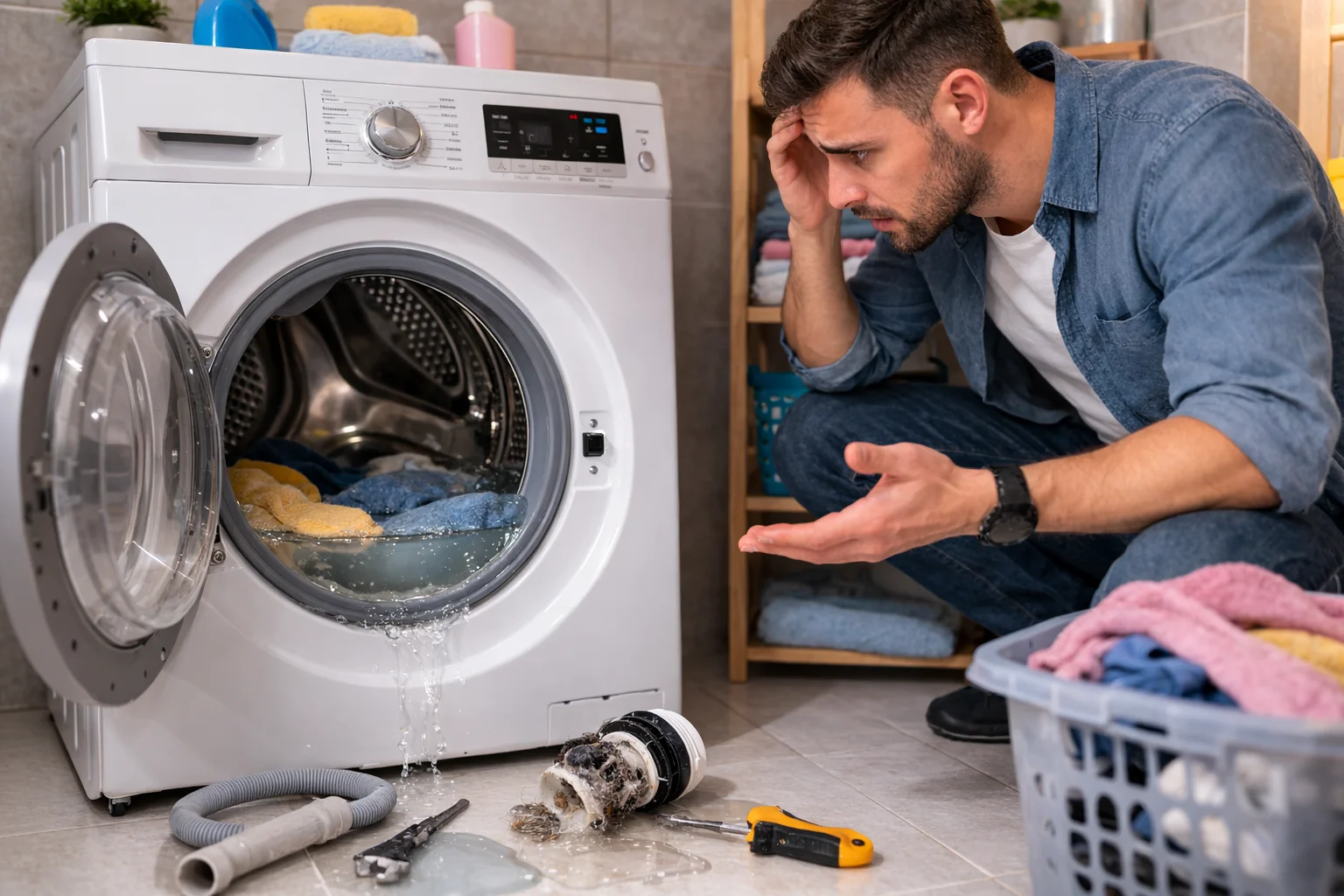
If a washing machine completes its spin cycle but leaves water in the drum, something in the drainage system is preventing the water from leaving the appliance. In most situations, the cause is a blockage or a minor mechanical issue rather than a serious failure. Understanding how the draining process works makes it much easier to identify what might be interfering with normal operation

Table of Contents
How a Washing Machine Actually Removes Water
During the final stage of a wash program, the machine transitions from washing to draining and spinning. At that point, water collected inside the tub must be removed through the drainage system.
Inside the appliance, a small electric pump draws water from the lowest point of the tub. The pump then pushes this water into a flexible drain hose. In most installations, the hose rises behind the machine before descending into the household drain pipe. This upward loop helps prevent wastewater from flowing back into the washer.
The spin cycle works in coordination with this process. As the drum rotates at high speed, centrifugal force pulls moisture from clothing. The pump then carries that water away through the drainage path.
If any part of this sequence is interrupted—whether by a clog, a mechanical fault, or restricted airflow—the machine may finish spinning but still leave standing water inside the drum
Related : Washing Machine Making Grinding Noise
Why Water Sometimes Stays in the Drum
When a washer holds water after the cycle ends, the explanation is often relatively straightforward. Several small components function together within the drainage system, and a disruption anywhere along this path can prevent water from exiting properly.
Common causes include:
- Debris trapped in the pump filter
- A bent or obstructed drain hose
- A pump that is weakening or no longer operating correctly
- A safety switch that prevents the machine from draining
- A worn drive belt in certain older models
Many of these issues develop gradually. Lint, loose threads, hair, and small items left in pockets can accumulate inside filters or hoses over time. Initially, the machine may drain more slowly than usual. Eventually, the restriction becomes significant enough that water cannot pass through the system efficiently.
Mechanical parts also experience wear with continued use. Drain pumps operate in a damp environment and process water that often contains detergent residue, fibers, and small debris. Over many years, this constant exposure can gradually weaken internal components
A Simple Way to Think About the Drain System
The drain system in a washing machine functions much like a compact plumbing network.
Water begins in the drum and travels through a short internal passage toward the pump. The pump then pushes it outward through the drain hose, which carries the water into the home’s plumbing system.
Any obstruction along this route can interrupt the process.
One of the most common restrictions occurs in the filter that protects the pump. Manufacturers install this filter to prevent solid objects from entering sensitive mechanical parts. Coins, buttons, hair clips, or bits of fabric can easily collect there
Related : Washing Machine Shaking Violently During Spin
Drain hoses can also become restricted. In some situations, the hose bends sharply when the machine is pushed too close to the wall. In others, detergent residue and lint gradually narrow the hose’s internal passage.
The home’s plumbing may also play a role. A partially blocked standpipe or sink drain can cause water to move back toward the washer instead of flowing away from it
Practical Checks That Often Solve the Problem
Many drainage issues can be identified through careful observation rather than extensive repair work.
Before taking any further steps, the machine should always be disconnected from electrical power. Water and electricity create obvious safety risks, so interior components should only be inspected when the appliance is unplugged.
Several simple checks can help identify the source of the issue.
Inspect the drain hose.
Look behind the washing machine to see whether the hose is sharply bent or compressed against the wall. Straightening the hose can sometimes restore proper drainage immediately.
Examine the pump filter.
Most modern machines include a small access panel near the bottom front of the cabinet. Opening this panel allows access to the pump filter. Towels or a shallow container are helpful during this step, as water often escapes when the filter is removed.
Listen for unusual sounds.
A buzzing or humming noise during the drain phase may indicate that the pump is attempting to operate but cannot move water effectively.
Consider the type of laundry in the load.
Large items such as towels or blankets can shed fibers that accumulate inside filters or hoses.
These observations frequently reveal the cause of the issue without requiring extensive disassembly
Situations Where the Issue Is Not a Simple Blockage
Although clogs account for many drainage problems, mechanical failures occasionally occur.
The drain pump itself may stop functioning properly. Pumps rely on small internal impellers to move water through the system. If debris damages these blades or the motor weakens, the pump may lose the ability to push water through the hose.
Older washing machines that rely on drive belts may also experience belt wear. When a belt loses tension or becomes damaged, the drum and pump may not operate with enough force to complete the draining stage.
Safety switches can also produce confusing symptoms. Many machines are designed not to spin or drain unless the lid or door is securely closed. If the switch becomes worn or misaligned, the machine may fail to recognize that the door is closed
Related : Washing Machine Motor Not Working
Electrical control boards represent another possibility, although such failures are less common. When the control system fails to send power to the pump, the machine may complete the cycle while leaving water inside the drum
What the Drain System Cannot Realistically Do

Certain expectations about washing machines are not entirely realistic.
The drainage system cannot remove large debris introduced during washing. Objects such as small stones, thick fabric fragments, or heavy accumulations of lint can overwhelm filters and hoses.
The system also cannot compensate for plumbing problems elsewhere in the home. If the household drain pipe is clogged or poorly vented, water may struggle to leave the washer regardless of how well the appliance itself is functioning.
Another frequent misconception involves the role of the spin cycle. While spinning helps force moisture from clothing, the pump remains responsible for removing that water from the tub.
Even a perfectly functioning washing machine depends on clear plumbing and normal operating conditions
Safety and Practical Considerations
Working around appliances that contain water requires careful attention.
Disconnecting the power supply should always be the first step before opening panels or removing filters. Electrical components may remain energized even when the machine appears idle.
Water spills are also common when inspecting drainage components. Towels, shallow containers, and careful handling can help prevent unnecessary mess and reduce the risk of slipping.
Heavy washing machines should not be moved abruptly or dragged across floors without assistance. Their weight can strain flooring materials or cause hoses to detach unexpectedly.
If inspection reveals damaged wiring, strong burning odors, or significant leaking, contacting a qualified technician is generally the safer option
Related : Washer Not Spinning Properly
A Small Reality Check About Dramatic Claims
It is sometimes suggested that a washing machine refusing to drain automatically signals a major repair. In many cases, this interpretation overstates the situation.
Most drainage problems involve minor restrictions or normal wear rather than serious mechanical damage. Filters become clogged precisely because they are designed to capture debris before it reaches sensitive components.
This does not mean the issue should be ignored. Persistent standing water can lead to unpleasant odors, mold growth, and additional strain on the appliance. Still, the presence of water at the end of a cycle does not always indicate a significant malfunction.
In many households, a simple cleaning resolves the issue entirely
Two Everyday Situations That Illustrate the Issue

Consider a household where someone regularly washes work clothes covered in sawdust or fine lint. Over several weeks, those fibers gradually accumulate inside the pump filter. Initially the washer drains normally, but eventually the filter becomes restricted enough that water begins lingering in the drum.
In another situation, a washing machine may be pushed tightly against the wall during a kitchen renovation. The drain hose becomes partially compressed behind the appliance. The next laundry cycle finishes with water still in the tub because the hose cannot carry it away efficiently.
Neither example involves a complex mechanical failure. Both result from small changes in how the machine is used or positioned
Knowledge About Appliance Behavior Continues to Evolve
Appliance design has changed considerably over the past decade. Modern washing machines rely on electronic sensors, improved pump designs, and energy-efficient cycles that use less water.
Engineers continue to explore ways to reduce mechanical wear and improve drainage efficiency. Some newer machines monitor water flow and automatically pause the cycle if drainage problems are detected.
Despite these advances, real-world conditions still vary widely. Plumbing layouts, detergent types, and everyday laundry habits all influence how appliances perform in different homes.
Because of these variables, diagnosing drainage problems sometimes requires practical observation rather than relying on a single universal explanation
Living With Machines That Occasionally Need Attention
Household appliances quietly perform repetitive tasks every day. Washing machines, in particular, operate in a demanding environment filled with water, detergent, lint, and fabric fibers.
A drainage problem often reflects the gradual accumulation of these materials rather than a dramatic malfunction.
Routine maintenance—cleaning filters, inspecting hoses, and noticing unusual sounds—helps keep the system operating reliably. Small preventative actions taken from time to time can reduce the likelihood of larger issues later.
Even well-designed machines rely on these simple habits to function consistently
Related : Top Load Washer – Will Not Drain
Sometimes, resolving a drainage problem is simply a reminder that even the most familiar household tools benefit from occasional attention.
Frequently Asked Questions
1. Why is my washing machine not draining after the spin cycle?
If your washing machine is not draining after the spin cycle, the most common reason is a blockage in the drain system. Lint, coins, hair, or small clothing items can clog the pump filter or drain hose. In some cases, the drain pump, drive belt, or lid switch may also prevent the washer from draining properly.
2. How do I manually drain water from a washing machine?
First unplug the washing machine for safety. Locate the drain hose behind the appliance and place it into a bucket positioned lower than the washer drum. Water should begin flowing out using gravity. Some washing machines also have an emergency drain tube near the pump filter at the bottom front panel.
3. Can a clogged filter stop a washing machine from draining?
Yes. A clogged pump filter is one of the most common causes of drainage problems. The filter collects lint, coins, buttons, and debris before they reach the drain pump. When the filter becomes blocked, water cannot move through the system and may remain inside the drum.
4. Is it safe to use a washing machine that is not draining properly?
No. Continuing to run a washer that does not drain properly may cause unpleasant odors, mold growth, and strain on internal components. It is best to diagnose and fix the issue as soon as possible.
5. When should I call a professional for a washing machine drainage problem?
If cleaning the pump filter and checking the drain hose does not solve the problem, the issue may involve the drain pump, electrical components, or internal wiring. In these situations, a qualified appliance technician should inspect the washer.
Written by Muhammad Khalid
Muhammad Khalid is the founder of FixAppLab, a website that explains common washing machine, refrigerator, dryer, and dishwasher problems through clear troubleshooting guides. His work focuses on helping homeowners understand how everyday appliances operate and why mechanical or electrical issues may occur.
Learn more about the author →


2 comments
[…] Related : Washing Machine Not Draining After Spin Cycle […]
[…] Not Draining After Spin Cycle […]