Washing Machine Not Filling With Water: 10 Causes and Easy Fixes
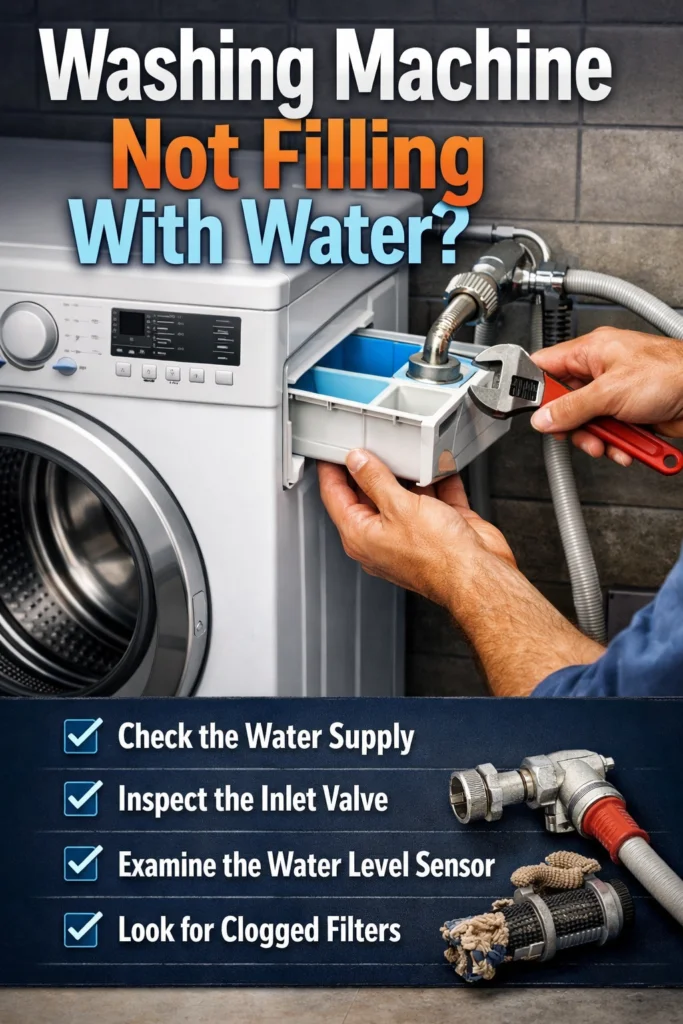
A washing machine not filling with water typically indicates a problem with the water supply, internal valves, or sensors that regulate how the appliance fills. In many situations, the cause is straightforward—such as a closed tap or a blocked inlet screen. In other cases, the issue may originate from an internal component that no longer responds correctly
Signs Your Washing Machine Is Not Filling With Water
- The washing cycle starts but the drum remains dry
- Water enters very slowly instead of filling normally
- The washer makes a humming sound but no water flows
- Clothes remain dry after the wash cycle
- The machine stops shortly after starting
If you notice one or more of these signs, the issue usually involves the water supply, inlet valve, hoses, or internal sensors.
Table of Contents
When the Machine Starts but No Water Appears
Common Causes of a Washing Machine Not Filling With Water
Most people notice this problem in a similar way. The washer begins its cycle, the control panel lights up, and a faint mechanical sound may start—but the drum remains dry.
A modern washing machine follows a predictable sequence when a cycle begins. Once the door locks and the selected program starts, the control system signals the inlet valve to open. Water flows through the supply hoses, passes through small internal screens, and enters the drum. Sensors monitor the water level and stop the flow once the machine reaches the programmed amount.
When the drum stays empty, the interruption occurs somewhere in this sequence. The washer may be unable to receive water, or it may fail to recognize that water should be allowed into the drum. Understanding this difference is important because the appropriate solution depends on whether the problem originates outside the machine or within one of its internal systems
If your washing machine not filling with water problem continues, checking the water supply system and inlet components can help identify the cause.
If your washing machine not filling with water issue continues, inspecting the inlet valve and water supply system can help identify the cause.
Related Guide
Washing Machine Problems: Common Issues and Practical SolutionsWashing machines can experience a range of problems, including drainage failures, spinning issues, or cycle interruptions. This guide explains the most common washer problems and how they can be diagnosed.
Quick Checks Before You Call a Technician
- Make sure the hot and cold water taps are fully open
- Check that the water inlet hoses are not bent or kinked
- Inspect inlet filters for debris or mineral buildup
- Ensure the washer door or lid is fully closed
- Confirm the correct wash cycle is selected
These simple checks can often identify the problem without requiring professional repair.
The Role of the Water Supply in Everyday Laundry
Before examining internal components, it is helpful to remember that a washing machine depends entirely on the home’s plumbing system. If the supply cannot deliver water consistently, the appliance cannot perform its basic function. Two small valves behind the washer control the incoming water flow—one for hot water and one for cold. Even a partially closed valve can restrict the supply enough to disrupt the filling stage.
Hoses also play an important role, even though they often go unnoticed. They sit behind the appliance, usually positioned close to the wall. Over time, they may bend or twist slightly as the washer vibrates during regular use. A tight bend in the hose can restrict water flow enough that the drum fills slowly or not at all.
Water pressure is another factor that sometimes surprises homeowners. In many houses—especially older buildings or apartment complexes—pressure may fluctuate depending on demand. Morning showers or simultaneous appliance use can reduce the amount of water available to the washer. A quick check of nearby faucets can help determine whether the problem is limited to the washing machine or part of a broader plumbing issue in the home
For general appliance maintenance guidelines, you can review recommendations from Consumer Reports appliance maintenance guide .
The Small Components That Control Water Entry

Inside the washing machine, the most critical component responsible for filling is the inlet valve. This electrically controlled valve opens when the machine receives a signal to begin the wash cycle. When the system functions properly, the process happens quietly and quickly. Water enters the drum without much notice and continues until the programmed level is reached.
Over time, several factors can interfere with this process:
- Mineral deposits may accumulate in the small filter screens attached to the valve.
- Sediment from household pipes can collect inside the mesh filters.
- The valve itself can wear out after years of repeated opening and closing.
A clogged screen typically slows water flow rather than stopping it completely. In these cases, the drum may fill very slowly, and the washer may take longer than usual to begin washing. A worn inlet valve often behaves differently. The machine may produce a low humming sound as the electrical system attempts to open the valve, yet no water enters the drum.
These types of issues often develop gradually, which explains why some people notice inconsistent filling before the washer stops taking in water entirely
Related Guide
Washing Machine Shaking Too Much During Spin CycleA washing machine that shakes excessively during spinning may indicate leveling issues, overloaded laundry, or worn suspension parts. Learn what causes excessive vibration and how to fix it.
When the Washer’s Safety Systems Intervene
Modern washing machines include several safety mechanisms designed to prevent leaks or mechanical damage. Occasionally, these protective systems can create the impression that the washer has stopped functioning.
One common example involves the door lock or lid switch. The machine will not allow water into the drum unless the door is fully closed and securely locked. This safeguard prevents water from spilling out if the door opens during a cycle.
If the latch becomes misaligned or the switch begins to wear out, the washer may fail to detect that the door is properly closed. The machine may power on normally yet refuse to begin filling because the locking signal is incomplete. Sensors also play a role in controlling water levels. A pressure switch measures how much water is already inside the drum. If this sensor sends inaccurate readings, the washer may mistakenly interpret the drum as already full, even when it is empty.
Although these systems are designed to protect the appliance, they can sometimes produce confusing symptoms when something within the system stops working correctly.
A Quick Look at Two Everyday Situations
Many service technicians observe that washing machine issues often arise from small changes in routine rather than major mechanical failures.
Scenario one: A household shifts the washing machine slightly while cleaning the laundry area. After being pushed closer to the wall, the appliance compresses the supply hose behind it. The hose bends sharply, restricting water flow during the next wash cycle.
Scenario two: Plumbing work elsewhere in the home sends sediment through the water lines. Some of this debris settles inside the washer’s inlet filter. The machine still powers on and begins the cycle, but the drum remains dry because water cannot pass through the clogged screen.
In both cases, the washing machine itself is not damaged. It simply cannot receive water through the supply system. Situations like these explain why many filling problems can be resolved without replacing major components.
What This Problem Cannot Realistically Indicate
When people encounter appliance issues, it is natural to assume the entire machine has failed. With filling problems, that assumption rarely reflects the actual situation.
A washer that powers on, locks its door, and begins a cycle already demonstrates that several important systems are functioning. The motor, electronic controls, and user interface are still active. The absence of water usually points to a much narrower set of possibilities—such as supply interruptions, clogged filters, or a single valve that is no longer responding.
Some online discussions suggest that any washer malfunction requires replacing the control board or even the entire appliance. In practice, technicians often find much simpler explanations. Replacing an expensive electronic component without first checking the water supply would be similar to replacing a car engine when the fuel tank is empty
Related Guide
Washing Machine Keeps Pausing: 8 Troubleshooting Tips That May HelpIf your washer repeatedly pauses during a wash cycle, the issue could involve drainage delays, imbalance detection, or sensor problems. This guide explains possible causes and solutions.
Practical Safety and Maintenance Considerations

Working around household appliances requires caution. Washing machines combine electricity and water in the same system, which means even small inspections should be performed carefully.
Before checking hoses or removing inlet filters, it is advisable to
- Turn off the water supply valves
- Disconnect the appliance from electrical power
- Keep towels or a small container nearby to catch any remaining water
Routine maintenance can also reduce the likelihood of filling problems. Periodically inspecting hoses and cleaning inlet screens helps maintain consistent water flow. Another useful habit is leaving enough space behind the washing machine so hoses are not pressed tightly against the wall. These small precautions help reduce strain on the appliance and extend the lifespan of its internal components
Regular maintenance can help prevent problems such as a washing machine not filling with water by keeping hoses and inlet filters clean.
Regularly checking water hoses, inlet filters, and supply valves can prevent many washing machine filling problems. A simple inspection every few months helps maintain proper water flow and reduces the risk of unexpected cycle interruptions.
Why Appliance Behavior Can Still Surprise Us
Household appliances appear simple from the outside, though their internal operation involves a surprising level of coordination. Modern washing machines rely on sensors, electronic signals, mechanical valves, and water pressure working together in precise timing.
If even one small component behaves differently, the sequence may stop.
Engineers continue refining these systems as washers become more energy-efficient and water-efficient. Newer models often use less water and depend more heavily on sensors to determine the correct level for each cycle. Although these improvements reduce resource consumption, they also make washers more dependent on accurate signals and proper installation.
As appliance designs continue to evolve, technicians regularly encounter new combinations of minor issues that interrupt otherwise routine operation
Related Guide
Washing Machine Making Loud Noise When Spinning: 9 Common Causes and FixesIf your washing machine makes loud banging or grinding noises during the spin cycle, several mechanical issues could be responsible. Learn the most common causes and practical troubleshooting steps.
Looking at Big Claims About Washer Problems
Some repair discussions portray washing machine problems as mysterious or severe. It is easy to encounter dramatic claims suggesting that a washer failing to fill with water indicates a major mechanical breakdown. In many situations, this interpretation exaggerates the problem.
In everyday service work, technicians frequently trace the issue to a closed valve, a clogged screen, or a restricted hose. These conditions can stop a cycle from progressing, but they rarely mean the entire appliance is beyond repair. Recognizing the difference between a simple supply problem and a genuine mechanical failure helps avoid unnecessary concern—and unnecessary repair costs.
In many situations, a washing machine not filling with water is caused by a simple supply or inlet valve issue rather than a major mechanical failure.
In most cases, a washing machine not filling with water can be traced back to a simple issue such as a blocked inlet filter or a closed water supply valve.
A Quiet Moment in the Laundry Room
Laundry appliances rarely attract attention when they function normally. They operate quietly in the background, performing tasks that households depend on every day. When a washer suddenly stops filling with water, it interrupts that routine and draws attention to a process most people seldom consider. A single wash cycle depends on plumbing, sensors, valves, and electronic controls working together inside a compact appliance.
Sometimes restoring that balance begins with something as simple as fixing a washing machine not filling with water by checking the supply valve or inlet filter.
Many homeowners first notice the washing machine not filling with water problem when the drum remains completely dry after the cycle starts.
Recommended Washing Machine Repair Guides
Frequently Asked Questions
Why is my washing machine not filling with water properly?
If the water tap is open but the washing machine is still not filling with water, the issue may involve clogged inlet filters, a kinked water hose, or low water pressure. In some cases, the water inlet valve inside the machine may be worn or blocked, preventing water from entering the drum.
Can low water pressure cause a washing machine to stop filling?
Yes, low household water pressure can prevent a washing machine from filling properly. Washing machines require a steady flow of water to begin and maintain the wash cycle. If the pressure is too low, the machine may struggle to fill or may stop the cycle entirely.
How do I clean the washing machine water inlet filter?
To clean the inlet filter, first turn off the water supply and unplug the washer. Remove the water hoses from the back of the machine and locate the small mesh screens inside the inlet ports. Carefully remove any debris or mineral buildup, rinse the filters with water, and reconnect the hoses securely.
When should I call a professional for a washing machine that is not filling with water?
If you have already checked the water supply, hoses, and inlet filters but the washer still does not fill, the issue may involve the water inlet valve, pressure switch, or electronic control board. In these cases, contacting a qualified appliance repair technician is usually the safest and most reliable option


6 comments
[…] Related : Washing Machine Not Filling With Water: 10 Causes and Easy Fixes […]
[…] Washing Machine Not Filling With Water – Causes Explained […]
[…] Washing Machine Not Filling With Water: 10 Causes and Easy Fixes […]
[…] Washing Machine Not Filling With Water […]
[…] Washing Machine Not Filling With Water – 10 Causes & Easy Fixes […]
[…] Washing Machine Not Filling With Water: 10 Causes and Easy Fixes […]