Washer Fills Then Immediately Drains: 7 Causes & Solutions
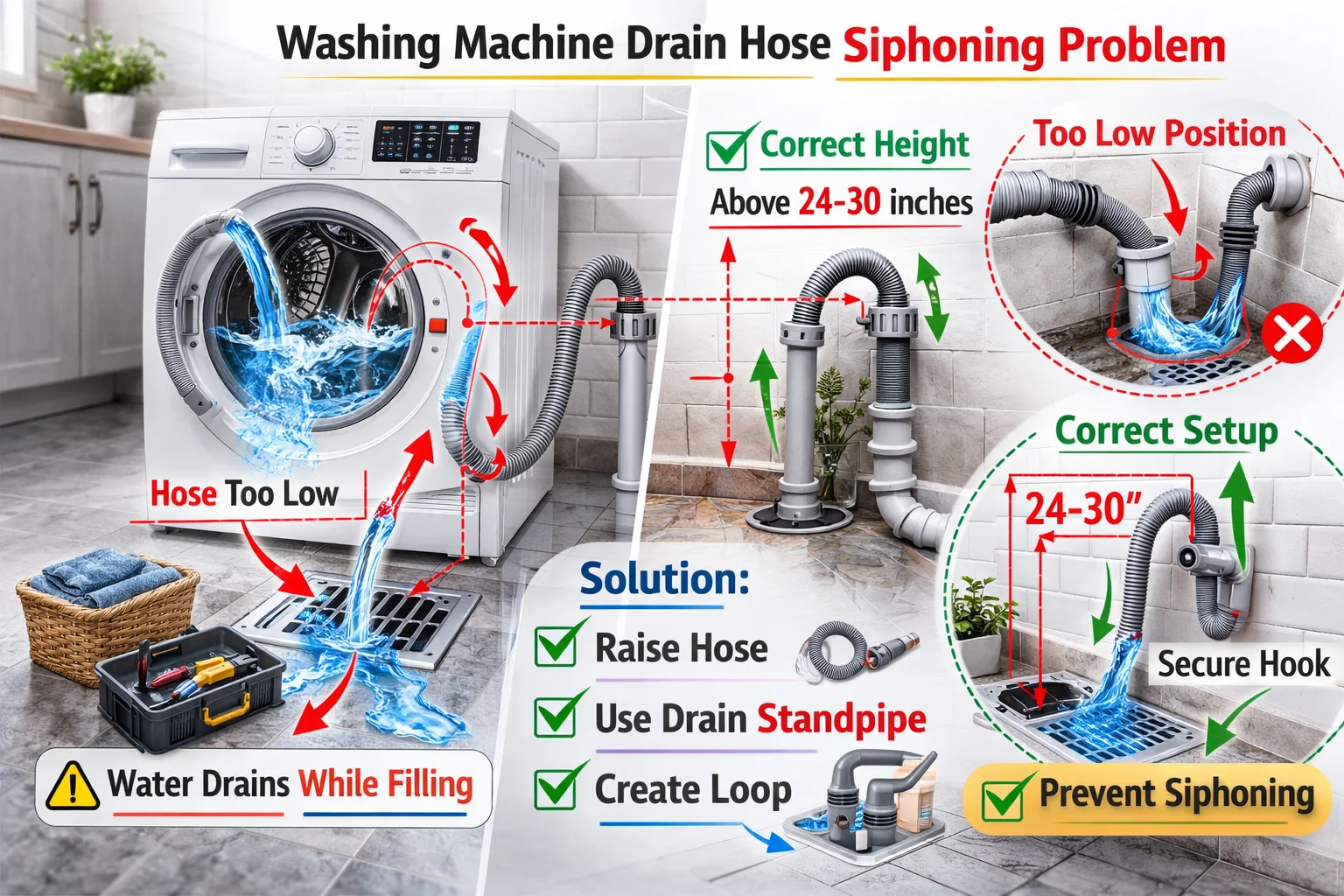
A washing machine that fills and then immediately drains is usually reacting to a setup or sensing issue rather than a serious mechanical fault. In many situations, the appliance is actually working as intended, protecting itself from overflow, incorrect water levels, or unstable operating conditions. Understanding how water flow, internal pressure systems, and sensors interact during a wash cycle can help explain why a washing machine fills then immediately drains without completing the process.
If your washing machine fills then immediately drains, the most common cause is a siphoning issue, incorrect drain hose placement, or a faulty water level sensor. In most cases, adjusting the hose height or checking basic components can resolve the problem quickly without major repairs.

Quick Troubleshooting Checklist
- Check if the drain hose is too low or inserted too deep
- Make sure there is an air gap to prevent siphoning
- Inspect water inlet valve and filters
- Verify proper water pressure in your home
- Reset the washing machine for 5–10 minutes
Why Does a Washing Machine Fill Then Immediately Drain?
If your washing machine fills then immediately drains, the problem is often related to how water enters, stays inside, or is detected by the washer. A drain hose installed incorrectly can create a siphoning effect, while restricted water flow or a faulty water-level sensing system can prevent the washer from completing its startup checks.
The timing of the problem provides an important clue. If water begins leaving the tub while the washer is still filling, check the drain hose and installation first. If the washer fills normally and then drains after a short pause, the water-level sensor, lid or door lock, control system, or another component may need closer inspection.
What Should You Check First?
Before replacing any washer parts, start with the parts and conditions that are easiest to check. A washing machine fills then immediately drains problem can sometimes be caused by drain hose positioning, restricted water flow, or a simple installation issue rather than a failed internal component.
1. Watch the Drain Hose
Check whether water is leaving the washer while it is still filling. If it is, incorrect drain hose positioning or siphoning should be investigated first.
2. Check Water Flow
Make sure both water supply valves are open and the inlet screens are not restricted. Slow filling can cause some washers to stop the cycle.
3. Observe the Timing
Note whether the washer drains immediately, after several seconds, or only after filling to a certain level. The timing can help narrow down the cause.
4. Check the Lid or Door
Make sure the lid or door closes and locks properly. A washer that cannot confirm the door or lid is secure may interrupt the cycle and drain the water.
Quick tip: Do not start by replacing the control board, water-level sensor, or drain pump. First determine whether water is leaving because of siphoning, entering too slowly, or being intentionally drained by the washer’s control system.

7 Common Causes and Fixes
When a washing machine fills then immediately drains, the cause can range from an incorrectly positioned drain hose to a problem with water-level sensing or another washer component. The best approach is to start with simple installation and water-supply checks before moving toward internal parts.
1. Drain Hose Is Installed Too Low
One of the first things to check is the drain hose. If it is positioned too low, water can begin flowing out of the washer as soon as it enters. This is commonly associated with a siphoning effect, which prevents the tub from maintaining the water level required by the wash cycle.
Check the installation instructions for your specific washer and make sure the drain hose is installed at the manufacturer’s recommended height. The hose should also not be pushed excessively far into the standpipe or sealed so tightly that proper air movement is prevented.
Quick check: Watch the drain hose while the washer is filling. If water is continuously leaving at the same time, investigate the hose position and possible siphoning before replacing parts.
2. Drain Hose Is Inserted Too Deep
Even when the drain hose is installed at an appropriate height, inserting it too deeply into the drain pipe can contribute to siphoning. The washer may continue filling while water is pulled out through the drain, making it appear as though the appliance is unable to hold water.
Remove excess hose from the standpipe and check the installation requirements for your model. Avoid creating an airtight connection around the hose because the drainage system needs proper air circulation.
3. Water Inlet Flow Is Too Slow
A washer can also fill and drain when it cannot reach the expected water level within the programmed time. Restricted inlet screens, partially closed supply valves, low household water pressure, or a worn water inlet valve can reduce the amount of water entering the machine.
Check that the hot and cold water supply valves are fully open if your washer uses both supplies. Inspect the accessible inlet screens for buildup and make sure the water hoses are not sharply kinked.
4. Water-Level Sensor or Pressure System Problem
The washer needs to know how much water is inside the tub before it can safely continue the cycle. Depending on the model, this information may come from a pressure-based water-level system or another sensing arrangement.
A blocked, kinked, disconnected, or damaged pressure hose can cause incorrect water-level information. If the washer appears to fill normally but then suddenly drains instead of beginning the wash cycle, the sensing system may require further diagnosis.
Internal sensor testing should be performed according to the washer’s service information because designs and testing procedures vary between models.
5. Lid Lock or Door Lock Is Not Confirming Proper Closure
Some washers will fill with water but stop or drain if the control system cannot confirm that the lid or door is securely closed. This safety system prevents the washer from continuing certain parts of the cycle when the required lock signal is missing.
Make sure clothing is not trapped around the lid or door, and check for visible damage around the latch area. If the washer repeatedly fills and drains while showing a lock-related warning or unusual locking behavior, the lock system may need further testing.
6. Control System or Cycle Error
The washer’s control system coordinates filling, sensing, agitation, and draining. A temporary electronic error or a fault in the control system can interrupt this sequence and cause the washer to drain before the wash cycle begins.
A simple power reset may help identify a temporary control glitch. Disconnect the washer from power for several minutes, then reconnect it and select a normal cycle. If the same behavior returns repeatedly, the reset has not fixed the underlying problem and further diagnosis may be necessary.
7. Drain or Internal Component Problem
If the drain hose installation, water supply, and basic sensing checks appear normal, an internal component may be involved. Depending on the washer design, possible areas can include the water inlet system, pressure system, control components, wiring, or drain-related components.
Internal diagnosis should not begin with random part replacement. A proper diagnosis helps determine whether the washer is intentionally draining because of a detected condition or whether a component is failing to operate as expected.
Quick Cause Guide
- Water drains while filling: Check for siphoning and drain hose installation.
- Fills very slowly: Check water supply, inlet screens, pressure, and inlet valve.
- Fills normally then drains: Check the water-level sensing and safety systems.
- Lock does not engage: Inspect the lid or door lock system.
- Problem continues after a reset: Further diagnosis may be required.
How to Troubleshoot a Washing Machine That Fills Then Immediately Drains
Once you know the most likely causes, the next step is to identify which one matches your washer’s behavior. Follow these checks in order, starting with the easiest external causes before moving toward internal components.
Step 1: Watch What Happens While the Washer Fills
Start an appropriate wash cycle and carefully observe the machine during the first few moments. Pay attention to whether water is entering normally and whether it begins leaving through the drain hose at the same time.
If water is continuously flowing out while the washer is filling, focus on the drain hose and possible siphoning before investigating electronic components.
Important clue: Water leaving the tub while it is still filling points more strongly toward a drainage or installation problem than a failed control board.
Step 2: Check the Drain Hose Position
Inspect the drain hose for incorrect positioning, excessive insertion into the standpipe, sharp bends, or an overly tight connection. Compare the installation with the requirements provided for your specific washing machine.
Correct any obvious installation problem before moving on to internal troubleshooting. A siphoning problem can make a perfectly functional washer appear to have a serious fault.
Step 3: Check the Water Supply
Make sure the household water supply valves are fully open and inspect the inlet hoses for kinks or restrictions. If accessible, check the inlet screens for visible buildup that could restrict water flow.
If the washer takes noticeably longer than usual to fill, reduced water flow may be contributing to the problem. In that situation, the inlet valve and household water pressure may require further testing.
Step 4: Check the Lid or Door Lock
Confirm that the lid or door closes completely and that clothing is not trapped around the latch. Look for obvious damage or anything preventing the lock from engaging normally.
Do not force the locking mechanism. If the washer repeatedly attempts to lock, displays a related warning, or drains after failing to confirm closure, the lock system may need further diagnosis.
Step 5: Reset the Washing Machine
If the basic checks look normal, disconnect the washer from power for several minutes. Reconnect it and run a suitable test cycle according to the manufacturer’s instructions.
If the washer works normally after the reset and the problem does not return, a temporary electronic issue may have been involved. If the same problem happens again, the reset has not repaired the underlying cause.
Step 6: Pay Attention to the Timing
The exact timing of the drain can provide another useful clue. Immediate draining during filling points toward siphoning or installation. Filling followed by a pause and then draining can point toward sensing, locking, water-flow, or control-system problems.
Write down what the washer does before it drains. This information can make further diagnosis much easier if professional service is eventually required.
Step 7: Avoid Replacing Parts Without a Diagnosis
Several different problems can produce similar symptoms. Replacing a water-level sensor, inlet valve, control board, or drain component without confirming the fault can waste money and may leave the original problem unresolved.
If the external checks do not identify the cause, use the model-specific service information or have the washer properly diagnosed before purchasing replacement parts.
Troubleshooting Summary
- Watch whether water drains while the washer is filling.
- Check the drain hose installation and possible siphoning.
- Confirm adequate water flow and clean accessible inlet screens.
- Check the lid or door lock for normal operation.
- Reset the washer to rule out a temporary control glitch.
- Use the timing and symptoms to decide whether further diagnosis is needed.

How to Prevent a Washing Machine From Filling and Draining Immediately
Preventing a washing machine fills then immediately drains problem often comes down to proper installation, regular maintenance, and paying attention to changes in washer performance. A few simple checks can reduce the chance of drainage, water-flow, and sensing problems developing.
Keep the Drain Hose Properly Positioned
Check the drain hose after moving or reinstalling the washer. Make sure it remains installed according to the manufacturer’s recommended height and position.
Maintain Good Water Flow
Keep the water supply valves fully open and periodically inspect the inlet hoses and accessible filter screens for restrictions or buildup.
Avoid Overloading the Washer
Follow the recommended load size for your washer. Excessive loads can contribute to unusual cycle behavior and place additional stress on mechanical and control components.
Pay Attention to Changes
If the washer suddenly takes longer to fill, starts draining at unusual times, or repeatedly interrupts cycles, investigate the change instead of continuing to run repeated cycles.
Maintenance tip: If the washer has recently been moved, installed, or disconnected, check the drain hose and water connections before assuming that an internal component has failed.
When to Call a Technician
Many cases of a washing machine fills then immediately drains problem can be narrowed down with basic checks. However, professional diagnosis becomes the better option when the problem continues after checking the drain hose, water supply, and other accessible causes.
Professional Help May Be Needed If:
- The washer repeatedly fills and drains even after the drain hose installation has been checked.
- The washer fills normally but drains after a pause without starting the wash cycle.
- The control panel shows error codes or behaves unpredictably.
- The washer has electrical symptoms such as burning smells, damaged wiring, sparks, or repeated breaker trips.
- Water enters very slowly despite normal household water supply and open valves.
- The problem appears to involve an internal water-level sensor, pressure system, control board, wiring, or another component that requires testing.
Safety first: Stop using the washer if you notice burning smells, smoke, sparks, damaged electrical wiring, or water reaching electrical connections. Disconnect power only when it is safe to do so and arrange appropriate inspection.
Avoid replacing expensive parts based only on the symptom. A washer that fills and immediately drains can have several possible causes, and proper diagnosis is usually more effective than replacing components one at a time.
Key Takeaways
- A washing machine fills then immediately drains problem is often caused by drain hose positioning or siphoning.
- A faulty water-level sensor, pressure hose, or restricted water supply can also interrupt the cycle.
- Check the drain hose and water supply before assuming that an expensive internal component has failed.
- Slow filling can cause some washers to cancel the cycle and drain the water automatically.
- Persistent problems, electrical symptoms, or suspected internal component failures may require professional diagnosis.
You May Also Like
If your washing machine is filling, draining, or stopping unexpectedly, these related troubleshooting guides can help you identify other possible water-flow, sensing, drainage, and cycle problems.
- Washing Machine Not Filling With Water: 10 Causes and Easy Fixes
- Washing Machine Water Inlet Valve Problems
- Washing Machine Not Draining Water
- Top Load Washing Machine Not Draining
- Washing Machine Not Detecting Water Level
- Washing Machine Stuck on Sensing Cycle: Fix Guide
- 7 Causes Why Washing Machine Fills Too Slowly
- Washing Machine Water Not Pumping Out
- Washer Fills With Water Then Stops
- Washing Machine Problems: Complete Troubleshooting Guide


Comments