9 Causes of Washing Machine Sudden Loud Bang Noise and Easy Fixes
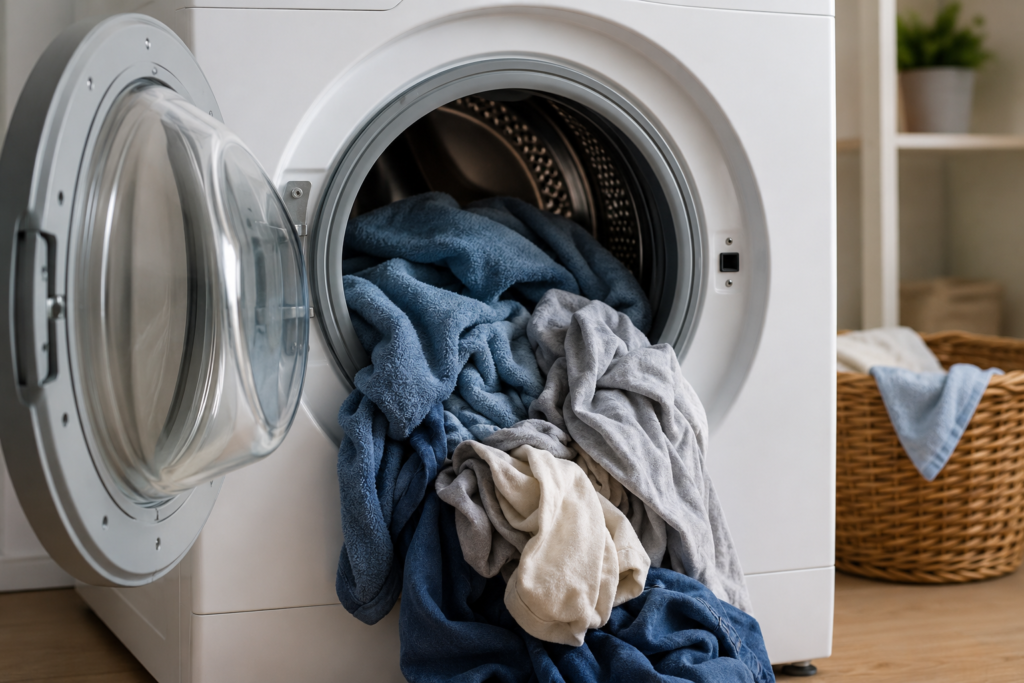
Don’t panic — a washing machine sudden loud bang noise is one of the most common washer problems homeowners experience, and in many cases, the fix is simpler than expected. The loud banging sound is usually caused by an unbalanced laundry load, worn suspension parts, loose internal components, or foreign objects trapped inside the drum. While some noises are harmless and easy to fix at home, repeated banging during the spin cycle can also signal a more serious mechanical issue. Before calling a technician, it’s important to identify when the noise happens, how severe it is, and whether the washer is vibrating, shaking, or leaking at the same time. This guide explains the most common causes, warning signs, troubleshooting steps, and practical fixes to help you stop the problem safely.
Quick Key Takeaways
- Most washing machine banging noises are caused by unbalanced laundry loads during the spin cycle.
- Repeated loud banging with small loads usually points to shock absorber, spring, or bearing problems.
- Metallic knocking sounds often come from coins, screws, or other foreign objects trapped inside the drum.
- A washer that is not level can create aggressive vibration and loud cabinet impact noises.
- Stop using the machine immediately if banging is combined with grinding, leaking, burning smells, or drum wobbling.
Table of Contents
That Bang Isn’t Always What You Think
Most people hear a sudden loud bang from their washer and immediately imagine the worst — a broken drum, motor failure, or something catastrophically expensive. In reality, the majority of banging complaints come down to something far more mundane: laundry shifted to one side during the spin cycle, the machine went off-balance, and the tub swung hard enough to hit the outer cabinet.
It sounds dramatic, but it happens constantly — especially with heavier items like bath towels, denim jeans, or bed linens that tend to clump together as the drum builds speed. That said, not every bang is harmless. The critical difference between a load-balance issue and a real mechanical problem usually comes down to how the noise behaves:
- A single loud thump that stops after redistributing clothes → almost certainly a balance problem
- Banging that continues through every cycle regardless of load size → a structural or mechanical issue
- Bang paired with grinding, vibration, or leaking → something has failed and needs professional attention
Understanding which category your problem falls into will save you time, money, and a lot of unnecessary stress . A washing machine sudden loud bang noise usually becomes most noticeable during high-speed spin cycles when the drum loses balance or internal suspension parts begin wearing out.
Why an Unbalanced Load Creates Such a Violent Sound
To understand the noise, it helps to picture what’s actually happening inside the machine. During a spin cycle, the drum rotates anywhere from 800 to 1,400 RPM depending on the model and setting. At those speeds, even a relatively small weight imbalance creates enormous centrifugal force.
If a heavy blanket has bunched to one side, the imbalance grows exponentially as the drum accelerates — and eventually the tub swings far enough to make hard contact with the outer cabinet. You’re not hearing something break. You’re hearing the physical impact of a spinning drum thrown off its center. Most modern machines detect this automatically and will slow down or stop the spin cycle, sometimes showing an error code. That’s the machine protecting itself — not a sign that something is permanently broken.
Quick fix for an unbalanced load:
- Pause the washer and open the door
- Manually spread the clothes evenly around the drum
- Remove a few items if the machine is overpacked
- When washing a single large item like a comforter, add two or three towels to act as counterweights
- Restart the cycle and monitor
If the banging stops completely, you’ve found your answer
When the Problem Goes Deeper

If redistributing the load doesn’t solve it. or if the machine bangs even with small, light loads the suspension system is the most likely culprit. This is where the diagnosis gets a little more involved, but it’s still very manageable if you know what to look for.
Worn or Failed Shock Absorbers (Front-Loaders)
Front-loading washers use hydraulic shock absorbers to dampen drum movement during high-speed spinning. Think of them exactly like the shock absorbers on a car. they absorb energy and prevent excessive movement. Over time, the internal fluid leaks or the piston wears out, leaving the drum with almost nothing controlling its motion.
Signs your shock absorbers have failed:
- Banging gets noticeably worse as spin speed increases
- Excessive vibration even with small, balanced loads
- Drum moves far more than a gentle spring-back when pushed by hand
- Oily residue visible around the shock absorber body after removing the access panel
Replacing shock absorbers is a moderately involved repair, but far less costly than ignoring it until the drum shaft cracks or the tub splits
Broken Suspension Springs (Top-Loaders)
Top-loading machines take a different approach. suspension springs hang the outer tub from the machine frame. When one breaks or detaches, the tub loses its balanced support and begins hanging unevenly. During spinning, the unsupported side swings and slams against the cabinet in a consistent, rhythmic pattern.
Signs of a broken suspension spring:
- Tub visibly sitting lower or tilted to one side
- Rhythmic banging that follows the drum’s rotation pattern
- Machine leans noticeably when loaded
- Loud clunking as the drum changes direction
You can often spot this without disassembling anything. Open the lid and look at the tub position. If it’s noticeably lower on one side, a broken spring is almost certainly responsible. On most top-loader models, replacing the spring is a manageable DIY repair
Damaged Drum Bearings
Bearing failure is one of the more serious mechanical causes of washing machine banging and unfortunately, one of the most expensive to repair. The drum bearing supports the shaft the inner drum rotates on. As it wears, the drum develops play and begins to wobble slightly during spinning. At low speeds this creates a rumbling or grinding sound. At high spin speeds, the wobble becomes severe enough that the drum physically contacts the outer tub.
How to test your drum bearings at home:
- Unplug the machine completely
- Open the door and grab the drum
- Try moving it up and down, not just rotationally
- Spin the drum by hand and listen carefully
If you feel noticeable vertical play, or hear grinding when spinning by hand, the bearings are worn. Bearing replacement is labor-intensive and requires significant disassembly on older machines, the repair cost can approach the value of the appliance itself, making replacement worth considering
Foreign Objects: The Sneaky Cause Nobody Checks First

This one gets overlooked more than any other cause.
Coins, screws, bra underwires, hair clips, and small toys can escape clothing pockets and lodge in the space between the inner drum and the outer tub. As the drum rotates, these objects get picked up and dropped repeatedly creating a rhythmic metallic banging that’s remarkably easy to mistake for a mechanical failure.
The telltale signs of a trapped foreign object:
- Banging happens at a very consistent interval. exactly once per drum rotation
- Metallic scraping or clinking sound, not a dull thud
- Noise may change when the drum reverses direction
- Present during both wash and spin cycles
Where to check:
- All drum holes. inspect carefully with a flashlight
- The rubber door gasket on front-loaders (objects lodge in the folds)
- The drain pump filter. coins and metal objects collect here frequently
Cleaning the pump filter alone often resolves unexplained banging and clattering, and it takes about five minutes . In many cases, a washing machine sudden loud bang noise is eventually traced back to coins, screws, bra wires, or other metal objects trapped between the inner and outer drum.
Is Your Machine Level? This Simple Check Gets Skipped Constantly
A washing machine that isn’t sitting level on the floor can generate surprisingly loud banging during the spin cycle. When the machine rocks on uneven feet, normal spin vibration gets amplified into a rhythmic thumping as the machine makes repeated contact with the floor or surrounding cabinets.
How to check if your washer is level:
- Place a spirit level on top of the machine check both front-to-back and side-to-side
- Gently push the machine from each corner it should not rock at all
- If it rocks, identify which foot or feet are off the floor
Most washers have adjustable leveling feet that thread in or out by hand or with a wrench, plus locking nuts to hold them in position once set. Getting all four feet firmly on the floor eliminates this type of banging entirely. If the machine sits on a wooden or suspended floor that flexes under the weight, anti-vibration pads under the feet will provide additional stability
Banging When Filling with Water? This Is a Different Problem
If the loud bang happens while the machine is filling with water. not during spinning. the cause is almost certainly water hammer, a plumbing issue rather than a washing machine malfunction.
Water hammer occurs when the solenoid valve inside the machine closes rapidly, cutting the water flow abruptly. That sudden stoppage sends a pressure shockwave through the supply pipes, creating a loud bang or thud that can travel through your walls.
How to fix water hammer:
- Reduce water pressure at the main supply. ideal residential pressure is 60–80 PSI
- Secure loose supply pipes that rattle when pressure spikes
- Install a water hammer arrestor on the washing machine supply lin. these contain a pressurized air chamber that absorbs the shockwave before it reaches the pipes. They cost $10–$30 and install in under an hour
Washing Machine Sudden Loud Bang Noise Diagnosis Guide
Use this reference to narrow down your problem fast:
| When the Bang Happens | Most Likely Cause |
|---|---|
| During spin cycle with large loads | Unbalanced laundry load |
| During spin with any load size | Worn shocks, springs, or bearings |
| When filling with water | Water hammer in supply pipes |
| Brand new machine, immediately | Shipping bolts not removed |
| Rhythmic metallic clink | Foreign object in drum |
| Heavy knock from lower cabinet | Loose counterweights |
Stop Using the Machine Immediately If You Notice Any of These
Some situations go well beyond DIY troubleshooting. Stop the machine and unplug it if you experience any of the following:
- Banging continues with a small, properly balanced load
- The drum wobbles visibly or feels loose when pushed
- Grinding noise gets louder with each successive wash cycle
- Burning smell or signs of overheating during operation
- Water leaking from anywhere other than the drain hose
- Machine aggressively walking across the floor during spinning
Running a mechanically compromised washer risks cracking the outer tub, bending the drum shaft, burning out the motor, or turning a $200 repair into a complete appliance replacement
Important Safety Note Before Troubleshooting
Always unplug the washing machine before inspecting internal components, suspension parts, belts, or the drum assembly. Even when the washer appears turned off, electrical components may still carry power.
Avoid placing your hands near moving drum components or underneath the machine while it is connected to power. If the washer smells like burning plastic, leaks water near electrical parts, or produces grinding noises alongside loud banging, stop using it immediately.
For major suspension, bearing, or motor-related repairs, professional diagnosis is usually the safest option.
Step-by-Step Troubleshooting Checklist
Work through these steps in order before calling a technician:
Step 1 — Stop the machine immediately
Continuing to run a banging washer risks serious internal damage.
Step 2 — Redistribute or reduce the load
Open the door, spread clothes evenly, remove excess items. Restart and monitor. This resolves the majority of banging complaints.
Step 3 — Check that the machine is level
Push from each corner. zero rocking. Adjust leveling feet as needed.
Step 4 — Test the drum by hand
With the machine unplugged, spin the drum and push it up and down. Grinding or vertical play points to bearing or suspension failure.
Step 5 — Inspect for foreign objects
Use a flashlight to check drum holes, the door seal folds, and the drain pump filter.
Step 6 — Visually inspect suspension components
Look for broken springs, oily leaking shocks, or loose counterweight bolts through the access panel.
Step 7 — Call a qualified technician
If banging continues after all of the above, a mechanical failure requires professional diagnosis
Repair Cost Overview: Know Before You Call
| Repair Type | Estimated Cost |
|---|---|
| Shock absorber replacement | $100 – $250 |
| Suspension spring replacement | $75 – $150 |
| Drum bearing replacement | $200 – $450 |
| Counterweight rebolting | $100 – $200 |
| Water hammer arrestor (DIY) | $10 – $30 |
| Leveling and balance adjustment | Free |
For machines that are eight years or older, always ask a technician to honestly assess whether the repair cost makes financial sense compared to replacement
When to Call a Professional
Some repairs are realistic DIY projects. Others genuinely require professional tools, experience, and model-specific parts. Call a qualified appliance technician when:
- Drum bearings are confirmed worn or damaged
- Counterweights are loose and need resecuring
- Multiple suspension components have failed simultaneously
- The machine leaks water in combination with banging noise
- You’ve worked through every troubleshooting step and banging continues
A good technician will give you an honest repair-versus-replace assessment .don’t hesitate to ask for one directly
Common Mistakes That Make the Problem Worse
Ignoring Repeated Banging
Continuing to run a washer that repeatedly bangs during every cycle can damage the suspension system, bearings, drum shaft, and outer tub.
Washing Heavy Items Alone
Comforters, rugs, and blankets easily create severe imbalance when washed by themselves. Mixing smaller towels with bulky items helps stabilize the load.
Overloading the Drum
Overpacking the washer increases stress on shocks, springs, bearings, and the motor, especially during high-speed spinning.
Skipping Pocket Checks
Coins, screws, keys, and metal objects are one of the most overlooked causes of banging and grinding noises inside washing machines.
How to Prevent Washing Machine Banging Noise in the Future
The good news is that most of the causes covered in this guide are entirely preventable. These habits will protect your washer’s suspension system and keep it running quietly for years. Preventing a washing machine sudden loud bang noise usually starts with proper loading habits, regular washer maintenance, and keeping the machine level on the floor. Small maintenance steps can prevent expensive suspension, drum, and bearing damage later.
- Distribute laundry evenly before every cycle. don’t just drop everything in at once
- Never exceed the rated load capacity listed in your owner’s manual
- Empty all pockets before loading . coins and metal objects cause real internal damage
- Mix heavy and light items in each load rather than washing heavy items alone
- Recheck leveling feet periodically, especially after the machine has been moved
- Clean the drain pump filter every two to three months
- Use appropriate spin speed settings — high-speed spinning puts additional stress on aging suspension components
Final Thoughts
A washing machine sudden loud bang noise is alarming in the moment, but in most cases the cause is fixable. and often something you can handle without spending anything at all. Work through the simple checks first: load balance, machine level, foreign objects. If those come back clean and the banging continues, move systematically through the suspension components before drawing any conclusions.
The machines that end up with serious damage are almost always the ones where early warning signs were ignored. Catch the problem now, diagnose it correctly, and your washer will likely give you many more years of reliable, quiet service. In most cases, a washing machine sudden loud bang noise can be fixed early before major internal damage develops.
Many homeowners also notice related problems like washing machine making loud noise when spinning or excessive washing machine shaking during spin cycles.


Comments