Washing Machine Clicking Noise: 7 Causes and Easy Fixes
A washing machine clicking noise is most often caused by a small object stuck in the drum or pump, a worn part, or a part that is trying to engage and can’t. Many causes are easy to check at home, so start with the simple ones before calling for service.
When Does the Clicking Happen?
| When you hear it | Common cause |
|---|---|
| During spin | Object caught between the drum and tub, or loose items in the drum |
| While draining | Debris in the drain pump |
| When the cycle starts or the machine won’t start | Door or lid lock, or a part trying to engage |
| Constant clicking, any time | Worn or loose internal part, which needs a closer look |
Key Points
- Empty pockets and check the drum before washing, since small objects are a common cause
- The timing of the noise helps narrow down the cause
- Clicking that keeps getting louder may mean a worn part
- Fixing it early usually costs less than waiting for a bigger failure
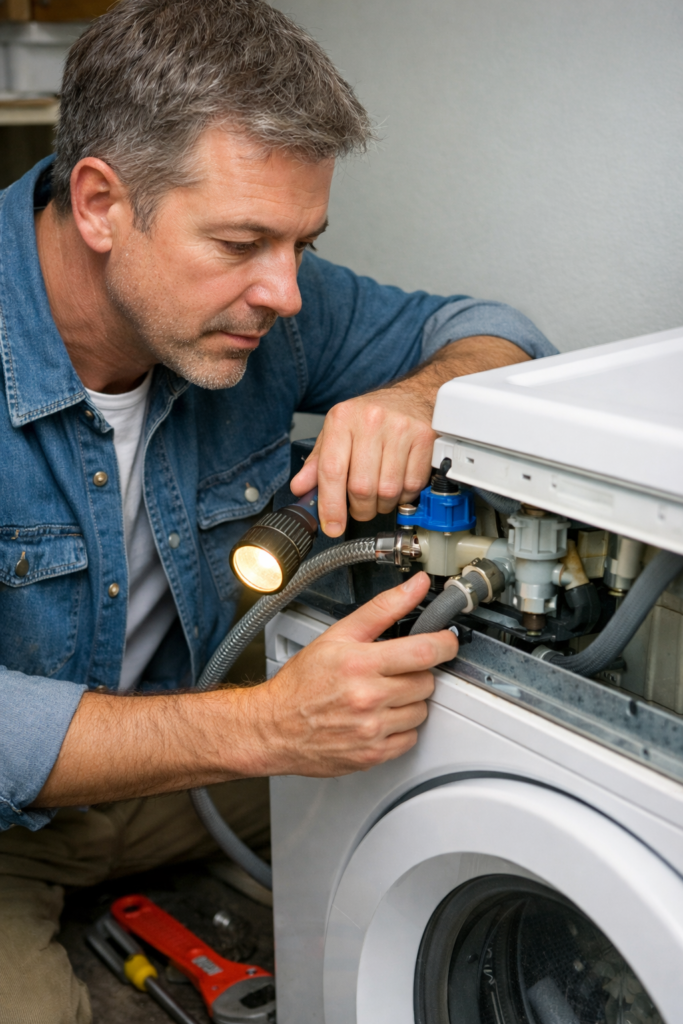
Symptoms of a Washing Machine Clicking Noise Problem
A washing machine clicking noise problem does not always sound the same. The timing and pattern of the clicking can provide valuable clues about what is happening inside the appliance. Paying attention to when the sound occurs is often the fastest way to narrow down the possible cause before starting any repairs.
| Symptom | What It May Indicate |
|---|---|
| Clicking only at the start of the cycle | Door lock mechanism or control relay engaging. |
| Clicking during the spin cycle | Foreign objects, worn pulley, drum movement, or an unbalanced load. |
| Clicking while draining | Drain pump obstruction or debris affecting the impeller. |
| Continuous clicking throughout the cycle | Possible mechanical wear, motor-related issues, or an electronic control problem. |
| Single clicking sound with normal operation | Often a normal operating sound from relays or locking mechanisms on many modern washing machines. |
Quick Tip: Identifying exactly when the clicking noise occurs is usually more useful than focusing on how loud it is. Matching the sound with a specific stage of the wash cycle makes troubleshooting faster and more accurate.
Table of Contents
What a Clicking Sound Actually Tells You
A washing machine operates through a series of controlled movement. spinning, pausing, draining, and restarting in timed cycles. When these actions function smoothly, they create a consistent and predictable rhythm. A clicking sound disrupts that rhythm, which is why it becomes immediately noticeable.
In most cases, the noise is caused by repeated contact between components. Something may be catching, slipping, or attempting to lock into position without fully engaging. The timing of the sound provides valuable diagnostic clues. For example, a click at the beginning of a cycle may relate to electrical switching or door locking mechanisms, while repeated clicking during spinning often suggests movement-related issues.
Clicking during the draining phase may indicate resistance within the drain system, such as a partially blocked pump. Understanding when the sound occurs. whether at startup, during agitation, or while draining. helps narrow down the root cause more effectively than focusing on the sound alone.
The Most Common Reason: Small Objects in the Wrong Place
One of the most frequent causes of a washing machine clicking noise problem is the presence of small foreign objects inside the machine. Items such as coins, buttons, hairpins, or small fabric pieces can pass through the drum and become trapped in areas where they interfere with normal movement.
As the drum rotates, these objects shift position and create a repetitive clicking or ticking sound. The noise often becomes more pronounced at higher spin speeds, making it easier to identify during the spin cycle. In many cases, the sound appears inconsistent at first and then becomes more regular as the object settles. Two areas are particularly prone to trapping debris:
- The rubber door seal (gasket), where small items can hide in folds
- The gap between the inner drum and outer tub, where objects can become lodged
A careful inspection can often resolve the issue. Slowly rotating the drum by hand may reveal slight resistance or a faint ticking sound, helping you locate the obstruction before it causes further damage
Common Causes at a Glance
A washing machine clicking noise problem can develop for several different reasons. While some causes are quick and inexpensive to fix, others may require replacement parts or professional service. This comparison table provides a quick overview to help you narrow down the most likely cause based on your machine’s behavior.
| Possible Cause | When the Noise Usually Occurs | DIY Friendly | Recommended Action |
|---|---|---|---|
| Coins, buttons, or other foreign objects | Spin or drain cycle | ✔ Yes | Inspect the drum, door gasket, and drain filter for trapped objects. |
| Blocked drain pump | While draining water | ✔ Yes | Clean the drain filter and remove any debris from the pump area. |
| Unbalanced laundry load | High-speed spin cycle | ✔ Yes | Redistribute the clothes evenly and run the spin cycle again. |
| Worn drive pulley or belt | During drum rotation | ⚠ Limited | Inspect for wear or seek professional repair if the noise continues. |
| Door lock or control board relay | Beginning of the wash cycle | ✖ No | If the washer fails to start or keeps clicking, further diagnosis may be required. |
Helpful Note: If the clicking noise changes with different wash stages, observe exactly when it happens before replacing any parts. This simple observation can significantly reduce unnecessary repairs and help identify the correct cause more quickly.
When the Sound Comes From Internal Components
Not every washing machine clicking noise problem is caused by loose objects. Over time, internal components experience wear, especially in machines that are used frequently. Many of these parts rely on precise alignment and smooth engagement to function properly. Common mechanical sources of clicking include
- Drain pump impeller: A partially blocked or worn impeller can produce a steady clicking noise during water drainage
- Drive system components: Belts, pulleys, or couplings may slip slightly, leading to intermittent clicking sounds
- Agitator mechanisms (top-load washers): Worn directional cogs or internal gears can create clicking during agitation
These types of issues usually produce consistent, repeatable sounds rather than random clicking. The noise often occurs at the same point in each cycle, which can help distinguish mechanical wear from temporary obstructions
How to Identify the Source of the Clicking Noise
Finding the exact source of a washing machine clicking noise problem is often easier than replacing parts based on guesswork. By observing when the sound occurs and performing a few simple checks, you can narrow down the cause before deciding whether a repair is needed.
-
Listen to when the clicking begins.
Notice whether the sound starts during filling, washing, spinning, or draining. The stage of the cycle is one of the most reliable clues for identifying the affected component. -
Rotate the drum by hand.
With the washing machine switched off and unplugged, slowly turn the drum. If you hear a clicking sound or feel resistance, a foreign object may be trapped between the inner drum and outer tub. -
Inspect the door seal.
Check the folds of the rubber gasket for coins, buttons, bra wires, or other small items that may strike the drum during operation. -
Run a short empty cycle.
Operating the washer without laundry helps determine whether the noise is caused by the appliance itself or by objects left inside clothing pockets. -
Observe the drain cycle.
If the clicking appears only while water is draining, inspect the drain filter and pump area for debris that could interfere with the impeller. -
Check for vibration during spinning.
Excessive movement or an uneven load can place additional stress on moving parts and create clicking sounds that disappear once the machine is properly balanced.
If the clicking noise remains even when the drum is empty and the machine is correctly balanced, the problem is more likely to involve an internal mechanical or electrical component rather than a trapped object.
Expert Insight
In many real-world cases, clicking noises are not caused by major failures but by small mechanical resistance or minor obstructions. However, if the sound becomes consistent and louder over time, it often indicates progressive wear in internal components.
Early inspection and routine maintenance can prevent these issues from turning into costly repairs or complete part replacement.
Many washing machine problems are interconnected. Issues like drainage failure, spinning problems, or excessive vibration can often lead to unusual noises. Understanding these related problems can help you diagnose faults more accurately and prevent repeated breakdowns.
Electrical and Control-Related Clicking
Clicking noises are not always mechanical in nature. Many modern washing machines include electrical relays, switches, and control boards that produce soft clicking sounds when transitioning between cycle stages. In normal operation, these sounds are brief and infrequent.
Concerns arise when the clicking becomes repetitive or disrupts the washing cycle. For instance, if the machine clicks repeatedly without starting, or pauses mid-cycle while making clicking sounds, the issue may involve electronic components. Situations that may indicate a control-related issue include:
- Repeated clicking without drum movement
- The machine pausing and failing to advance in the cycle
- Clicking accompanied by failure to start or lock
In these cases, the problem may involve the control board, timer mechanism, or door lock system. Electrical faults can be more complex and may require professional diagnosis.
A Closer Look at Movement and Balance
Proper balance is essential for smooth washing machine operation. Even a slight imbalance can place stress on internal components, leading to unusual sounds, including clicking or tapping.
An uneven load inside the drum can shift weight to one side, particularly during high-speed spinning. This imbalance forces the machine to compensate, which can create strain on suspension systems and moving parts. Over time, this strain may result in persistent noise. Other contributing factors include
- Worn or weakened shock absorbers
- Loose or damaged counterweights
- An uneven or unstable floor surface
These conditions may start as minor issues but can gradually lead to more serious mechanical wear. Addressing balance problems early can help prevent long-term damage and reduce unnecessary strain on the machine
What This Problem Cannot Realistically Indicate
It is common to assume that any unusual noise signals a serious failure. In reality, a washing machine clicking noise problem does not always indicate that the appliance is on the verge of breaking down completely. A single or occasional clicking sound does not automatically mean:
- The motor is about to fail
- The entire system is malfunctioning
- The machine requires immediate replacement
Some sources tend to overstate the severity of such noises, suggesting that any clicking indicates major damage. This perspective can be misleading. In many cases, the issue is minor, temporary, or easily resolved without extensive repairs
Before You Call a Technician
Many washing machine clicking noise problems can be traced to simple issues that are easy to identify at home. Before scheduling a service appointment, take a few minutes to complete the following checklist. These basic inspections may save both time and repair costs.
Quick Pre-Service Checklist
- ✓ Unplug the washing machine before performing any inspection.
- ✓ Check the drum and rubber door seal for coins, buttons, hairpins, or other small objects.
- ✓ Clean the drain filter and remove any visible debris.
- ✓ Make sure the washing machine is standing on a level surface.
- ✓ Redistribute an uneven laundry load and run another spin cycle.
- ✓ Listen carefully to determine whether the clicking occurs during filling, washing, spinning, or draining.
- ✓ Run a short empty cycle to see if the noise continues without clothing inside.
If the clicking noise remains after completing these checks, or if it becomes louder over time, the issue may involve internal components such as the drive system, drain pump, bearings, or electronic controls. At that stage, a professional inspection is usually the safest and most reliable option.
Practical Steps You Can Take at Home
Before considering professional repair, several practical steps can help identify or resolve a washing machine clicking noise problem. A careful and methodical approach often reveals simple causes that can be addressed without specialized tools. Start with these basic checks
- Turn off and unplug the washing machine
- Inspect the drum and door seal for foreign objects
- Clean the drain filter to remove debris or blockages
- Run a short empty cycle to observe any changes in sound
If the clicking persists, gently check for loose components or unusual movement. Avoid forcing parts or opening sealed sections, as this can lead to additional damage. Recognizing the limits of DIY troubleshooting is important, especially when dealing with internal or electrical components.
This type of washing machine clicking noise problem is very common in household appliances and can often be fixed without professional repair.
Two Everyday Situations That Show How This Happens
In real-world use, a washing machine clicking noise problem often develops in simple and unexpected ways. These everyday scenarios highlight how easily the issue can arise
A coin left in a pocket slips into the drum during a wash cycle. It passes through a small opening and becomes lodged near the drain pump. Each time the machine drains water, the coin shifts slightly, producing a consistent clicking sound during that phase
A washing machine placed on uneven flooring begins to tilt slightly during high-speed spinning. As the load shifts inside the drum, internal components adjust under pressure, creating a light but noticeable clicking sound. Although both situations produce similar noises, their underlying causes differ significantly. Careful observation helps distinguish between them and guides the appropriate solution.

Safety and Practical Considerations
Safety Alert
If your washing machine clicking noise problem is combined with burning smells, water leakage, or electrical issues, stop using the appliance immediately. Continuing to run the machine in this condition can increase the risk of internal damage or safety hazards.
Working with household appliances requires attention to safety. Even simple inspections should be carried out with the machine powered off to avoid injury or further damage. Important safety guidelines include
- Never reach into the drum while it is moving
- Avoid dismantling electrical components without proper knowledge
- Be cautious of sharp edges inside the drum or filter compartment
If the clicking noise is accompanied by burning smells, visible leaks, or electrical irregularities, it is safer to stop using the machine immediately. Continuing to operate a faulty appliance can increase the risk of damage or safety hazards
How to Prevent a Washing Machine Clicking Noise Problem
While some clicking noises are caused by normal wear over time, many can be prevented through simple maintenance and proper everyday use. Developing a few good habits can help reduce unnecessary stress on your washing machine and keep it operating more quietly.
Preventive Maintenance Tips
- Check clothing pockets before every wash to remove coins, keys, screws, and other small objects.
- Clean the drain filter regularly according to the manufacturer’s maintenance schedule.
- Avoid overloading the drum, as excessive weight increases stress on moving components.
- Distribute laundry evenly to reduce vibration during the spin cycle.
- Inspect the rubber door seal occasionally and remove any trapped debris.
- Place the washing machine on a solid, level surface to minimize unnecessary movement.
- Pay attention to new or changing noises and investigate them early before they develop into larger mechanical problems.
Keep Your Washing Machine Running Smoothly
Paying attention to unusual sounds and acting early can help you avoid major repairs. Regular cleaning, proper loading, and basic maintenance checks can significantly extend the life of your washing machine.
Frequently Asked Questions
Here are answers to some of the most common questions homeowners ask about a washing machine clicking noise problem.
Why is my washing machine making a clicking noise during the spin cycle?
Clicking during the spin cycle is commonly caused by loose objects such as coins or buttons, an unbalanced load, a worn drive pulley, or suspension-related wear. The timing and intensity of the noise can help identify the exact cause.
Is a clicking noise always a sign of a serious washing machine problem?
No. Many clicking noises are caused by small foreign objects or normal mechanical operation. However, repeated clicking combined with poor performance, burning smells, or water leaks should be inspected as soon as possible.
Can I continue using my washing machine if it makes a clicking sound?
If the machine operates normally and the sound is minor, you can perform basic inspections first. If the clicking becomes louder, occurs every cycle, or is accompanied by vibration or drainage problems, stop using the appliance until the issue is diagnosed.
How can I prevent a washing machine clicking noise?
Check clothing pockets before washing, clean the drain filter regularly, avoid overloading the drum, keep the washer level, and inspect the rubber door seal for trapped objects during routine maintenance.
When should I contact a professional technician?
Professional service is recommended if the clicking continues after basic troubleshooting, the drum stops rotating, the washer fails to drain or start, or you notice electrical issues, burning smells, or visible water leaks.
About the Author
Muhammad Khalid
Muhammad Khalid is the founder of FixAppLab, where he publishes practical appliance troubleshooting guides for homeowners. His content focuses on washing machines, dryers, and refrigerators, helping readers understand common faults, identify likely causes, and follow clear troubleshooting steps before considering professional repair.
Every article is written with a strong emphasis on accuracy, readability, and user-first guidance. The goal is to provide reliable repair information that helps readers make informed decisions while reducing unnecessary repair costs whenever possible.


1 comment
[…] Clicking Noise Problem – Easy Fix Guide […]