Washer Not Starting on First Attempt: Why It Happens and How to Fix It
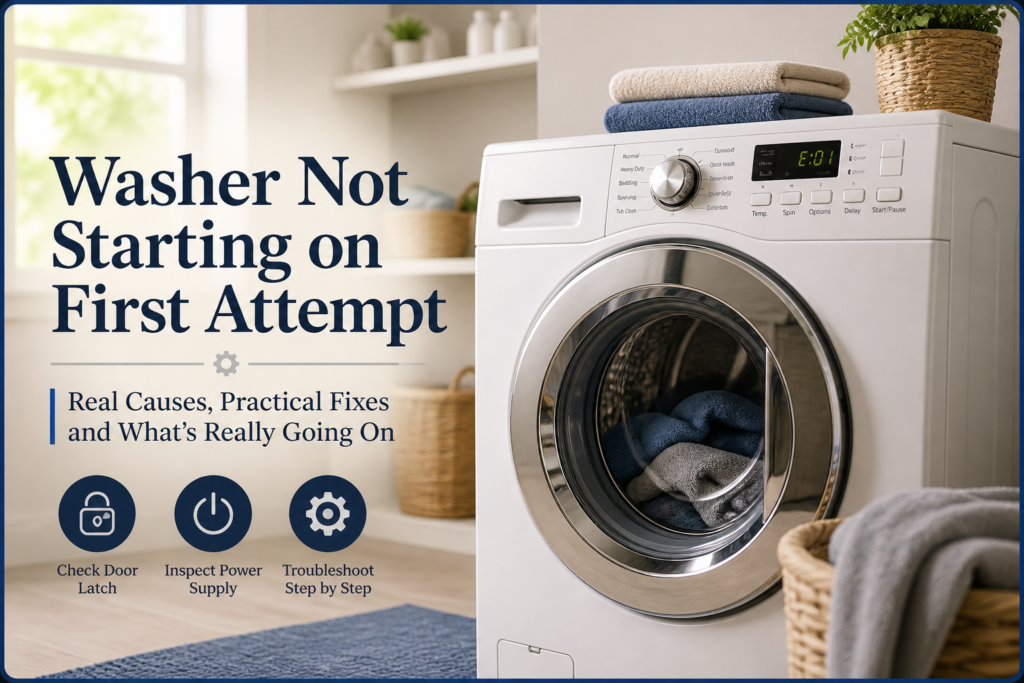
When a washer not starting on first attempt becomes a regular annoyance, it usually means something in the startup process is not fully engaging. The machine isn’t broken .it’s hesitating because a signal is weak, delayed, or incomplete. In most cases, the fix comes down to identifying where that hesitation occurs and correcting it before it turns into a bigger problem
Quick Key Takeaways
- A washer not starting on first attempt is usually caused by delayed signals, not total failure
- Common causes include door latch issues, worn buttons, or minor electrical inconsistencies
- The problem often develops gradually and becomes more noticeable over time
- Simple fixes like checking the door, resetting the machine, or adjusting usage habits can solve it
- Ignoring early signs may lead to more frequent startup delays or component wear
Table of Contents
What Actually Happens When You Press Start
Most people expect a washing machine to behave like a simple switch .press a button, and it runs. In reality, modern washers go through a quick internal checklist before anything moves. This process happens in seconds, but if even one step is slightly off, the machine will pause or ignore the command.
When you press start, the washer checks if the door is locked properly, confirms it has stable power, verifies settings, and prepares internal components like the motor and water valve. If any part of this sequence doesn’t return a clear signal, the washer simply doesn’t proceed. Pressing the button again often works because the missing signal finally completes itself. That’s why a washer not starting on first attempt feels inconsistent .it’s not failing, it’s waiting
Why This Problem Shows Up in Real Life
This issue rarely appears out of nowhere. It usually develops slowly, often without the user noticing at first. You might press start and nothing happens, then press it again and it works. At first, it feels like a minor glitch. Over time, it becomes more frequent.
In real-life situations, this often happens during busy routines. You load laundry quickly, close the door without much attention, press start, and walk away. If the door wasn’t perfectly aligned or the button press didn’t register properly, the machine won’t begin the cycle.
Another common situation is when the washer has been used multiple times in a row. Internal components warm up slightly, and sensors or switches may respond a bit slower. This delay can cause the washer not starting on first attempt, especially during back-to-back loads
The Most Common Causes Behind the Delay

Understanding the causes helps you fix the issue without guessing. In most cases, the problem comes from a small number of components that control the startup process.
Here are the most realistic causes
- Door or lid switch not engaging properly – The washer needs confirmation that the door is fully locked. Even a slight misalignment can prevent startup.
- Worn start button or control panel – Repeated use can weaken the internal contacts, causing delayed response.
- Power supply inconsistency – Loose plugs or unstable outlets can interrupt the initial signal.
- Control board delay – The internal system may take longer to process commands due to age or minor faults.
- Overloaded drum – Excess weight can interfere with internal checks, preventing the machine from starting immediately.
These causes are not dramatic failures. They are small inefficiencies that build up over time
How to Fix Washer Not Starting on First Attempt Quickly
Fixing this issue doesn’t always require technical skills. Many cases can be resolved with careful observation and a few simple adjustments. Start with the basics. Make sure the washer is properly plugged in and the outlet is stable. A loose connection might still power the display but fail to deliver a strong startup signal.
Next, check the door. Close it firmly and listen for a clear click. If you need to push harder than usual, the latch may be wearing out or misaligned. Cleaning the latch area can also help if dirt or detergent residue has built up.
If the washer not starting on first attempt continues, try resetting the machine. Unplug it for a few minutes to clear any temporary electronic glitches. This often restores normal response, especially if the issue is related to the control system. Pay attention to how you press the start button. Some washers require a steady press rather than a quick tap. If you notice that pressing more firmly or holding the button works better, the switch may be wearing out
Quick Troubleshooting Guide
If your washer is not starting on the first attempt, you can quickly narrow down the issue by checking a few key areas. This helps you avoid unnecessary repairs and saves time.
- Make sure the power plug is firmly connected and the outlet is working properly
- Close the washer door securely until you hear a solid click
- Press and hold the start button for 2–3 seconds instead of tapping it quickly
- Reduce the load if the drum feels too full or unbalanced
- Unplug the washer for 5 minutes to reset the internal system
When the Problem Comes From Internal Behavior

Not every issue is visible from the outside. Sometimes the washer behaves this way because of how its internal systems interact. For example, the control board might delay processing if it receives mixed signals from sensors. This doesn’t trigger an error .it simply causes hesitation. Similarly, if the machine detects imbalance or unusual load distribution, it may pause before starting.
In these cases, the washer not starting on first attempt is actually a protective behavior. The machine is trying to avoid running under unsafe or inefficient conditions. This is why the issue can feel unpredictable. It depends on factors like load size, temperature, and how recently the machine was used
Small Habits That Make the Problem Worse
User habits play a bigger role than most people realize. Even a well-functioning washer can start showing delays if it’s used in a way that stresses its systems. One common mistake is overloading the drum. When clothes are packed tightly, the washer struggles to assess balance. This can delay startup or require a second attempt.
Another habit is rushing the process. Pressing buttons too quickly or repeatedly can confuse the control system. Some washers need a moment to register commands, especially after powering on. Ignoring early signs is also a factor. If the washer occasionally fails to start on the first attempt and you don’t address it, the issue often becomes more frequent
Common Mistakes That Make the Issue Worse
Many users unintentionally make the problem worse by overlooking small details during daily use. These habits can increase wear on components and lead to more frequent startup delays.
- Pressing the start button repeatedly in frustration
- Slamming the washer door to force it to lock
- Ignoring occasional delays instead of investigating early
- Using unstable or shared power outlets
- Running back-to-back heavy loads without giving the machine a break
Real-Life Scenario: A Subtle Door Issue
Consider a household where the washer works perfectly most of the time, except for occasional delays when starting. The user notices that pressing the door slightly while hitting the start button makes it work instantly.
This points to a door latch issue .not a major failure, but a small misalignment. Over time, the latch may wear down or shift slightly. The washer still functions, but only when the door is positioned just right. This kind of problem often goes unnoticed because it doesn’t completely stop the machine from working
Real-Life Scenario: Control Panel Wear
In another situation, a user finds that the washer responds only after pressing the start button multiple times. The machine eventually starts, but the delay becomes frustrating. Here, the issue is likely with the control panel. The button’s internal contacts have worn down from repeated use. Each press doesn’t always create a full connection, so the signal only goes through after several attempts. This is a gradual issue, not a sudden failure. It reflects normal wear rather than a defect
When to Consider Professional Help
There comes a point where basic troubleshooting isn’t enough. If the washer not starting on first attempt becomes consistent and none of the simple fixes work, it’s worth getting a professional opinion.
Signs that you may need help include repeated delays, unresponsive buttons, or unusual behavior during startup. If the machine starts acting unpredictably beyond just the initial delay, the issue could involve deeper electrical components. A technician can test parts like the control board, switches, and wiring more accurately. This helps avoid replacing parts unnecessarily
Safety Considerations You Shouldn’t Ignore
Even though this problem often seems minor, it’s still important to approach it carefully. Washing machines combine water and electricity, which means small faults can become risky if ignored. Avoid forcing the machine to start by repeatedly pressing buttons or slamming the door. This can worsen mechanical wear and lead to more serious damage.
If you notice unusual smells, sparks, or sudden shutdowns, stop using the washer immediately. These are signs that go beyond a simple startup delay. Keeping the washer clean and dry, especially around the control panel and door area, also helps maintain reliable operation
Expert Tips for Reliable Washer Performance
A few small adjustments in how you use and maintain your washer can significantly improve its responsiveness and reduce startup delays over time.
- Use a dedicated power outlet to ensure consistent voltage
- Clean the door latch area regularly to prevent buildup
- Operate the control panel with dry hands to avoid moisture damage
- Avoid overloading and always distribute clothes evenly
- Pay attention to early warning signs and fix issues before they worsen
How to Prevent This Issue from Coming Back
Preventing the washer not starting on first attempt mostly comes down to consistent use and basic care. Make sure loads are balanced and not overloaded. Close the door carefully instead of forcing it. Use a stable power source and avoid sharing outlets with heavy appliances.
Regularly check for buildup around the door latch and clean it when needed. Pay attention to how the machine responds .small delays can signal early wear that’s easier to fix sooner rather than later. These habits don’t take much effort, but they help keep the washer functioning smoothly over time
When to Call a Technician
While many startup issues can be handled at home, some situations require professional attention to avoid further damage.
- The washer consistently fails to start even after basic troubleshooting
- The start button becomes completely unresponsive
- You notice burning smells, sparks, or unusual noises
- The machine behaves unpredictably beyond startup delays
A trained technician can accurately test internal components and prevent unnecessary part replacements.
Looking at the Problem from a Practical Perspective
A washer not starting on first attempt is rarely a sign of immediate failure. It’s more like a small hesitation that reveals how different parts of the machine are interacting. The washer is still doing its job, just not as smoothly as before. Understanding this behavior makes troubleshooting easier. Instead of assuming the worst, you can focus on the specific conditions that cause the delay. This approach saves time, reduces stress, and often prevents unnecessary repairs
A washer that needs a second try isn’t broken. it’s simply telling you that something small isn’t quite lining up the way it should.
About the Author
Muhammad Khalid
Founder of FixAppLab • Appliance Troubleshooting Specialist
Muhammad Khalid is the founder of FixAppLab, a practical resource focused on real-world appliance troubleshooting. His work explains how everyday appliances behave, why common problems occur, and how users can fix them without unnecessary confusion.
Explore detailed guides on washing machine problems, dryer issues, and refrigerator troubleshooting. Each article focuses on practical solutions based on how appliances function in real homes.
Learn more about the platform on the About page, browse the full blog, or get in touch via the contact page.
📧 Email: Mkhalidjutt302@Gmail.com
📞 Phone: 0345-1525769


Comments