Washer Repair Cost by State: Complete 2026 Guide
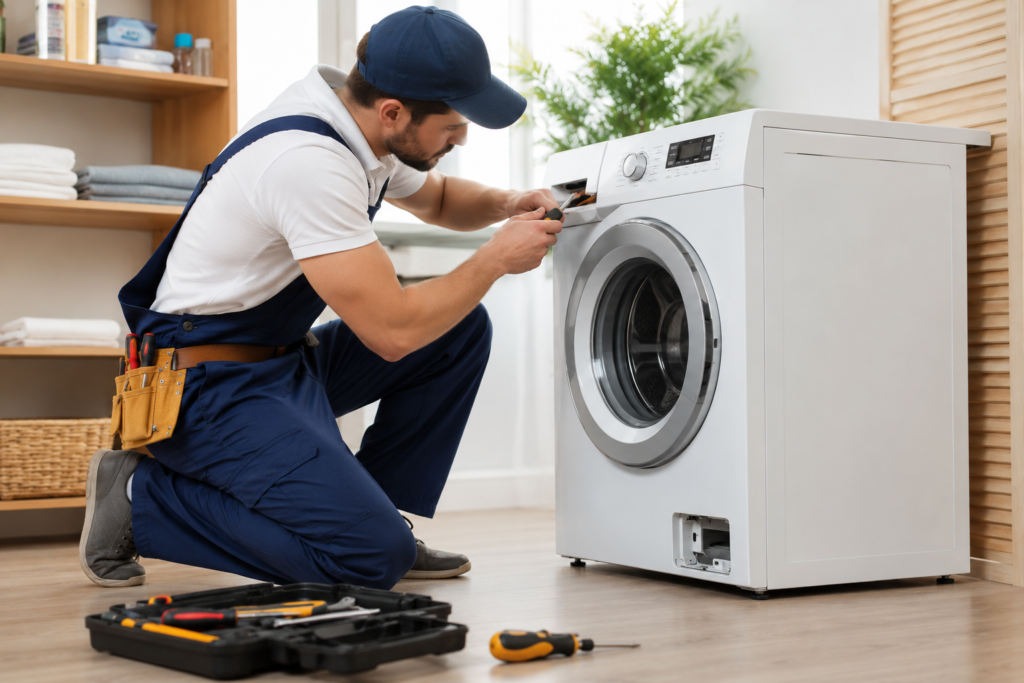
Washer repair cost by state typically falls between $130 and $500, with most homeowners paying somewhere in the $150 to $350 range depending on where they live. The national average sits around $180 to $200, but your actual bill depends heavily on your state’s labor rates, cost of living, and how many qualified technicians are competing for your business nearby. If you’ve ever wondered why a neighbor in another state paid half of what you did for the exact same fix, the answer almost always comes down to location
This guide breaks down what actually drives washer repair cost by state, what you can expect to pay by region, which specific repairs tend to cost the most, and how to tell whether a quote you’ve received is fair or worth pushing back on. Understanding washer repair cost by state before calling a technician can help you compare quotes and avoid paying more than necessary.
Table of Contents
Why Washer Repair Cost by State Varies So Much
A washing machine repair isn’t priced the same way in every part of the country, and that catches a lot of homeowners off guard. Most people assume a bad lid switch or a failed drain pump should cost roughly the same no matter the zip code. In reality, several local factors stack on top of each other, and that’s exactly why washer repair cost by state can swing so widely from one region to the next.
Local Labor Rates
Labor is the single biggest driver of washer repair cost by state. Technicians in high-cost-of-living states like California, New York, and Massachusetts commonly charge $100 to $175 per hour. In more affordable states such as Mississippi, Kansas, or Arkansas, hourly rates often land closer to $60 to $90. That gap alone can add or subtract $50 to $100 from a routine repair, before parts are even factored in.
Cost of Living and Business Overhead
Technicians have to cover fuel, insurance, licensing fees, and shop space, and those costs get passed along to the customer. A repair company operating in a dense metro area with high rent and higher wages simply carries more overhead to recoup than one working out of a small town. That difference shows up in both the service call fee and the hourly labor rate.
Technician Availability
In states with fewer certified appliance repair companies, there’s less competition to keep prices in check, and technicians often need to travel farther to reach you. That extra drive time frequently gets built into the price, especially in rural counties where the nearest qualified repair company might be an hour away.
Parts Availability
Some states see a heavier concentration of specific washer brands than others, which affects how easily a technician can source parts locally. When a part has to be special-ordered, you’re usually looking at a longer wait and sometimes a higher price once shipping gets added in.
Average Washer Repair Cost by State: Regional Breakdown

Exact pricing shifts by city and even by neighborhood, but grouping states into regions gives you a realistic starting point before you ever pick up the phone. Here’s how washer repair cost by state tends to break down across the country.
Northeast (New York, Massachusetts, New Jersey, Connecticut)
This region consistently sits at the top of the price scale, with typical repairs running $230 to $480. High labor rates, dense traffic that extends technician travel time, and elevated business overhead all push costs upward here.
West Coast (California, Washington, Oregon)
California repairs commonly land between $220 and $480, largely due to high labor costs and licensing requirements. Washington and Oregon trend slightly lower but still sit above the national average.
Midwest (Ohio, Illinois, Michigan, Indiana, Wisconsin)
Expect a more moderate range here, generally $160 to $340. Lower overhead and a solid supply of independent technicians help keep prices reasonable, though major metro areas like Chicago can approach coastal pricing.
South (Texas, Florida, Georgia, North Carolina)
This region tends to offer some of the more affordable repair options nationally, usually falling between $160 and $340. A high number of independent repair businesses competing for customers helps hold prices down, even in larger cities.
Mountain West and Plains (Colorado, Utah, Kansas, Nebraska)
Costs here typically land near or just below the national average, around $150 to $360. Lower population density in some areas can mean longer technician travel times, which sometimes offsets otherwise lower labor rates.
Rural South and Appalachia (Mississippi, Arkansas, Alabama, West Virginia)
Some of the lowest washer repair costs in the country show up here, often ranging from $100 to $300. Lower cost of living translates directly into lower labor rates, though longer wait times are more common since fewer technicians cover larger service areas.
| Region | Typical Repair Cost |
|---|---|
| Northeast | $230–$480 |
| West Coast | $220–$480 |
| Midwest | $160–$340 |
| South | $160–$340 |
| Mountain West & Plains | $150–$360 |
| Rural South & Appalachia | $100–$300 |
What Drives the Price of a Specific Repair
Regional averages only tell part of the story. The actual part that’s failed matters just as much as your zip code when it comes to washer repair cost by state. Here’s what you can generally expect for the most common repairs, regardless of where you live:
- Lid or door switch replacement: $85 to $220. Often the culprit when a washer won’t start even though the door looks fully closed.
- Drain pump replacement: $150 to $350. A common fix when the machine fills with water but won’t drain.
- Drive belt replacement: $110 to $220. Usually needed when the drum won’t spin or you hear a squealing sound during the cycle.
- Water inlet valve replacement: $120 to $280. Addresses a washer that won’t fill, or fills too slowly.
- Motor coupling replacement: $90 to $280. A relatively affordable fix since the coupling is designed to fail before more expensive parts do.
- Control board replacement: $200 to $500. One of the pricier repairs simply because the part itself is expensive.
- Drum bearing replacement: $150 to $600. Costly because it often requires dismantling much of the machine to reach the bearings.
This is another area where washer repair cost by state comes into play, since labor time on these specific jobs gets billed at whatever your local hourly rate happens to be. Front-load washers generally cost more to repair than top-load models in every state, simply because they contain more components and take longer to service. Brand plays a role too — premium names like Bosch, Speed Queen, and Samsung tend to run higher than Whirlpool, GE, or Kenmore, mainly due to the cost of manufacturer parts
You May Also Like
If you’re researching washer repair costs, these guides can help you diagnose common problems, estimate repair expenses, and decide whether repairing or replacing your washer makes the most sense.
- Washing Machine Repair Cost Estimate 2026
- Washer Repair vs Replace
- Washing Machine Not Draining But Not Clogged
- Washing Machine Not Spinning Properly: 9 Causes and Easy Fixes
- Washing Machine Bearings Symptoms
- Washing Machine Motor Not Working
- Washing Machine Water Pump Motor Failure Fix
- Washing Machine Water Inlet Valve Problems
- Washing Machine Error Codes Explained
- Complete Washing Machine Problems Guide
Free Washer Repair Cost Calculator
Want a more accurate repair estimate? Use our free calculator to estimate your washing machine repair cost based on the failed part, labor rates, and repair type before calling a technician.
Open Repair Cost Calculator →What to Check Before You Call a Technician
Not every washer problem needs a service call. A few quick checks can save you a diagnostic fee entirely, or at least help the technician diagnose the issue faster once they arrive

- Confirm the washer has power. Check the outlet, the breaker, and make sure nothing accidentally unplugged the machine during a move or cleaning.
- Check the load balance. An unbalanced load is one of the most common reasons a washer stops mid-cycle or refuses to spin. Redistribute the clothes and restart.
- Inspect the door or lid latch. If it isn’t clicking shut fully, most washers won’t start as a safety precaution.
- Look at the drain hose and filter. A clogged filter or kinked hose is a frequent cause of drainage problems and doesn’t always require a technician.
- Note any error codes. Write down exactly what the display shows before resetting the power. This detail alone can shorten a diagnostic visit.
If these basic checks don’t resolve the issue, it’s time to call a professional — and knowing the typical washer repair cost by state in your area beforehand puts you in a much stronger position to evaluate the quote.
When to Call a Technician Right Away
Some symptoms aren’t worth troubleshooting on your own. Call a professional promptly if you notice a burning smell, a tripped breaker every time the washer runs, water leaking near electrical components, or a loud grinding or banging noise from the drum. These issues can point to motor, wiring, or bearing problems that carry both safety risks and a higher chance of causing further damage the longer they’re left alone.
For additional appliance safety information, homeowners can also review guidance from the U.S. Consumer Product Safety Commission.
How to Get a Fair Price No Matter Where You Live
Since washer repair cost by state can swing so widely, the smartest move is to gather local quotes rather than rely on a national average alone. A few habits make this easier.
Get quotes from two or three appliance repair companies in your area before committing to anything. Ask directly whether the service call or diagnostic fee gets credited toward the repair if you move forward — many companies do this, but not all advertise it upfront. Share your washer’s brand and model number when requesting a quote, since parts pricing varies meaningfully between manufacturers
It’s also worth asking whether the company charges a flat rate for your specific repair or bills by the hour. Flat-rate pricing tends to be more predictable, especially for common jobs like a switch or valve replacement, while hourly billing can create surprises if the technician runs into something unexpected once the machine is opened up
Common Mistakes That Drive Up Repair Costs
A few avoidable habits tend to push washer repair cost by state estimates higher than they need to be:
- Skipping the multiple-quote step and accepting the first number offered
- Ignoring small leaks or noises until they turn into a bigger, more expensive failure
- Choosing the cheapest technician available without checking reviews or licensing
- Running emergency or after-hours service for a problem that could easily wait until regular business hours
- Forgetting to check whether the manufacturer’s warranty still applies before paying out of pocket
Avoiding these missteps won’t change your region’s baseline labor rate, but it can easily save you $50 to $150 on an otherwise straightforward repair — and it keeps your final bill closer to the low end of the typical washer repair cost by state for your area.
Repair or Replace: When the Math Tips Toward a New Washer
Once you have a repair estimate in hand, it’s worth comparing that number against the cost of a new washing machine before approving any work. The widely used guideline in the appliance industry is the 50% rule: if the repair cost comes in above roughly half the price of a comparable new washer, replacement is usually the more financially sound choice — especially once the machine is eight years or older.
A few other signals point toward replacement, regardless of your state’s typical repair pricing:
- The washer has needed two or more significant repairs within the past two years
- The failed part is discontinued or difficult to source
- The repair involves the drum, tub, or bearings, which usually means dismantling a large portion of the machine
- Your household’s laundry needs have outgrown the machine’s capacity
On the other hand, a younger washer with an isolated, inexpensive fault — a belt, a switch, a hose — is almost always worth repairing, no matter which state you’re calling from. The repair cost stays low relative to replacement, and a properly repaired appliance can often deliver several more years of reliable service.
The Bottom Line
Washer repair cost by state depends heavily on local labor rates, cost of living, and how many technicians are competing for your business, with national pricing generally falling between $150 and $500. Coastal and metro areas tend to sit at the higher end, while the South and rural regions typically offer more affordable rates. Knowing the typical washer repair cost by state for your region — and getting two or three local quotes before committing — puts you in a much stronger position to know whether a repair estimate is reasonable or worth negotiating before you approve the work.


Comments