Washing Machine Drum Loose and Loud: Causes, Warning Signs & Easy Fixes
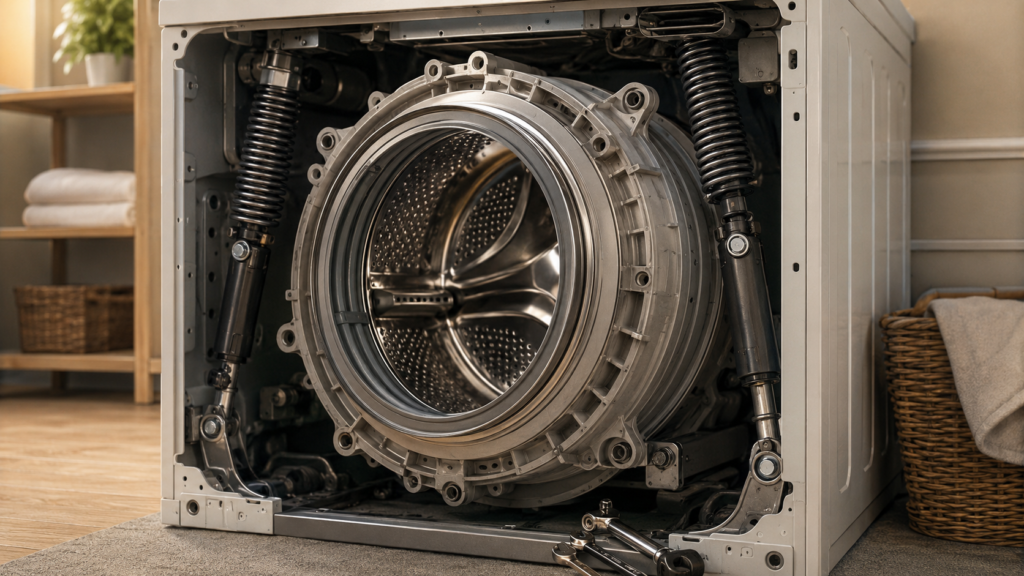
A washing machine drum loose and loud during a cycle is usually caused by an unbalanced load, worn suspension springs or shock absorbers, loose counterweights, or failing drum bearings. Most of these problems get worse the longer you keep running cycles, so it’s worth pausing and figuring out the cause before starting another load. Below, we’ll walk through exactly why a washing machine drum becomes loose and loud, how to test which part is failing, and what it actually takes to fix it.
Table of Contents
Quick Answer: What Causes a Washing Machine Drum to Be Loose and Loud?
If you just want the short version: a washing machine drum loose and loud problem almost always comes down to one of six things — an unbalanced load, an unlevel machine, worn suspension springs or shocks, worn drum bearings, a loose counterweight, or a broken spider arm. Front-load and top-load washers each fail a little differently, which we’ll break down section by section below.
Why Your Washing Machine Drum Becomes Loose and Loud in the First Place
A washing machine drum isn’t just floating freely inside the cabinet. It’s held in place by a system of springs, bearings, shocks, and — in many models — counterweights that all work together to keep the drum steady while it spins. When a washing machine drum is loose and loud, one or more of those supporting parts has worn out, broken, or shifted out of position, and the drum has started moving in ways it was never designed to.
Front-load and top-load machines don’t fail in quite the same way, so it helps to know which type you own before you start troubleshooting. Front-loaders lean heavily on suspension springs and shock absorbers to keep the drum steady during high-speed spinning. Top-loaders, especially older agitator-style models, rely more on suspension rods and a central support bearing. Knowing your machine type narrows things down considerably before you even open the cabinet.
What to Check When Your Washing Machine Drum Loose and Loud Problem Starts
Before assuming a part has failed, it’s worth ruling out the two simplest explanations: an unbalanced load and an unlevel machine. In many cases, that’s really all it is.
Check the Load First
Heavy items like comforters, towels, or a single rug can bunch up on one side of the drum. Once the spin cycle kicks in, that uneven weight can make the whole machine shake violently and bang against the cabinet, which is often mistaken for a mechanical failure
- Stop the cycle and let the drum come to a complete stop
- Open the door or lid and redistribute the laundry evenly
- Remove a few items if the load is too large
- Mix large and small items instead of washing one heavy item alone
- Restart the cycle and listen again
If the noise only shows up with specific loads and disappears with a smaller, balanced one, you’re probably not dealing with a washing machine drum loose and loud mechanical issue at all — just a loading habit that needs adjusting.
Make Sure the Machine Is Actually Level
An unlevel washer can produce symptoms that look exactly like a loose drum. If one or more feet aren’t sitting flat, the whole machine rocks during the spin cycle, and that movement gets more noticeable as the drum speeds up.
Set a spirit level on top of the machine and check it in both directions. If it rocks when you press down on the corners, adjust the leveling feet until all four are firm on the floor, then tighten the locking nuts so they don’t work loose again. This five-minute fix solves a surprising number of noise complaints, so don’t skip it even if you suspect something more serious is going on.
Washing Machine Drum Loose and Loud: Check the Suspension System

If the load is balanced and the machine is level but you’re still dealing with a washing machine drum loose and loud during every cycle, the suspension system is the next place to look. In front-load washers, the tub hangs from suspension springs and is controlled by shock absorbers mounted near the base. In top-loaders, suspension rods do the same job.
Over years of use, springs stretch out or snap outright, and shock absorbers lose their dampening ability. When that happens, the drum tilts or swings more freely than it should, and every spin cycle turns into loud, uneven thumping as the unsupported side knocks against the cabinet wall. A washer with failing shocks often sounds perfectly normal during the wash cycle but turns into a real racket the moment it hits high spin.
Quick check: Unplug the machine, open the door, and push down firmly on the top of the drum, then let go. If it bounces back repeatedly instead of settling quickly, worn springs or shocks are the likely cause of your washing machine drum loose and loud problem.
Worn Drum Bearings — One of the More Serious Causes
Worn bearings are one of the more common reasons a washing machine drum is loose and loud, particularly in machines that are five or more years old. The bearing sits at the back of the tub assembly and allows the drum to spin smoothly. Over time, moisture that seeps past worn seals causes the bearing to rust and gradually break down
- A deep rumbling or grinding sound that gets louder as spin speed increases
- Side-to-side play when you grab the drum and rock it by hand
- Rough or uneven rotation when you spin the drum manually
- Water leaking near the bottom rear of the machine
Bearing failure is a bigger job than a spring or shock replacement because it usually means partially or fully disassembling the outer tub. It’s not a repair most people take on for the first time without a video guide or some mechanical confidence, but the part itself is fairly inexpensive — the labor is what adds up.

Loose Counterweights
Many washers use concrete or metal counterweights bolted to the outer tub to offset the force of a spinning load. If the mounting bolts loosen over time, or if the concrete cracks, those weights can shift and bang against the tub with every rotation. It sounds heavy and deep, almost like something is loose inside the cabinet — because it is.
You’ll typically need to remove an access panel to see the counterweights directly. If you spot a loose bolt or a weight that shifts when you nudge it, don’t keep running the machine. A loose counterweight bouncing around during spin can turn a minor fix into real cabinet or tub damage fairly quickly.
Broken Spider Arm (Front-Load Washers)
The spider arm, sometimes called the drum spider or flange, connects the drum to the drive shaft on most front-load machines. It’s usually cast aluminum, and years of exposure to hard water and detergent residue can corrode it until it eventually cracks. Once an arm breaks, the drum loses its central support and tilts off-axis — one of the more dramatic causes of a washing machine drum loose and loud complaint.
Signs of a broken spider arm include a loud knocking sound, a drum that sits visibly crooked, and scraping noises as the drum rubs against the outer tub or door seal. This repair usually means pulling the drum out entirely, so it’s typically best left to a professional unless you’re very comfortable with a full appliance teardown.
Foreign Objects Trapped in the Drum
Sometimes a “loose drum” isn’t a mechanical failure at all — it’s a coin, bra underwire, key, or small piece of hardware that slipped past the door seal and got stuck between the inner drum and the outer tub. As the drum spins, the object scrapes or clicks, and it can sound remarkably similar to a bearing or suspension problem.
Turn the drum slowly by hand with the machine unplugged and listen closely. Check the drum holes and the rubber door gasket for anything visible. If you can see or hear an object but can’t reach it, a bent wire hanger or a flexible magnet can sometimes fish it out — otherwise, this is a quick job for a technician to clear safely.
How to Test a Washing Machine Drum Loose and Loud Problem at Home
Before deciding on a repair, run through this simple diagnostic sequence to narrow down why your washing machine drum is loose and loud:
- Unplug the washer and open the door or lid
- Remove all laundry from the drum
- Grab the top of the drum with both hands and push and pull it up, down, and side to side
- Note how much play there is — a small amount is normal, excessive movement is not
- Spin the drum slowly by hand and listen for grinding, scraping, or roughness
- Run a short empty cycle and pay attention to exactly when the noise happens
| What You Notice | Likely Cause |
|---|---|
| Rhythmic thump matching drum rotation | Spring, shock, or loose counterweight |
| Grinding or growling that builds with spin speed | Worn drum bearings |
| Sudden, sharp metallic clank | Broken spider arm or fully loose counterweight |
| Scraping or clicking sound | Trapped foreign object |
| Noise only with certain loads | Unbalanced laundry, not a mechanical fault |
Avoid These Common Repair Mistakes
A washing machine drum loose and loud issue can become more expensive when the early warning signs are ignored. Avoiding the mistakes below can help prevent additional damage.
A washer may continue to complete cycles even with worn bearings, failed shocks, a loose counterweight, or a damaged spider arm. Repeated use can increase the damage to the outer tub, cabinet, hoses, and other components.
Loud noises can sound similar. A trapped object, failing suspension, loose counterweight, and worn bearing may all produce different types of banging, scraping, or rumbling. Diagnose the problem before ordering replacement parts.
A small amount of movement can be normal, but excessive side-to-side play, a visibly crooked drum, or a drum that drops lower than expected can indicate a more serious mechanical problem.
Heavy comforters, rugs, and uneven loads can make a normal washer sound like it has a mechanical failure. When diagnosing a washing machine drum loose and loud problem, first test the machine with the drum empty or with a small, balanced load.
Counterweights are extremely heavy. If one is loose or damaged, continued spinning can cause major internal damage. Do not continue using the washer until the mounting hardware and counterweight condition have been checked.
Should You Keep Using a Washer With a Loose Drum?
No — it’s not a good idea to keep running cycles on a machine with a genuinely loose and loud drum. A one-time imbalance is easy to fix and not a big deal. But when a washing machine drum is loose and loud because of worn bearings, a cracked spider arm, or failed suspension, continued use can lead to a damaged outer tub, torn hoses, motor strain, water leaks, and cabinet damage — all of which cost far more to repair than the original problem.
Repair or Replace? What It Actually Costs
Suspension springs and shock absorbers are the cheapest and easiest fix, usually running $20–$60 for parts, and a moderately handy homeowner can often swap them out in an hour or two. Drum bearings cost less as a standalone part but require several hours of disassembly, so professional repair often runs $300–$500 depending on the machine and your location. A broken spider arm is usually the most expensive repair of the group, since it often means replacing the entire tub-and-spider assembly rather than a single part.
As a rough guideline: if your washing machine drum is loose and loud because of springs, shocks, or a loose counterweight, repairing it is almost always worth it. If the cause is a failed bearing or a broken spider arm on a machine that’s already eight or more years old, get a repair quote before buying parts — the labor cost alone can approach half the price of a new mid-range washer.
Estimate Your Washing Machine Repair Cost
A washing machine drum loose and loud problem can cost very little to fix if the cause is a simple suspension or balance issue, but bearing and drum damage can be much more expensive. Use our free calculator to get a better estimate before deciding whether repairing or replacing your washer makes more sense.
Use the Free Repair Cost CalculatorWhen to Call a Professional
Springs, shocks, and leveling adjustments are reasonable DIY territory if you’re comfortable with basic hand tools and a repair guide for your specific model. Bearing replacement and spider arm repair are a different story — they usually involve a full teardown, and getting the reassembly wrong can throw the drum permanently out of balance or damage brand-new parts on the very first cycle.
If you’ve worked through the checks above and you’re still not sure why your washing machine drum is loose and loud, or if the diagnosis points to bearings or a spider arm, it’s worth getting a professional opinion before ordering parts. A short service visit can confirm exactly what’s wrong and give you a real cost comparison against replacing the machine outright.
Preventing a Loose, Loud Drum in the Future
A few simple habits go a long way toward keeping your washer’s drum quiet and stable for years:
- Distribute laundry evenly and avoid washing single heavy items alone
- Don’t exceed the manufacturer’s recommended load size
- Check pockets for coins, keys, and small hardware before every load
- Keep the machine level and recheck it every six months
- Use the correct amount of HE detergent to protect rubber seals and bearings
- Run an occasional empty hot cycle with a washing machine cleaner to reduce residue buildup
Frequently Asked Questions
Why is my washing machine drum loose and loud only during the spin cycle?
This usually points to worn bearings or failing suspension components, since both problems tend to show up most under the higher speed and force of a spin cycle rather than during the slower wash cycle.
Can a washing machine drum loose and loud problem damage other parts?
Yes. Left unaddressed, it can strain the motor, crack the outer tub, loosen hoses, and eventually cause water leaks — all of which are more expensive to fix than the original suspension or bearing issue.
Is it safe to keep washing clothes if the drum is loose?
It’s fine to finish a load if the noise is clearly from an unbalanced load. If you’ve ruled that out and the drum still feels loose when you rock it by hand, stop using the machine until you’ve identified the cause.
You May Also Like
If your washing machine drum is loose and loud, these related troubleshooting guides can help you diagnose shaking, vibration, grinding, bearing problems, suspension faults, and other common washer issues faster:
- Washing Machine Making Loud Noise When Spinning: 9 Common Causes and Fixes
- Washing Machine Bearing Symptoms: Signs You Should Not Ignore
- Top Load Washer Shaking Violently on Spin Cycle
- Washing Machine Shaking Violently During Spin: Causes and Fixes
- 6 Reasons a Washing Machine Is Making a Grinding Noise
- 7 Washing Machine Shock Absorber Failure Symptoms You Should Never Ignore
- Do Washing Machine Suspension Rods Wear Out?
- How to Balance a Washing Machine Drum and Reduce Excessive Movement
- Why Does a Washing Machine Vibrate at Specific Speeds?
- Washing Machine Problems: Complete Troubleshooting Guide
Final Thoughts
A washing machine drum loose and loud problem can range from something as simple as an unbalanced load to something as serious as a failed bearing or broken spider arm. Start with the basics — check the load, level the machine, and listen for trapped objects — before assuming you need a major repair. If the noise continues after ruling those out, work through the suspension system, bearings, and drive components in order, since the type of noise you hear usually points you straight to the failing part.
Catching a washing machine drum loose and loud issue early is what makes the difference between a $40 spring replacement and a repair bill that starts competing with the price of a new washer. When in doubt, a quick inspection from a qualified technician can confirm the diagnosis and save you from guessing.
About the Author
FixAppLab Editorial Team
The FixAppLab Editorial Team creates practical appliance troubleshooting guides designed to help homeowners better understand common washing machine problems, repair options, maintenance issues, and when professional service may be the better choice.


Comments