

A washing machine drum that refuses to turn usually indicates a mechanical or electrical interruption somewhere between the motor and the drum itself. In many situations, the cause is relatively straightforward, such as an overloaded washer, a worn drive belt, or a safety sensor preventing the appliance from running. The real challenge is identifying which small issue is responsible for stopping a complex household machine.
Quick Answer: Washing Machine Drum Not Turning
If your washing machine drum is not turning, the problem usually occurs when the washer motor cannot transfer movement to the drum. This can happen because of a broken drive belt, worn motor carbon brushes, an overloaded drum, or a faulty door lock safety sensor.
In some situations the motor may still run while the drum remains stationary. Checking the load balance, drive belt condition, and door lock system can often help identify why the washing machine drum is not spinning or rotating during a wash cycle.
- Overloaded or unbalanced laundry load
- Broken or loose washing machine drive belt
- Worn motor carbon brushes
- Faulty washing machine door lock
- Defective motor capacitor
- Blocked drain pump
- Malfunctioning control board
Table of Contents
Key Takeaways
- A washing machine drum not turning is usually caused by a mechanical or electrical issue.
- Overloading and unbalanced laundry are the most common and easily fixable problems.
- A broken or loose drive belt can stop the drum while the motor still runs.
- Worn carbon brushes or a faulty motor capacitor can prevent rotation.
- A defective door lock sensor may stop the washing cycle completely.
- Simple checks can often identify the problem before calling a technician.
Why the Drum Stops Turning in the First Place
Inside a typical washing machine, the drum does not rotate independently. Movement begins with the motor, which generates rotational energy and transfers it through several connected components. Depending on the design of the appliance, this power may pass through a drive belt, pulley system, clutch assembly, or a direct-drive mechanism that links the motor directly to the drum.
When the washing system functions normally, the motor activates during specific stages of the wash cycle. That movement is transferred to the drum, allowing clothes to tumble during washing and rotate rapidly during the spin cycle to remove excess water. This coordinated process depends on multiple mechanical and electrical parts working together.
When the drum stops turning, the underlying issue generally falls into one of two categories: either the motor cannot deliver motion, or the drum cannot receive it. In practical terms, this distinction helps narrow down the troubleshooting process. A washer that hums without spinning often indicates that the motor is attempting to operate but cannot transfer motion to the drum. A machine that remains silent may suggest a door lock problem, an electrical interruption, or a fault in the control system that manages the appliance.
Understanding this basic difference can make diagnosing a washing machine drum not turning much more efficient.
Washing Machine Smells Bad? Causes and Easy Fixes
A bad odor coming from your washer usually means mold, detergent buildup, or trapped moisture. Learn the main causes and simple solutions to eliminate the smell and keep your washing machine fresh.
Read Full Guide →Sometimes the Machine Is Behaving Normally
Not every pause in drum movement signals a malfunction. Many modern washing machines include programmed phases during which the drum rotates slowly or stops temporarily as part of normal operation. These pauses are built into the appliance’s software and are designed to protect clothing or manage the washing process more effectively.
Certain wash programs deliberately reduce drum movement. Delicate fabric cycles, wool settings, and foam-detection stages are common examples. These phases prevent fabrics from stretching and help regulate detergent foam levels inside the drum. In these programs, slower rotation and intermittent pauses are expected.
A typical scenario occurs during wool or delicate wash cycles. The drum may rotate slowly for several seconds and then pause before moving again. This pattern reduces stress on fragile fabrics that might otherwise distort during continuous movement. Someone unfamiliar with these cycles might assume the machine has stopped working.
Another situation occurs when the washer detects excess detergent foam. Many machines pause the drum briefly to allow foam to settle before continuing the cycle. Reviewing the selected wash program often clarifies whether reduced drum movement reflects normal behavior or a mechanical issue.
Overloading and Balance Problems
One of the most common and least complicated reasons a drum stops turning is overloading. Washing machines are engineered to operate within a specific weight range, and exceeding that capacity can interfere with the drum’s ability to rotate properly.
When the drum becomes too heavy, the motor may struggle to begin the spin cycle. Even if the motor is functioning correctly, excessive weight can prevent smooth rotation. Modern washing machines often include balance sensors that detect uneven loads and automatically stop the spin cycle to prevent internal damage.
Large household items such as comforters, blankets, and thick towels can also create balance problems. During washing, these items may cluster together and shift to one side of the drum. When this happens, the washer detects the imbalance and may cancel the spin cycle entirely
Washing Machine Not Spinning Properly? 9 Causes and Easy Fixes
If your washer is leaving clothes soaking wet, the spin cycle may not be working correctly. This guide explains the most common causes, including unbalanced loads, faulty belts, and motor issues.
Learn More →Two common household examples illustrate this issue. In one situation, a large blanket is washed together with several towels. Once the fabrics absorb water, the combined weight becomes much heavier than expected. The drum attempts to spin but cannot distribute the load evenly. In another case, a load made mostly of jeans absorbs significant water and gathers on one side of the drum. The washer senses the imbalance and stops spinning to protect internal components. Removing a few items and redistributing the load often restores normal operation.
Mechanical Issues When Washing Machine Drum Is Not Spinning
When the drum refuses to turn even with a balanced load, the issue may involve the mechanical components that connect the motor to the drum. These parts form the physical pathway that transfers movement through the washing machine.
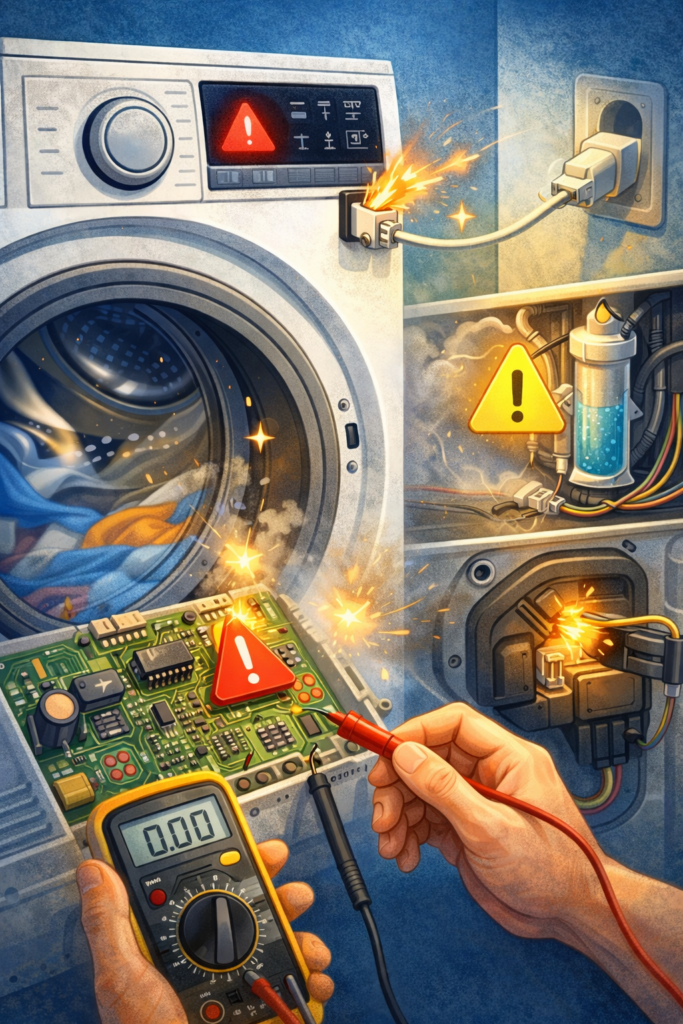
One of the most common components involved is the drive belt. Many washing machines rely on a rubber belt that connects the motor shaft to the drum pulley. Over time, this belt may stretch, slip off its position, or break entirely. When the belt fails, the motor can continue running while the drum remains stationary. A common sign of a loose or broken belt is a drum that spins unusually freely when turned by hand.
Another important component is the motor’s carbon brushes. Some washing machine motors use these brushes to conduct electricity to the motor’s rotating parts. Over time, carbon brushes gradually wear down. When they become too short, electrical contact weakens and the motor cannot rotate effectively. In such cases, the washer may produce a humming sound while the drum remains still.
Certain washing machine motors also depend on a capacitor to initiate rotation. The capacitor stores electrical energy and provides the extra torque needed to start the motor. If this component weakens or fails, the motor may attempt to start but lack the power needed to move the drum. In these situations, the drum may move slightly or fail to move at all.
Drum bearings also play a crucial role. These bearings support the drum and allow it to rotate smoothly inside the washing machine housing. When bearings wear out, the drum may resist movement or produce loud grinding sounds during operation. Although bearing failure is less common than belt problems, severe wear can eventually stop the drum completely.
Washing Machine Taking Too Long to Wash?
A wash cycle that never seems to finish may be caused by water pressure issues, sensor problems, or detergent buildup. Discover 10 simple fixes that may help reduce wash time.
View Complete Guide →Electrical and Sensor Issues
Mechanical components represent only part of the washing machine system. Modern appliances rely heavily on electronic sensors and safety mechanisms to manage washing cycles and protect internal components.
A malfunctioning sensor can prevent drum movement even when mechanical parts remain functional. Several electronic components commonly contribute to this type of issue. These include door lock sensors, control board circuits, water level sensors, and temperature safety devices that monitor the machine’s operation.
The door lock mechanism is particularly important for safety. Washing machines are designed to spin only when the door is securely locked. If the appliance cannot confirm that the door is properly closed, the control system prevents the motor from operating. In some cases, the issue may involve a worn latch or a slightly misaligned door catch that prevents the lock sensor from engaging.
Electronic control boards also play a central role in modern washers. These circuit boards coordinate the entire wash cycle, including water intake, drum rotation, and spin speed. When the control board develops a fault, the drum may stop responding even though other functions appear normal. Electrical issues like these can be more difficult to diagnose because they often require testing equipment and technical expertise.
If your washing machine drum not spinning, the issue may be related to the motor, belt, or internal components.
In many cases, a washer drum not moving can be caused by an unbalanced load or a worn-out drive belt.
What This Problem Cannot Realistically Indicate
Online discussions sometimes exaggerate the seriousness of a washing machine drum not turning. Some explanations suggest that a stationary drum automatically means severe internal damage. In reality, many situations involve minor mechanical wear or temporary imbalances rather than catastrophic failure.
A drum that does not spin does not automatically mean the washing machine is beyond repair. In many cases, the problem involves a simple mechanical component such as a belt, brush, or sensor that can be replaced relatively easily.
It also does not necessarily indicate motor failure. Washing machine motors are typically durable and often last longer than belts, capacitors, and other smaller parts that experience more frequent wear.
Another common misconception involves detergent use. Excessive detergent can create heavy foam and affect certain washing stages, but it rarely causes the drum to stop completely. Recognizing the difference between realistic causes and exaggerated claims helps homeowners focus on practical troubleshooting steps.
Step-by-Step Troubleshooting
- Check the laundry load: Remove heavy or uneven items and try running the spin cycle again.
- Inspect the door lock: Make sure the washer door is fully closed and locking properly.
- Reset the washing machine: Unplug the machine for 2–5 minutes and restart it.
- Test drum movement manually: Turn the drum by hand to check for unusual resistance.
- Check the drive belt: Look for a loose, worn, or broken belt behind the panel.
- Listen to the motor: If the motor runs but the drum does not move, internal parts may be worn.
- Call a technician if needed: For electrical or motor issues, professional repair is recommended.
Washing Machine Door Not Locking?
If the washer door will not lock, the machine may refuse to start. The issue could be related to the door latch, lock mechanism, or control board sensor.
Fix the Problem →Safety and Practical Considerations
Before inspecting or repairing a washing machine drum not turning, always disconnect the appliance from the power supply to reduce the risk of electrical shock. Avoid direct contact with internal wiring, motor components, or control boards, as these parts can remain hazardous even when the machine appears inactive.
Use protective gloves to prevent cuts from sharp internal edges, and handle components carefully, as parts such as the drum, motor, and counterweights can be heavier than expected. If the issue involves electrical faults or complex internal damage, seeking help from a qualified technician is the safest and most practical option.
What We Still Do Not Fully Understand
Household appliances often appear simple on the outside, yet their internal operation involves complex interactions between motors, sensors, and electronic control systems. Washing machines have become increasingly sophisticated as manufacturers focus on energy efficiency and improved fabric care.
Newer models incorporate advanced sensors and automated software that adjust water levels, detect load balance, and regulate spin speed. These improvements enhance performance but can also make troubleshooting more complicated.
Washing Machine Not Filling With Water? 10 Possible Causes
When a washer fails to fill with water, the problem may involve inlet valves, water supply hoses, or pressure sensors. Learn how to diagnose and fix this common issue.
Read the Fix Guide →As a result, diagnosing modern washing machines may not always be as straightforward as working with older mechanical models. Even experienced technicians occasionally encounter unusual behavior caused by sensitive sensors or software logic within the control system.
Although the basic mechanical principles remain familiar, the electronic systems that manage modern washers continue evolving. Troubleshooting sometimes requires patience and systematic testing rather than a single obvious solution. A washing machine motor running but drum not spinning often indicates a mechanical disconnection inside the appliance. This type of washing machine spin problem can usually be diagnosed with simple checks at home.
A Small Reality Check About Common Advice
Many appliance repair guides present troubleshooting as a simple checklist that always leads to a quick answer. In practice, real repairs rarely follow such a neat pattern.
Two households with identical washing machine models may experience the same symptom for completely different reasons. One machine may have a worn drive belt, while another simply contains an unbalanced load of clothing.
Advice that promises guaranteed solutions often oversimplifies the problem. A more realistic approach involves eliminating possible causes step by step rather than immediately replacing expensive components.
Careful observation and methodical inspection frequently reveal that the problem is less severe than it initially appears.
Learn more about how washing machines workWhen It Makes Sense to Seek Professional Help
Certain warning signs suggest that professional diagnosis may be necessary. Loud grinding noises during attempted spin cycles can indicate serious bearing damage. A burning smell near the motor area may signal overheating electrical components.
Other warning signs include electrical faults that repeatedly trip circuit breakers or persistent drum failure after basic troubleshooting steps have already been attempted. In these situations, continuing to operate the machine may worsen the damage.
Professional technicians use specialized tools to test washing machine motors, capacitors, sensors, and electronic control boards safely. Attempting complex repairs without proper experience can quickly turn a manageable issue into a much more expensive repair.
For many households, the most practical decision involves balancing repair costs against the age and condition of the appliance.
Washing Machine Making Loud Noise When Spinning?
Loud banging or grinding noises during spin cycles may indicate worn bearings, suspension problems, or an unbalanced load.
See the Causes →Living With Machines That Occasionally Fail
Household appliances perform thousands of wash cycles throughout their lifespan. Each cycle places stress on mechanical parts, electrical systems, and internal sensors that coordinate the washing process.
Over time, smaller components gradually wear out, electrical connections loosen, and friction increases within moving parts. These gradual changes eventually lead to noticeable issues, such as a washing machine drum not turning.
In many cases, identifying and repairing the specific component responsible for the problem restores the appliance to normal operation. And in everyday household life, the moment when the drum stops spinning often serves as a quiet reminder that even dependable machines eventually require a bit of maintenance and attention.
If your washing machine drum is not turning, identifying the root cause early can help prevent further damage. In many cases, a washing machine drum not turning is linked to simple mechanical or electrical issues such as load imbalance, a worn drive belt, or a faulty door lock, many of which can be diagnosed and fixed at home.
Common Washing Machine Problems and Solutions
Washing machines can develop several issues over time. This complete guide covers the most frequent washer problems and how to troubleshoot them.
Explore the Guide →Frequently Asked Questions
Why is my washing machine drum not turning but the machine has power?
If your washing machine drum is not turning but the machine has power, the issue is often related to a mechanical component rather than electricity. Common causes include a broken drive belt, worn carbon brushes, or a faulty motor capacitor. In some cases, the drum may also stop due to an overloaded or unbalanced load, which prevents the washer from entering the spin cycle.
Can an overloaded washer cause the drum to stop turning?
Yes, an overloaded washing machine can prevent the drum from turning properly. When the drum contains too many clothes or heavy items like blankets and towels, the load can become unbalanced. Most modern washers detect this imbalance and automatically stop the spin cycle to protect the motor and internal parts.
How do I know if the drive belt is causing the washing machine drum not to turn?
A damaged or loose drive belt is one of the most common reasons a washing machine drum is not turning. If the motor runs but the drum does not move, the belt may have slipped or snapped. Another sign is when the drum spins very freely by hand, which often indicates that the belt is no longer properly connected to the motor.
Is it safe to fix a washing machine drum that is not turning yourself?
Basic troubleshooting steps—such as checking for overload, cleaning the drain filter, or inspecting the drive belt—can often be done safely at home. However, repairs involving electrical components, motors, or control boards should be handled by a professional technician. Always unplug the washing machine before attempting any inspection or repair
Explore More Washing Machine Solutions
Helpful troubleshooting guides to fix common washing machine problems quickly and easily.
Pingback: 7 Causes Why Washing Machine Fills Then Immediately Drains (Fix Guide) - fixapplab.com