Washing Machine Keeps Tripping Breaker: Causes, Fixes, and When to Call a Pro
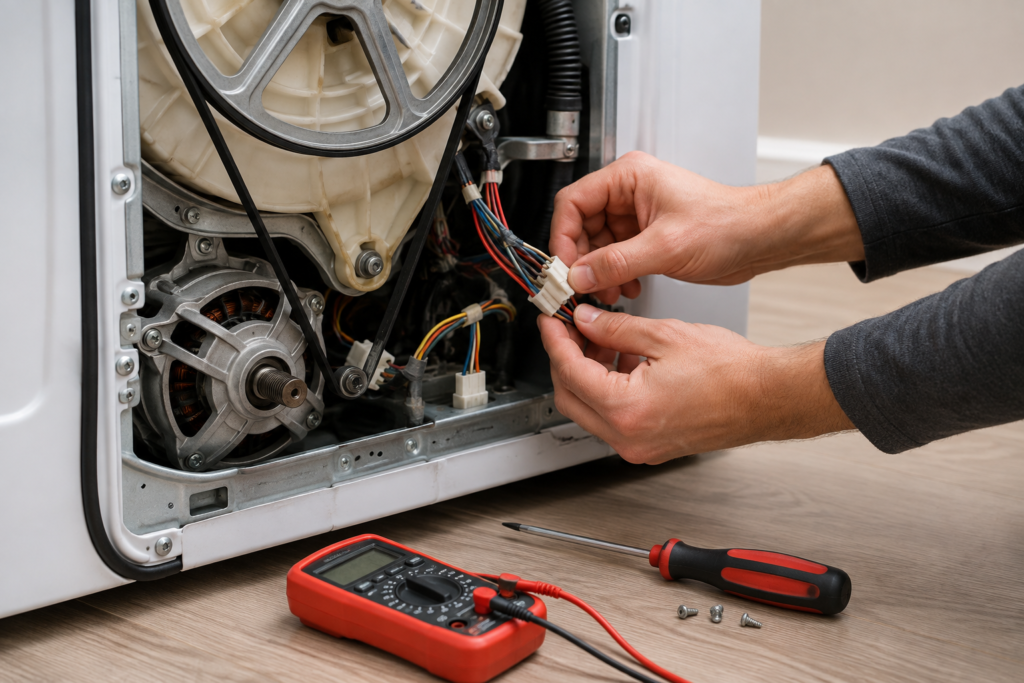
Yes — a washing machine keeps tripping breaker switches for a handful of predictable reasons: an overloaded circuit, a short circuit inside the appliance, a water leak reaching an electrical part, or a failing heating element or motor. The fastest way to fix it is to figure out exactly when in the cycle the power cuts out, because that single detail usually tells you which component is failing. Don’t keep resetting the breaker and hoping it holds — repeated resets can hide a real fire hazard instead of solving it.
Table of Contents
Why a Washing Machine Keeps Tripping Breaker Switches
A circuit breaker only does two things: it shuts off power when a circuit is overloaded, or it shuts off power when current escapes its intended path through a short circuit or ground fault. That’s it. So when a washing machine keeps tripping breaker components in your electrical panel, you’re really dealing with one of those two situations happening somewhere inside the appliance or the wiring that feeds it.
Washing machines pull a lot of current, especially the moment the motor kicks in and while the heating element warms water for a hot cycle. If the circuit is already stretched thin, shared with another appliance, or if a part inside the washer has developed a fault, the breaker does exactly what it’s designed to do — it cuts power before things get hot enough to start a fire.
When Does It Trip? Timing Is Your Best Diagnostic Clue

If your washing machine keeps tripping the breaker, don’t reach for a screwdriver yet. Run the machine again if it’s safe to do so, and pay close attention to the exact moment the power dies. This one observation narrows down the cause faster than almost anything else you can check.
Trips the instant you plug it in or press start. This usually points to a direct short in the power cord, the internal wiring harness, the main switch, or the noise suppressor — something is shorting out before the machine even begins normal operation.
Trips during fill or heating. Look at the water inlet valve solenoid, or more commonly, the heating element. A cracked or corroded element can let water reach the live wiring, and the breaker trips the instant it happens.
Trips during agitation or spin. The motor is the prime suspect. A washing machine that keeps tripping breaker switches specifically during spin often has worn motor windings, a mechanical jam forcing it to draw excess current, or an internal wire rubbing against the metal cabinet from vibration.
Trips during drain. This almost always traces back to the drain pump — either a short inside the pump motor or water leaking directly onto its electrical coil.
Write this timing down before calling anyone. It turns a vague “my washing machine keeps tripping breaker” complaint into real diagnostic information a technician can act on right away.
Safe Checks You Can Do Yourself First

You don’t need to open the cabinet to rule out the easy stuff.If your washing machine keeps tripping breaker protection, start with the simple external checks before opening the appliance or testing internal components.
Start by testing the outlet separately. Unplug the washer and plug in a different high-draw appliance, like a microwave, on the same outlet. If that trips the breaker too, the outlet or the circuit is the problem — not the washing machine itself.
Next, inspect the power cord. With the machine unplugged, run your hand along the visible cord and check the plug for cuts, melted plastic, scorch marks, or exposed wire. A damaged cord is a cheap, straightforward fix, but never plug a compromised one back in.
Then check for water underneath or behind the machine. Even a small, slow leak near electrical connections can create a ground fault. If you find moisture, dry the area completely and hold off on running the washer again until you’ve found where it’s coming from.
Also rule out a shared or overloaded circuit. If the washer shares a breaker with a dryer, space heater, or another high-power appliance, running them at the same time can push the combined load past what the circuit is rated for. Try running the washer alone on its circuit and see whether the trips stop.
Finally, reset the breaker only once. Flip it back on a single time and watch what happens. If it trips again immediately, stop troubleshooting on your own and treat it as a genuine electrical fault rather than a fluke.
Step-by-Step Check
Follow these basic checks in order before assuming that a major washing machine component needs replacement.
Identify the Exact Trip Point
Notice whether the breaker trips at startup, during filling, heating, agitation, draining, or spin. This is one of the strongest clues for narrowing down the fault.
Inspect the Power Cord and Plug
With the washer unplugged, check the visible cord and plug for cuts, exposed conductors, melted insulation, scorch marks, or other signs of heat damage.
Check for Water Around the Washer
Look around and underneath the machine for standing water or signs of a leak. Moisture near electrical components can contribute to ground-fault protection tripping.
Rule Out an Overloaded Circuit
Check whether other high-power appliances are operating on the same circuit. If the washer shares the circuit, the combined electrical load may be too high.
Stop if the Breaker Trips Again
If the breaker trips again after the basic checks, avoid repeatedly resetting it. Continued trips can indicate an appliance fault, wiring problem, overload, or ground fault that needs proper diagnosis.
The Components Most Likely Behind a Washing Machine That Keeps Tripping Breaker Switches

Heating element. This is one of the most common reasons a washing machine keeps tripping breaker switches specifically on hot cycles. As the element ages or limescale builds up around it, the outer casing can crack and let water touch the live wiring inside. If your machine trips roughly 15 to 20 minutes into a hot wash but runs fine on cold cycles, start here. If the washer trips mainly during hot cycles, washing machine heating element problems become more likely and may require further inspection.
Drain pump. A pump that’s leaking internally or has developed a short will typically trip the breaker right as the drain cycle begins. You’ll often notice water left sitting in the drum, grinding noises, or a faint burning smell near the pump housing alongside the trips.
Motor. Motors draw the most current during spin, so a motor with worn bearings, damaged windings, or an internal short usually shows up most clearly at that stage. Watch for humming without movement, a drum that struggles to turn, or a burning odor. If the breaker trips mainly during agitation or spin, washing machine motor problems are another possibility, especially when unusual noise or overheating is also present.
Door lock or interlock switch. On front-loaders especially, moisture and detergent residue can degrade the wiring inside the door lock assembly over time. When it fails, it can send an unintended surge through the circuit the moment the door locks or the cycle starts.
Internal wiring. Years of vibration during spin cycles can loosen connectors or wear through insulation until a bare wire touches the metal frame. This tends to cause trips at inconsistent points in the cycle rather than the same stage every time, which is itself a useful clue when you’re trying to figure out why a washing machine keeps tripping breaker switches.
A weak or failing breaker. Breakers wear out. One that’s tripped repeatedly over the years can grow more sensitive and shut off at a lower current than it originally did. If the breaker feels warm, buzzes, or won’t reset cleanly, have an electrician test it before assuming the washer is always to blame.
RCD/GFCI Trips vs. Standard Breaker Trips
If your home uses a GFCI outlet or an RCD-protected circuit, it helps to know the difference. A standard breaker trips on overload or a major short. An RCD or GFCI is far more sensitive — it trips on tiny current leaks to earth, which is exactly what happens when moisture reaches a heating element, motor, or pump. So if it’s an RCD tripping rather than the main panel breaker, a faulty component inside the washer is the more likely explanation, not a circuit overload. These washing machine electrical problems can sometimes look similar, so identifying which protective device is tripping can help narrow down the cause.
What Not to Do
A few habits make this problem worse, not better. Never install a higher-rated breaker just to stop the tripping — the rating is matched to the wiring, and bumping it up without redesigning the circuit creates a real fire risk. Never bypass, tape down, or otherwise defeat a breaker, either. Don’t keep resetting it over and over without identifying the cause; every reset just lets the underlying fault sit there a little longer. And if you ever smell burning, see sparks, or notice melted plastic, stop using the washer immediately instead of continuing to test it yourself.When a washing machine keeps tripping breaker protection repeatedly, continuing to reset the breaker can allow an underlying electrical fault to remain unresolved.
For additional appliance and electrical safety information, you can review guidance from the U.S. Consumer Product Safety Commission (CPSC) .
When to Call a Professional
If your washing machine keeps tripping breaker protection after the basic checks, the problem may involve an internal electrical component that needs professional testing. Once you’ve ruled out a shared circuit, checked the cord, and looked for obvious water damage, most of what’s left requires opening the machine and testing individual components with a multimeter — work that carries a real risk of shock if you’re not experienced with it. Call an appliance repair technician if your washing machine keeps tripping breaker switches at the same stage of the cycle every time, if you notice a burning smell, or if the motor makes unusual noises under load.
Call an electrician instead if you suspect the problem lives in the home’s wiring rather than the appliance — for example, if the outlet feels hot, the breaker trips even with other appliances running, or you hear buzzing from the panel itself. Figuring out whether the fault is in the washer or the household circuit matters, because fixing one while ignoring the other won’t actually solve anything.
You May Also Like
If your washing machine keeps tripping the breaker, these related troubleshooting guides can help you diagnose other electrical, motor, heating, and power-related washer problems faster:
- Washing Machine Power Supply Issue Symptoms
- Washing Machine Wiring Issue Symptoms
- Why Does a Washer Stop When Heating Water?
- Washing Machine Motor Overheating
- Washing Machine Motor Not Working
- Washing Machine Water Pump Motor Failure
- Washer Voltage Fluctuation Problem
- Washing Machine Start Relay Problems
- Washing Machine PCB Board Fault Symptoms
- Washing Machine Repair Cost Estimate 2026
Prevention Tips to Avoid Future Breaker Trips
After the underlying problem has been repaired, a few simple habits can help protect the washer and electrical circuit. These steps cannot prevent every component failure, but they can reduce avoidable electrical problems and help you notice warning signs earlier.
Use the Correct Circuit
Avoid routinely operating the washer together with other high-power appliances on the same circuit.
Keep the Area Dry
Address leaking hoses, pumps, seals, or connections promptly so water does not reach electrical components.
Watch for Warning Signs
Do not ignore unusual humming, burning smells, repeated trips, abnormal noises, or visible electrical damage.
Protect the Power Cord
Keep the cord away from sharp edges, excessive heat, standing water, and areas where it can be crushed or damaged.
Never Upsize the Breaker
Never install a higher-rated breaker simply because the existing breaker keeps tripping. The circuit must be properly evaluated first.
Investigate Repeated Trips
A breaker that repeatedly trips is a warning that should be diagnosed rather than repeatedly reset.
The goal is not to stop the breaker from tripping. The goal is to find and correct the condition that is causing it to trip.
Estimate Your Washing Machine Repair Cost
If your washing machine keeps tripping the breaker and you need professional repair, it helps to have a rough idea of the potential cost before scheduling service. Use our washing machine repair cost calculator to estimate common repair expenses based on your situation.
Useful for: comparing possible repair costs, planning a service visit, and deciding whether repairing an older washer may be worthwhile.
Get a quick repair-cost estimate before deciding on your next step.
Final Thoughts
When a washing machine keeps tripping breaker protection, the timing of the trip can provide an important clue about whether the issue is related to the circuit, heating system, motor, pump, wiring, or another component. A washing machine that keeps tripping breaker switches is your electrical panel doing exactly what it’s built to do — stopping a fault before it turns into something worse. Instead of resetting it again and again, work through the problem in order: note when the trip happens, rule out the outlet and cord, check for leaks, and then narrow it down to the heating element, motor, drain pump, or door lock. Catching it early, whether it turns out to be a cheap cord replacement or a part that needs a professional’s attention, is a lot cheaper than waiting for the washing machine to fail completely — and a lot safer for your home in the meantime.
Written & Reviewed For FixAppLab
FixAppLab Editorial Team
The FixAppLab Editorial Team creates practical appliance troubleshooting guides designed to help homeowners understand common washing machine problems, identify useful warning signs, and choose safer next steps.
Focus: Washing machine troubleshooting, appliance maintenance, electrical symptoms, repair guidance, and practical problem-solving.
Editorial note: Troubleshooting information should be used as general guidance. Electrical faults, damaged wiring, burning odors, sparks, or repeated breaker trips may require qualified professional inspection.


Comments