
Understanding Common Washing Machine Problems
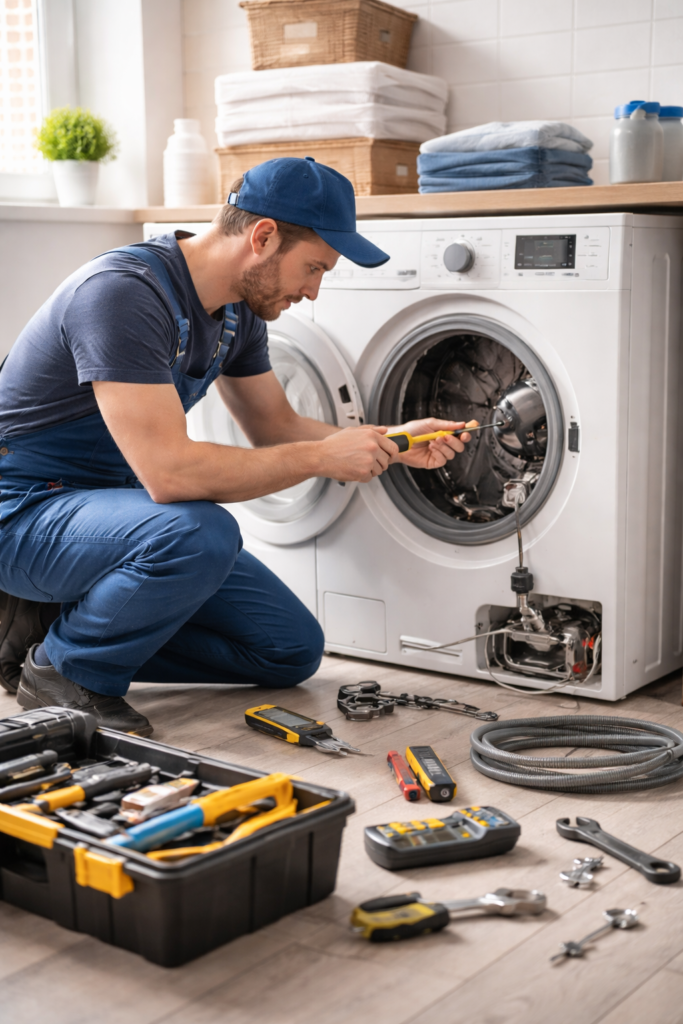
Washing machines are one of the most frequently used appliances in modern households. Because they operate regularly with water, detergent, and heavy loads of laundry, small issues can sometimes appear during normal use. These problems may include excessive shaking during the spin cycle, water remaining in the drum, unusual noises, or the machine pausing unexpectedly during a wash cycle.
In many cases, these symptoms do not indicate a serious mechanical failure. Instead, they often develop from simple causes such as unbalanced laundry loads, partially blocked filters, restricted drain hoses, or minor installation problems. Understanding how these issues develop makes it easier to identify what the washing machine is reacting to and whether a simple adjustment or maintenance step may resolve the situation.
By recognizing common warning signs and understanding how different components inside a washing machine work together, homeowners can often diagnose problems more confidently and prevent small issues from developing into more complicated repairs.
Many washing machine problems appear gradually as small operational issues rather than sudden mechanical failures.
Quick Problem Finder
Select the washing machine issue you want to understand:
Table of Contents
Why Washing Machines Develop Problems Over Time
Washing machines operate in an environment that combines water, detergent, mechanical movement, and electrical components. Each wash cycle places stress on multiple systems at once.
During a typical cycle, the machine must
- Fill with water
- Agitate clothing through detergent
- Drain used water
- Spin the drum at high speed
- Balance the weight of wet laundry
Every stage relies on different parts of the appliance working together. The motor powers movement, pumps move water, sensors monitor safety conditions, and suspension components absorb vibration.
Over hundreds or thousands of cycles, even well-built machines gradually experience wear. Rubber seals lose elasticity. Bearings rotate under constant pressure. Filters collect lint and debris. Because of these conditions, washing machines rarely fail without warning. Instead, they usually display small behavioral changes that appear long before a serious repair becomes necessary
Over time, these conditions can lead to several washing machine problems that homeowners frequently experience
Washing Machine Shaking Too Much During Spin
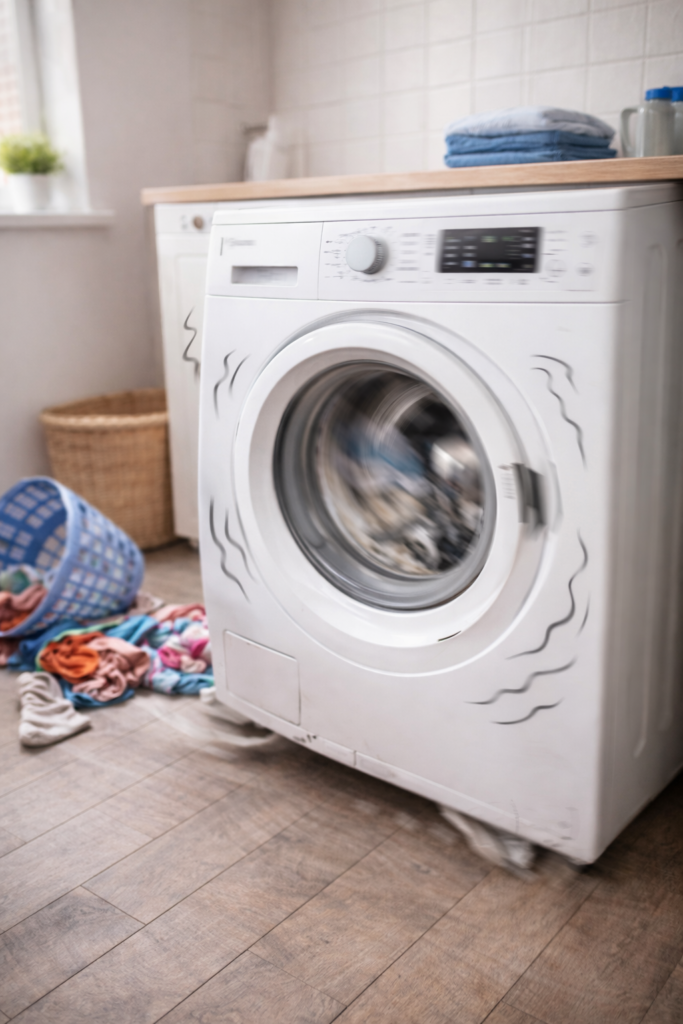
One of the most noticeable washing machine issues occurs when the appliance begins vibrating excessively during the spin cycle
During spinning, the drum rotates at very high speeds in order to remove moisture from clothing. This motion creates strong internal forces. If the load becomes unbalanced or the machine loses stability, that motion transfers outward as vibration .Several factors commonly lead to this situation.
Unbalanced Laundry Loads
Wet clothing can weigh significantly more than expected. Thick fabrics such as towels, blankets, or comforters absorb large amounts of water. If these items gather on one side of the drum, the washer must spin uneven weight.
The effect is similar to spinning a bucket that contains water leaning toward one side. The container pulls in the direction of the heavier mass.
Everyday situations where this occurs include
- Washing a single heavy blanket alone
- Overloading the drum with dense fabrics
- Mixing one bulky item with very lightweight clothing
- Allowing garments to twist into tight bundles
Many modern machines attempt to correct this imbalance automatically by pausing and rotating the drum slowly in the opposite direction.
Installation and Leveling Problems
Even a perfectly balanced load cannot compensate for poor installation.
Washing machines rely on adjustable feet that keep the cabinet level on the floor. If one leg sits slightly higher than the others, the appliance may rock during operation. As spin speed increases, this movement becomes more pronounced.
Floor structure also influences vibration. Concrete floors absorb movement effectively, while wooden floors may flex slightly under the machine’s weight. Checking whether the washer rocks when pressed gently on its corners often reveals whether leveling adjustments are needed.
Internal Suspension Wear
Inside the washer cabinet, suspension rods or shock absorbers stabilize the drum. These components absorb movement as laundry shifts during spinning.
After years of use, these parts can weaken. When that happens, the drum may swing farther than intended, producing loud banging sounds or noticeable vibration. In many homes, excessive shaking becomes the first visible signal that suspension components are reaching the end of their service life
Washing Machine Not Draining Properly
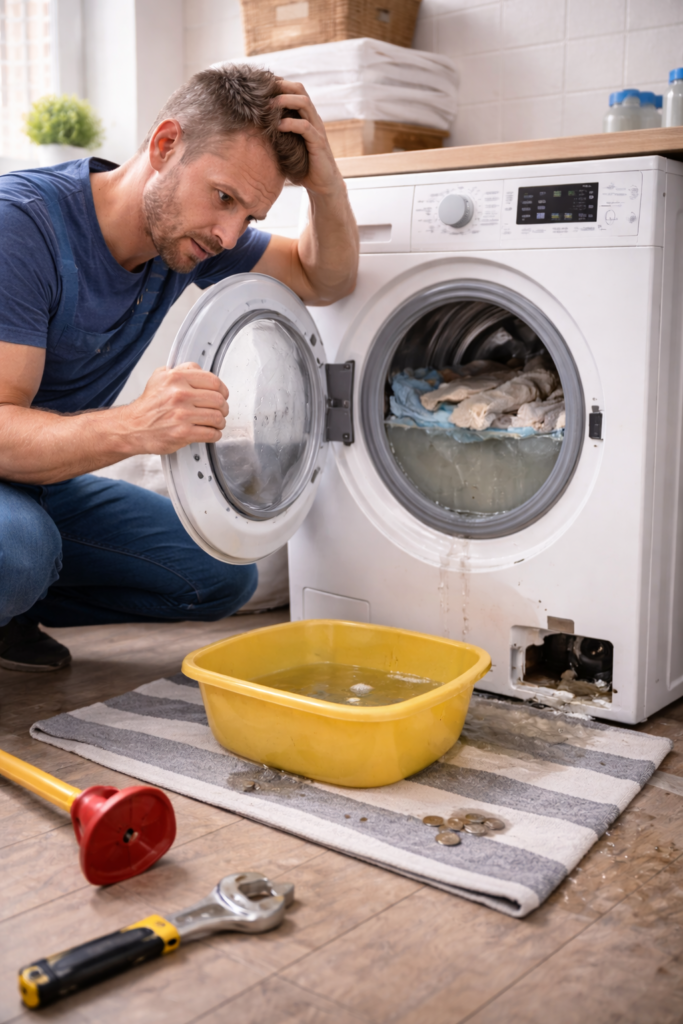
Another issue that frequently appears involves water remaining inside the drum after a cycle finishes
When a washing machine fails to drain completely, the cause usually lies somewhere within the drainage system. Although this situation can seem alarming, the explanation is often relatively simple.
How the Drain System Works
At the bottom of the washer sits a small electric pump designed to remove used water from the drum. Once the wash or rinse stage ends, the pump activates and pushes water into a drain hose. The hose then carries the water into the household plumbing system.
Several parts contribute to this process
- The drain pump
- A pump filter that captures debris
- Internal hoses connecting the drum to the pump
- The external drain hose behind the appliance
If any part of this pathway becomes restricted, water may remain inside the drum.
Filters and Small Debris
Washing machines process more than just fabric and detergent. Each load introduces lint, threads, hair, and occasionally small objects left in pockets. Over time, these materials accumulate inside the pump filter.
Common items found in pump filters include
- Coins
- Buttons
- Hair pins
- Fabric lint
- Small fragments of clothing
Once debris builds up, water struggles to pass through the filter. The washer may drain slowly or stop draining entirely.
Drain Hose Restrictions
Another common cause involves the drain hose itself. Because the hose sits behind the appliance, it can easily become bent or compressed when the washer is pushed against the wall. Even a slight kink may restrict water flow enough to interfere with the cycle.
In other situations, detergent residue and lint gradually narrow the hose interior. These small changes can reduce drainage efficiency until water begins collecting inside the drum
Washing Machine Water Not Pumping Out
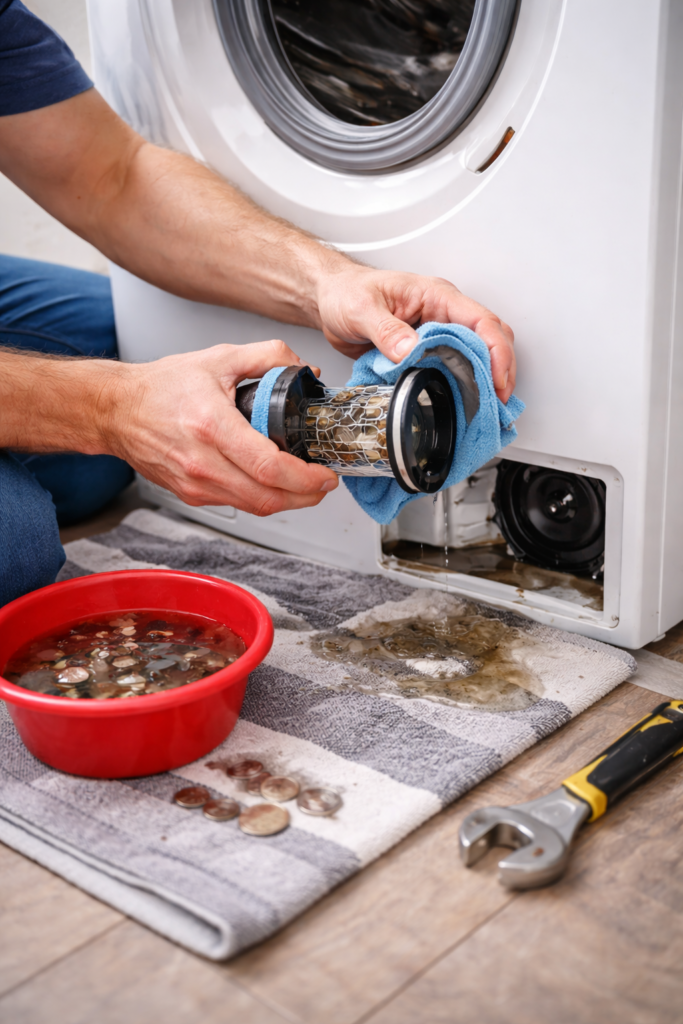
Sometimes a washer appears to complete part of the cycle yet leaves a noticeable amount of water behind. In these situations, the pump may be attempting to operate but struggling to move water effectively.
The Role of the Pump Impeller
Inside the pump assembly sits a small rotating blade known as an impeller. This component spins rapidly to push water through the drain hose.
If debris jams the impeller or the motor weakens with age, the pump may produce a humming sound without actually moving water. Because the pump works under wet conditions and handles debris from clothing, gradual wear is expected over time.
Household Plumbing Interference
Occasionally the washer itself functions normally while the surrounding plumbing system creates the appearance of a drainage failure.
For example:
- A partially clogged standpipe
- A blocked sink connection
- Poor venting in the household drain line
In these situations, water cannot exit the washer quickly enough, even though the pump continues running
Washing Machine Stops Before the Spin Cycle

Another situation that confuses many homeowners occurs when the washing machine completes most of the program but refuses to enter the spin phase.
Modern washers include safety checks before accelerating to high speed. If the machine detects conditions that could create instability or strain, it simply stops the cycle instead of spinning.
Balance Detection Systems
Before spinning begins, the washer rotates the drum slowly to evaluate how evenly the laundry is distributed.
If sensors detect excessive imbalance, the machine pauses and attempts to redistribute the load. When this process fails, the washer may cancel the spin stage entirely. This protective feature prevents excessive vibration that could damage internal components.
Drainage Requirements
The washer must also remove most of the water from the drum before spinning. If water remains inside because of a slow pump or restricted hose, the machine may refuse to start the spin cycle.
From the outside, it may appear that the washer stopped unexpectedly. In reality, the system is preventing high-speed spinning while water is still present
Washing Machine Stops Mid Cycle
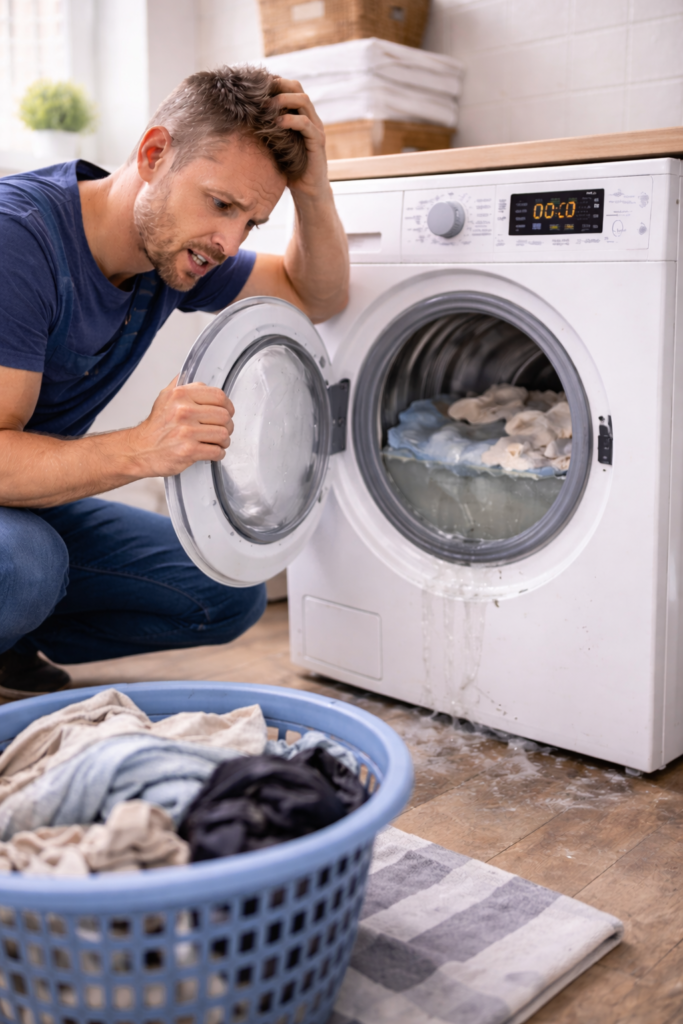
Occasionally a washing machine halts in the middle of a program without completing the wash. Although this behavior can seem concerning, the explanation is often linked to sensors monitoring operating conditions
Modern washers continuously evaluate several factors during a cycle
- Load balance
- Water levels
- Drain performance
- Door lock status
- Motor speed
If one of these readings falls outside the expected range, the control system may pause the program temporarily.
For example, if the drum becomes severely unbalanced during spinning, the machine may stop until the load is redistributed. Similarly, if the pump cannot remove water quickly enough, the washer may halt until drainage improves. These interruptions are often protective responses rather than signs of immediate failure
Washing Machine Keeps Pausing During a Cycle
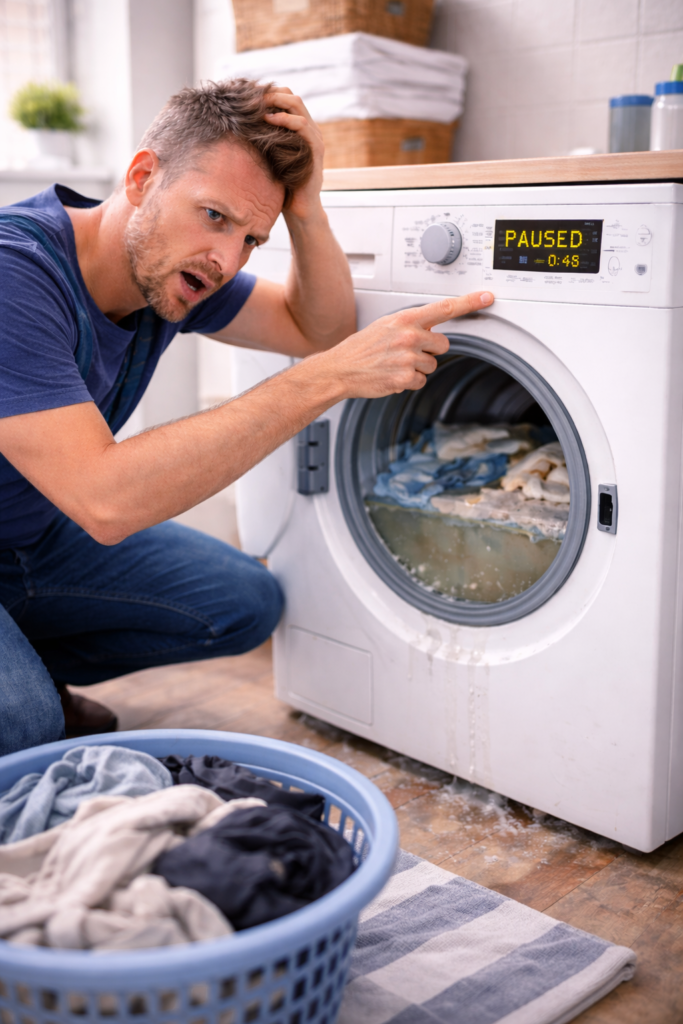
In many homes, people notice their washer stopping briefly during different stages of a cycle. The drum may pause for several seconds, the timer may appear to stall, and then the machine resumes as if nothing unusual happened.
Although this behavior can seem unpredictable, it usually reflects how modern washing machines manage internal conditions rather than a mechanical failure.
When Pausing Is Part of Normal Operation
Unlike older machines that relied on mechanical timers, many modern washers monitor their operation continuously. Sensors track water levels, load balance, drum speed, and temperature throughout the wash cycle.
Because of this constant monitoring, a washer may pause while it adjusts conditions inside the drum. For example, the machine may stop briefly while redistributing clothing before the spin stage.
Other situations where short pauses occur include
- When the washer is draining water before the next stage
- When the machine is waiting for the drum to reach the correct water level
- When sensors detect excessive foam from detergent
- When the system evaluates balance before high-speed spinning
In many cases, these pauses last only a few seconds. They become more noticeable when a washer must correct imbalance or wait for water flow to reach the programmed level.
Load Balance and Drum Stability
Laundry rarely distributes itself perfectly during washing. As clothing absorbs water, items can gather in one area of the drum. When this happens, the drum becomes unstable as it accelerates. Sensors detect this imbalance and pause the cycle so the washer can rotate slowly in the opposite direction and redistribute the load.
This situation commonly appears when washing
- Thick bath towels
- Heavy blankets
- Sweatshirts or denim garments
- Mixed loads with one bulky item
Often the machine corrects the problem automatically and continues spinning normally once the load becomes balanced.
Water Flow and Filling Delays
Water supply conditions also influence how a washer behaves during a cycle. If the incoming water flow is slower than expected, the washer may pause while waiting to reach the correct level inside the drum. This delay can occur when:
- The water supply valve is not fully open
- Mineral deposits restrict inlet filters
- The supply hose becomes bent or kinked
- Sediment blocks the inlet screen
From the outside, this may appear as though the timer has stopped. In reality, the washer is simply waiting until enough water enters the system
Grinding Noise From a Washing Machine
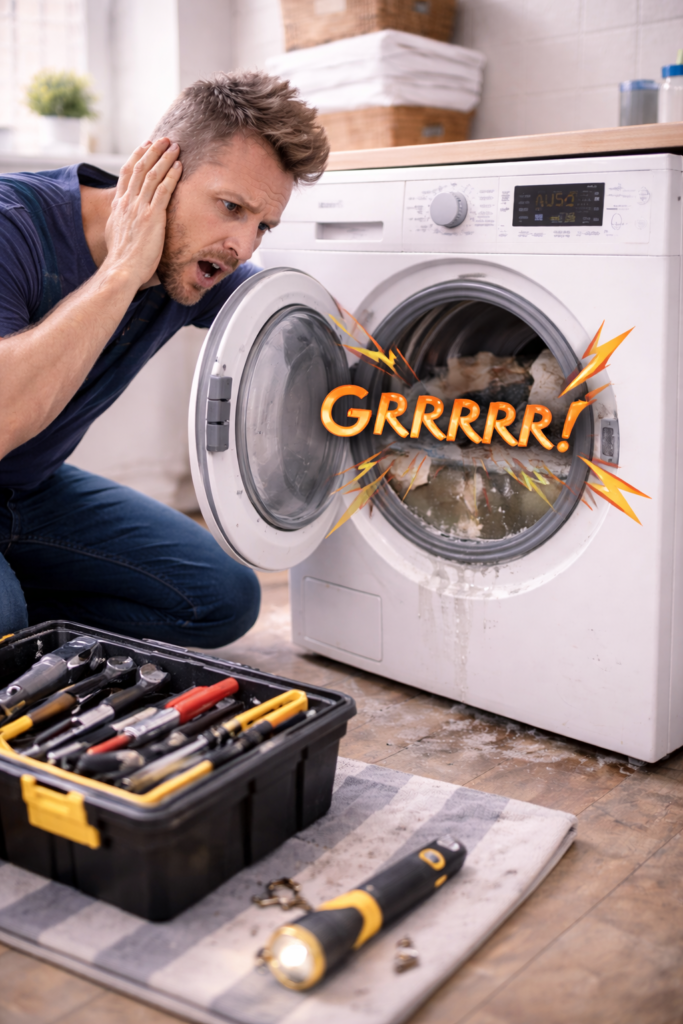
Another issue that sometimes concerns homeowners is the appearance of grinding or scraping sounds during a wash cycle. While unusual noises can seem alarming, they often develop gradually and may originate from several different sources within the appliance
Bearings and Mechanical Friction
Inside the washer, bearings allow the drum to rotate smoothly during washing and spinning. These components reduce friction between moving metal surfaces.
Over time, moisture, detergent residue, and repeated mechanical stress can degrade the lubrication inside the bearings. As this wear progresses, the drum may begin producing a rough grinding sound during rotation. The sound often becomes more noticeable during the spin cycle, when the drum rotates at its highest speed.
Drive Belt Wear
In belt-driven washing machines, a rubber belt transfers motion from the motor to the drum pulley. After years of use, this belt may stretch or develop cracks.
A worn belt can slip along the pulley surface, producing a scraping or squealing sound as the motor attempts to maintain rotation.
Foreign Objects Inside the Drum Assembly
Everyday items occasionally find their way into areas where they do not belong. Coins, small screws, or loose garment wires can slip through openings in the drum and become trapped between internal components.
As the drum rotates, these objects may scrape against metal surfaces, creating rhythmic grinding sounds. Removing the object usually restores normal operation.
Washing Machine Motor Not Working
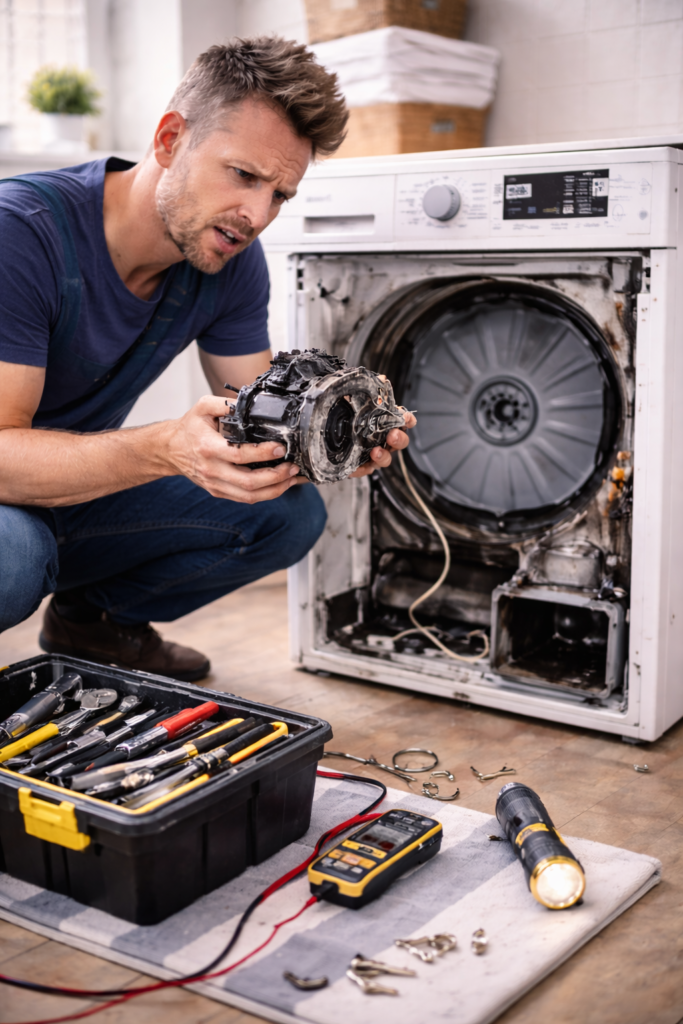
The motor is one of the central components of a washing machine. It provides the mechanical energy that turns the drum or agitator during both the wash and spin stages.
When the motor fails to operate correctly, the washer may fill with water but remain motionless.
Mechanical Resistance
In many cases, the motor itself is still functional but cannot transfer motion to the drum.
For example
- A worn drive belt may slip off its pulley
- A damaged motor coupling may disconnect the motor from the drum assembly
- Foreign objects may jam the drum, preventing rotation
In these situations, the motor may produce a humming sound while the drum remains still.
Electrical Interruptions
Electrical components also play a role in motor operation. Washing machines rely on several systems to deliver power to the motor.
These include:
- Door or lid safety switches
- Capacitors that assist motor startup
- Control boards that manage cycle timing
- Internal wiring connections
If one of these components fails, the motor may never receive the signal to begin turning.
Because these systems interact with each other, diagnosing motor issues sometimes requires careful inspection rather than replacing parts immediately
When Multiple Problems Appear Together
In some households, washing machine problems seem to occur in combination rather than appearing individually.
For example, a washer may begin shaking excessively and then stop before the spin cycle. In another situation, the machine may pause repeatedly and eventually leave water inside the drum. These patterns often develop because several components within the appliance influence one another. A restricted drain hose can slow water removal, which prevents the washer from entering the spin stage. Excess water remaining in the drum may then cause imbalance during spinning.
Similarly, worn suspension components can increase vibration, which may trigger sensors designed to pause the cycle. Understanding these interactions helps explain why a washer may display several symptoms at once.
This is why several washing machine problems can sometimes appear at the same time.
Safety and Practical Considerations
When troubleshooting appliance problems, a few basic safety practices are always important.
The first step before inspecting any internal component is disconnecting the washing machine from electrical power. Even when the machine appears inactive, internal wiring may still carry current.
Water spills are also common when inspecting drainage components. Placing towels or a shallow container beneath filters or hoses helps contain the water that may escape during cleaning.
Another important consideration involves the physical weight of the appliance. Washing machines are heavy, and moving them suddenly can strain plumbing connections or damage flooring.
For repairs involving electrical components, sealed motors, or internal assemblies, professional service is often the safest approach.
Understanding the Limits of Household Troubleshooting
Many washing machine problems can be traced to simple causes such as clogged filters, unbalanced loads, or bent hoses. Addressing these issues often restores normal operation without major repairs.
At the same time, not every situation can be solved through basic troubleshooting. Certain conditions indicate that professional inspection may be necessary, including:
- Persistent grinding or mechanical noise
- Strong burning odors during operation
- Water leaking from internal components
- Repeated cycle interruptions despite balanced loads
Modern washing machines combine mechanical engineering with electronic control systems. Diagnosing deeper faults sometimes requires specialized tools and technical knowledge.
Learning how to identify washing machine problems early can help homeowners avoid costly repairs and keep their appliance running smoothly.
A Practical Perspective on Everyday Appliance Problems
Washing machines quietly perform one of the most repetitive tasks in a household. Over time, even reliable machines encounter small interruptions in their routine.
A washer that pauses briefly, shakes during spinning, or drains more slowly than expected is often responding to ordinary conditions—laundry imbalance, gradual debris buildup, or the slow wear of internal components. Most of these situations can be understood through observation rather than immediate replacement of parts.
In many homes, simply noticing how the machine behaves during each stage of the cycle provides the clearest clues about what the appliance is trying to communicate
Understanding common washing machine problems can help homeowners identify the cause before the issue becomes more serious.
Many common washing machine problems appear gradually and can often be prevented through regular maintenance and proper installation.
⚠ Safety Tips Before Fixing a Washing Machine
- Always unplug the washing machine before checking internal parts.
- Avoid opening electrical panels if you do not have repair experience.
- Water and electricity together can create safety hazards.
- If you notice burning smells or damaged wires, contact a technician.
According to appliance safety guidelines from Energy.gov, unplugging appliances before repair helps reduce electrical risks.
People Also Read
Frequently Asked Questions
Why is my washing machine shaking too much during the spin cycle?
A washing machine usually shakes excessively when the laundry load becomes unbalanced or the appliance is not level on the floor. Heavy items such as blankets or towels can gather on one side of the drum, creating uneven weight distribution. Checking the leveling legs and redistributing the laundry often reduces vibration during the spin cycle.
Why does my washing machine stop before the spin cycle starts?
If a washer stops before the spin stage, it often means the machine detects a condition that could cause instability. Common reasons include an unbalanced load, slow drainage, or a faulty door lock sensor. Modern washing machines pause the cycle to prevent damage when these conditions occur
What causes a washing machine to stop mid cycle?
A washing machine may stop mid cycle when sensors detect an issue such as an uneven load, drainage blockage, door lock problem, or temporary electronic glitch. Many machines pause automatically to protect internal components until the condition is corrected.
Why is my washing machine not draining water properly?
Drainage problems often occur when debris blocks the pump filter or the drain hose becomes bent or restricted. Coins, lint, and small clothing items commonly accumulate in the filter and slow the movement of water. Cleaning the pump filter and checking the drain hose usually resolves the issue.
What does a grinding noise in a washing machine mean?
Grinding noises often indicate mechanical friction or an object trapped inside the drum assembly. Worn drum bearings, a slipping drive belt, or small items such as coins caught between the drum and tub can produce this sound. Identifying the source early helps prevent additional wear on internal components.
When should I call a technician for a washing machine problem?
Professional service is recommended if the washer produces loud mechanical noises, leaks water, repeatedly stops during cycles, or fails to spin even after basic troubleshooting. These symptoms may indicate worn bearings, electrical faults, or internal component damage that requires specialized repair.
Is it normal for a washing machine to vibrate while running?
Yes, a small amount of vibration is normal, especially during the spin cycle when the drum rotates at high speed. Washing machines use centrifugal force to remove water from clothes, which naturally creates movement. Vibration becomes a concern only when the machine makes loud banging sounds or shifts from its position.
Can an uneven floor cause a washing machine to shake?
Yes. A washing machine must sit evenly on all four leveling feet to remain stable. If the floor surface is uneven or one foot is slightly higher than the others, the washer may rock during operation. Adjusting the leveling legs usually helps stabilize the appliance.
Why does my washing machine keep pausing during a cycle?
A washing machine may pause during a cycle when it detects an unbalanced load, slow water filling, excessive detergent foam, or drainage delays. Modern washers include sensors that temporarily pause the program until conditions return to normal.
Can overloading a washing machine cause problems?
Yes. Overloading the washer can make it difficult for the drum to rotate properly and distribute weight evenly. This may lead to vibration, incomplete spinning, or the machine stopping during the cycle. Washing smaller, balanced loads helps maintain proper performance.
How often should I clean the washing machine pump filter?
Most appliance technicians recommend checking and cleaning the pump filter every one to three months. Regular cleaning prevents debris buildup that can block the drainage system and interfere with the washer’s ability to remove water.
Why are my clothes still wet after the wash cycle finishes?
Clothes may remain wet if the washer fails to reach the spin stage or if water cannot drain completely from the drum. Common causes include an unbalanced load, a clogged pump filter, or a restricted drain hose.
Can a clogged drain hose affect washing machine performance?
Yes. A drain hose that is bent, kinked, or partially blocked can slow the flow of water leaving the washer. When drainage becomes too slow, the machine may pause the cycle or refuse to spin until the water level decreases.
How can I prevent common washing machine problems?
Simple maintenance habits help reduce many common washer issues. These include checking clothing pockets before washing, cleaning the pump filter periodically, balancing laundry loads, and ensuring the washer sits level on the floor
These are some of the most common washing machine problems homeowners experience.
Understanding these washing machine problems can help prevent bigger appliance failures in the future.
Pingback: Washing Machine Making Loud Noise When Spinning: 9 Common Causes and Fixes - fixapplab.com
Pingback: Washing Machine Not Filling With Water: 10 Causes and Easy Fixes - fixapplab.com
Pingback: 7 Easy Fixes for Washing Machine Won’t Agitate but Spins - fixapplab.com
Pingback: 7 Causes Why Washing Machine Fills Too Slowly (Easy Fix Guide) - fixapplab.com