
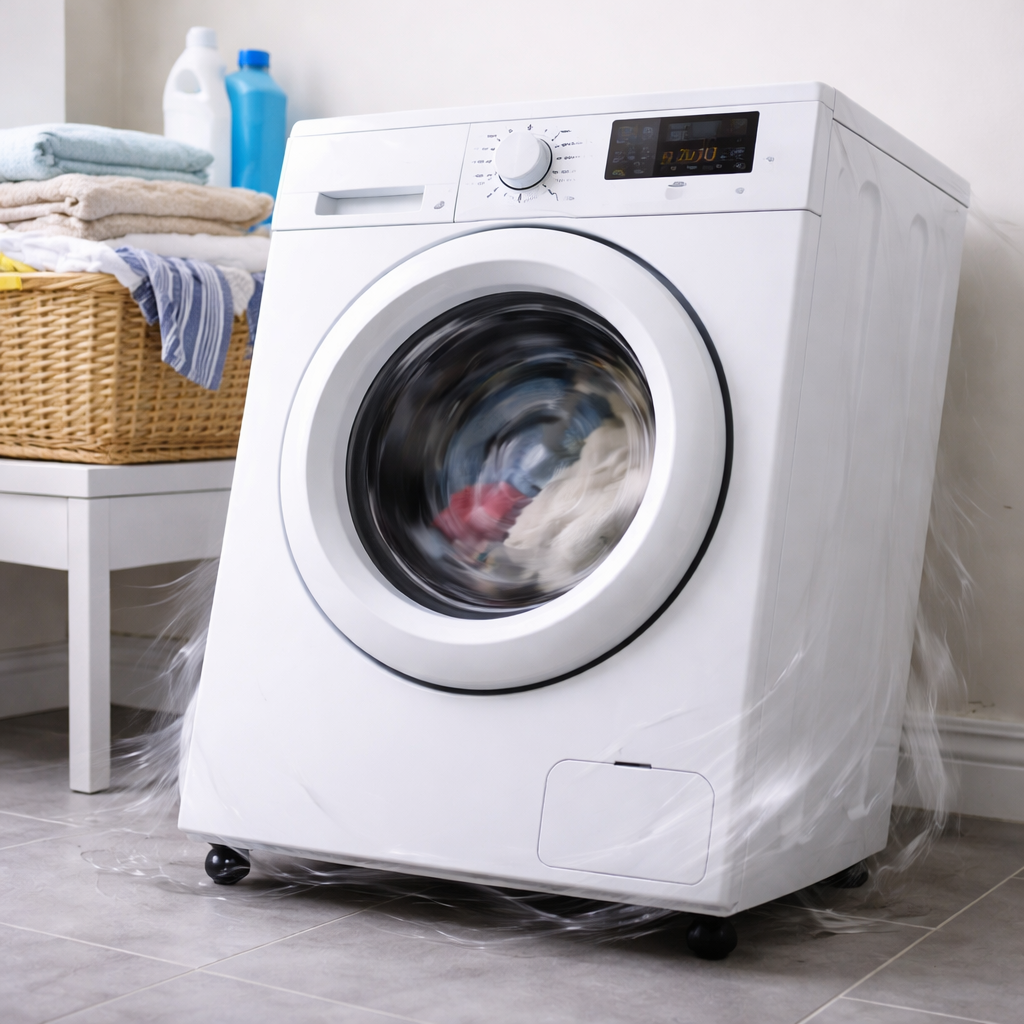
A washing machine shaking violently during the spin cycle usually indicates an imbalance inside the drum or a stability issue beneath the appliance. In many cases, the cause is relatively simple—uneven laundry distribution, leveling problems, or worn suspension components. Identifying the precise reason, though, requires understanding how the machine behaves during its fastest operating phase
In this article
Why a Washing Machine Shaking Violently During Spin Happens
To understand why shaking occurs, it helps to examine what happens during the spin cycle. By this stage of the wash program, the drum rotates at high speed to remove water from clothing using centrifugal force. The faster the drum spins, the more effectively moisture is expelled from the fabric.
This rapid rotation places considerable stress on the washer’s internal structure. The drum, suspension system, and outer cabinet must work together to absorb movement while keeping the appliance stable. Even a slight imbalance can become significantly magnified at higher speeds.
Imagine a drum containing several damp towels. Because water adds weight, those towels may shift toward one side as the drum accelerates. Once the load moves off center, the washer attempts to stabilize the rotation. The uneven mass pushes outward, creating pressure that intensifies as the drum spins faster.
That imbalance is what produces strong vibration.
Washing machines are designed to manage normal movement, but the system depends on proper loading and stable installation. When one part of that balance changes, the machine may begin to shake more aggressively than expected.
When Normal Movement Turns Into a Problem
A small amount of motion is part of the normal operation of most washing machines. As the drum accelerates during the spin cycle, mild vibration and a low humming sound are common. Many owners notice slight movement during this stage.
Problems begin when that motion becomes excessive.
A washer that produces loud thumping sounds, shifts position, or appears to move across the floor is operating outside its intended range. While the machine may still complete the cycle, the repeated force can place strain on internal components over time.
Common signs that vibration has become abnormal include:
- Loud banging or knocking noises
- The washer shifting from its original position
- Strong vibration felt through the surrounding floor
- Sudden pauses or interruptions during spinning
- Clothing remaining unusually wet after the cycle
These symptoms often indicate that something is interfering with the washer’s balance or suspension system.
How Laundry Loads Affect Stability
One of the most frequent causes of severe shaking begins with the simplest step in the entire process: loading the washer.
Laundry rarely distributes itself evenly inside the drum. Large items such as blankets, rugs, or comforters tend to absorb significant amounts of water and gather in one area. When the spin cycle begins, the concentrated weight pulls the drum toward one side.
Overloading the washer can produce a similar problem. When too many items are packed into the drum, clothing cannot move freely during washing. Instead of spreading evenly, garments form dense clusters that rotate unevenly.
Underloading can also lead to imbalance. A single thick item may cling to one side of the drum, leaving the opposite side nearly empty.
Consider a common household example. Someone washes a thick bath mat by itself. Once soaked, the mat becomes heavy and settles into one section of the drum. When spinning begins, the washer attempts to rotate that uneven load, which produces sudden vibration and loud thumping.
Adding a few towels to distribute weight often stabilizes the load immediately.
Balanced loads allow clothing to move naturally during spinning, reducing the likelihood that weight will concentrate in one area.
The Importance of Proper Installation

Even a well-balanced laundry load cannot prevent shaking if the washing machine itself is not sitting securely.
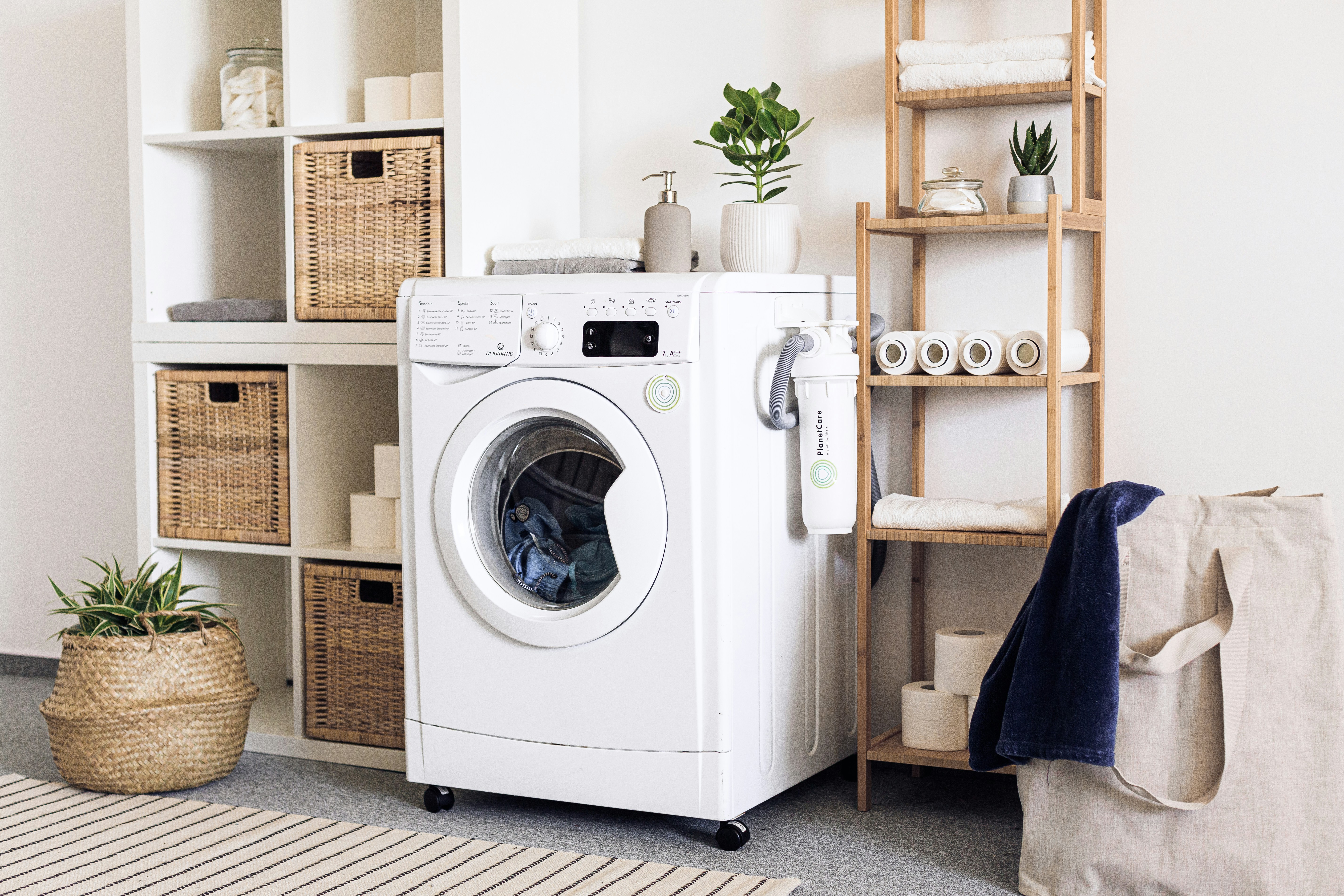
Most washers rely on four adjustable legs to maintain a level position. These legs allow installers to compensate for uneven flooring so that the appliance rests evenly on all corners. When one leg sits slightly higher or lower than the others, the washer may rock during operation.
A machine placed on a smooth tile surface may also shift more easily when vibration occurs. Small movements during repeated cycles can gradually move the washer away from its original position.
Homeowners sometimes notice the washer slowly inching forward over time. The movement may go unnoticed until the machine eventually begins shaking more noticeably during spin cycles.
Proper leveling typically involves:
- Checking stability from front to back and side to side
- Adjusting the leveling legs until the washer sits firmly
- Tightening the lock nuts that secure the legs in place
- Ensuring all four feet maintain full contact with the floor
Rubber anti-vibration pads can add additional stability on slippery surfaces.
Installation details may seem minor, yet they play a significant role in how effectively vibration is absorbed

Internal Components That Control Movement
Inside the washer cabinet, several components work together to prevent the drum from transferring excessive force to the outer structure of the appliance.
The suspension system plays a central role. Much like the suspension of a vehicle, it absorbs movement and helps maintain balance. Springs, rods, and shock absorbers control how the drum shifts during spinning.
When these parts wear down, the washer gradually loses its ability to manage motion.
Common internal causes of severe shaking include:
- Worn suspension rods in top-loading washers
- Faulty shock absorbers in front-loading models
- Damaged drum bearings that allow excessive movement
- Loose internal mounting components
A washer with worn suspension parts often produces loud banging sounds during spin cycles. The drum may swing too far from its central position, causing it to strike the sides of the cabinet.
Another everyday scenario illustrates this pattern. A household notices that their washer has grown progressively louder over several months. At first the noise resembles a mild rattling sound. Over time, the drum begins striking the interior walls of the machine during spinning. In many cases, the suspension components have simply reached the end of their service life.
Replacing those worn parts usually restores stability.
Shipping Bolts and Other Overlooked Setup Issues
New washing machines sometimes shake intensely during their first few cycles for an unexpected reason: the shipping bolts were never removed.
These bolts secure the drum during transportation to prevent internal damage. They hold the drum firmly in place, restricting the movement that the suspension system normally allows.
Operating a washer with shipping bolts installed prevents the drum from absorbing vibration properly. Instead of floating within the suspension system, the drum transfers force directly to the cabinet.
The result can be dramatic shaking.
Fortunately, the solution is straightforward. Removing the bolts restores the drum’s intended flexibility and allows the suspension system to function correctly.
Other installation oversights can produce similar problems. A pedestal base that is not securely fastened, loose mounting screws, or an uneven floor may all contribute to instability during the spin cycle.
Details that seem minor during installation often become noticeable only once the machine begins spinning at full speed.
What This Problem Cannot Realistically Indicate
When a washer begins shaking dramatically, it is easy to assume the entire appliance is failing. In reality, violent vibration rarely means that the machine is beyond repair.
Online discussions sometimes suggest catastrophic mechanical failure whenever shaking occurs. These explanations often exaggerate the situation.
In many cases, the underlying issue falls into one of the following categories:
- Load imbalance
- Leveling problems
- Suspension wear
- Installation oversights
These are mechanical issues with identifiable solutions.
A shaking washer does not automatically mean that the motor is damaged or that the appliance must be replaced immediately. Modern washing machines are built with safety margins, and many vibration problems can be resolved with relatively modest repairs.
Recognizing the limits of the issue helps prevent unnecessary concern.
Safety and Practical Considerations
Although many causes are simple, strong vibration should not be ignored.
Running the washer while it shakes violently can strain internal components. Repeated impacts within the cabinet may damage suspension parts or loosen mounting hardware.
Basic safety measures include:
- Pausing the cycle if loud banging occurs
- Redistributing the laundry load
- Checking whether the washer has shifted position
- Inspecting the leveling legs for stability
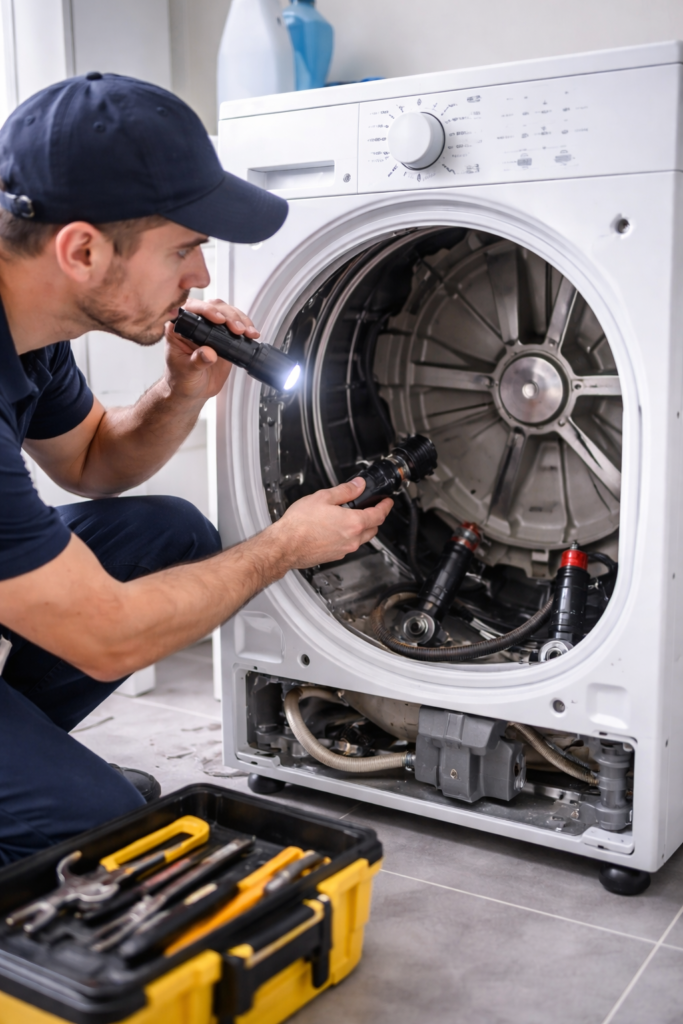
Opening the cabinet to inspect internal components generally requires technical knowledge. Washing machines contain electrical systems and moving parts that may present hazards if handled improperly.
When internal repairs are required, trained service technicians are usually better equipped to diagnose the issue and replace worn components safely.
Routine maintenance, thoughtful loading habits, and stable installation conditions all help reduce the likelihood of major vibration problems.
What Current Knowledge Still Doesn’t Fully Explain
Modern washing machines often include balance detection systems designed to correct uneven loads automatically. Sensors monitor drum movement and may adjust spin speeds to reduce vibration.
Despite these improvements, machines sometimes struggle to stabilize certain loads. Thick fabrics, heavily absorbent items, and unusual laundry combinations can behave unpredictably inside the drum.
Engineers continue refining suspension systems, motors, and balance algorithms to further reduce vibration. Research in appliance design explores ways to detect imbalance earlier and redistribute loads more effectively during wash cycles.
Even with these advances, some variation remains unavoidable because laundry itself behaves differently from one load to the
For more guidance on appliance efficiency, you can also review washing machine energy information from the U.S. Department of Energy.
A Closer Look at Everyday Use
For most households, the washer operates quietly in the background of daily life. Laundry is loaded, cycles run, and the appliance completes its task with little attention.
When shaking suddenly appears, the change can feel dramatic. Noise echoes through the room, the machine rattles against the floor, and the entire laundry area seems unstable.
In many homes, though, the cause turns out to be something ordinary—a thick blanket washed alone, a slightly uneven floor tile, or suspension components that gradually wore down after years of use.
Understanding how washing machines manage weight and movement often transforms what first appears to be a serious malfunction into a problem that can be traced to simple mechanical balance.
Sometimes stability depends less on the complexity of the appliance and more on the quiet interaction between load distribution, installation conditions, and the basic physics of spinning fabric
Frequently Asked Questions
Why does my washing machine shake only during the spin cycle?
The spin cycle is the fastest part of a washing machine’s operation. During this stage, the drum rotates at high speed to remove water from clothes. If the laundry load becomes uneven or the washer is not properly leveled, the imbalance becomes more noticeable at these higher speeds, which leads to shaking or vibration.
Is it dangerous if my washing machine shakes violently?
Occasional vibration is normal, but strong shaking should not be ignored. Continued operation during severe vibration can place extra stress on internal components such as suspension rods, shock absorbers, and drum bearings. Over time, this may lead to additional wear or mechanical damage.
Can an uneven floor cause a washing machine to shake?
Yes. A washing machine must sit evenly on all four legs to remain stable during operation. If the floor surface is uneven or one leveling leg is slightly higher than the others, the machine can rock during the spin cycle. Adjusting the leveling legs and ensuring firm contact with the floor usually resolves this issue
When should I call a technician for a shaking washing machine?
If redistributing the laundry load and leveling the machine do not reduce the vibration, the issue may involve worn suspension parts, damaged bearings, or loose internal components. In these situations, a qualified technician can inspect the washer safely and determine whether any internal parts need repair or replacement
Written by Muhammad Khalid
Muhammad Khalid is the founder of FixAppLab, a website that explains common washing machine, refrigerator, dryer, and dishwasher problems through clear troubleshooting guides. His work focuses on helping homeowners understand how everyday appliances operate and why mechanical or electrical issues may occur.
Learn more about the author →
Pingback: Washing Machine Not Draining Water - fixapplab.com
Pingback: Washing Machine Not Draining After Spin Cycle 6 Common Causes