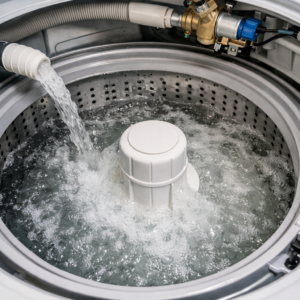
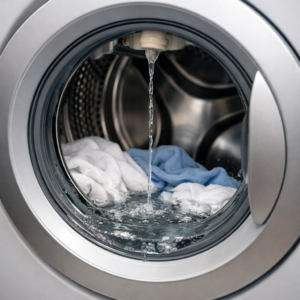
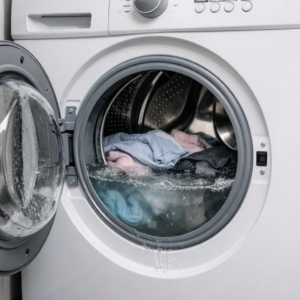
A washing machine not stopping water usually indicates a control or sensor issue. In simple terms, the appliance is either unable to detect the correct water level or failing to shut off the water supply at the right time. In most situations, the root cause can be traced to a specific component that is no longer functioning as intended
Key Takeaways
Primary Cause: A faulty water inlet valve or pressure switch usually leads to continuous filling.
Safety First: Always unplug the washing machine and turn off the water supply before inspection.
Hidden Issue: A clogged or damaged pressure hose can prevent accurate water level detection.
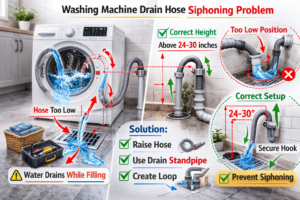
Installation Error: Incorrect drain hose positioning may cause a siphoning effect.
How a Washing Machine Not Stopping Water Issue Happens
Every washing machine operates through a coordinated system designed to control water intake with precision. Water enters the drum through a water inlet valve, and the filling process stops once the correct level is reached. This process is regulated by a pressure-based sensing mechanism rather than guesswork.
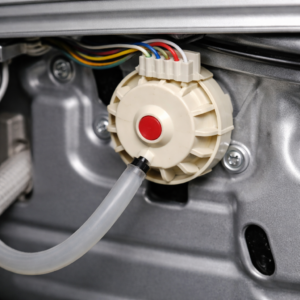
As the drum fills, air pressure builds inside a small tube connected to a pressure switch. When the pressure reaches a predetermined level, the switch signals the system to close the inlet valve. This creates a controlled loop where water enters, pressure is measured, and filling stops at the right moment.
When you encounter a washing machine not stopping water, it typically means this feedback loop has been disrupted. The machine may not be receiving the correct signal, or it may be unable to respond to it properly. This is why the issue often appears mechanical but is actually related to sensing or control failure.
What the Problem Usually Looks Like in Real Life
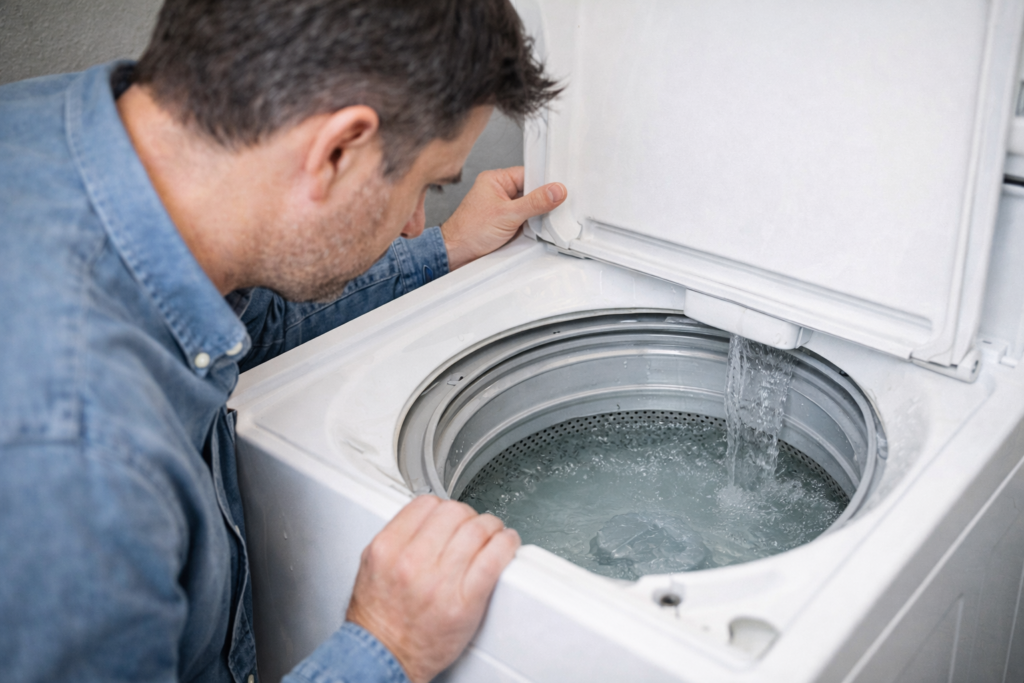
A washer that keeps filling with water rarely fails suddenly without warning. In many cases, subtle changes appear first, making the issue easy to overlook until it becomes more serious. You might notice that water continues to flow even after the drum appears full. In other cases, the wash cycle may stall and fail to move forward to spinning or rinsing. Some machines may even fill and drain at the same time, creating a repetitive loop that never stabilizes.
A common real-life scenario involves hearing water entering the drum even when the machine is switched off. By morning, the tub may contain more water than expected. This slow and continuous filling often points to a faulty water inlet valve that is not sealing properly. Another everyday situation occurs when a normal cycle is started, but upon returning, the drum is nearly overflowing. The machine remains stuck in the filling phase. Although it feels like a sudden breakdown, the underlying issue usually develops gradually over time.
Find out why your washer drains instantly and how to fix it properly.
The Parts That Cause Washing Machine Not Stopping Water
A washing machine not stopping water is usually linked to a small number of essential components. Each of these parts plays a critical role in managing water levels, and failure in any one of them can disrupt the entire system.
Water Inlet Valve
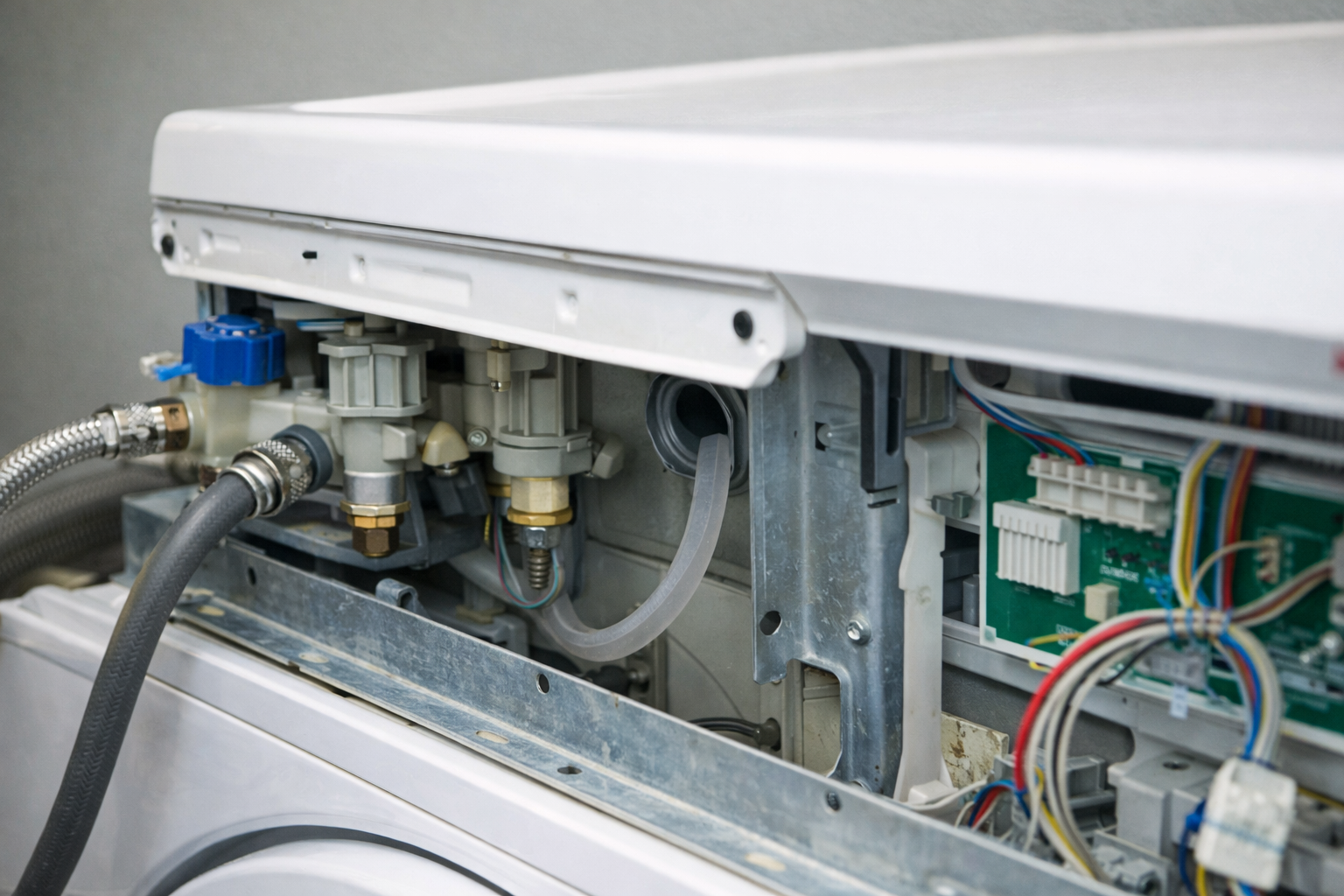
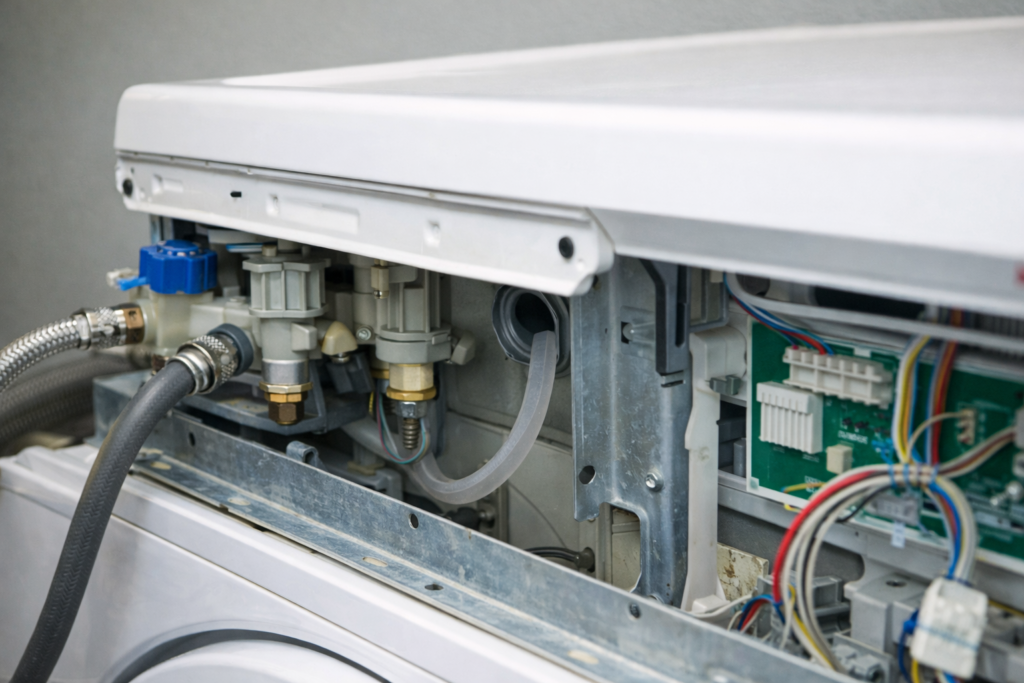
The inlet valve controls the flow of water into the washing machine. If it becomes stuck open—either due to mechanical wear or electrical failure—water will continue to enter the drum even when it should stop. A key diagnostic sign is water flowing even when the appliance is unplugged.
Pressure Switch
The pressure switch acts as the machine’s water level sensor. It determines when enough water has entered the drum. If this component fails, the washer cannot detect water levels accurately and continues filling as if the drum were still empty.
Pressure Hose
The pressure hose connects the drum to the pressure switch and carries air pressure signals. If the hose is clogged, kinked, or leaking, the pressure signal will not reach the switch. As a result, the machine keeps filling because it lacks accurate feedback.
Modern washing machines rely on a control board or electronic timer to manage cycles. If this system malfunctions, communication between components becomes inconsistent. The inlet valve may stay open longer than necessary, or the system may fail to process sensor input correctly. Although these components differ in function, they are closely interconnected. Even a minor blockage or electrical fault can produce the same symptom as a major component failure
Why the Machine Sometimes Fills and Drains at the Same Time
One of the more confusing situations occurs when the washing machine fills and drains simultaneously. This behavior often creates the impression of a serious internal fault. In many cases, the cause is related to installation rather than a defective part. If the drain hose is inserted too far into the standpipe or positioned too low, it can create a siphoning effect. Water is pulled out of the drum as quickly as it enters, causing the machine to continuously refill.
From the outside, this may resemble a malfunctioning washer. In reality, it is often a setup issue involving the drainage system. Adjusting the hose height or positioning usually resolves the problem without requiring any part replacement. This highlights an important point: not all washing machine water issues are mechanical. Some are directly related to how the appliance is installed.
Related Guides
Water-related washing machine issues are often connected. These additional guides can help you explore related problems and solutions.
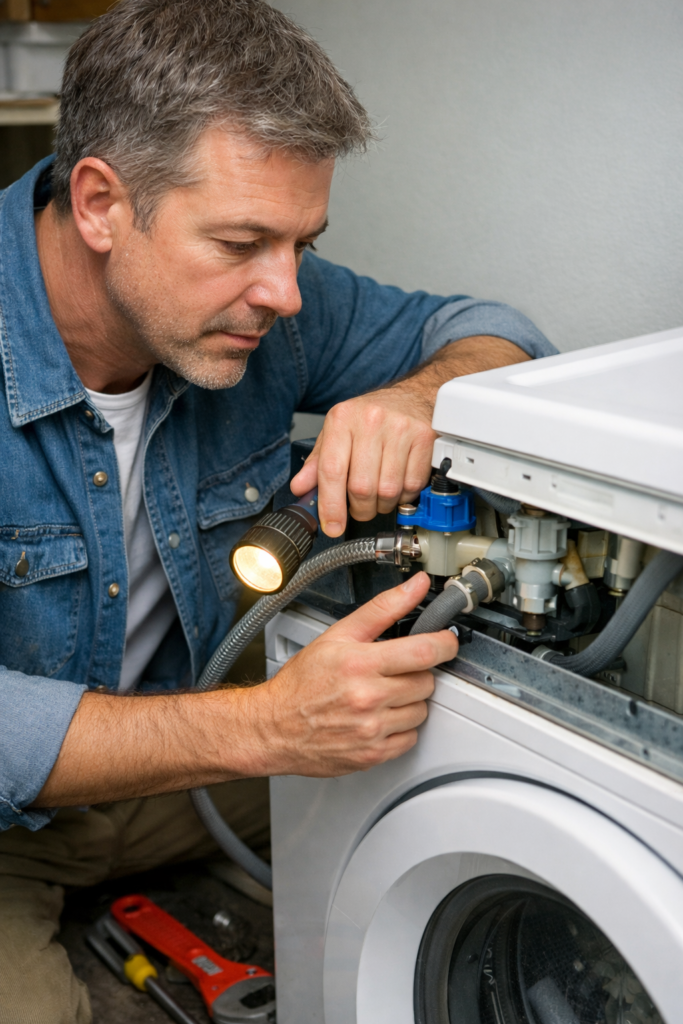
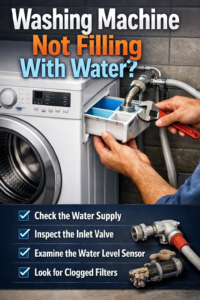
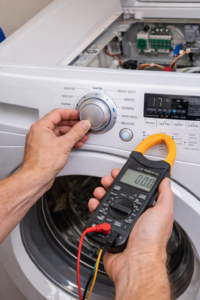
When dealing with a washing machine not stopping water, it is important to begin with safety and careful observation rather than immediate repairs. Start with these essential steps
Turn off the water supply to prevent overflow or flooding
Unplug the machine before inspecting internal components
Observe whether water continues to flow after power is disconnected
This last step is especially useful for diagnosis. If water continues entering after unplugging, the issue likely lies with the inlet valve. If the water stops, the problem may involve the pressure switch, control board, or electrical system. Next, perform a basic inspection
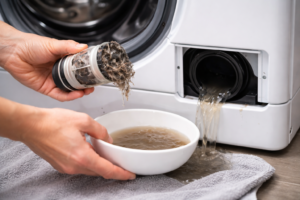
Check for debris in the inlet valve screens
Inspect the pressure hose for blockages, cracks, or loose connections
Listen for abnormal sounds or lack of response from the pressure switch
These checks do not require specialized tools, but they do require patience. Replacing parts without identifying the exact cause often leads to unnecessary costs and repeated issues.
Important Safety Note
Always unplug your washing machine and turn off the water supply before inspecting any internal parts.
Working with electrical appliances without proper precautions can lead to serious injury or equipment damage.
What This Problem Cannot Realistically Do
It is common to assume that a washing machine not stopping water means the appliance is beyond repair. This assumption is often driven by frustration rather than technical reality. In most cases, the issue is isolated to a single faulty component. Replacing that part—whether it is the inlet valve, pressure switch, or hose—typically restores normal function. Complete system failure is relatively uncommon in this scenario.
While prolonged overfilling can lead to secondary problems, such as water damage or wear on internal parts, modern washing machines are designed with safety mechanisms. These systems help prevent widespread damage in many situations. The idea that continuous filling automatically requires replacing the entire machine is not supported by how these appliances are built or repaired.
What Many People Get Wrong
Many assume that continuous water filling means the entire washing machine is damaged.
In reality, most cases involve a single faulty component—such as the water inlet valve or pressure switch—
which can be repaired or replaced without needing to replace the entire appliance.
If your washer is also not draining water,
the issue may be related to the same pressure or control system.
Safety and Practical Considerations
Because washing machines involve both water and electricity, even minor issues should be handled with care. Safety should always be the first priority when troubleshooting. Before inspecting any component, disconnect the power supply completely. Even when the machine appears inactive, internal circuits may still carry electrical current. This creates a risk of electric shock if precautions are ignored.
Water overflow presents additional concerns. Prolonged exposure to moisture can damage flooring, especially in confined laundry areas. It can also lead to mold growth if not addressed quickly. For individuals without experience in appliance repair, there is a point where professional assistance becomes the safer option. Replacing a hose or valve may be manageable, but diagnosing electrical faults or control board issues often requires technical expertise. A cautious, informed approach helps reduce both safety risks and repair expenses.
A Note on Changing Designs and Ongoing Knowledge
Washing machines have evolved significantly over time. Older models relied primarily on mechanical systems, while newer machines incorporate sensors, circuit boards, and digital controls. This evolution means that the same symptom—such as continuous filling—can have different causes depending on the model and design. What works as a solution for one machine may not apply to another.
In addition, repair knowledge continues to develop as manufacturers introduce new technologies. Diagnostic methods that were effective in older systems may not always translate directly to modern appliances. Staying informed and adaptable is an important part of dealing with current washing machine issues.
Continue Reading
If your washing machine is showing inconsistent behavior, these additional guides can help you explore related issues and solutions.
There is a widespread belief that most appliance issues can be resolved with a simple trick or quick fix. While this idea is appealing, it often oversimplifies the problem. A washing machine not stopping water typically involves multiple interacting components. A clogged hose, a faulty pressure switch, or a defective valve can all produce identical symptoms. Without proper diagnosis, quick fixes may only address surface-level issues.
In some cases, temporary solutions may appear effective but fail to resolve the underlying cause. When the problem returns, it is often because the root issue was not identified or addressed. A more thoughtful, step-by-step approach tends to provide more reliable and lasting results.“This type of washing machine not stopping water issue often happens due to if your washer not stopping water, check the inlet valves
Taking a Step Back Before Deciding What to Do Next
When a washing machine problem disrupts daily routines, the instinct is to fix it immediately. While urgency is understandable, taking time to observe the machine can lead to a more accurate diagnosis. Pay attention to how the washer fills, when it stops, and what sounds it makes during operation. These small details often reveal the source of the issue more clearly than guesswork.
Some problems are resolved through simple adjustments, while others require replacing specific components. In certain cases, professional repair is the most practical option. The right decision becomes clearer when you take the time to understand the situation. Sometimes, the most effective step is simply recognizing what the machine is trying to communicate .This washing machine keeps filling with water problem should not be ignored
Frequently Asked Questions
Why is my washing machine not stopping water even when turned off?
If your washing machine is not stopping water even when turned off, the most common cause is a faulty water inlet valve. This valve can get stuck open due to wear, debris, or mineral buildup, allowing water to continue flowing into the drum. In this situation, turning off the water supply immediately is important to prevent overflow and potential water damage.
How do I fix a washing machine that keeps filling with water?
To fix a washing machine that keeps filling with water, start by unplugging the machine and shutting off the water supply. Then check key components such as the inlet valve, pressure switch, and pressure hose for damage or blockages. In many cases, cleaning the hose or replacing a faulty valve resolves the issue without needing major repairs.
Can a clogged pressure hose cause a washing machine not stopping water issue?
Yes, a clogged or damaged pressure hose is a common reason for a washing machine not stopping water. The hose carries air pressure signals to the pressure switch, which tells the machine when to stop filling. If the hose is blocked or leaking, the machine cannot detect the correct water level and continues to fill unnecessarily.
Is it safe to use a washing machine that keeps filling with water?
No, it is not safe to continue using a washing machine that keeps filling with water. This problem can lead to overflow, water damage, electrical hazards, and mold growth. It is best to stop using the machine immediately, turn off the water supply, and diagnose or repair the issue before running another cycle.
ABOUT THE AUTHOR
Muhammad Khalid
Founder of FixAppLab • Appliance Troubleshooting Writer
Muhammad Khalid is the founder of FixAppLab, a platform dedicated to explaining everyday appliance problems and practical troubleshooting solutions. His work focuses on helping homeowners understand how washing machines and other household appliances function, and how to identify and resolve common mechanical and electrical issues.