Why Is My Washer Not Filling With Enough Water? 7 Causes & Easy Fixes
A washer that isn’t filling with enough water is usually dealing with restricted water flow, incorrect settings, or a sensor misreading the water level. In many cases, the cause is minor—such as a clogged inlet screen or partially closed valve—rather than a serious mechanical failure
Why Is My Washer Not Filling With Enough Water?
Quick Answer: If your washer is not filling with enough water, it is usually caused by clogged inlet filters, low water pressure, kinked hoses, or a faulty water inlet valve. In some cases, incorrect settings or a malfunctioning water level sensor can also stop the washer from filling properly.
Most common causes include:
- Blocked or dirty inlet screens
- Low household water pressure
- Bent or kinked water hoses
- Faulty water inlet valve
- Incorrect washer settings
Important: In many modern washing machines, low water levels are normal due to high-efficiency settings. Always check your cycle settings before assuming there is a fault.
Table of Contents
How a Washer Decides How Much Water to Use
To understand why your washer is not filling with enough water, it’s important to recognize that modern washing machines operate differently from older models. Instead of filling to a fixed level, many machines use load-sensing technology to determine how much water is needed based on fabric type, weight, and cycle selection.
Inside the appliance, a pressure system and water level sensor (pressure switch) monitor how much water has entered the drum. As water fills, air pressure builds in a connected tube. Once the pressure reaches a calibrated point, the washer assumes the correct level has been reached and stops filling.
This system improves water efficiency and energy savings, but it also introduces sensitivity. Even a small restriction or sensor misreading can lead to noticeably low water levels. This is one of the most common reasons people begin searching for answers to why is my washer not filling with enough water, even when the machine appears functional
Related Washing Machine Problems You Should Know
If you’re dealing with low water levels, you might also face other common washer issues. Explore these detailed guides to understand and fix related problems effectively.
-
Washing Machine Not Filling With Water – 10 Causes & Easy Fixes
Learn why your washer may completely stop filling and how to fix it step by step.
-
Why Is My Washing Machine Filling Too Slowly?
Discover the reasons behind slow water flow and how to restore normal filling speed.
-
Washing Machine Keeps Adding Water Continuously – Causes & Fix
Understand why your washer keeps filling endlessly and how to stop it.
When the Water Supply Itself Is the Problem
In many cases, the issue lies outside the washing machine. A washer can only fill based on the water pressure and supply available in your home plumbing system. Any disruption before water reaches the appliance will directly affect fill performance. Several common conditions can limit water flow:
- Partially closed water supply valves
- Low household water pressure
- Sediment buildup in pipes or connections
- Simultaneous water usage during peak times
In a typical household, you may notice the washer filling slowly while a shower or kitchen tap is running. This does not indicate a malfunction; instead, the machine is responding to reduced pressure.
A practical way to assess this is by turning on a nearby faucet. If the flow appears weak or inconsistent, the washer is likely experiencing the same limitation, which helps explain why your washer is not filling with enough water.
Small Blockages That Make a Big Difference
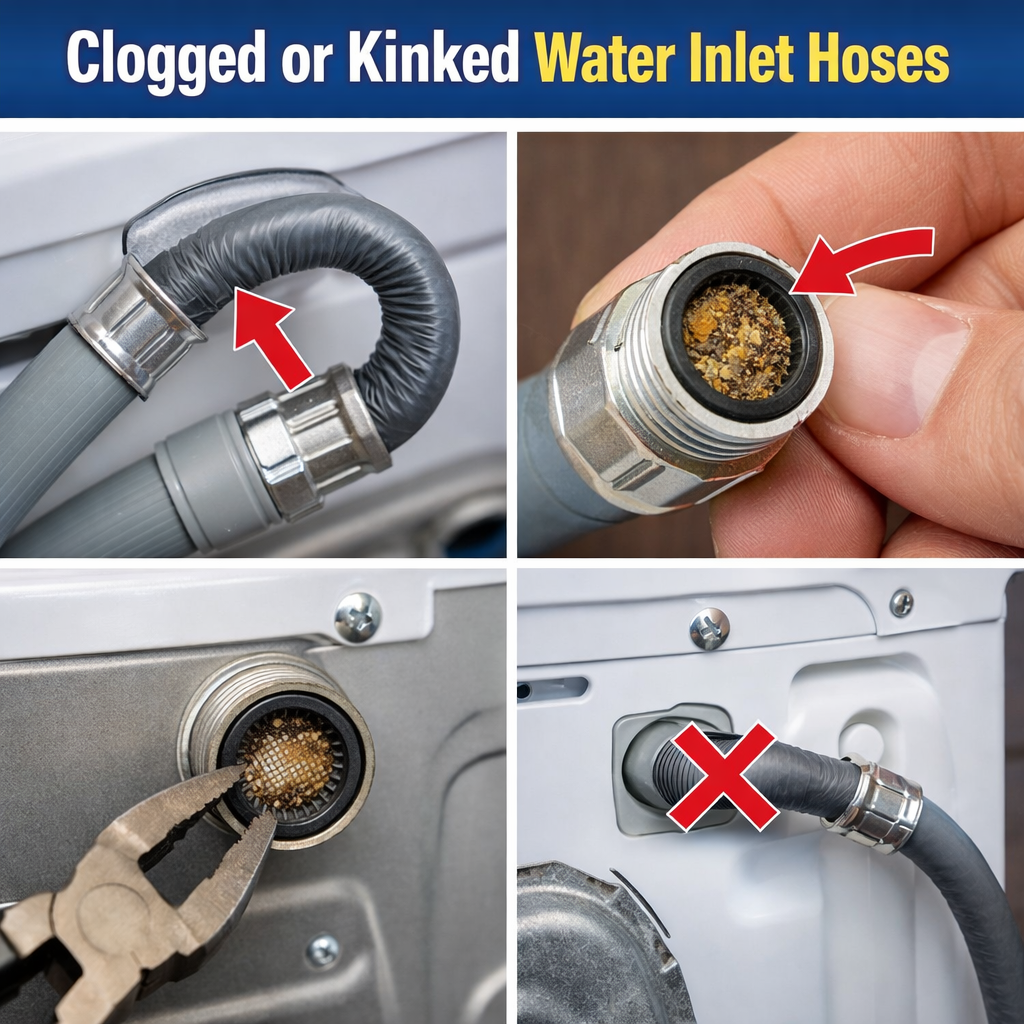
One of the most overlooked causes of low water levels is the presence of clogged inlet screens or mesh filters. These tiny screens are located where the water hoses connect to the washer and are designed to trap debris before it enters the system. Over time, these filters accumulate sediment, mineral deposits, and debris, especially in homes with hard water. Even a thin layer of buildup can significantly restrict water flow into the drum.
The change is often gradual. The washer continues to run, spin, and drain normally, but the water level slowly becomes lower than expected. This subtle shift often leads users to question, why is my washer not filling with enough water, without realizing the issue is external and easily fixable. Cleaning these screens typically restores normal water flow. Regular maintenance of inlet filters is one of the most effective ways to prevent recurring fill issues.
If your washer has similar issues, you can also read this guide on washing machine not filling with water to understand deeper causes.
When Internal Components Misread the Situation
Not all causes are visible from the outside. Inside the washing machine, several key components regulate water intake, and if one fails or sends incorrect signals, the washer may stop filling prematurely. The pressure switch (water level sensor) plays a central role. If it incorrectly detects pressure, it may signal that the drum is already full—even when it isn’t. This results in an early cutoff of the water supply.
Another critical part is the water inlet valve, which controls how quickly water enters the machine. If the valve becomes faulty or partially blocked, it may not open fully, leading to slow or insufficient filling.
These issues often lack obvious warning signs. The washer may complete cycles as usual, but clothes may come out poorly cleaned or slightly damp. In such cases, understanding how these internal systems function is key to diagnosing why your washer is not filling with enough water
Step-by-Step Fix Guide
Follow these steps to fix your washer quickly:
- Check water supply: Make sure valves are fully open
- Inspect hoses: Remove bends or kinks
- Clean filters: Remove debris from inlet screens
- Test pressure: Ensure strong water flow
- Reset washer: Unplug for 5 minutes
Tip: These steps fix most washer filling problems without needing a technician.
Settings That Change What “Enough Water” Means
Not every instance of low water level indicates a malfunction. Many modern washers—especially high-efficiency (HE) models—are designed to use significantly less water than traditional machines. Instead of fully submerging clothes, these washers rely on tumbling action and concentrated detergent to clean effectively. As a result, the drum may appear only partially filled during operation.
This design can feel unfamiliar, particularly for users transitioning from older models. Opening the lid mid-cycle and seeing a shallow water level often creates the impression that something is wrong, even when the machine is operating correctly. Certain settings can further reduce water usage:
- Eco or energy-saving modes
- Small or light load selections
- Quick wash cycles
If the issue occurs only with specific settings, it is likely related to cycle selection rather than a mechanical problem
Related Guides You May Find Helpful
What This Problem Cannot Realistically Do
It is a common assumption that low water levels will immediately damage the washing machine or ruin every load of laundry. In most situations, this concern is overstated. A washer using less water than expected does not typically harm itself. The main impact is on cleaning performance, particularly for heavily soiled items, rather than immediate mechanical failure.
Another misconception is that adding extra detergent will compensate for low water levels. In reality, this often creates additional problems. Excess detergent can lead to residue buildup, poor rinsing, and internal clogging, which may worsen performance over time. The issue is primarily about efficiency and effectiveness, not immediate damage. Clothes may not be cleaned as thoroughly, but the machine itself is usually not at risk.
Two Everyday Situations That Show How This Happens

Consider starting a load of laundry in the evening while other household activities are underway. Someone is showering, and the dishwasher is running. The washer begins filling, but the combined demand reduces water pressure. The result is a lower-than-expected water level, even though nothing is technically broken.
In another situation, a homeowner installs a new high-efficiency washer. During initial use, they notice that the drum never fills completely. Assuming a defect, they begin troubleshooting, only to discover that the machine is designed to operate with minimal water and relies on motion instead of soaking. Both scenarios can lead to the same question—why is my washer not filling with enough water—even though the underlying causes are entirely different.
Safety and Practical Considerations
Working on a washing machine involves both water and electrical components, which requires careful handling. Safety should always be the first priority when inspecting or troubleshooting the appliance. Before performing any checks
- Unplug the washer from the power source
- Turn off the water supply valves
- Avoid forcing connections or components
- Use proper tools instead of improvised equipment
If the issue involves internal wiring or electronic components such as the control board, it is safer to consult a qualified technician. Attempting complex repairs without experience can lead to injury or further damage.
Routine maintenance, however, is both safe and beneficial. Regularly inspecting hoses, cleaning filters, and ensuring secure connections can prevent many common causes of low water fill problems.
For general appliance maintenance guidelines, you can also refer to Consumer Reports.
A Measured View on Common Claims
There is a widespread belief that modern washing machines are “too efficient” and do not use enough water to clean properly. While this perception is understandable, it often oversimplifies the issue. High-efficiency washers are designed to clean differently, not inadequately. They rely on mechanical action, optimized detergent use, and controlled water levels rather than full immersion.
Most problems arise when something disrupts this balance such as restricted water flow, incorrect settings, or faulty sensors. Blaming the design alone overlooks how these systems are intended to function.
At the same time, it is reasonable to acknowledge that these machines are less forgiving. Minor issues that might go unnoticed in older models can become more noticeable in modern systems.
Where Understanding Still Continues to Evolve
Washing machine technology continues to advance, particularly with the integration of smart sensors, automated cycles, and adaptive load detection. Manufacturers are constantly refining how machines measure water levels and adjust performance.
As a result, not every unusual behavior has a simple or widely understood explanation. Even experienced technicians often rely on practical knowledge rather than fixed guidelines when diagnosing complex issues.
This ongoing evolution can create a gap between user expectations and actual machine behavior. Recognizing that gap is an important step in understanding why your washer is not filling with enough water.
A Quiet Look at What’s Really Going On
When a washer appears to be underfilling, it often feels like a clear malfunction. In reality, it is usually the result of multiple small factors working together—water pressure, sensor input, machine settings, and routine maintenance conditions. The appliance is typically operating according to its design, even if the outcome seems unexpected.
And sometimes, resolving the issue is less about fixing a broken part and more about understanding how the system is intended to function and adjusting expectations accordingly
Extra SEO Content (Washer Not Filling With Enough Water)
If you are wondering why is my washer not filling with enough water, the problem is often related to low water pressure, clogged inlet filters, or a faulty water inlet valve. A washer not filling with water can also be caused by bent hoses or incorrect machine settings.
In many cases, a washing machine not filling properly is not a serious issue and can be fixed with simple troubleshooting steps. For example, cleaning inlet filters, checking water supply, and ensuring proper hose connection can quickly solve the problem.
A washing machine low water level is sometimes normal in modern high-efficiency washers. However, if your washer filling slowly or not filling enough at all, then you should inspect water pressure and internal components.
Understanding why your washing machine is not filling with enough water helps you diagnose the issue correctly and avoid unnecessary repairs.
Frequently Asked Questions
Why is my washer not filling with enough water even though the hoses are fine?
If your hoses are in good condition, the issue is often related to clogged inlet screens, low water pressure, or a faulty water inlet valve. In some cases, the pressure switch (water level sensor) may be misreading the water level and stopping the fill cycle too early. Checking internal components and cleaning filters usually helps resolve the problem.
Is it normal for modern washers to use less water?
Yes, it is completely normal. Most high-efficiency (HE) washing machines are designed to use less water while still cleaning effectively. They rely on tumbling action and concentrated detergent rather than full submersion. This often leads users to think why is my washer not filling with enough water, when the machine is actually functioning as intended.
Can low water pressure cause my washer to underfill?
Yes, low household water pressure is a common cause. If the water flow from your taps is weak, your washer will also receive less water. This can result in slow filling or reduced water levels. Ensuring your main supply valve is fully open and checking for plumbing issues can help improve performance.
How do I fix clogged washer inlet filters?
To fix clogged filters
- Turn off the water supply
- Disconnect the hoses from the back of the washer
- Remove the small mesh screens carefully
- Rinse them under clean running water
- Reinstall and reconnect everything
Cleaning these filters regularly can prevent issues related to restricted water flow and low fill levels.
Can using too much detergent affect water filling?
Yes, indirectly. Using excess detergent can create residue buildup inside the washer, which may interfere with sensors and water flow over time. This can contribute to performance issues, including improper filling and rinsing. Always use the recommended amount for your machine type


Comments