8 Causes of Washer Water Flow Weak Inside Drum
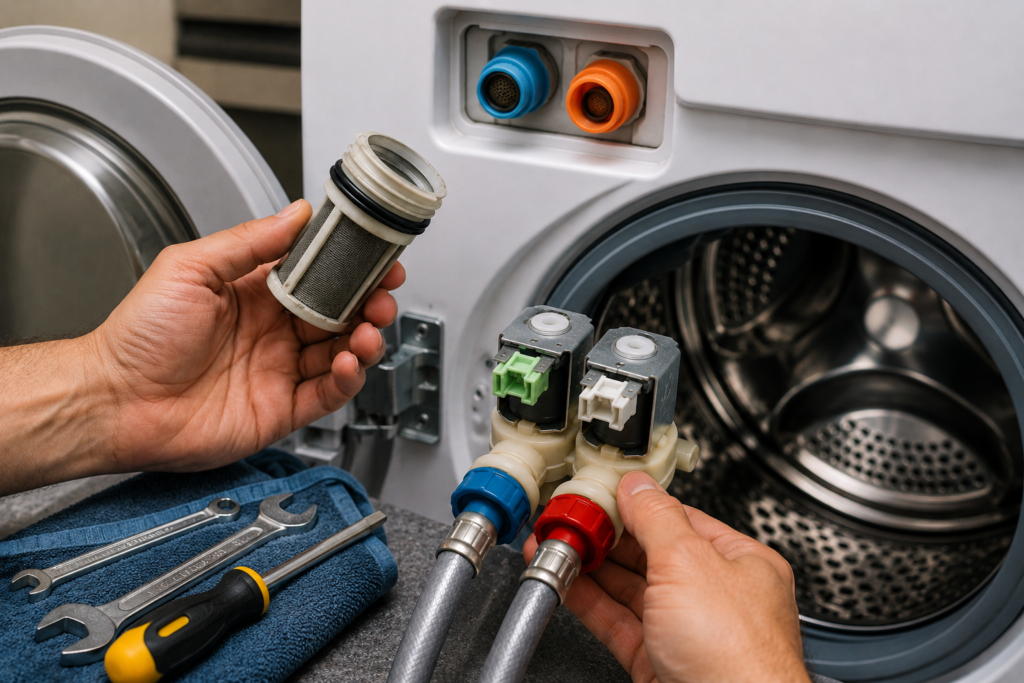
Washer water flow weak inside drum problems usually start slowly before the machine completely stops filling properly. Clothes may come out partially dry in spots, detergent may stay behind after cycles, and the washer can take much longer than normal to finish washing. In many cases, the issue develops gradually because of restricted water movement, worn inlet components, clogged screens, or plumbing-related flow problems
A weak fill problem is not always caused by a major washer failure. Sometimes the restriction comes from something simple like dirty inlet screens, kinked hoses, or partially closed water valves. In other situations, the washer may be reacting to unstable household water pressure or internal component wear that affects how water enters the drum during normal cycles
Quick Signs Your Washer May Have Weak Water Flow
Weak water flow inside the drum usually starts with small performance changes before becoming a serious filling problem. Many washers continue running even when water intake becomes restricted, which can make the issue harder to recognize early. Paying attention to subtle changes during normal laundry cycles often helps identify the problem before additional parts become stressed.
- Water enters the drum much slower than normal
- Wash cycles take longer to complete
- Detergent does not fully dissolve during washing
- Clothes come out unevenly cleaned or partially dry
- The washer pauses during fill cycles unexpectedly
- Buzzing or humming sounds occur while filling
Table of Contents
Why Weak Water Flow Inside the Drum Creates Bigger Problems
Modern washing machines depend on balanced water intake to operate correctly. The washer control system expects the drum to reach specific water levels within a certain amount of time. When water enters too slowly, the machine may delay agitation, extend rinse cycles, or stop completely because it assumes something is wrong.
This issue often becomes more noticeable with larger loads. A small load may still wash reasonably well because the machine needs less water, but once heavier laundry is added, the weak flow becomes obvious. Towels may stay stiff after washing, detergent may remain visible on dark clothes, and the drum may sound unusually empty during the wash cycle.
In real household situations, many people initially blame detergent, overloading, or even fabric type before realizing the actual issue is poor water flow into the drum
How the Washer Fill System Actually Works
Understanding how the fill system operates makes troubleshooting much easier. When a wash cycle starts, the control board sends power to the water inlet valve. This valve opens and allows hot or cold water to pass through the supply hoses and into the washer.
Before water reaches the drum, it usually passes through small filter screens designed to trap sediment and debris from the home’s plumbing system. In front-load machines, water may also travel through the detergent dispenser assembly before entering the tub.
If any part of this path becomes restricted, water pressure drops before reaching the drum. The washer may still function, but filling becomes slower and less effective. That is why washer water flow weak inside drum problems often feel inconsistent at first rather than completely stopping the appliance.
One of the Most Common Causes: Dirty Inlet Screens

Small inlet screens are responsible for a surprisingly large number of weak water flow complaints. These tiny mesh filters are located where the water hoses connect to the back of the washer. Their job is to prevent rust, sediment, and mineral debris from entering the machine. Over time, especially in homes with older plumbing or hard water, these screens collect buildup that slowly restricts flow. The restriction may affect only hot water, only cold water, or both sides depending on where debris accumulates.
This problem usually develops slowly. At first, the washer simply fills a little slower than normal. Weeks later, cycles begin taking noticeably longer, and eventually the drum may not fill properly at all. Because the change happens gradually, many homeowners do not notice the problem until cleaning performance drops significantly. Cleaning the screens is often straightforward. After unplugging the washer and shutting off the supply valves, disconnect the hoses and inspect the mesh filters carefully. If mineral deposits or rust are visible, gentle cleaning with water and a soft brush can restore normal flow.
Why Kinked Hoses Cause More Trouble Than Expected
A bent water hose may seem minor, but even partial restriction can seriously reduce the amount of water entering the drum. This commonly happens after moving the appliance for cleaning, replacing flooring, or pushing the washer too close to the wall. In real-world situations, a washer with a pinched hose often behaves unpredictably. Some cycles may work normally while others struggle because different cycles rely on different water temperatures and fill patterns. A hose that restricts cold water, for example, may mostly affect rinse cycles while warm washes appear somewhat normal.
Older hoses can create additional problems internally. Sometimes the inside lining begins collapsing even though the outside still looks acceptable. From the exterior, the hose appears fine, but water movement becomes restricted inside the hose itself. Checking behind the washer for sharp bends, twisting, or pressure against the wall is an important step whenever washer water flow weak inside drum symptoms appear.
The Water Inlet Valve Can Fail Slowly
Unlike sudden electrical failures, water inlet valves often weaken gradually. The valve may still open, but not fully enough to allow proper water volume into the drum. One of the most common signs is a humming or buzzing sound during filling. The washer attempts to pull water through the valve, but the restricted internal mechanism limits flow. This can happen because of mineral buildup, aging solenoids, or internal wear.
Many homeowners notice this behavior more during cold weather months. Mineral deposits inside the valve may harden further, making restrictions worse. The machine may begin showing fill-related error codes or pausing unexpectedly because it cannot reach the expected water level within the programmed time. A failing inlet valve usually cannot be permanently fixed through cleaning alone once internal wear develops. Replacement is often the most reliable long-term solution. In many cases, washer water flow weak inside drum symptoms continue getting worse as the inlet valve becomes more restricted over time.
Real-Life Example: A Washer That “Worked Fine” for Months
A homeowner once described a washer that technically still completed cycles, but clothing never seemed fully clean anymore. Dark clothes showed detergent streaks, and heavier loads came out unevenly wet. Because the machine still operated, the problem was ignored for several months.
The actual cause turned out to be heavily restricted cold-water inlet screens combined with mineral buildup inside the inlet valve. Water was entering the drum at less than half the normal rate, but the washer continued compensating by extending fill times automatically. Situations like this are common because modern washers try to adapt to low flow conditions instead of shutting down immediately
Step-by-Step Check Before Replacing Washer Parts
Many homeowners replace washer parts too early without checking simple restrictions first. A weak water flow problem often comes from clogged screens, partially restricted hoses, or supply issues rather than major internal failures. Following a logical inspection order helps avoid unnecessary repair costs and makes troubleshooting much more accurate.
- Make sure both hot and cold water supply valves are fully open
- Inspect the inlet hoses for sharp bends or pressure against the wall
- Disconnect and clean the inlet filter screens carefully
- Run separate hot and cold wash cycles to compare water flow
- Check the detergent dispenser for soap or mineral buildup
- Listen for buzzing sounds that may indicate inlet valve restriction
- Monitor how long the washer takes to fill compared to normal operation
Hard Water Creates Hidden Restrictions
Hard water affects washing machines differently than many people realize. Mineral buildup does not only appear on visible surfaces. Calcium and sediment can slowly narrow internal water pathways throughout the machine. Areas commonly affected include
- Inlet screens
- Internal valve passages
- Detergent dispenser channels
- Small internal hoses
- Spray nozzles in some models
The problem becomes worse over time because reduced water flow allows even more mineral concentration inside restricted areas. Eventually, the washer begins struggling during both fill and rinse cycles .Homes with hard water often experience recurring washer water flow weak inside drum problems unless regular maintenance is performed.
Detergent Dispenser Restrictions Can Mimic Fill Problems
Front-load washers frequently route incoming water through the detergent drawer assembly before it enters the drum. When detergent residue, softener buildup, or mold blocks these channels, water may appear weak inside the tub even though household pressure remains normal.
This issue behaves differently from valve or hose restrictions. Users often notice water trickling slowly through the detergent tray or soap remaining inside the dispenser after cycles finish.
In many cases, cleaning the detergent drawer restores proper water movement immediately. Warm water, mild soap, and a soft brush usually remove buildup effectively. However, severe mold or hardened detergent deposits inside hidden channels may require deeper cleaning.
Low Household Water Pressure Should Never Be Ignored
Not every weak-fill issue originates inside the washing machine. Sometimes the home’s plumbing system itself cannot provide enough pressure for the appliance. This often becomes noticeable during high-demand times. For example, someone may run a shower while the washer fills, causing water flow into the drum to weaken dramatically. In older homes, partially blocked pipes or failing pressure regulators can reduce appliance performance throughout the house.
A simple way to test this is by checking nearby faucets while the washer fills. If sinks or showers also lose pressure, the problem may involve the home’s plumbing rather than the washer itself. This distinction matters because replacing washer parts will not solve a pressure problem coming from the plumbing system.
Troubleshooting the Problem in the Right Order
One mistake many people make is replacing expensive parts before checking simple restrictions first. The smartest approach is to move step-by-step from the easiest possibilities toward deeper mechanical problems. A practical troubleshooting process usually works best in this order:
- Confirm household water pressure is normal
- Fully open both supply valves
- Inspect hoses for bends or internal damage
- Clean inlet screens carefully
- Test hot and cold fill separately
- Clean the detergent dispenser system
- Listen for humming or unusual fill noises
- Monitor how long the washer takes to fill
This process often identifies the problem without unnecessary part replacement.
Mistakes That Often Make the Situation Worse

People trying to fix weak water flow sometimes accidentally create larger issues. One common mistake is aggressively scraping inlet screens with sharp tools. Damaged screens allow debris into the valve, leading to even more serious restrictions later. Another mistake is forcing the washer tightly against the wall after reconnecting hoses. Even slight pressure can pinch the supply lines and recreate the original problem immediately.
Using excessive detergent also contributes indirectly to flow-related issues. Heavy soap residue builds inside dispenser channels and internal pathways, especially in high-efficiency machines that already use lower water levels. Ignoring early symptoms is another major issue. Weak filling rarely improves on its own. Most restrictions gradually worsen until cycles fail entirely.
When Professional Service Makes Sense
Some washer water flow weak inside drum problems move beyond simple maintenance. If screens are clean, hoses are clear, and household pressure is normal, deeper diagnosis may be necessary.
Internal electrical testing, valve resistance checks, and control board diagnosis often require specialized tools and experience. Modern washers rely heavily on electronic controls, and intermittent fill problems can sometimes originate from sensor or board failures rather than mechanical restrictions. Professional service is also safer when accessing internal wiring or disassembling sealed components.
Repair costs vary depending on the actual failure. Simple hose or screen-related fixes are inexpensive, while inlet valve replacement or electronic diagnosis may cost more depending on the washer model
Common Mistakes That Can Reduce Washer Water Flow
Weak washer filling problems are sometimes made worse by simple maintenance mistakes or incorrect troubleshooting. Many restrictions develop slowly over time, and certain habits can accelerate buildup inside the fill system without homeowners realizing it. Avoiding these common issues helps maintain stronger water flow and prevents unnecessary strain on washer components.
Too much detergent creates residue inside dispenser channels and internal water pathways, especially in high-efficiency washers.
Water hoses can become pinched or bent behind the machine, restricting flow into the drum during fill cycles.
Minor restrictions often become severe over time and may eventually damage inlet valves or trigger fill-related errors.
When It’s Time to Call a Washer Technician
Some washer water flow problems can be solved through basic cleaning and inspection, but persistent filling issues may point toward deeper mechanical or electrical faults. If the washer still fills slowly after checking hoses, inlet screens, and household pressure, professional diagnosis may be necessary to prevent further damage.
Professional service is usually recommended if:
- The inlet valve continues humming but water flow remains weak
- The washer displays recurring fill or water intake error codes
- Water pressure is normal throughout the home but the drum still fills slowly
- The machine stops mid-cycle during washing or rinsing
- Internal electrical or control board problems are suspected
- Water flow issues return repeatedly after cleaning the inlet screens
Preventing Weak Water Flow Problems in the Future
Most weak-flow problems develop slowly through neglect rather than sudden failure. Small maintenance habits can significantly reduce the chances of restricted water flow later. Inspecting hoses periodically helps prevent hidden kinks and internal hose damage. Cleaning inlet screens every few months is especially important in homes with older plumbing or hard water conditions. Leaving enough space behind the washer also prevents pressure against supply lines.
Using the correct amount of detergent matters more than many people realize. Excess soap creates buildup inside dispensers and water pathways that eventually interferes with normal flow. Paying attention to slower fill times early can also prevent more expensive repairs later. Minor restrictions are much easier to correct before they damage inlet valves or stress other washer components.
Weak water flow inside the drum usually starts as a small performance issue, but over time it can affect cleaning quality, cycle timing, and overall washer reliability. In many cases, the real problem is not a major breakdown but a restriction that slowly developed through normal use. Taking the time to diagnose the issue properly often saves both money and unnecessary part replacement .Regular maintenance helps reduce the chances of washer water flow weak inside drum problems developing again later.
Muhammad Khalid
Founder of FixAppLab • Appliance Troubleshooting Writer
Muhammad Khalid is the founder of FixAppLab , a website focused on practical appliance troubleshooting and real-world repair guidance. His work helps homeowners understand how washing machines, dryers, and refrigerators behave during common mechanical and electrical problems.
He regularly publishes detailed troubleshooting articles designed to explain why appliance problems happen, how to diagnose them safely, and what practical steps may help restore normal performance.
Explore Appliance Guides:


Comments