Washing Machine Won’t Stop Filling Water? Fast DIY Fix
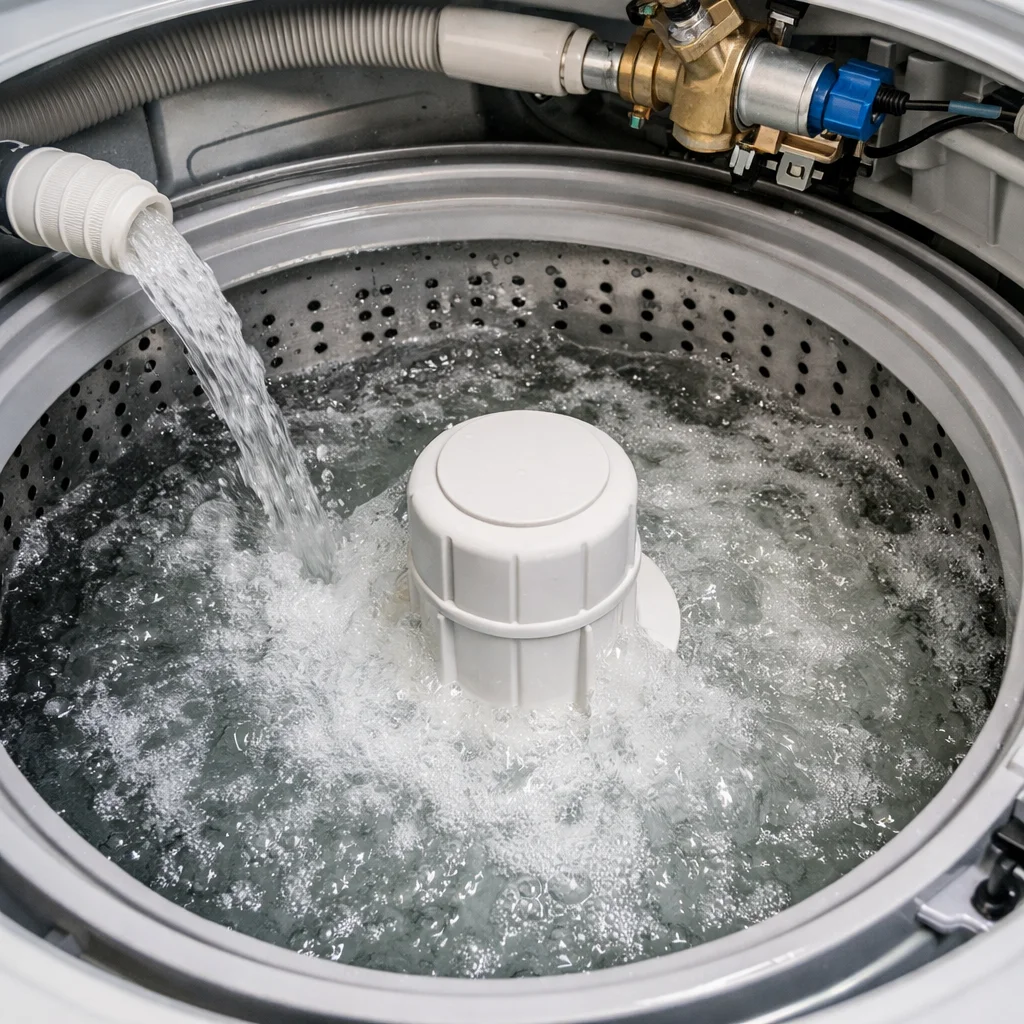
Table of Contents
How a Washing Machine Knows When to Stop Filling
A washing machine does not simply fill with water for a fixed amount of time. Instead, the washer uses a water-level sensing system to determine when enough water has entered the tub. Depending on the model, this system may use a pressure switch, pressure sensor, or electronic water-level sensor.
During a normal cycle, the control system opens the water inlet valve. As the water level rises, pressure or sensor readings change. Once the washer detects the programmed water level, the control system closes the inlet valve and moves the cycle forward.
The filling process usually works like this:
- The wash cycle begins and the control system activates the water inlet valve.
- Water enters the washer through the inlet hoses.
- The water level rises inside the tub.
- A pressure or electronic sensor detects the changing water level.
- The control system determines that the required level has been reached.
- The inlet valve closes and the washer continues with the cycle.
If any part of this process fails, the washer may continue filling longer than normal. For example, a valve that does not close properly can allow water to keep entering, while a faulty pressure system may prevent the washer from recognizing that the correct water level has already been reached.
Key point: The most useful clue is what happens when you stop the washer. If water continues flowing after the machine is turned off, suspect the water inlet valve. If the water stops but the washer keeps filling during a cycle, the water-level sensing system or drain setup may need closer inspection.
9 Common Causes of a Washing Machine That Keeps Filling
Continuous filling can have several causes, but most problems can be narrowed down by paying attention to how the washer behaves. The nine causes below cover the most common reasons a washer may continue adding water instead of moving through the cycle normally.
1. Faulty Water Inlet Valve
The water inlet valve controls the flow of water into the washer. If its internal mechanism becomes worn, damaged, or stuck open, water may continue entering the tub even when the washer should have stopped filling. If water flows into the machine while it is completely turned off, the inlet valve is one of the first components to suspect.
2. Failed Water-Level Pressure Switch
Many washers use a pressure-based system to determine how much water is inside the tub. A failed pressure switch may send incorrect information to the control system, making the washer behave as though the required water level has not been reached.
3. Blocked or Damaged Pressure Hose
The small pressure hose connected to the water-level system must transfer air pressure accurately. Detergent residue, debris, a loose connection, or a small crack can interfere with the signal. When the pressure system cannot accurately detect the water level, the washer may continue filling.
4. Drain Hose Siphoning
Sometimes the washer is filling normally, but water is leaving through the drain at the same time. A drain hose positioned too low or inserted too deeply into the standpipe can create a siphoning effect. The washer may then keep adding water because it never reaches the expected level.
5. Blocked Pressure Chamber or Air Dome
Some washing machines use an air dome or pressure chamber connected to the sensing system. Residue and buildup can interfere with the pressure signal. When this happens, the washer may receive an inaccurate water-level reading and continue the filling process longer than it should.
6. Faulty Water-Level Sensor
Newer washing machines may use electronic sensors instead of a traditional mechanical pressure switch. If the sensor produces an incorrect reading or loses communication with the control system, the washer may not recognize the correct water level.
7. Faulty Control Board
The main control board coordinates the inlet valve, sensors, and other components. A control problem can occasionally cause incorrect filling behavior. However, the control board should not be the first part replaced because simpler mechanical or sensing problems are more common and easier to verify.
8. Inlet Hose or Plumbing Problem
Kinked hoses, restricted water flow, incorrect connections, or plumbing problems can affect how the washer fills and drains. Although these issues do not always cause continuous filling by themselves, checking the hoses and connections is a simple first step before testing internal components.
9. Temporary Control or Communication Glitch
Occasionally, an electronic glitch can cause unusual washer behavior. A power reset may clear a temporary error, but it should not be treated as a permanent fix. If the washer starts filling continuously again after a reset, the underlying valve, sensor, pressure system, or control problem should be investigated.
Best place to start: Check whether water enters the washer when it is turned off. If it does, the water inlet valve is the strongest suspect. If the water stops when power is removed but the washer keeps filling during a cycle, investigate the water-level sensing system and drain hose setup.
How to Diagnose a Washing Machine That Keeps Filling
Before replacing parts, use the washer’s behavior to narrow down the cause. You can often identify whether the problem involves the inlet valve, water-level sensing system, or drain hose without immediately disassembling the entire machine.
Step 1: Check Whether Water Enters When the Washer Is Off
Stop the washer and disconnect its power. If water continues entering the tub even though the machine is no longer operating, shut off the household water supply immediately. A water inlet valve that is stuck or no longer seals properly is a likely cause.
Step 2: Watch the Water Level During a Normal Cycle
If the washer only continues filling while a cycle is running, observe whether the water level keeps rising or stays relatively low. A continuously rising level can point toward a valve or water-level sensing problem, while a level that never seems to reach the expected point may indicate water leaving through the drain.
Step 3: Check the Drain Hose Position
Look at the drain hose behind the washer. Make sure it is installed according to the manufacturer’s requirements and is not positioned in a way that allows water to siphon out of the tub. If water is leaving while fresh water is entering, the washer may continue filling because it cannot maintain the expected water level.
Step 4: Inspect the Water Inlet Hoses
Check both water supply hoses for kinks, damaged connections, leaks, or unusual installation. Also inspect the inlet connections for visible debris or mineral buildup. Do not remove internal components while the washer is connected to electricity or water pressure.
Step 5: Consider the Pressure System
If the washer stops filling normally when the water supply is manually controlled but fails to recognize the correct level during a cycle, the pressure switch, pressure hose, or electronic water-level sensor may need inspection. These components vary considerably between washer models, so model-specific service information is important before testing them.
Step 6: Look for an Error Code
Modern washers may display an error code when a water-level sensor, inlet system, or control circuit detects a problem. Write down the exact code and check the appliance manual or manufacturer’s service information rather than assuming every code means the same thing across different brands.
Diagnostic shortcut: Water entering while the washer is turned off points strongly toward the inlet valve. Water entering only during the cycle suggests checking the water-level sensing system and drain setup. Water entering and immediately leaving through the drain points toward a possible siphoning or drain installation problem.

How to Fix a Washing Machine That Keeps Filling
Once you have narrowed down the likely cause, the next step is to correct the problem safely. Start with the simplest checks first and avoid replacing expensive parts until the inlet valve, drain setup, and water-level sensing system have been ruled out.
1. Turn Off the Water and Reset the Washer
If the washer is actively overfilling, turn off both water supply faucets first. Then unplug the appliance and allow it to remain disconnected for several minutes before restarting it. A reset can clear a temporary electronic issue, but it will not repair a damaged valve, sensor, or hose.
2. Correct a Drain Hose Siphoning Problem
If the washer fills and drains at the same time, inspect the drain hose installation. Reposition the hose according to your washer’s installation instructions and avoid sealing the connection so tightly that proper airflow is blocked. A correct drain setup can stop the siphoning effect without replacing any parts.
3. Inspect the Pressure Hose and Connections
After disconnecting power and shutting off the water supply, inspect the pressure hose for loose connections, cracks, kinks, or visible blockage. The hose must transmit pressure accurately for the washer to recognize the correct water level. Replace a visibly damaged hose rather than attempting to seal a cracked section.
4. Clean the Pressure Chamber if Accessible
Some washers have an air dome or pressure chamber that can collect detergent residue and debris. If the component is accessible and your model’s service information allows cleaning, remove buildup carefully. Do not force tools into hidden passages or modify internal components when the correct procedure is unclear.
5. Replace a Faulty Water Inlet Valve
If water continues entering the washer while it is switched off, the inlet valve may not be closing completely. Replacing the valve assembly is often the appropriate repair. Use the correct replacement part for your exact washer model rather than installing a similar-looking valve.
6. Replace a Faulty Pressure Switch or Water-Level Sensor
If the pressure hose and connections are in good condition but the washer still cannot detect the correct water level, the pressure switch or electronic sensor may be faulty. Confirm the diagnosis using model-specific information before replacing the component because similar symptoms can also be caused by wiring or control problems.
7. Check the Control System Last
Consider the control board only after the more common causes have been checked. Control board diagnosis may require electrical testing and model-specific service information, so professional service is often the safest option if you are not experienced with appliance repair.
Repair tip: Do not replace multiple parts at once. Test one likely cause at a time. This makes troubleshooting more accurate and can prevent unnecessary repair costs.
Why a Washing Machine Fills With Water When Turned Off
If water continues entering the washer when the machine is completely turned off, this is an important diagnostic clue. In most cases, the problem is not the control board or software. A water inlet valve that is stuck open or no longer seals properly can allow household water pressure to push water into the tub even without an active wash cycle.
What This Usually Means
The inlet valve is designed to open when the washer needs water and close when the water supply is no longer required. If its internal seal becomes damaged, worn, or stuck, the valve may allow water to pass through continuously.
A Simple Way to Confirm the Symptom
- Turn the washer off.
- Unplug the washer from the electrical outlet.
- Observe whether water continues entering the tub.
- If water continues flowing, turn off the household water supply to the washer.
Important clue: If water still enters the washer after electrical power has been disconnected, the inlet valve becomes the primary suspect because the valve is being opened by water pressure rather than an electrical command from the washer.
Safety: Do not leave the washer unattended while it is filling unexpectedly. Shut off the water supply until the cause has been identified, especially if the tub is approaching an unsafe water level.
Why a Washing Machine Fills and Drains at the Same Time
If your washer seems to add water continuously but the water level never rises normally, it may be filling and draining at the same time. This can make the washer appear to have a filling problem when the actual issue is related to the drain hose installation.
The Most Common Cause: Drain Hose Siphoning
A drain hose that is installed incorrectly can allow water to flow out of the washer through gravity and siphoning. The washer then keeps adding fresh water because it cannot maintain the expected water level.
Check These Drain Hose Problems
- The drain hose may be positioned too low.
- The hose may be inserted too far into the standpipe.
- The drain connection may be sealed in a way that prevents proper air movement.
- The hose may not be installed according to the washer manufacturer’s instructions.
Quick test: Watch the drain while the washer is filling. If water is visibly leaving through the drain while fresh water is entering, correct the drain hose installation before replacing internal washer parts.
Remember: If correcting the drain hose does not stop the continuous filling, return to the inlet valve and water-level sensing system for further diagnosis.

Safety Before Troubleshooting
A washing machine combines water, electricity, moving parts, and heavy components, so safety should come before diagnosis. If the washer is filling unexpectedly, do not continue running it simply to see what happens.
Before Inspecting the Washer
- Unplug the washer before inspecting internal components.
- Turn off the household water supply before disconnecting water hoses.
- Keep water away from electrical outlets, plugs, and extension cords.
- Do not work on the appliance while it is energized.
- If the washer has leaked significantly, clean up standing water before continuing.
Stop and get professional help if you find damaged wiring, signs of burning, exposed electrical components, major water leakage, or a problem that requires live electrical testing and you are not trained to perform it safely.
When to Replace a Part vs. Call a Professional
Some causes of continuous filling are relatively straightforward to identify, while others require electrical testing or model-specific service information. Knowing when to stop troubleshooting yourself can prevent additional damage and unnecessary part replacements.
DIY-Friendly Checks
- Checking the drain hose position
- Inspecting visible water hoses
- Checking for obvious leaks
- Resetting the washer after a temporary error
Professional Service Recommended
- Electrical control-board diagnosis
- Live electrical testing
- Damaged internal wiring
- Repeated filling after basic repairs
Best approach: Start with simple, low-risk checks. If the diagnosis points to an internal electrical component or you are unsure which part has failed, professional diagnosis is usually safer than replacing multiple parts based on guesswork.

How Much Could Your Washer Repair Cost?
Repair costs can vary depending on the failed component, washer brand, model, labor rates, and location. Before deciding whether a repair is worth it, get a quick estimate based on the type of washer problem you are dealing with.
Planning a repair? Use our washing machine repair cost calculator to estimate common repair expenses before contacting a technician.
Estimates are for planning purposes and actual repair prices may vary.
How to Prevent Your Washer From Continuously Filling
Regular maintenance cannot prevent every washer failure, but a few simple habits can reduce the chance of water-level and filling problems.
- Check water hoses regularly: Look for cracks, leaks, kinks, or damaged connections.
- Keep the drain hose correctly installed: Follow the installation requirements for your specific washer.
- Avoid excessive detergent: Too much detergent can contribute to residue buildup inside some washer components.
- Pay attention to unusual filling: Longer-than-normal filling can be an early warning sign.
- Do not ignore water entering while the washer is off: Shut off the water supply and investigate the inlet valve.
- Follow the manufacturer’s maintenance instructions: Model-specific recommendations should take priority over generic advice.
Final Takeaway
A washing machine that keeps adding water is usually not a sign that the entire appliance has failed. The most important clues are whether water enters while the washer is turned off, whether the water level keeps rising during a cycle, and whether water is draining away at the same time.
Start with the simplest checks, including the inlet valve, drain hose installation, and water-level sensing system. If the problem involves electrical testing or an uncertain internal failure, stop troubleshooting and consider professional service.
Frequently Asked Questions
Why does my washing machine keep adding water continuously running even when it is turned off?
If your washing machine keeps adding water continuously running even when powered off, the most likely cause is a faulty water inlet valve. This valve may be stuck open or not sealing properly, allowing water to flow into the drum without electrical control. In this case, the issue is mechanical rather than electronic, and replacing the inlet valve usually resolves it.
Can a pressure switch cause a washing machine to keep filling with water?
Yes, a defective water level pressure switch is a common reason why a washer keeps filling. This component signals the machine when the correct water level has been reached. If it fails or does not receive proper air pressure from the hose, the washer assumes it is still empty, causing continuous filling.
Why does my washer keep filling and draining at the same time?
This problem is often caused by a drain hose siphoning issue. If the drain hose is positioned too low or inserted too far into the standpipe, water drains out as it fills. The machine then keeps adding water to compensate, creating the impression that it is continuously running. Adjusting the hose height usually fixes this issue.
Is it safe to use a washing machine that keeps overfilling?
No, it is not safe to continue using a washer with this issue. A washing machine keeps adding water continuously running can lead to overflow, water damage, and potential electrical hazards. It is best to unplug the machine, turn off the water supply, and diagnose the problem before using it again.


2 comments
[…] Guides Water Flow Keeps Adding Water Continuously Water Supply Not Filling With Water Sensor Stuck on Sensing […]
[…] Washing Machine Keeps Adding Water Continuously Running […]