Why Is Washing Machine Not Starting? 7 Proven Causes and Fixes You Can Try
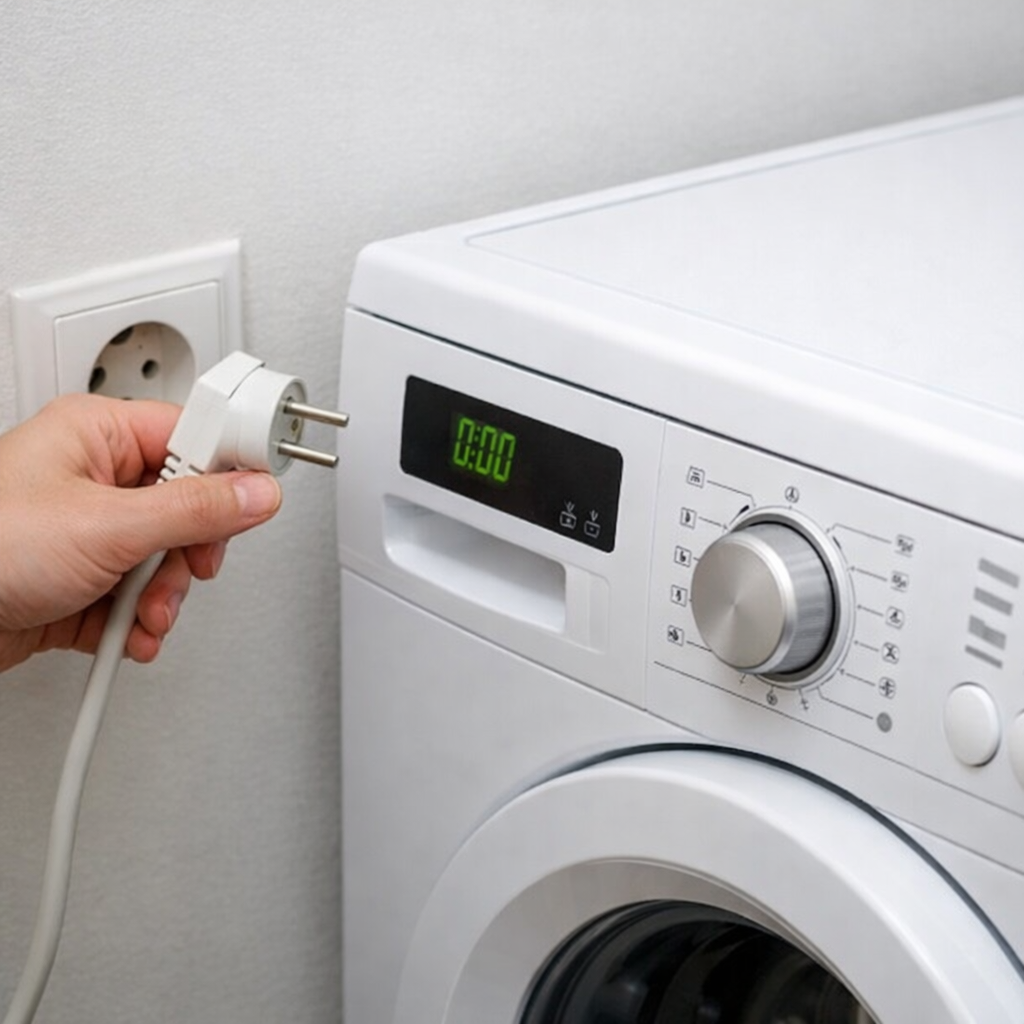
A washing machine usually fails to start because something simple is interrupting its normal sequence—such as a power issue, door lock problem, or lack of water supply. If you’re wondering why is washing machine not starting, the issue can often be traced to these basic interruptions. In some cases, the cause runs deeper and involves internal components that control how the machine operates
Quick Troubleshooting Checklist
Before investigating deeper causes, check these common issues first:
- Make sure the power outlet is working properly.
- Confirm the washing machine door or lid is fully locked.
- Check that the water supply valves are open.
- Disable Child Lock or Control Lock if enabled.
- Try resetting the washing machine.
- Inspect the power cord for visible damage.
- Verify that the selected cycle is correct.
Table of Contents

How a Washing Machine Actually Begins a Cycle
Starting a wash cycle is not a single action. It involves a sequence of internal checks that occur within seconds of pressing the start button. The machine verifies electrical power, confirms that the door or lid is securely locked, checks water availability, and then signals its internal components to begin the cycle. If any of these steps fail, the process stops before it truly begins. This is why a washing machine not starting can feel confusing—everything appears normal on the outside, yet the machine remains inactive. These built-in checks are designed to protect both the appliance and the user.
Modern washing machines are especially strict about this process. They are engineered to prevent leaks, electrical hazards, and unsafe operation. Even a minor interruption in this startup sequence can prevent the machine from running.
When Power Is Present but Nothing Responds
One of the most frustrating scenarios is when the machine appears to have power—indicator lights may be on, or the display panel may function—but pressing the start button produces no response. This situation often points to a communication issue between the control panel and internal components. Several factors can contribute to this condition:
- A worn or unresponsive start button or control panel
- Internal electrical faults disrupting signal transmission
- Temporary electronic glitches affecting the system’s response
In many cases, a simple reset can resolve the issue. Unplugging the machine for a few minutes allows the internal circuits to reset and clear minor faults. This basic step is often overlooked but can be surprisingly effective. In everyday use, people may press the start button repeatedly, assuming the machine will respond. In reality, repeated pressing can accelerate wear on already weakened components, making the issue worse over time. Many users ask why is washing machine not starting even when the machine has power, and the reason often lies in internal system communication
Common Startup Symptoms and Possible Causes
| Symptom | Most Likely Cause |
|---|---|
| No lights or display | Power supply issue |
| Lights on but won’t start | Door lock, control panel, or PCB issue |
| Clicking sound only | Relay, door lock, or control board fault |
| Humming but not running | Motor or mechanical problem |
| Starts then immediately stops | Water supply or sensor issue |
The Role of Door and Lid Safety Systems
Washing machines rely heavily on safety mechanisms to function properly. If the door or lid is not securely locked, the machine will not start under any circumstances. This safety feature prevents water leakage and reduces the risk of injury during operation.
The system does more than detect whether the door is closed. It relies on a latch or sensor to confirm that the door is properly sealed and locked. If this confirmation is not received, the machine will not proceed. A washing machine not starting is frequently linked to door or lid issues, especially in cases such as:
- A misaligned or damaged door latch
- A worn-out lid switch or sensor
- A weak closing mechanism that no longer clicks firmly
In front-load washers, even a small obstruction—like fabric caught in the seal—can prevent proper locking. In top-load models, the lid switch may gradually wear out after repeated use. A common real-life example involves someone quickly loading laundry before leaving home. If the door is not fully secured, the machine remains inactive, not because it is broken, but because it cannot confirm safe operation. Another common reason why is washing machine not starting is a faulty door latch or lid switch that fails to trigger the safety mechanism.
Important Note
A washing machine will not start if the door is not securely locked. Even a small misalignment can prevent the safety system from activating.
Water Supply as a Hidden Starting Requirement

Water supply plays a critical role in the startup process. Many users assume water only matters after the cycle begins, but the machine checks for adequate water flow before initiating any operation. If the appliance cannot detect proper water input, it may refuse to start altogether. This prevents damage to clothing and internal components. As a result, a washing machine not starting can sometimes be traced back to water-related issues rather than electrical faults. Common causes include
- Closed or partially opened water inlet valves
- Kinked, blocked, or damaged inlet hoses
- Clogged inlet filters restricting water flow
These issues are often overlooked because the machine appears otherwise functional. Power is available, the door is closed, and settings are correct—yet the cycle does not begin. In some households, temporary water supply interruptions can also contribute to the problem. If a user attempts to start a cycle during such an interruption, the machine may remain unresponsive until normal water flow resumes. If you’re still thinking why is washing machine not starting, it could be due to the machine not detecting proper water flow.
Control Boards and Internal Decision-Making
At the core of every modern washing machine is a control board, often referred to as the electronic control module. This component acts as the system’s “brain,” processing inputs and directing every stage of the wash cycle. When the control board begins to fail, symptoms can be inconsistent and difficult to diagnose. One of the early signs is a washing machine not starting, even when all external conditions appear normal. Typical indicators of control board issues include:
- Buttons responding inconsistently or not at all
- Display lights flickering or behaving unusually
- Cycles failing to initiate without clear reason
Unlike mechanical faults, electronic issues do not always follow predictable patterns. The machine may function normally one day and fail the next, making troubleshooting more challenging. Repairing or replacing a control board usually requires technical expertise. In some cases, the cost of repair may approach the value of replacing the appliance itself. In some cases, why is washing machine not starting can be linked to a faulty control board that fails to send proper signals.
You May Also Like
If your washing machine won’t start, these related repair guides can help you diagnose power problems, door lock failures, control board issues, and other common startup faults more accurately:
- Washer Turns On But Does Nothing – 9 Easy Solutions That Actually Work
- Washing Machine Power Button Not Working – 9 Easy Fixes
- Washing Machine Door Not Locking – Causes and Fixes
- Washing Machine PCB Board Fault Symptoms
- Washer Not Reacting to Control Input
- Washing Machine Display Not Working – 10 Easy Fixes
- Washing Machine Takes Multiple Attempts to Start – Easy Fixes
Mechanical Problems That Prevent Startup
Although electronic failures are common, physical components can also prevent a washing machine from starting. Internal mechanical systems must function smoothly for the machine to operate correctly. Key components such as the motor, drive belt, and transmission system play essential roles. If any of these parts fail or encounter resistance, the machine may detect an abnormal condition and stop before starting. Examples of mechanical issues include
- A worn or broken drive belt preventing drum movement
- A seized or damaged motor triggering protective shutdown
- Internal obstructions interfering with drum rotation
In some cases, a faint humming sound may be heard when attempting to start the machine. This often indicates that the motor is receiving power but cannot function properly due to mechanical resistance. These problems typically develop gradually. Early warning signs may include unusual noises, slower spin cycles, or intermittent delays before complete failure occurs. This is another reason why is washing machine not starting, even when the machine appears to have power and no visible issues.
Settings, Locks, and User Confusion
Not all startup issues are caused by faults or damage. In many cases, the problem lies in the machine’s settings or user interface. Modern washing machines include features designed for convenience and safety, but these can sometimes lead to confusion:
- Child lock or control lock disabling all functions
- Delay start timers postponing operation
- Incorrect cycle selections requiring additional input
These features are beneficial but can be activated unintentionally. As a result, users may assume the machine is malfunctioning when it is actually functioning as programmed. For example, someone cleaning the control panel may accidentally enable a lock feature. When they later attempt to use the machine, it appears unresponsive. In reality, the appliance is simply following the selected settings.
What a Washing Machine Cannot Do

There is a common assumption that a washing machine should always start immediately when the button is pressed. In practice, these appliances are designed to prevent operation under unsafe or incomplete conditions. A washing machine cannot
- Operate with an unsecured or unlocked door
- Run without sufficient water supply
- Ignore internal faults or overheating
- Override its own built-in safety systems
Some online advice suggests bypassing sensors or forcing the machine to operate. This approach can lead to serious consequences, including water leaks, electrical hazards, or permanent damage to the appliance. These limitations are intentional. Ignoring them often results in more complex and costly repairs rather than resolving the issue.
Safety and Practical Considerations
Washing machines operate using both electricity and water, which requires careful handling during troubleshooting. While basic checks can be performed safely, more complex inspections carry risks. Safe practices include:
- Avoiding internal repairs without proper knowledge
- Disconnecting power before inspecting components
- Exercising caution around wet surfaces and electrical parts
Recognizing when a problem exceeds basic troubleshooting is essential. Attempting advanced repairs without experience can lead to injury or further damage. There is also a practical consideration. If the machine is older or showing multiple issues, investing time and effort into repairs may not always be the most effective solution. If you are still unsure why is washing machine not starting, checking each system step by step can help identify the exact cause
Understanding the Limits of Diagnosis
Identifying the exact cause of a startup issue is not always straightforward. Many problems share similar symptoms, making accurate diagnosis challenging without proper tools or expertise. Washing machine technology continues to evolve. Modern appliances include sensors, software systems, and interconnected components that increase both efficiency and complexity.
As a result, two machines showing the same issue—such as a washing machine not starting—may have entirely different underlying causes. This complexity highlights the importance of careful observation and methodical troubleshooting. This explains why is washing machine not starting can sometimes be difficult to diagnose without proper inspection.
A Measured Perspective on Common Claims
There is a widespread belief that most washing machine problems can be resolved quickly with simple fixes. While this is true in some cases, it is often overstated. Advice that promises instant solutions may overlook the complexity of modern appliances. Not every issue can be resolved by resetting the machine or checking a single component. A more balanced approach involves starting with basic checks—such as power supply, door lock, and water flow—and gradually exploring more complex possibilities if the issue persists. In many situations, understanding why is washing machine not starting requires patience and a step-by-step approach.
Living With the Occasional Breakdown
A washing machine is an essential household appliance that often operates without much attention—until it stops working. When it fails to start, the disruption can feel immediate and inconvenient.These situations highlight how interconnected the system is. A minor issue in one area can prevent the entire machine from functioning.
Understanding this interconnected design makes troubleshooting more manageable. Instead of guessing randomly, the process becomes more logical and focused, based on how the machine is designed to operate. And sometimes, the most practical approach is recognizing that not every issue needs to be solved immediately or alone Understanding why is washing machine not starting helps narrow down the issue and makes troubleshooting more effective. In many cases, a washing machine won’t start due to simple issues that can be fixed with basic troubleshooting steps
Expert Tips
- Avoid repeatedly pressing the Start button if the machine does not respond.
- Keep the door latch area clean to ensure proper locking.
- Check water hoses periodically for restrictions or kinks.
- Use a surge protector if voltage fluctuations are common in your area.
- Address unusual noises early before they develop into major mechanical failures.
- Follow the manufacturer’s maintenance recommendations to reduce unexpected startup problems.
When to Call a Technician
If basic troubleshooting does not resolve the issue, the problem may involve internal electrical components, wiring faults, or motor failure. In such cases, professional diagnosis is recommended to avoid further damage or safety risks.
If you still cannot figure out why is washing machine not starting, it is best to consult a professional technician for proper diagnosis.
Frequently Asked Questions
Why is my washing machine not starting even though it has power?
If your washing machine has power but won’t start, the issue is often related to the door lock mechanism, control panel, or start button. The machine may detect that the door is not securely locked or fail to receive the start signal due to a faulty control system. In some cases, resetting the appliance by unplugging it for a few minutes can resolve minor electronic glitches.
Can a water supply issue cause a washing machine not to start?
Yes, a water supply problem can prevent a washing machine from starting. Most modern machines check for proper water flow before beginning a cycle. If the inlet valve is closed, hoses are blocked, or filters are clogged, the machine may refuse to start to avoid damage.
How do I reset a washing machine that won’t start?
To reset a washing machine, unplug it from the power source for 1–5 minutes, then plug it back in. This process helps clear temporary system errors or control board glitches. After resetting, try starting a new cycle to see if the issue is resolved.
When should I call a technician for a washing machine not starting?
You should contact a professional technician if the problem persists after basic checks such as power supply, door lock, and water flow. Issues involving the motor, control board, wiring, or internal components require technical expertise and should not be handled without proper knowledge for safety reasons.
Muhammad Khalid
Founder of FixAppLab • Appliance Troubleshooting Researcher & Writer
Muhammad Khalid is the founder of FixAppLab, a website dedicated to helping homeowners better understand appliance problems and practical troubleshooting methods. His work focuses on washing machines, dryers, refrigerators, and other common household appliances. Through detailed repair guides and educational resources, he aims to simplify complex appliance issues and help readers make informed repair and maintenance decisions.
Whether you’re troubleshooting a washer that won’t start, diagnosing refrigerator cooling problems, or learning how appliance components work, FixAppLab provides easy-to-follow guides designed for everyday homeowners.


5 comments
[…] your washer refuses to start, you can also read why is washing machine not starting . Clothes remain soaked at the end, which may also be related to washing machine not draining water […]
[…] Why Is Washing Machine Not Starting? Causes & Fixes […]
[…] Washing Machine Not Starting – Causes & Fix Guide Washing Machine Lid Switch Problems Explained Washer Turns On But Does Nothing – Easy Fixes […]
[…] Washing Machine Not Starting – Causes & Fix Guide Washing Machine Lid Switch Problems Explained Washer Turns On But Does Nothing – Easy Fixes PCB Board Fault Symptoms in Washing Machines […]
[…] Why Is Washing Machine Not Starting? […]