7 Washing Machine Water Temperature Sensor Problems: Warning Signs & Easy Fixes
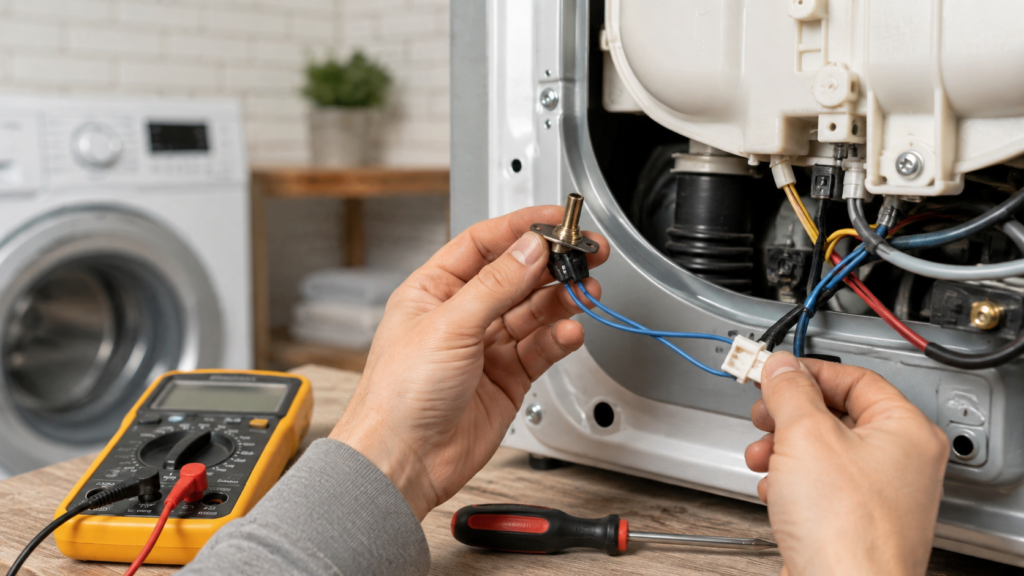
Yes, a faulty washing machine water temperature sensor is one of the most common reasons a washer fills with the wrong water temperature, runs longer than it should, or throws a heating-related error code. This small part tells the control board how hot or cold the water is, and once it stops sending accurate readings, the whole wash cycle can go off track. In most cases, you can confirm the problem yourself with a basic multimeter before spending money on a service call.
This guide walks through what the washing machine water temperature sensor actually does, the warning signs that it’s failing, what causes it to go bad, and how to test and replace it safely.
Table of Contents
What Is a Washing Machine Water Temperature Sensor?
The washing machine water temperature sensor, often called a thermistor, is a small component mounted near the tub, the water inlet valve, or the heating element assembly, depending on your washer’s design. Its job is simple: measure the water temperature in real time and report that reading back to the control board.
Most modern washers use what’s known as an NTC thermistor. NTC stands for Negative Temperature Coefficient, which means the sensor’s electrical resistance drops as the water gets warmer. The control board reads this changing resistance, translates it into a temperature value, and decides whether to open the hot water valve, the cold water valve, or activate an internal heating element.
Without a properly functioning washing machine water temperature sensor, the machine has no reliable way of knowing whether the water inside the drum actually matches the cycle you selected. That’s why even a minor fault in this part can throw off an entire load of laundry.
Quick answer: If your washer’s water feels wrong for the selected cycle, the cycle runs unusually long, or you’re seeing a heating error code, the washing machine water temperature sensor — or the wiring connected to it — is a likely starting point for troubleshooting.
Signs Your Washing Machine Water Temperature Sensor Is Failing
A failing sensor doesn’t always announce itself with a flashing error code. Sometimes the symptoms build up gradually over several loads before the pattern becomes obvious.
The Water Temperature Doesn’t Match the Selected Setting
This is usually the first thing people notice. You select a hot wash, but the water going into the drum feels lukewarm at best. Or you pick a cold cycle, and the water somehow feels warm. When a washing machine water temperature sensor sends an inaccurate reading, the control board makes the wrong call on which valve to open or how long to run the heater.
Before assuming the sensor is at fault, double-check that the hot and cold hoses are connected to the correct inlet ports. Reversed hoses cause this exact same symptom, and it costs nothing to rule out.
Clothes Come Out Dingy or Still Dirty
Laundry detergent is formulated to activate best within a specific temperature range. When a faulty water temperature sensor causes the machine to under-heat the water, detergent doesn’t fully dissolve or activate, which often leaves a greasy film on fabric or fails to lift tough stains the way a normal cycle would.
The Wash Cycle Takes Much Longer Than Usual
If the control board believes the water hasn’t reached its target temperature, it may hold the machine in place, continuing to add water or run the heater while waiting for a signal that never comes correctly. A normal 45-minute cycle can stretch to well over an hour, particularly on warm or hot settings, when the washing machine water temperature sensor is misreporting.
The Machine Stops or Pauses Mid-Cycle
Some washers pause indefinitely if the temperature sensor reports a reading outside the expected range for that stage of the cycle. If your washer runs fine on cold loads but consistently stalls on warm or hot ones, that’s a strong clue pointing toward the sensor or its wiring.
Error Codes Related to Heating or Temperature
Many washers, especially newer digital models, display a specific error code when the sensor circuit is open, shorted, or reading outside its normal range. The exact code depends on the brand, so check your owner’s manual rather than assuming every temperature-related code automatically means the washing machine water temperature sensor is bad. Control boards, heating elements, and wiring can all trigger similar codes.
Inconsistent Results From One Load to the Next
A sensor that’s failing intermittently, rather than completely dead, can produce confusing results — one load heats properly, and the very next load with identical settings runs cold. This kind of inconsistency often points to a loose connector or a sensor beginning to degrade, rather than one that’s fully failed.
At a glance — common symptoms and likely cause:
| Symptom | Most Likely Cause |
|---|---|
| Water feels wrong for the cycle selected | Sensor misreading or reversed hoses |
| Cycle runs much longer than normal | Sensor stuck waiting for target temp |
| Washer pauses on warm/hot only | Sensor or wiring fault |
| Temperature error code on display | Sensor circuit open/shorted |
| Results vary load to load | Loose connector or degrading sensor |
What Causes a Water Temperature Sensor to Fail?
A few different issues can cause a washing machine water temperature sensor to stop reading correctly, and knowing the cause helps you figure out whether you’re dealing with a simple fix or a full part replacement.
Mineral and limescale buildup is especially common in homes with hard water. Scale deposits coat the sensor probe, effectively insulating it from the water it’s supposed to be measuring, which throws off the reading.
Corroded or loose wiring connections at the sensor plug can interrupt the signal on its way to the control board. Years of vibration from spin cycles gradually loosen these connections or cause the terminals to oxidize.
Physical failure of the thermistor itself happens over time due to age, heat exposure, or a manufacturing defect. Once the internal component degrades, the washing machine water temperature sensor may report a fixed, incorrect value or stop sending a signal altogether.
A struggling control board is sometimes mistaken for a sensor problem. If the board can’t properly interpret an otherwise healthy sensor signal, the washer behaves exactly as if the sensor had failed, even though the part itself tests fine.
How to Test a Washing Machine Water Temperature Sensor

Before ordering a replacement part, confirm the sensor is actually the source of the problem. Always start by disconnecting the washer from power, since you’ll be working near electrical components.
Step 1: Check for error codes. Note any code shown on the display and look it up in your washer’s manual rather than relying on generic lists online, since codes vary between manufacturers.
Step 2: Locate the sensor. Depending on the model, it’s usually mounted near the bottom or side of the tub, integrated into the water inlet valve, or attached directly to the heating element. You may need to remove the back panel or tilt the washer to reach it.
Step 3: Inspect the connector. Look for corrosion, burn marks, loose pins, or moisture around the wiring plug. A visibly damaged connector can cause the exact same symptoms as a failed washing machine water temperature sensor, without the sensor itself being the culprit.
Step 4: Test resistance with a multimeter. Disconnect the sensor from the wiring harness, set your multimeter to measure ohms, and place the probes on the sensor terminals. Resistance values vary by model and by water temperature, so compare your reading against your washer’s service manual or tech sheet rather than a generic number. As a rough guide, many thermistors read somewhere in the range of a few thousand to tens of thousands of ohms at room temperature, dropping as the sensor warms. A reading of zero or infinite resistance almost always confirms the sensor has failed.
Step 5: Check the wiring harness. If the sensor tests within range, run a continuity check on the wiring between the sensor and the control board to rule out a broken wire as the actual cause.
Safety note: Never test or handle the sensor while the washer is plugged in. Water and live electrical components are a dangerous combination, and a wet hand near an energized connector is not a risk worth taking.
How to Replace a Washing Machine Water Temperature Sensor
If testing confirms the sensor is bad, replacing it is usually one of the more affordable and manageable appliance repairs a homeowner can tackle.
Start by unplugging the washer and shutting off the water supply. Remove the back or top panel to access the tub or heating element area, and take a quick photo of the wiring before disconnecting anything, so reassembly is easier later. Unplug the connector, then unscrew or unclip the old sensor from its mounting point.
Install the new sensor so it seats firmly in the same position, reconnect the wiring securely, and reassemble the panel. Always match the replacement part number exactly to your washer’s model. Two sensors can look nearly identical while having very different resistance characteristics, and installing the wrong washing machine water temperature sensor can leave you right back where you started with inaccurate readings.
Once everything is reassembled, restore power and water, then run a test cycle. If you have a kitchen thermometer on hand, checking the water partway through the fill can confirm the fix worked as expected.
Common Mistakes to Avoid
- Ordering a generic or universal sensor instead of the exact part number for your model
- Skipping the wiring photo, then guessing at reconnection
- Testing resistance while the sensor is still connected to the harness, which skews the reading
- Assuming every temperature error automatically points to the sensor, without ruling out the heating element or control board first
Repair or Replace the Whole Washer?
In almost every case, replacing just the washing machine water temperature sensor is the right call rather than replacing the entire appliance. The part itself is inexpensive, and the repair is well within reach for anyone comfortable with basic tools. Replacing the whole washer only makes sense if the unit is already old, has multiple unrelated failures, or the control board itself needs replacing alongside the sensor, since board costs can approach the price of a new mid-range washer.
Preventing Future Sensor Problems
You can’t prevent every sensor failure, but a few habits reduce the odds of dealing with this issue again. In hard water areas, periodic descaling treatments or a water softener cut down on the mineral buildup that coats the sensor probe over time. Avoid overloading the washer, since excess strain contributes to wiring and connector wear near the tub. If you ever notice unusual cycle times or temperature inconsistencies, investigate early rather than letting the washer keep running with an unresolved fault — a small sensor issue left alone can eventually stress the heating element or control board as well.
When to Call a Professional
Testing and replacing a washing machine water temperature sensor is a reasonable DIY project for most homeowners comfortable with a multimeter and a screwdriver. That said, call a qualified technician if the washer repeatedly trips the circuit breaker, you spot burnt wiring, the control board looks physically damaged, or the sensor tests fine but the temperature fault keeps coming back. Working around live electrical components without experience isn’t worth the risk, especially on a washer with an internal heating element.
Appliance Safety Resources
A washing machine involves water, electricity, heating components, and internal wiring, so safety should always come first when diagnosing a problem. If you notice damaged wiring, exposed electrical connections, burning smells, repeated electrical faults, or other serious safety concerns, stop using the washer and consider contacting a qualified appliance professional.
For additional consumer product safety information and appliance-related safety guidance, visit the U.S. Consumer Product Safety Commission .
You May Also Like
If you’re troubleshooting a washing machine water temperature sensor, these related guides can help you diagnose other sensor, heating, water supply, and cycle problems:
- Washing Machine Sensor Not Working
- Why Does My Washer Stop When Heating Water?
- Washing Machine Error Codes Explained
- Washing Machine Water Inlet Valve Problems
- How to Test a Washer Water Inlet Valve
- Washing Machine Stuck on Sensing Cycle
- Washing Machine Won’t Finish Cycle
- Washer Fills With Water Then Stops
- How to Enter Washing Machine Diagnostic Mode
- Washing Machine Not Detecting Water Level
Washing Machine Repair Cost Calculator
Need to estimate the potential cost of repairing your washer? Use our washing machine repair cost calculator to get a quick repair-cost estimate.
Use the Repair Cost Calculator →Final Thoughts
A washing machine water temperature sensor is a small part, but it plays an outsized role in whether your laundry actually comes out clean. When it fails, you’ll typically notice wrong water temperatures, longer cycle times, stalled washes, or specific error codes on the display. With a multimeter and a bit of patience, most homeowners can confirm whether the washing machine water temperature sensor is truly the problem and swap it out without calling in a repair service. Just remember that the water supply, wiring, heating element, and control board can all mimic sensor failure, so a little methodical testing goes a long way before you order a replacement part.


Comments