Washing Machine Won’t Finish Cycle
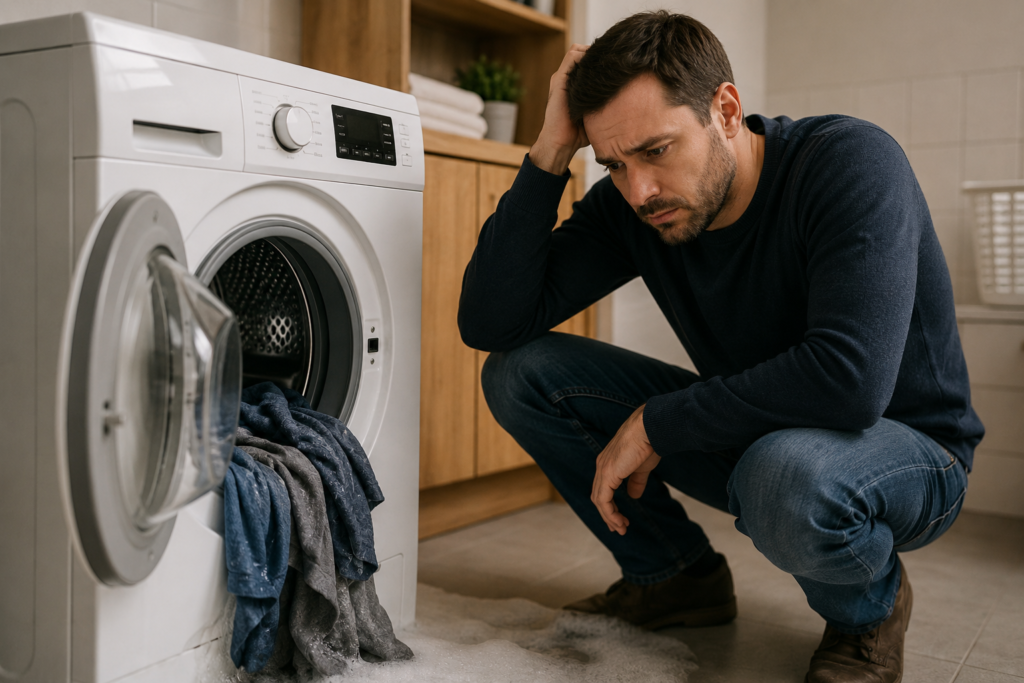
You toss a load of laundry in, walk away, and come back expecting clean clothes ready for the dryer. Instead, you find wet clothes sitting in a drum full of water. or a machine that stopped halfway through and never recovered. Your washing machine won’t finish cycle, and now you’re stuck staring at it wondering what went wrong.
This is one of the most reported washer problems homeowners deal with, and the frustrating part is that it can happen for a dozen different reasons. The good news is that most of those reasons are something you can identify yourself, and many can be fixed without calling a technician. This guide walks through every likely cause, what to look for, and exactly what to do about it
Quick Key Takeaways
- A washing machine that won’t finish its cycle is usually caused by a drainage, balance, sensor, or electrical issue.
- Start by checking the drain filter, drain hose, and load balance before inspecting internal components.
- Many common problems can be fixed without replacing expensive parts.
- If the washer repeatedly stops at the exact same stage, the timer or electronic control board may require professional diagnosis.
Table of Contents
Why Does a Washing Machine Won’t Finish Cycle?
Before jumping into specific causes, it helps to understand what’s actually happening when your washing machine won’t finish cycle.
Modern washers are built with a range of safety sensors and automatic shutoffs. These systems are designed to stop the machine when something is wrong. whether that’s too much water in the drum, an unbalanced load putting strain on the motor, or an electrical fault the control board has picked up. So when your washer halts mid-cycle, it’s rarely a random glitch. It’s the machine responding to a condition it wasn’t designed to push through.
That’s actually useful information. It means your washer is pointing you toward the problem. you just need to know where to look
Overloaded or Imbalanced Drum
This is one of the most common reasons a washing machine won’t finish cycle, and also one of the easiest to fix.
When you pack too many clothes into a single load, the drum becomes too heavy to spin properly. The washer will try to redistribute the load automatically, but if it can’t achieve proper balance after a few attempts, it stops the cycle entirely to protect the motor from damage. Heavy items like wet towels, denim jeans, and comforters are especially prone to bunching on one side of the drum during the spin stage.
Symptoms to watch for:
- Machine stops specifically during the spin phase
- Clothes are bunched to one side when you open the door
- Loud thumping or banging before the machine halts
What to do: Open the door, spread the clothes evenly around the drum, and remove a few heavy items if the load feels overpacked. Restart the spin cycle. Going forward, avoid filling the drum more than three-quarters full and mix large heavy items with smaller lighter ones in every load
Clogged Drain Pump Filter

If your washing machine won’t finish cycle and there’s standing water left in the drum, a blocked drain pump filter is one of the first things to check. Most front-loading washers have a small access panel at the bottom front of the machine that houses this filter. Over time it catches lint, coins, hair ties, and small fabric scraps. and when it gets blocked, water simply can’t exit the drum. The machine senses this and stops rather than attempting to spin with a full tub.
How to clean the drain pump filter:
- Unplug the machine from the wall
- Place a shallow tray and a towel under the access panel at the bottom front
- Open the panel and unscrew the filter cap slowly. water will flow out
- Remove the filter completely and clear out any trapped debris
- Rinse the filter under running water until clean
- Screw it back in firmly, close the panel, and restart the cycle
This is one of the simplest maintenance tasks you can do on a front-loader, and it solves the problem in a surprisingly large number of cases
Kinked or Blocked Drain Hose

Even if the pump filter is clear, a problem with the drain hose can stop water from leaving the drum. The drain hose is the large corrugated hose at the back of the machine that carries wastewater to your standpipe or utility sink. If it’s kinked, pinched against the wall, or blocked internally, water backs up and the machine halts.
Small garments. particularly socks. can slip past the drum seal and into the hose over time, creating a partial blockage that gradually gets worse.
What to do: Pull the machine slightly away from the wall and inspect the full length of the hose for sharp bends or kinks. Straighten anything you find. Then disconnect the hose and flush water through it to check for internal blockages. Also check the standpipe or drain connection at the wall. a clog there causes exactly the same symptoms. If the hose itself is cracked or damaged, replace it. New drain hoses are inexpensive and take less than 30 minutes to swap out
Lid Switch or Door Latch Failure
The lid switch on a top-load washer and the door latch on a front-load washer both do the same job: they confirm to the machine that the door is securely closed before allowing the spin cycle to run. This is a built-in safety system, and if either component becomes worn or faulty, the machine will stop mid-cycle because it can no longer verify the door is properly locked.
This is one of the leading causes of a washing machine that won’t finish cycle. particularly on machines that are a few years old.
How to check: On top-loaders, press down firmly on the lid while the cycle is running. If the machine continues only when you apply pressure, the lid switch is almost certainly failing. You should also hear a distinct click when the lid closes and engages the switch properly. no click is a clear warning sign. On front-loaders, watch whether the door lock indicator remains active throughout the cycle.
Lid switches and door latches are relatively inexpensive parts and replacing them is one of the most cost-effective repairs you can make on an older washer
You May Also Like
If your washing machine won’t finish its cycle, these related troubleshooting guides can help you identify the exact problem, complete the wash cycle successfully, and prevent the issue from happening again.
- Washer Stops Mid-Cycle Without Error Code – 9 Causes & Easy Fixes
- 5 Quick Fixes When Your Washing Machine Stops Mid-Cycle
- Washing Machine Not Transitioning Between Cycles
- Why Does My Washing Machine Pause During the Cycle?
- Washing Machine Keeps Pausing – 8 Troubleshooting Tips
- How to Fix a Washer Stuck on Rinse Cycle
Faulty Water Inlet Valve
The water inlet valve controls the flow of hot and cold water into the drum at the start of every cycle. When this valve becomes clogged with mineral deposits or starts to fail, the machine may take too long to fill. or may not reach the required water level at all.
Most modern washers monitor the fill stage with a sensor. If the tub doesn’t reach the expected water level within a set period of time, the machine pauses or stops the cycle completely. This is a problem that often develops gradually, getting worse as sediment builds up inside the valve’s inlet screens over months of use.
What to look for: The machine stops early in the cycle during the fill stage, or filling takes noticeably longer than it used to. Water flow into the drum may also sound noticeably weaker.
What to do: Turn off the water supply and disconnect the inlet hoses from the back of the machine. Inside each inlet port you’ll find a small mesh screen. If these are clogged with mineral buildup, clean them carefully with a brush. If the valve itself is corroded or no longer opening and closing properly, replacement is the right move. it’s a straightforward repair on most washer models
Water Level Pressure Switch Problem
The pressure switch is a small component. usually connected to the drum by a thin rubber hose. that monitors exactly how much water is in the tub. It signals the machine to stop filling and begin washing once the correct level is reached, and it also confirms the drum is empty before allowing the spin cycle to start.
When this switch fails, or when the hose connecting it to the drum cracks or kinks, the machine receives inaccurate readings. It may fill endlessly without ever progressing to the wash stage, or it may cut the cycle short because it incorrectly reads the drum as still containing water.
Before assuming the switch itself has failed, always check the small rubber hose attached to it first. A damaged or disconnected hose produces identical symptoms and costs almost nothing to replace. If the hose is intact and the problem continues, the pressure switch itself has likely failed
Defective Timer or Electronic Control Board

The timer on older mechanical washers. and the electronic control board on modern digital machines. is responsible for moving the washer through each stage of the cycle in sequence. Fill, wash, drain, spin. the control board coordinates all of it. If this component develops a fault, the machine can freeze at a specific stage and simply refuse to advance.
The clearest sign of a control board problem is consistency: the machine stops at the exact same point in the cycle every single time, regardless of load size or wash setting. Error codes on the display panel can also point directly to a board fault. check these against your owner’s manual before doing anything else.
Control board replacement is a more expensive repair and is best evaluated by a technician first, particularly on older machines where the cost of a new board may approach the value of the washer itself
Motor Overheating
Running back-to-back cycles or washing a very heavy load can push the motor to overheat. Most washers include a built-in thermal overload protector that shuts the motor down when it gets too hot. and when it triggers, the machine stops mid-cycle and won’t restart until the motor has cooled.
A faulty thermistor can make this problem worse. The thermistor is the temperature sensor inside the machine, and if it starts sending inaccurate readings, the machine may shut down prematurely even when the motor isn’t actually running hot.
The most telling sign: The machine stops mid-cycle and then restarts on its own after 20 to 30 minutes without any intervention. If this happens repeatedly even with normal-sized loads, have a technician inspect the motor and thermistor rather than continuing to run the machine
Electrical Connectivity Issues
If you’ve worked through every cause above and your washing machine still won’t finish cycle. stopping suddenly near the end with no error code. a loose or corroded internal wiring connection may be to blame. Faulty connectivity can interrupt the signal between components unpredictably, causing the machine to stall at different points with no obvious pattern.
Try a hard reset first: unplug the machine for 5 to 10 minutes, plug it back in, and run a short cycle. If the problem returns, this is a job for a qualified technician. Internal wiring isn’t something to inspect without proper knowledge and tools
Safety Note
Always unplug the washing machine before cleaning the drain pump filter, inspecting hoses, or checking internal components. Avoid opening electrical panels or handling wiring unless you have the proper knowledge and safety equipment.
Quick Checks When Your Washing Machine Won’t Finish Cycle
If your washing machine won’t finish cycle and you’re not sure where to start, run through these basics first. they take less than ten minutes and catch the majority of common causes:
- Check the display for any error codes and look them up in your owner’s manual
- Clean the drain pump filter if your machine has an access panel at the bottom front
- Inspect the drain hose for kinks or blockages behind the machine
- Confirm the water supply valves are fully open
- Check that the machine is level. an unlevel washer struggles to complete the spin cycle
- Run a hard reset by unplugging for 5 to 10 minutes, then try an empty short cycle
More often than not, one of these quick checks will point you directly to the cause
Prevention Tips
- Clean the drain pump filter every few months to prevent drainage problems.
- Avoid overloading the drum with heavy laundry.
- Inspect the drain hose regularly for kinks or blockages.
- Use the correct amount of detergent to reduce residue buildup.
- Leave the washer door slightly open after each load to reduce moisture and odor.
- Run a maintenance cleaning cycle periodically according to the manufacturer’s recommendations.
When to Call a Professional
If you’ve worked through the causes in this guide and the problem persists, it’s time to bring in a qualified appliance technician. Issues involving the motor, internal wiring, or the main control board require proper diagnostic tools and shouldn’t be approached without experience.
That said, the majority of washing machine won’t finish cycle problems come down to something straightforward .a blocked drain filter, a kinked hose, an overloaded drum, or a worn lid switch. Starting with the simple, accessible checks before moving toward more complex components will solve the problem in most cases, and it will save you both time and money
Your washer is telling you something when it stops mid-cycle. This guide gives you what you need to listen to it
About the Author
Practical appliance repair guidance written to help homeowners diagnose common washing machine problems safely, understand likely causes, and decide when a simple DIY fix is enough or when professional service is the better option.
Muhammad Khalid
Founder of FixAppLab and appliance troubleshooting writer. Muhammad creates detailed repair guides focused on washing machines, refrigerators, and dryers. Every article is written to simplify technical problems into clear, practical steps that homeowners can follow with confidence.
Editorial Commitment
Each guide is reviewed for clarity, technical accuracy, readability, and practical usefulness. Recommendations focus on safe troubleshooting before suggesting replacement parts or professional repair.


Comments