Freezer Items Partially Frozen Issue? 9 Real Causes and Fixes
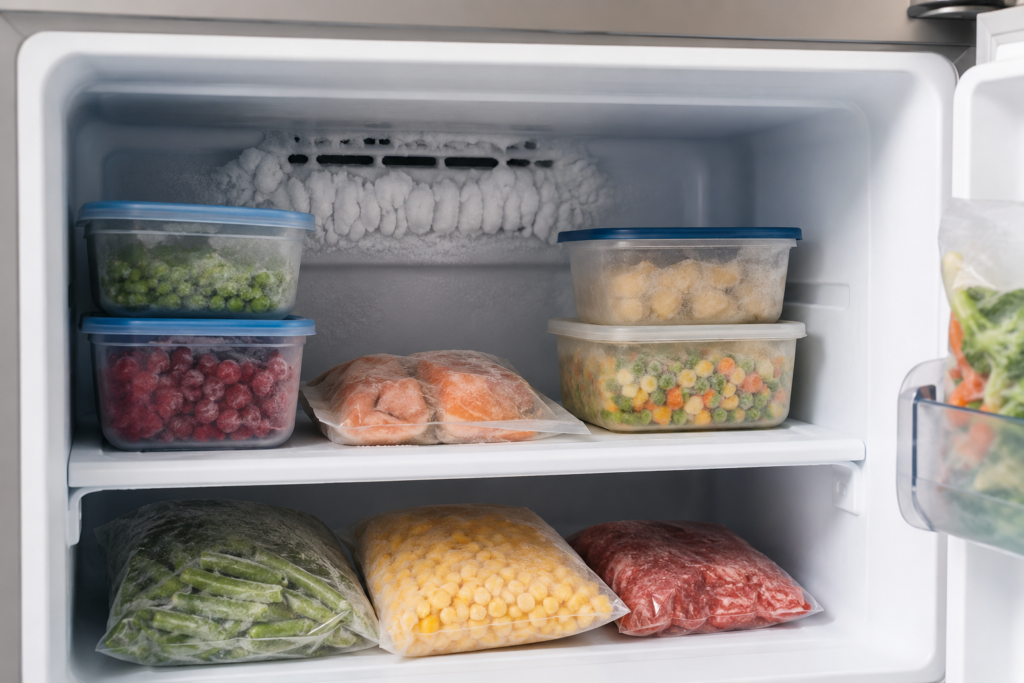
A freezer that’s only partially freezing food is almost always a sign of disrupted airflow, a failing defrost system, or a compromised door seal. not a dead appliance. Before assuming the worst, check whether your vents are blocked and confirm the temperature is actually set to 0°F (-18°C). Most of the time, the freezer items partially frozen issue is caused by airflow or frost buildup, and the fix is simpler than you’d expect
Quick Troubleshooting Guide
Check for a worn door seal or frequent warm-air exposure from repeated opening.
A failing defrost system may be restricting airflow through the evaporator coils.
Dirty condenser coils or weak cooling performance may be overworking the compressor.
Blocked vents or weak evaporator fan airflow are the most common causes.
Table of Contents
There’s a specific kind of frustration that comes from reaching into your freezer and finding that the ground beef is rock solid but the peas are soft, the ice cream has turned to soup, and everything is coated in a thin layer of ice crystals. The appliance is clearly running. the compressor is humming, the light comes on. so what exactly is going wrong?
The answer usually comes down to airflow. A freezer doesn’t just need to be cold; it needs to move cold air consistently through every corner of the compartment. When something disrupts that circulation. whether it’s a packed shelf, a frost-clogged coil, or a struggling fan. the result is exactly what you’re seeing: some things freeze solid while others barely hold their shape. Knowing which part of the system is failing makes the difference between a five-minute fix and an unnecessary service call
Why Freezers Develop Uneven Temperatures
Most people think of a freezer as a simple cold box, but there’s more going on inside. The evaporator coils at the back of the unit absorb heat from the compartment, and a fan pushes that cooled air forward and downward through the entire space. Every corner depends on air actually reaching it. If something disrupts that flow. even partially. you end up with distinct temperature zones. The back stays frigid, the front goes soft, and food near blocked vents might develop frost damage while items near the door barely freeze at all. This is why the freezer items partially frozen issue often appears gradually instead of all at once
This is why the freezer items partially frozen issue is almost never a simple “the freezer is broken” situation. It’s usually one specific, identifiable disruption. Troubleshooting it methodically, rather than guessing, saves time and usually avoids an unnecessary repair bill
Start Here: Blocked Airflow Is the Most Common Culprit
Before anything else, check how the freezer is packed. Overstuffing is by far the most common reason a freezer stops freezing evenly. When food is stacked tightly against the back wall, pushed against the vents, or piled so high that air can’t move between containers, the fan is essentially blowing cold air into a wall. The result is cold pockets right at the source and warmer areas everywhere else.
The fix is straightforward:
- Pull out excess items and reorganize what remains
- Make sure the air vents on the back or side walls are completely clear
- Leave at least an inch of space between food packages wherever possible
- Wipe away any frost buildup around the vents before reloading
Freezers actually work more efficiently with some breathing room. Once you’ve reorganized, give the unit several hours to stabilize before drawing any conclusions
Expert Tip
Many homeowners assume the freezer temperature is accurate because the control dial hasn’t changed. In reality, internal temperatures can drift significantly over time, especially in older appliances. Using a standalone freezer thermometer often reveals temperature swings that the built-in controls never show.
Double-Check the Temperature Setting
It sounds obvious, but incorrect temperature settings cause more partially frozen freezer problems than most people realize. Many older freezers use a dial ranging from 1 to 7 or “Min” to “Max” rather than showing an exact degree reading. which leaves plenty of room for error. The correct internal temperature is 0°F (-18°C). Anything above around 10°F (-12°C) will cause softer freezing, especially for high-water-content foods like vegetables, pre-cooked meals, and ice cream.
Pick up an inexpensive freezer thermometer and measure what’s actually happening inside. Place it in the center of the compartment, not near the back wall where it reads colder than the rest of the space. If the real temperature is noticeably warmer than what you’ve set, that points toward a mechanical problem rather than a settings issue. and you’ll need to dig a little deeper
Frost Buildup and a Failing Auto-Defrost System

This is one of the sneakier causes because the freezer appears to be working until you notice food quality declining over days or weeks. Modern freezers run an automatic defrost cycle every 8 to 12 hours, using a heating element to briefly melt any frost that accumulates on the evaporator coils. If any part of that system fails the heater, the thermostat controlling it, or the timer board .frost starts building up unchecked.
Over time, that frost layer becomes thick enough to insulate the coils. When the coils can’t absorb heat efficiently, and when accumulated frost physically blocks the fan from moving air through the coil assembly, the compartment gradually warms in the areas farthest from the coils. You get that familiar pattern: the very back of the freezer is icy and hard, but everything forward is partially frozen or soft.
How to test for a defrost system problem:
- Unplug the freezer and remove all food into a cooler
- Leave both doors open and allow it to sit for a full 24 hours
- Lay towels around the base. there will be significant meltwater
- Dry the interior thoroughly, then plug it back in
- Monitor freezing performance over the next one to two weeks
If the freezer runs evenly for a while and then gradually deteriorates again, the defrost system is almost certainly the culprit. Whether it’s a defrost heater, bi-metal thermostat, or timer board, this is a well-defined repair that a technician can handle without replacing the whole unit
The Evaporator Fan: Small Component, Big Impact
The evaporator fan sits behind the back panel inside the freezer compartment. Its only job is to push cold air from the coils out into the rest of the space. When it starts failing .from worn bearings, ice buildup around the blades, or a bad motor. airflow drops significantly. The coils might be working perfectly, but without the fan moving that cold air, you’ll see exactly the kind of uneven freezing that looks like a much bigger problem.
Here’s a quick way to check it: Open the freezer door and press and hold the door switch manually. This tricks the appliance into thinking the door is closed and should allow the fan to run. Listen carefully:
- Strong, steady airflow. the fan is likely fine; look elsewhere
- No sound at all. the motor may have failed
- Weak hum or grinding noise. worn bearings or ice-bound blades
Sometimes ice buildup around the blades is the only issue, and a full manual defrost resolves it completely. If the motor itself has failed, it needs to be replaced .but it’s a relatively affordable repair compared to compressor or sealed-system work
A Worn Door Seal Causes More Damage Than It Looks
A failing door gasket builds problems slowly, which is why it’s easy to overlook. The seal starts letting in tiny amounts of warm, humid air. At first, nothing seems obviously wrong. But over weeks and months, that warm air creates persistent frost near the door frame, gradually raises the average internal temperature, and puts continuous strain on the compressor. Eventually you’re dealing with partially frozen food, excess frost accumulation, and a unit that runs almost constantly.
To check the seal: Close the door on a piece of paper or a dollar bill. If you can pull it out without any resistance around the full perimeter, the gasket isn’t sealing properly.
Before assuming the seal is damaged, clean it thoroughly with warm soapy water. a dirty gasket can mimic a failed one. If the rubber is cracked, stiff, or warped in any section after cleaning, replacing the gasket is the right move. It’s one of the more DIY-friendly freezer repairs and makes a noticeable, immediate difference in temperature consistency
Common Mistakes That Make the Problem Worse
- Turning the temperature setting to the coldest possible level immediately. This can increase frost buildup and strain the cooling system instead of fixing airflow problems.
- Packing food tightly against the rear vents after reorganizing the freezer. Even small airflow blockages can recreate uneven freezing conditions.
- Ignoring frost buildup for weeks or months because the freezer still seems “cold enough.” Defrost problems almost always worsen gradually over time.
- Repeatedly unplugging and restarting the freezer without diagnosing the root cause. Temporary cooling recovery can hide a larger airflow or defrost issue.
Don’t Overlook the Condenser Coils

Behind or beneath most freezers are the condenser coils. the part of the system responsible for releasing heat to the surrounding air. When these coils are coated in dust, pet hair, and kitchen debris, the refrigeration cycle becomes inefficient. The compressor works harder and longer to achieve the same cooling, and in some cases it simply can’t keep pace, leading to slightly elevated temperatures across the board.
Cleaning the coils is something most homeowners can handle without a technician. Unplug the unit, pull it away from the wall, and use a coil brush or the narrow attachment on a vacuum cleaner to clear off the buildup. It takes about 15 minutes and can produce a measurable improvement in cooling performance. As a general rule, plan to do this every six months. more frequently if you have pets
You May Also Like
If your freezer is partially thawing food, unstable cooling, weak airflow, or inconsistent freezing may also be affecting other refrigerator components. These related troubleshooting guides can help you diagnose the issue more effectively.
What to Do With Food That’s Already Been Affected
While you’re working through the problem, it’s worth knowing what to keep and what to discard.Many homeowners first notice a freezer items partially frozen issue when different foods begin thawing at different speeds inside the same compartment
- Still has ice crystals. generally safe to refreeze or cook as normal
- Fully thawed meat or poultry, kept below 40°F (4°C). cook immediately and consume the same day
- Fully thawed meat that’s been above 40°F for more than two hours. discard it; the risk isn’t worth it
- Melted ice cream or soft dairy. best thrown out; texture won’t recover after refreezing, and quality will be poor even if technically safe
When in doubt, use your senses. Unusual odor, off color, or a slimy texture on thawed meat are all signs to toss it without hesitation
When the Problem Is Beyond Basic Troubleshooting
If you’ve worked through airflow, performed a manual defrost, inspected the door seal, cleaned the condenser coils, and confirmed the temperature settings. and the freezer is still struggling. the problem likely lives in the sealed refrigerant system or the compressor itself.
A refrigerant leak causes the system to gradually lose its ability to absorb heat. The freezer runs constantly but never quite reaches proper temperature. A failing compressor may produce clicking sounds during startup, run in short cycles, or simply underperform without obvious noise. Neither of these is a DIY repair. They require a certified technician with proper tools and refrigerant handling certification.
At that point, the real question is whether repair makes financial sense. For a freezer that’s more than 10 to 12 years old, a compressor replacement or refrigerant recharge may cost more than the appliance is worth. A good technician will give you a straight answer on that after a proper diagnosis. and won’t push you toward a repair that doesn’t make sense for your situation
Keeping the Problem From Coming Back
Once you’ve resolved the freezer items partially frozen issue, a few simple habits will prevent it from recurring. Preventive maintenance is the best long-term way to avoid a freezer items partially frozen issue from returning again
- Keep the freezer organized with space between packages so air can circulate freely
- Clean condenser coils every six months, especially in homes with pets
- Check the door seal periodically and replace it at the first sign of wear
- Avoid placing warm food directly into the freezer. let it cool to room temperature first
- Don’t open the door more than necessary, particularly in humid weather
None of these take much effort, but together they go a long way toward stable, consistent freezing performance over the long term
When It’s Time to Call a Technician
If the freezer continues partially thawing food after basic troubleshooting, the issue may involve electrical controls, sealed-system cooling problems, or compressor failure. These repairs require specialized tools and accurate diagnosis.
Professional service is usually recommended if:
- The freezer runs constantly but temperatures remain unstable
- Frost buildup returns quickly after a full manual defrost
- You hear clicking, buzzing, or compressor startup noises repeatedly
- The evaporator fan is not running at all
- Cooling performance continues getting worse over time
Most cases of partial freezing trace back to a handful of fixable, identifiable problems. Working through them in order. starting with the simplest and most common. usually pinpoints the issue within a day or two. You rarely need a full replacement. You just need to know where to look, and now you do.


Comments