7 Causes of Weak Freezer Air Circulation and Easy Fixes
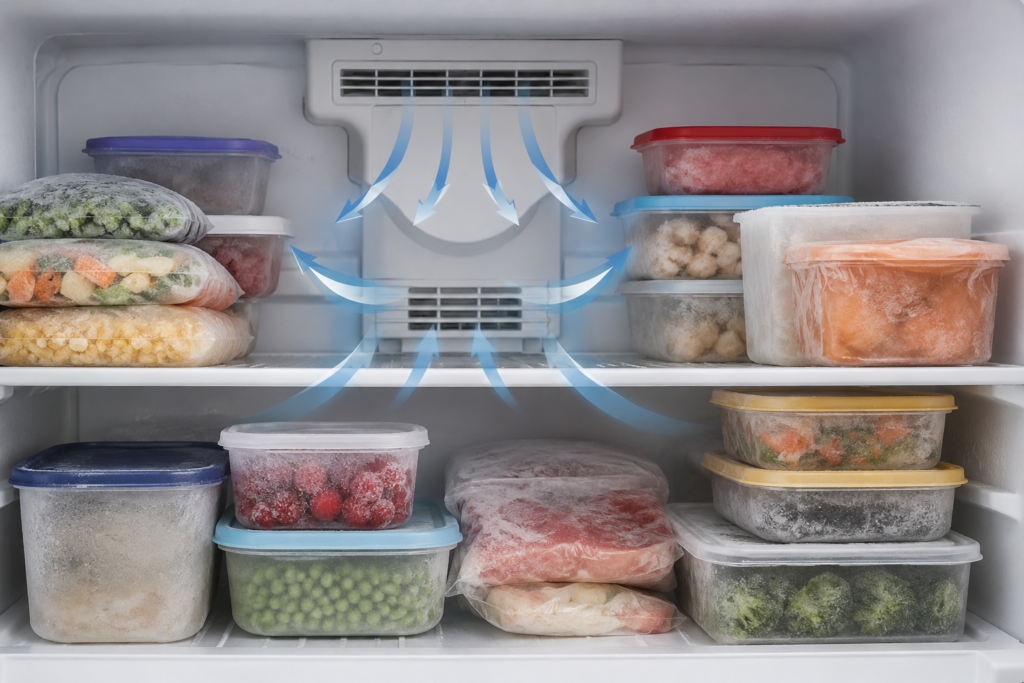
Weak freezer air circulation is usually caused by blocked vents, a failing evaporator fan, or frost buildup restricting airflow behind the freezer panels. Before assuming the worst, start by checking whether anything is physically blocking the vents inside the freezer, since restricted airflow is one of the most common and easiest problems to fix.
If your freezer has been feeling “off” lately. food isn’t staying as hard as it should, ice cream is soft around the edges, or certain spots feel noticeably warmer than others. weak air circulation is almost always at the root of it. The frustrating part is that this isn’t always obvious. The freezer might still feel cold when you open the door, but the temperature isn’t distributing evenly, and over time, your food pays the price. Understanding why airflow matters so much inside a freezer helps make sense of everything that can go wrong. and where to start looking when something does
Quick Key Takeaways
- Weak freezer airflow is most commonly caused by blocked vents, frost buildup, or a failing evaporator fan.
- Uneven freezing, soft ice cream, and temperature fluctuations are early warning signs of circulation problems.
- Cleaning condenser coils and avoiding overpacking can significantly improve freezer performance.
- If airflow improves temporarily after manual defrosting, the automatic defrost system may be failing.
Table of Contents
How Freezer Air Circulation Actually Works
A freezer doesn’t just get cold and stay cold passively. It actively moves air in a continuous loop. The evaporator fan pulls air across the evaporator coils. where the refrigerant absorbs heat. then pushes that chilled air through the freezer compartment and, in most refrigerator-freezer combos, into the fresh food section as well. That air returns through a separate return vent, gets re-chilled over the coils, and the cycle repeats constantly while the unit is running.
When something disrupts that loop. a physical blockage, ice buildup, or a mechanical failure air can’t move efficiently. Parts of the freezer stay colder than others, the compressor runs longer to compensate, and the whole system gradually falls out of balance. In some cases, the freezer runs almost constantly without ever reaching its set temperature
Common Warning Signs of Weak Freezer Airflow
Before diving into causes, it helps to recognize what weak circulation actually looks like in everyday use. In many cases, weak freezer air circulation develops slowly, which makes the temperature problem harder to notice at first.
- Ice cream or frozen foods feel soft or partially thawed
- Certain areas of the freezer are noticeably warmer than others
- Frost is building up unevenly on the interior walls or back panel
- The freezer runs constantly but never seems to get cold enough
- You hear the compressor working hard but feel little airflow from the vents
- Food near the back wall freezes solid while items near the front stay softer
If you’re noticing one or more of these, the air circulation system is worth a closer look
The Most Common Causes of Weak Freezer Air Circulation
1. Overpacked Shelves and Blocked Vents
This is genuinely the number one cause .and easy to overlook because it happens gradually. You add a few extra bags here, stack things tighter there, and before long the supply and return vents are partially or fully blocked by food pushed against the back wall.
Those vents aren’t decorative. They’re the entry and exit points for the air circulation loop. When food sits directly in front of them, cold air can’t distribute properly and the return path gets restricted. The fan keeps spinning, but it’s essentially pushing air into a dead end.
The fix: Pull items away from the back wall, keep the freezer at around 75–80% capacity, and make sure nothing is sitting flush against the vent openings. Give it 12–24 hours and see if temperatures stabilize
2. Frost and Ice Buildup on the Evaporator Coils
Even in frost-free freezers, ice accumulation on the evaporator coils is a real and fairly common problem. Frost-free models use a defrost heater that cycles on periodically to melt any ice that forms on the coils. But if that defrost system starts to fail. whether it’s the heater, the defrost thermostat, or the defrost timer. frost builds up unchecked. Over time, a thick layer of ice can completely encrust the coils and block the air passages around them.
When this happens, you’ll often notice a dramatic drop in airflow from the vents, even though the fan sounds like it’s running fine. The fan is running fine. it just can’t push air through a wall of ice.
Manually defrosting the unit (unplug it, remove the food, leave the door open for 6–8 hours) will confirm whether this is the issue. If the freezer works normally for a few weeks after a manual defrost and then gradually loses circulation again, the automatic defrost system almost certainly needs attention
3. A Failing or Frozen Evaporator Fan

The evaporator fan is the mechanical heart of the air circulation system. It sits behind a panel at the back of the freezer compartment and runs continuously while the compressor is running. When the fan motor starts to fail, you’ll often hear it before you feel the effect. a grinding, buzzing, or intermittent noise that wasn’t there before. Eventually, a failing motor slows down or stops completely, and airflow drops to nearly nothing.
A related but different problem is when the fan blades freeze up. If ice forms around the fan housing, the blades can seize even if the motor itself is fine. Opening the freezer and listening carefully tells you a lot. A healthy evaporator fan produces a consistent, quiet hum. Silence when the compressor is running is a red flag worth investigating immediately.
To check the fan:
- Unplug the freezer
- Remove the back panel inside the freezer compartment (usually held by a few screws)
- Try spinning the fan blades by hand. they should turn freely with no resistance
- If they’re seized by ice, defrosting will free them
- If the blades spin freely but the fan won’t run, the motor likely needs replacement
4. A Worn or Damaged Door Gasket
A failing door gasket might not seem directly related to air circulation, but the connection is real. When the gasket doesn’t seal properly, warm and humid air seeps into the freezer every time it closes .and sometimes even when it stays closed. That moisture freezes almost immediately inside the compartment and, over repeated cycles, builds up around the vents, the evaporator coils, and the fan housing.
The result is a freezer that works fine right after a manual defrost, only to develop airflow problems again within a few weeks. If you’re stuck in that cycle, the door gasket deserves a close inspection.
Quick gasket check: Run your hand slowly around the edge of the closed door. Any spot where you feel cold air escaping means the seal has failed there. You can also close a sheet of paper in the door. if it slides out easily, that section isn’t sealing properly. Cleaning the gasket with warm soapy water sometimes restores a seal that’s just stiff or grimy. Visible cracks, tears, or deformed sections mean it’s time for a replacement
5. Clogged Condenser Coils

The condenser coils release the heat that the refrigerant absorbs inside the freezer. When they’re clogged with dust, pet hair, and debris, the entire cooling system runs less efficiently. the compressor works harder, the evaporator struggles, and the result is weaker overall airflow and inconsistent temperatures throughout the unit. Dirty condenser coils can indirectly contribute to weak freezer air circulation by forcing the cooling system to work harder than normal.
These coils are usually located underneath the refrigerator or at the back of the unit. Cleaning them every few months with a vacuum and a coil brush makes a genuine, measurable difference in performance. It’s one of the most overlooked maintenance tasks, and one of the most impactful
Step-by-Step Troubleshooting: Where to Start
If you’re not sure what’s causing the weak airflow, work through this in order. simplest checks first:
- Check the vent openings inside the freezer. Are any items blocking the supply or return vents? Reorganize and wait 24 hours.
- Inspect the door gasket for gaps, cracks, or poor sealing. Clean it and test with the paper method.
- Look for unusual frost patterns .heavy, uneven frost on the interior walls or back panel suggests a defrost system issue or a leaking gasket.
- Listen for the evaporator fan when the compressor is running. A quiet freezer (without the usual hum) points to a fan problem.
- Remove the back panel inside the freezer and inspect the evaporator coils and fan. Heavy ice on the coils confirms a defrost system failure.
- Clean the condenser coils on the outside of the unit if they haven’t been touched in months.
Most of the time, you’ll identify the problem before you get to step six
When to Call a Technician
Most causes of weak freezer air circulation are manageable for a reasonably handy homeowner. But a few situations genuinely call for professional help:
- Defrost heater or thermostat failure. testing and replacing these components requires a multimeter and some familiarity with appliance wiring
- Evaporator fan motor replacement. doable as a DIY project but involves accessing internal wiring
- Compressor problems. if the compressor runs constantly without the freezer getting cold, or the compressor housing feels unusually hot, that’s a job for a technician
- Refrigerant leaks. never a DIY repair; refrigerants require certified handling and specialized equipment
If you notice a faint chemical smell near the appliance, the freezer running non-stop without getting cold, or a warm rear housing, stop troubleshooting and call a professional
Prevention Tips for Better Freezer Airflow
- Keep freezer vents clear and avoid pushing food directly against the back wall.
- Clean condenser coils every 4–6 months to improve cooling efficiency.
- Inspect the door gasket regularly for gaps, cracks, or poor sealing.
- Do not overload the freezer, since packed shelves restrict airflow circulation.
- Treat unusual frost buildup as an early warning sign instead of ignoring it.
Keeping Freezer Airflow Strong Going Forward
The good news is that most airflow problems are preventable with a few consistent habits. Don’t overfill the freezer. leaving breathing room around the vents keeps the circulation loop working the way it’s designed to. Check the door gasket periodically and clean it as part of your normal appliance routine. Clean the condenser coils at least twice a year, more often if you have pets. And if your frost-free freezer starts accumulating frost faster than usual, treat it as an early warning sign rather than a minor inconvenience. Preventing weak freezer air circulation early can help your freezer maintain stable temperatures and reduce unnecessary strain on the compressor.
A freezer that circulates air properly runs more efficiently, holds temperature more consistently, and lasts longer. Most of what causes weak airflow is preventable. and when it does happen, it’s usually fixable without a major repair bill
Weak freezer air circulation rarely signals a catastrophic problem. In most cases, it’s something as simple as a blocked vent, a gasket that’s seen better days, or a coil that needs cleaning. Catch it early, work through the basics methodically, and you’ll solve the problem in most cases without needing to call anyone. When the issue does go deeper, knowing what you’re dealing with makes the repair conversation with a technician a lot more straightforward.


Comments