Refrigerator Compressor Hot But Not Cooling
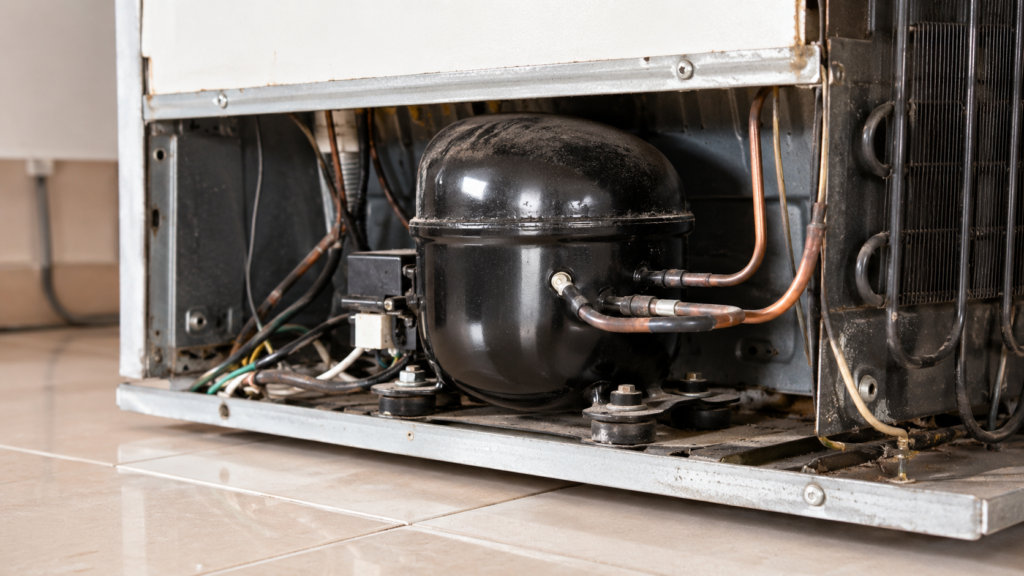
A refrigerator compressor hot but not cooling almost always means something in the cooling system has gone wrong. In most cases, the problem is caused by dirty condenser coils, restricted airflow, a faulty start relay, a failed condenser fan, or a refrigerant leak. While it’s completely normal for a refrigerator compressor to feel warm during normal operation, a compressor that’s extremely hot while the refrigerator isn’t cooling is a warning sign that shouldn’t be ignored.
In this guide, you’ll learn the most common causes of a refrigerator compressor hot but not cooling, how to diagnose the problem step by step, which fixes you can safely try yourself, and when it’s time to call a professional appliance repair technician.
Quick Key Takeaways
If your refrigerator compressor hot but not cooling, these key points will help you identify the problem quickly before moving into detailed troubleshooting.
- Dirty condenser coils are the most common reason a refrigerator compressor gets hot but stops cooling.
- A faulty start relay can prevent the compressor from starting properly even though it becomes extremely hot.
- Poor airflow around the refrigerator forces the compressor to run longer and overheat.
- Low refrigerant, compressor failure, or a sealed system problem usually requires professional repair.
- Cleaning the condenser coils and checking the condenser fan should always be your first troubleshooting step.
Quick Answer: What Causes a Hot Compressor With No Cooling
If your refrigerator compressor is running hot but the fridge isn’t cooling, the most likely causes are:
- Dirty or blocked condenser coils
- Poor airflow around the refrigerator
- A failed start relay
- A faulty condenser fan motor
- A refrigerant leak
- Frosted evaporator coils from a defrost system failure
- A compressor that’s wearing out internally
Start with the simplest and cheapest checks first .coil cleaning and airflow. before assuming your refrigerator compressor hot but not cooling issue requires a technician or a replacement compressor
Table of Contents
Why the Compressor Gets Hot in the First Place
The compressor is the engine of your refrigerator. It pressurizes refrigerant gas and pushes it through the condenser coils, where the gas releases heat and turns back into a liquid. That liquid then travels to the evaporator coils, where it absorbs heat from inside the fridge and keeps your food cold.
Because the compressor runs an electric motor and compresses gas almost constantly, it generates heat as a normal part of its job. A compressor that feels warm. even fairly hot to the touch during an active cooling cycle. isn’t a problem by itself. Most refrigerator compressors run somewhere between 120°F and 150°F under typical conditions.
The real warning sign is a mismatch between effort and result. When a refrigerator compressor is hot but not cooling the interior, it means the compressor is working overtime while something else in the system has stopped doing its part. That gap is what points to a genuine problem rather than normal operation.
Common Symptoms to Watch For
Before diving into causes, it helps to know what a failing cooling cycle actually looks like day to day. Homeowners dealing with a refrigerator compressor hot but not cooling typically notice a combination of these signs:
- The fridge and freezer feel warmer than usual, or food is spoiling faster than normal
- The compressor runs almost nonstop instead of cycling on and off
- The compressor housing is uncomfortably hot to the touch, not just warm
- You hear clicking, buzzing, or humming that repeats every few minutes
- The circuit breaker trips occasionally
- There’s little or no frost on the evaporator coils, or frost is limited to one small area
Not every symptom shows up in every case, but a hot compressor paired with warm food is the core pattern behind a refrigerator compressor hot but not cooling issue, and it’s worth investigating as soon as you notice it.
Common Causes of a Refrigerator Compressor Hot But Not Cooling
Dirty or Blocked Condenser Coils

This is the single most common reason behind a refrigerator compressor hot but not cooling complaint. The condenser coils, usually located at the back or underneath the fridge, release the heat the compressor pulls out of the interior. When they’re coated in dust, pet hair, or kitchen grease, that heat has nowhere to go.
The compressor compensates by running longer and hotter, but the coils simply can’t keep up, and cooling performance drops as a result. If it’s been more than six months to a year since you last cleaned them, this is where to start before checking anything else.
Restricted Airflow Around the Refrigerator
Even perfectly clean coils won’t help much if the refrigerator doesn’t have room to breathe. Compressors need clearance to dissipate heat effectively. most manufacturers recommend at least an inch or two of space on the sides and back.
A fridge pushed tight against a wall or crammed into a cabinet traps heat around the compressor compartment, which raises the compressor’s operating temperature and drags down cooling efficiency over time. This is a surprisingly common, and easily fixed, contributor to a refrigerator compressor running hot without actually cooling the interior
Failed Start Relay
The start relay gives the compressor motor the jolt of power it needs to get going. When it fails, the compressor may attempt to start repeatedly without ever completing a full cooling cycle. generating heat with every failed attempt but never actually pumping refrigerant properly.
This often produces a distinct click-buzz-click pattern every few minutes, as the relay engages, fails to start the motor, and the thermal overload trips to protect it. A quick way to check: unplug the fridge, locate the relay near the compressor, and give it a gentle shake. A rattling sound or a burnt smell usually means it needs to be replaced.
Faulty Condenser Fan Motor
Many refrigerators use a small fan next to the compressor to pull air across the coils and cool them down. If that fan stops spinning .because of debris, a worn motor, or an electrical fault .heat builds up around the compressor quickly, even if the coils themselves are clean.
You can usually check this by removing the rear access panel and spinning the blades by hand. If they don’t turn freely, or the motor doesn’t run at all when the fridge is powered on, the fan motor likely needs replacing. A seized condenser fan is one of the quicker fixes behind a refrigerator compressor hot but not cooling complaint, since the part itself is inexpensive
You May Also Like
If your refrigerator compressor is hot but not cooling, these related FixAppLab repair guides can help you diagnose compressor failures, cooling problems, airflow restrictions, and electrical faults more accurately.
Refrigerant Leak or Low Charge
If the sealed system has developed a leak, there isn’t enough refrigerant circulating to properly absorb and release heat. The compressor keeps running in an attempt to reach the set temperature, but with a reduced refrigerant charge, it can’t move enough heat out of the system no matter how long it runs.
Over time, this is one of the more frustrating causes of a refrigerator compressor hot but not cooling, since the compressor can sound and feel like it’s working hard while accomplishing almost nothing. Signs of a refrigerant issue include frost forming on only part of the evaporator coil, an oily residue near the tubing, or a compressor that runs nonstop without the fridge ever reaching temperature. This is not a DIY repair — refrigerant handling requires EPA certification and specialized recovery equipment.
Frosted Evaporator Coils or Defrost System Failure

If the evaporator coils in the freezer are covered in a thick layer of ice, airflow to the rest of the fridge gets cut off. The compressor keeps running because the thermostat still senses a warm interior, but cold air simply can’t circulate past the ice buildup.
This is usually traced back to a failed defrost heater, defrost thermostat, or defrost timer/control board that’s no longer clearing frost on its normal schedule. Pulling the freezer contents and checking the back wall for a solid sheet of ice is a quick way to confirm this cause.
A Compressor Nearing the End of Its Life
Sometimes the compressor itself is the problem. Worn internal valves or pistons reduce its ability to build pressure and circulate refrigerant, even though the motor still runs and still generates heat.
A dying compressor often hums loudly, clicks repeatedly, or trips the overload protector. cycling on, overheating, shutting off, and trying again in a loop that never actually cools the fridge. This is one of the more frustrating versions of a refrigerator compressor hot but not cooling problem, since the symptoms can look identical to a bad start relay until you test the compressor windings directly.
Faulty Thermostat or Control Board
If the thermostat isn’t reading the interior temperature accurately, it may fail to send the compressor the correct signals, or it may keep the compressor running well past when it should normally cycle off. On newer refrigerators with electronic controls, a malfunctioning temperature control board can cause similar erratic behavior.
These components are less commonly the culprit behind a hot compressor than dirty coils or a bad relay, but they’re worth ruling out once the more obvious causes have been checked
Quick Troubleshooting Guide
Use this quick checklist before replacing parts. Most refrigerator compressor hot but not cooling problems can be narrowed down within a few minutes.
| Inspection | Possible Cause |
|---|---|
| Dirty condenser coils | Poor heat release causing compressor overheating. |
| Compressor clicking repeatedly | Failed refrigerator start relay. |
| Heavy frost on evaporator | Defrost system failure. |
| Condenser fan not spinning | Insufficient cooling around compressor. |
| Runs continuously without cooling | Possible refrigerant leak or worn compressor. |
How to Diagnose a Refrigerator Compressor Hot But Not Cooling Yourself

Work through these steps in order before assuming you need a new compressor:
- Unplug the refrigerator and pull it away from the wall to access the condenser coils.
- Vacuum or brush off dust, lint, and pet hair from the coils and the compressor compartment.
- Confirm there’s adequate clearance behind and around the unit for airflow.
- Plug it back in and listen closely. clicking, buzzing, or repeated failed starts point to a bad start relay.
- After the fridge has run for 20–30 minutes, feel the condenser coils. If they’re barely warm while the compressor itself is hot, airflow or refrigerant flow is likely restricted.
- Open the freezer and check for heavy frost buildup on the evaporator coils, which suggests a defrost system failure.
- Check the door seals for gaps or tears that could be letting warm air in and forcing the compressor to overwork.
If you’ve cleaned the coils, confirmed good airflow, and the refrigerator compressor is still hot but not cooling, the issue is probably internal. the start relay, the compressor windings, or a refrigerant leak. These generally require a multimeter or specialized refrigerant equipment to diagnose accurately, which is where most DIY troubleshooting reaches its limit
Common Mistakes to Avoid
A few habits tend to make a refrigerator compressor hot but not cooling problem worse or harder to diagnose:
- Letting a clicking compressor keep cycling for days. Repeated failed starts can damage the motor windings, turning a cheap relay repair into an expensive compressor replacement.
- Assuming a warm compressor is always a bad sign. Some warmth is normal .it’s the combination of extreme heat and no cooling that signals trouble.
- Skipping the coil cleaning step because it “probably won’t help.” It’s the most common fix and takes only a few minutes.
- Attempting refrigerant work without certification. This isn’t just a safety issue. it’s also illegal in most areas without EPA credentials
Expert Tip
Professional appliance technicians often compare the compressor temperature with the condenser coil temperature. If the refrigerator compressor is hot but not cooling while the condenser coils remain only slightly warm, the issue usually involves restricted refrigerant flow, a faulty start relay, or an internal compressor failure rather than dirty coils alone.
Safety Note
Before inspecting a refrigerator compressor hot but not cooling, always unplug the refrigerator from the power outlet. Avoid touching exposed electrical terminals or opening sealed refrigerant lines. Refrigerant recovery and compressor replacement should only be performed by qualified appliance repair professionals.
When to Call a Professional
Some repairs are safe to handle yourself. Others involve pressurized refrigerant lines, high voltage, or sealed system components that require licensing to work on legally. Call a licensed appliance technician if:
- You suspect a refrigerant leak
- The compressor hums, clicks, or trips the overload protector repeatedly
- Cooling doesn’t improve after cleaning the coils and confirming proper airflow
- The compressor needs testing or replacement
Repair or Replace?
It’s also worth weighing the age of your refrigerator against the likely repair cost. If the unit is more than eight to ten years old and the compressor has failed, replacing the refrigerator is often more cost-effective than a compressor swap, since that single repair can run several hundred dollars in parts and labor. On a newer fridge, a compressor replacement. or a simpler fix like a start relay. is usually worth the investment to resolve a hot compressor that isn’t cooling
Preventing a Hot Compressor From Coming Back
A little routine maintenance goes a long way toward keeping your compressor from overheating again:
- Clean the condenser coils every six months, more often if you have pets.
- Keep at least a couple of inches of clearance around the back and top of the fridge.
- Inspect and replace worn door gaskets so cold air doesn’t leak out.
- Avoid overloading the fridge in ways that block internal vents.
- Don’t leave the doors open longer than necessary.
Final Thoughts
A refrigerator compressor hot but not cooling is almost always a sign that something in the cooling cycle. the coils, airflow, the start relay, refrigerant, or the defrost system. has broken down, forcing the compressor to work overtime with nothing to show for it. Start with the simple checks first: clean the coils, confirm the fridge has room to breathe, and listen for clicking or buzzing that points to a bad relay.
In many cases, that’s all it takes to fix a refrigerator compressor hot but not cooling and get the fridge back to cooling normally. If the problem persists after covering the basics, it’s a sign the issue has moved past a DIY fix, and calling a licensed technician will save you both time and further damage to the appliance.


Comments