8 Common Causes of a Fridge Running Non Stop and Back Panel Warm
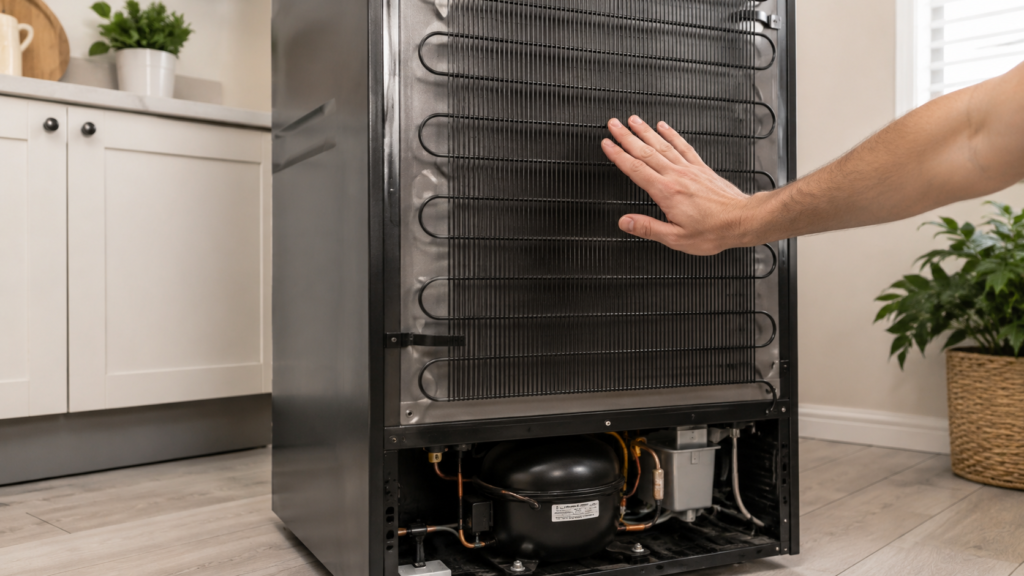
Yes, a fridge running non stop and back panel warm can be completely normal — but only for a little while. A refrigerator releases heat through its rear panel as part of how it cools, so mild warmth back there during an active cycle is expected. The problem shows up when the compressor never shuts off and that panel feels genuinely hot, not just warm, which usually means the appliance is working harder than it should to keep up.
Most causes behind a fridge running non stop and back panel warm are things you can check yourself in under an hour, with nothing more than a vacuum and a flashlight. This guide walks through why a fridge running non stop and back panel warm happens, how to tell normal operation from an actual fault, and the troubleshooting steps worth trying before you call in a technician.
Quick Key Takeaways
- A mildly warm refrigerator back panel is usually normal because the appliance releases heat during the cooling process.
- If the compressor runs continuously for days, the refrigerator may be struggling to remove heat efficiently.
- Dirty condenser coils, poor ventilation, damaged door seals, frost buildup, and incorrect temperature settings are common causes.
- Check simple airflow and maintenance issues first before assuming the compressor has failed.
- If the fridge is running constantly but the food is getting warmer, professional diagnosis may be necessary.
Table of Contents
Why Does the Back Panel Get Warm in the First Place?
A refrigerator doesn’t manufacture cold air out of thin air. It pulls heat out of the food compartment and dumps that heat somewhere else — usually the back or bottom of the unit, right where the compressor and condenser coils sit.
Here’s the basic cycle:
- Refrigerant absorbs heat from inside the fridge through the evaporator coils
- The compressor pressurizes that refrigerant, which generates heat of its own
- The condenser coils release that heat into your kitchen air
- The cycle repeats until the fridge reaches its target temperature, and the compressor shuts off
Since this heat exchange happens right at the back panel, some warmth there during a cooling cycle is nothing to worry about. What actually separates normal operation from a real issue is whether the compressor cycles off at all, or whether it just runs hour after hour without a break — which is exactly the pattern people describe when they search for a fridge running non stop and back panel warm.
Is It Normal for a Fridge to Run Constantly?
Sometimes, yes — at least temporarily. A fridge running non stop and back panel warm right after any of these situations usually isn’t a red flag:
- You just installed or moved the refrigerator
- Power was recently restored after an outage
- You loaded in a large batch of warm groceries or leftovers
- The door was left open longer than usual
- You recently changed the temperature setting
Give the fridge 12 to 24 hours to settle in any of these cases. If it eventually cycles off and holds a steady internal temperature, there’s nothing to fix. It’s when the compressor keeps running for days on end, with no sign of ever pausing, that you’re likely looking at a genuine fridge running non stop and back panel warm situation rather than a temporary adjustment period.
Common Causes of a Fridge Running Non Stop and Back Panel Warm

1. Dirty Condenser Coils
This is by far the most common reason for a fridge running non stop and back panel warm, and it’s the first thing worth checking. The condenser coils release the heat pulled out of your food, and they’re usually tucked behind the fridge or hidden under a bottom grille. Over months of normal use, dust, grease, and pet hair settle on these coils and act like insulation, trapping heat instead of letting it escape.
When the coils can’t release heat efficiently, the compressor has to run longer to compensate. That’s the direct link between dirty coils and a fridge that won’t stop running while the back panel stays hot to the touch. Cleaning them is simple: unplug the fridge, locate the coils, and clear them out with a vacuum brush attachment or a long-handled coil brush. Most manufacturers recommend doing this every six to twelve months, more often if you have pets.
2. Poor Ventilation Around the Unit
Refrigerators need breathing room. If yours is pushed flush against a wall, wedged into a tight cabinet cutout, or boxed in by clutter, the heat coming off the condenser has nowhere to go. That trapped heat builds up around the compressor, forcing the appliance to work overtime — and it’s a common, often overlooked reason behind a fridge running non stop with a warm back panel.
Most manufacturers recommend at least one to two inches of clearance behind the fridge and along the sides. If your unit is crammed into a tight spot, pulling it out even slightly can make a real difference in how often the compressor cycles off — and it’s one of the quickest fixes for a fridge running non stop and back panel warm from restricted airflow alone.
3. A Worn or Damaged Door Gasket

The rubber seal around your fridge door has one job: keep cold air in and warm air out. Once that seal cracks, hardens, or loses its grip, warm kitchen air leaks in continuously. The fridge senses the rising temperature and keeps the compressor running to catch up — which it never quite manages to do as long as the leak continues.
A simple test can confirm this: close the door on a piece of paper or a dollar bill and try pulling it out. If it slides free with little resistance, the seal isn’t gripping properly and probably needs replacing. It’s also worth checking whether a shelf or food container is propping the door open just slightly, since even a small gap produces the same effect as a failed gasket.
4. Temperature Set Too Cold
It’s a common assumption that setting the fridge to its coldest option keeps food fresher, but in practice it just forces the compressor to chase a target that’s harder to reach, especially in a warm kitchen. If someone bumped the dial while cleaning or restocking, that alone could explain why the fridge keeps running non stop with a back panel that never cools down.
For most refrigerators, the ideal fresh food compartment temperature sits between 37°F and 40°F (3°C to 4°C), and the freezer should stay around 0°F (-18°C). If your settings are colder than that, dial them back and give the unit a full day to stabilize before judging the results.
5. Frost Buildup Blocking Airflow
Frost-free refrigerators rely on a small defrost heater that periodically melts ice forming on the evaporator coils. When a defrost component fails — the heater, the timer, or the thermostat — frost keeps building until it blocks airflow entirely. The fridge can’t circulate cold air properly, so the compressor keeps running while the internal temperature never quite catches up.
Open the freezer and check the back interior wall. A light dusting of frost is normal, but thick ice sheets or a bulging back panel point to a defrost system failure — and this is one of the less obvious reasons behind a fridge running non stop and back panel warm that homeowners tend to overlook. You can manually defrost by unplugging the unit for 24 hours with the doors open, but if the frost comes right back within a week, the defrost components likely need a professional repair.
6. A Failing Condenser or Evaporator Fan
Most modern refrigerators rely on fans to move air across the coils and circulate cold air through the compartments. If the condenser fan fails, heat builds up around the compressor instead of dissipating — a direct cause of a fridge running non stop with a back panel that feels hot rather than warm. If the evaporator fan fails instead, you’ll often notice the freezer staying cold while the fridge compartment warms up, a telltale sign that cold air simply isn’t reaching where it needs to go.
Listen near the back of the fridge and inside the freezer while it’s running. Silence where you’d expect fan noise, or grinding and rattling sounds, both point toward a fan motor that needs replacing.
7. Overloading the Fridge or Blocking Vents

Packing the refrigerator too tightly restricts the airflow that’s supposed to carry cold air to every corner. When food is pressed against the rear wall or piled in front of interior vents, some sections stay warmer than they should, and the temperature sensor keeps signaling the compressor to run. Adding a large amount of warm food at once compounds the problem, since that heat has to be absorbed before the fridge can settle back into a normal cycle.
Leaving small gaps between containers and keeping vents clear goes a long way toward letting the fridge cool evenly instead of running nonstop with a hot back panel.
8. Refrigerant Leak or Compressor Wear
If you’ve worked through every item above and you’re still dealing with a fridge running non stop and back panel warm — especially if food inside isn’t staying cold — the issue may be a refrigerant leak or a compressor that’s simply wearing out. A refrigerant leak reduces the system’s ability to absorb and release heat, so the compressor runs nonstop trying to make up the difference. A compressor nearing the end of its life behaves in a similar way: it keeps running, but it can’t build the pressure needed to cool efficiently anymore.
Both of these problems call for a licensed technician. Refrigerant work involves regulated equipment and gases that shouldn’t be handled without proper certification, and diagnosing a failing compressor typically requires testing current draw and pressures with specialized tools.
You May Also Like
If your fridge is running non-stop and the back panel feels warm, these related repair guides may help you troubleshoot the problem faster:
- Refrigerator Running Constantly: Common Causes and Fixes
- Refrigerator Running Constantly Without Cycling Off
- Fridge Running Constantly Not Stopping: 9 Common Causes and Fixes
- Refrigerator Compressor Overheating: Causes and Warning Signs
- Refrigerator Condenser Fan Not Working: Troubleshooting Guide
- Refrigerator Not Cooling Properly: 12 Causes and Easy Fixes
- Why Is My Fridge Cooling Slowly?
- Refrigerator Problems: Complete Troubleshooting Guide
Quick Troubleshooting Checklist

Work through these checks in order, since they’re arranged from simplest to most involved:
- Confirm the internal temperature with an actual fridge thermometer rather than guessing by feel
- Check that the temperature dial or digital setting isn’t colder than necessary
- Inspect the door gasket for cracks, gaps, or a failed paper test
- Make sure the fridge has adequate clearance on the back and sides
- Unplug the unit and clean the condenser coils
- Check the freezer’s rear wall for excessive frost buildup
- Listen for the condenser and evaporator fans while the compressor runs
- Reorganize the interior so vents aren’t blocked and food isn’t overpacked
If you’ve worked through this list and you still have a fridge running non stop and back panel warm to the touch, it’s a good sign that the issue is beyond a simple homeowner fix.
Safety Note
Always unplug the refrigerator before cleaning condenser coils, inspecting the rear components, or working near the compressor and fans.
Do not attempt to repair sealed refrigerant lines, recharge refrigerant, or open compressor components yourself. If you smell burning, notice damaged wiring, or find the compressor repeatedly clicking and overheating, stop using the refrigerator and arrange professional service.
When to Call a Technician
Some signs point clearly toward a problem that’s beyond DIY troubleshooting. Call a technician if you notice:
- The compressor is extremely hot and clicking repeatedly
- The refrigerator stays warm inside despite running constantly
- Frost keeps returning within days of manual defrosting
- You hear grinding, buzzing, or unusual noises from the back panel
- There’s a burning smell or any other sign of an electrical fault
A persistently hot compressor paired with nonstop running can also become a safety concern in rare cases, particularly alongside a burning smell or a tripped breaker. When in doubt, unplug a fridge that’s running non stop and back panel warm and have it looked at rather than letting it keep running.
Repair or Replace?
If your refrigerator is under about eight years old and the cause turns out to be a seal, fan, thermostat, or dirty coils, repair almost always makes sense — these are inexpensive fixes compared to a new appliance. A fridge running non stop and back panel warm because of an aging, failing compressor is a different story, especially on a unit past ten years old, where the repair cost can start to approach the price of replacement. A technician can usually give you an honest read on which direction makes more sense once the actual cause behind the fridge running non stop and back panel warm symptom is confirmed.
Preventing a Fridge From Running Non Stop
A little routine maintenance goes a long way toward keeping the compressor cycling normally instead of running around the clock, and it’s usually far easier to prevent a fridge running non stop and back panel warm than to diagnose it after the fact:
- Clean the condenser coils every six months, or every three months if you have pets
- Keep at least an inch or two of clearance around the back and sides
- Check the door gasket periodically for cracks or gaps
- Avoid setting the temperature colder than necessary
- Let hot food cool before placing it inside
- Keep the fridge reasonably full, but never packed tight against the vents
Final Thoughts
A fridge running non stop and back panel warm doesn’t automatically mean something is broken. Plenty of ordinary situations — a recent grocery haul, a slightly dusty coil, a door left open too long — can explain it on their own. But when basic troubleshooting doesn’t resolve the issue and the compressor simply refuses to cycle off, the appliance is telling you it can’t keep up, whether that’s due to a leaking seal, blocked airflow, or a component nearing failure. Catching the cause early usually means a cheap, straightforward fix instead of a far costlier repair down the road.
Muhammad Khalid
Muhammad Khalid is the creator of FixAppLab and writes practical appliance repair guides designed to help homeowners understand common refrigerator and washing machine problems. His articles focus on clear troubleshooting steps, real-world symptoms, and simple solutions that can help readers identify appliance issues before deciding whether professional repair is needed.
At FixAppLab, the goal is to make appliance troubleshooting easier with clear, practical, and easy-to-follow repair information.


Comments