Washing Machine Agitation Slow
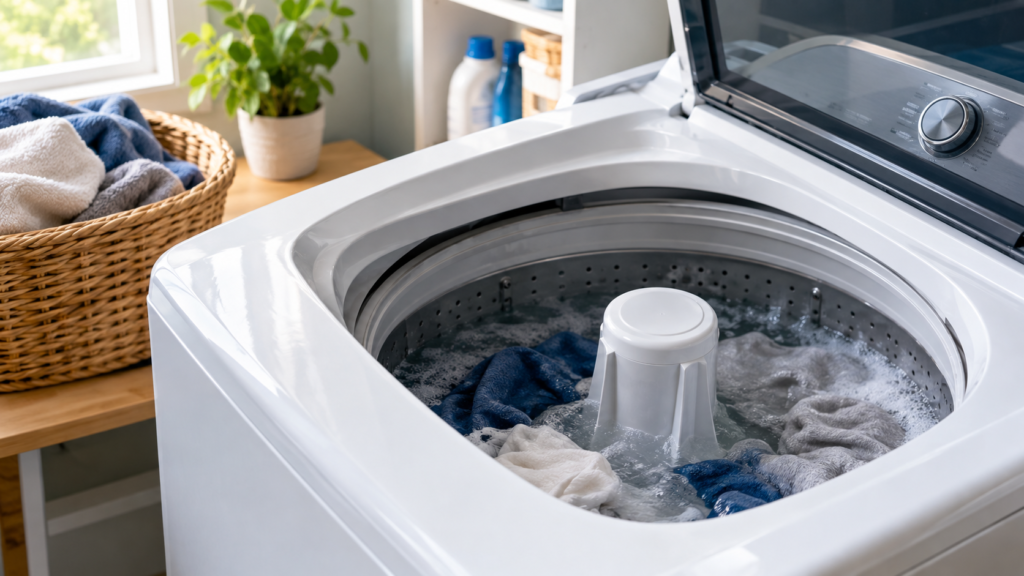
Yes, washing machine agitation slow is often something you can fix at home. The usual causes are an overloaded tub, a gentle cycle setting, worn agitator dogs, or a slipping drive belt. On some direct-drive washers, a worn motor coupler or a tired transmission can also be behind it, so start with the free checks below before you buy any parts.
Quick Key Takeaways
- Slow agitation is not always a fault: Delicate, gentle, and some normal cycles are designed to agitate more slowly.
- Start with simple checks: Reduce the load, try another cycle, and compare the washer’s movement when empty.
- Common mechanical causes: Worn agitator dogs, a slipping belt, damaged coupler, stripped splines, or a weak motor can reduce agitation.
- Listen for warning signs: Grinding, squealing, humming, clicking, burning smells, or oil leaks can point to a mechanical problem.
- Check before replacing parts: The same slow-agitation symptom can come from several different components, so confirm the cause before buying a replacement part.
Table of Contents
Is Slow Agitation Always a Problem?
Not always. Many top-load washers agitate gently on purpose, especially on delicate, hand-wash, and normal cycles. GE’s own support team has told customers that slow movement from a traditional agitator can be normal and easy on clothes. Plenty of people search for washing machine agitation slow fixes when the machine is actually working as designed.
A repair forum thread about an older Kenmore shows how easy it is to misread this. The owners thought the washer had a serious fault, but the “normal” cycle simply agitates much more softly than “heavy duty.” Once they ran the heavy-duty cycle, the washer worked as it should.
So the first question is whether the washer was ever faster on the same cycle. If it used to be vigorous on that setting and isn’t now, something is wearing out. If the machine is new and only moves slowly on a delicate cycle, it is probably doing its job.
Manufacturer guidance: Some washers are designed to use softer or variable-speed agitation depending on the model, cycle, and load. GE Appliances explains how softer washer agitation can be normal .
Signs Your Washing Machine Agitation Slow Problem Is Real
Slow movement on its own doesn’t always point to a fault. A real problem tends to come with other clues:
- Agitation is slower than it used to be on the same cycle
- Clothes barely circulate and come out dirty or with detergent residue
- Humming, grinding, or squealing while the agitator moves
- A burning-rubber smell
- The top of the agitator turns freely in both directions
- Clothes come out much wetter than usual after the spin
- Oil or dark grease under or beside the machine
If a weak spin shows up alongside washing machine agitation slow symptoms, the drive system deserves a closer look. If only the agitation is weak and the spin is normal, start with the agitator, the cycle control, and the motor’s speed instead.
What Causes Washing Machine Agitation Slow Problems?

Here are the usual causes, roughly from easiest to hardest to fix.
An Overloaded Tub or Too Much Detergent
This is the cheapest thing to rule out. Wet towels, jeans, and blankets create a lot of drag, and the motor can bog down until the agitator crawls. Take out roughly a third of the load and run the cycle again. If the agitator speeds up, the washer was fine and the load was too big.
Too much detergent can add resistance as well. Heavy suds make the tub and agitator work harder, so measure carefully and use low-sudsing HE detergent in a high-efficiency washer.
The Wrong Cycle or a Timer Problem
Many washers use different agitation speeds for different cycles, and some models use a two-speed motor. In that Kenmore thread, one helper pointed out that the motor can seem stuck in its slow speed and suggested comparing the gentle and normal cycles. If every cycle runs at the same slow speed, the timer, which selects the motor speed, becomes a suspect.
A GE owner described a similar pattern: the washer agitated normally on the regular cycle but crawled on soak and delicate. One reply suggested a bad timer contact causing a voltage drop at the motor during low-speed operation, or a failing motor if there was a clicking noise. That is forum troubleshooting, not a guaranteed diagnosis. Still, comparing cycles is the cheapest way to sort out washing machine agitation slow complaints that only appear on certain settings.
Worn Agitator Dogs
Many dual-action agitators have small plastic cams called agitator dogs inside the top half. They grip in one direction and ratchet freely in the other, which helps push clothes down into the water. When the dogs wear out, the top half stops doing its job and the wash action weakens. Worn dogs are a common reason for washing machine agitation slow complaints on top-loaders from brands such as Whirlpool, Maytag, and Kenmore.
Here is a quick test. With the washer unplugged, grab the top of the agitator and turn it by hand. It should turn freely one way and resist or lock the other way. If it spins easily in both directions, the dogs are worn.
A Worn or Slipping Drive Belt

Belt-driven washers use a rubber belt to carry power from the motor to the transmission or pulley. A stretched, cracked, glazed, or greasy belt can slip under load, so the agitator slows down or struggles once the tub is full. Squealing and a burning-rubber smell are common clues. As a general guideline, a belt that flexes much more than about half an inch when pressed is too loose.
Not every washer has a belt, though. Some direct-drive models, such as the Kenmore 90 series mentioned in one repair thread, have none, so check your model before you go looking.
A Worn Motor Coupler
Direct-drive washers connect the motor to the transmission with a coupler made of plastic and rubber. If it cracks or wears out, the motor can run while little or no power reaches the agitator. A fully broken coupler usually means no agitation at all, but a worn one can produce weak, sluggish movement. The motor often hums or buzzes during the cycle.
Stripped Splines or a Worn Drive Hub
The agitator or wash plate connects to the drive shaft through grooved teeth called splines. When these round off, the shaft can turn underneath while the agitator slips, especially once it is loaded with wet clothes.
In impeller-style washers, a worn plastic hub under the wash plate can do the same thing. If the teeth inside look smooth or are packed with plastic shavings, the part needs replacing. A worn drive block under the basket tends to cause wobble or a weak spin, so it is worth inspecting at the same time.
A Weak Motor or Start Capacitor
If the motor doesn’t have enough torque, the agitator may move reasonably well with an empty tub and then struggle once clothes are added. On some models, a failing start capacitor can cause low humming and weak movement, but this depends on the washer’s design.
A motor that gets very hot, smells burnt, or stops partway through a cycle should be checked by a professional.
A Failing Transmission or Gearcase
The transmission turns motor power into the back-and-forth motion that agitates the clothes. When gears wear or seals fail, the washer may agitate slowly, grind, or leak oil. It is the most expensive explanation for washing machine agitation slow problems, so rule out the simpler causes first.
Here is a simple check. Tilt the washer back carefully, or look inside the cabinet about six inches off the floor. A streak of oil points to a leaking gearcase seal. In the Kenmore thread, a slipping clutch was said to affect the spin rather than the agitation, so wet clothes after the spin cycle are a separate clue worth noting.
On electronically controlled top-loaders, a failing shifter assembly can also interfere with agitation, and it usually brings up an error code.
A Loose Wash Plate or Something in the Way
A coin, a wire, or a piece of clothing wedged near the base of the agitator can slow it down. A loose wash plate can also make the movement look weak even when the motor is working. Check the base of the agitator for anything stuck before you assume a bigger fault.
Safety Note
Always unplug the washing machine before checking the agitator, belt, coupler, wiring, or other internal parts. Never put your hands inside a moving washer or bypass a lid or door safety switch. If you notice exposed wiring, sparks, smoke, repeated breaker trips, or a strong burning smell, stop using the washer and have it inspected by a qualified technician.
Troubleshooting Washing Machine Agitation Slow, Step by Step

Work through these in order. The early steps cost nothing, and each one narrows things down. Unplug the washer before inspecting anything inside it, and never reach into the tub while the agitator is moving.
- Cut the load in half. Run the same cycle again. If the agitation improves, the load was the problem.
- Switch cycles. Try normal and heavy duty, and compare them with delicate. A big speed difference between cycles is usually normal.
- Run it empty. Add a small amount of water with no clothes and start a wash cycle. If the agitator is brisk when empty and slow when loaded, suspect worn dogs, stripped splines, a weak motor, or a slipping belt. If it is slow even when empty, the belt, motor, coupler, or transmission is more likely.
- Test the agitator by hand. With the washer unplugged, turn the top half. If it turns freely both ways, the dogs are worn.
- Look for an obstruction. Remove the fabric softener cup or agitator cap and check around the base.
- Listen. A smooth motor sound with weak movement suggests power isn’t reaching the agitator. Humming, buzzing, grinding, or clicking points toward the motor, coupler, or gears.
- Check for oil and error codes. Look for oil under the machine, and write down any error code before you reset anything.
Quick Troubleshooting Guide for Slow Washing Machine Agitation
Use this quick check to narrow down the cause before opening the washer or ordering replacement parts.
1. Check the Load
Remove some clothes and run the same cycle again. If agitation becomes stronger, overloading was likely contributing to the problem.
2. Compare Cycles
Compare normal, heavy-duty, and delicate settings. Different agitation speeds can be completely normal.
3. Test It Empty
If the washer agitates normally without clothes but slows down under load, suspect a drive component, motor, belt, or agitator problem.
4. Check for Noise
Squealing, grinding, humming, clicking, or a burning-rubber smell can help identify the affected drive component.
Quick Guide: What You Notice vs. What It Usually Means
| What you notice | Common cause |
|---|---|
| Top of the agitator turns freely both ways | Worn agitator dogs |
| Slow only on delicate or gentle cycles | Normal design, or a cycle/timer issue |
| Slow with squealing or a burning-rubber smell | Slipping drive belt |
| Motor hums but movement is weak | Motor coupler, motor, or capacitor (varies by model) |
| Grinding noise or oil under the washer | Gearcase or transmission |
| Fast when empty, slow when loaded | Overload, dogs, splines, belt, or weak motor |
Treat this as a starting point, not a final diagnosis. Washers vary a lot by brand and model.
How to Replace Agitator Dogs
If the hand test points to worn dogs, this is a manageable fix for a washing machine agitation slow problem on many top-load models. The exact steps vary by brand, so check your owner’s manual or model-specific instructions first.
You will need: a flathead screwdriver, a socket wrench with an extension (a 7/16-inch socket fits many models), and the correct agitator dog kit for your washer.
- Unplug the washer.
- Pry off the top cap of the agitator. Remove the fabric softener dispenser if there is one.
- Remove the bolt in the center of the agitator shaft.
- Lift the upper agitator section straight up.
- Pull out the old dogs and note how they sit.
- Install the new dogs in the same orientation.
- Put everything back together, tighten the bolt, and replace the caps.
Buy the kit using your washer’s model number. Dogs that look similar can be different sizes. And don’t force anything that won’t budge, since some agitators are removed differently from the steps above.
Common Mistakes to Avoid
The biggest mistake with washing machine agitation slow is buying an expensive part before confirming the cause. The same symptom can come from several different components, and a $10 plastic part is a very different repair from a gearcase.
A few other mistakes come up often:
- Judging the washer by a delicate cycle
- Skipping the load test and jumping straight to the motor
- Ordering parts without the model number
- Reaching into the tub or opening the cabinet without unplugging the washer
Repair or Replace the Washer?
Cheap fixes make sense on almost any machine. When washing machine agitation slow comes down to agitator dogs, a belt, or a coupler, repair is usually a reasonable choice.
A transmission, gearcase, or motor is a different decision. Compare the repair cost with the age and condition of the washer. If it is old, has other problems, and needs a major part, replacing it may be more sensible. That is a judgment call, so get a quote before you decide.
When to Call a Technician
Stop and unplug the washer if washing machine agitation slow comes with any of these:
- Burning smells, smoke, or sparks
- Damaged wiring or a damaged power cord
- A motor that gets extremely hot
- A breaker that trips repeatedly
- Water leaking onto electrical parts
- Severe grinding or metal-on-metal noise
- A motor that hums but won’t turn
- Oil leaking from the transmission area
- Error codes related to the motor, shifter, or speed sensor
These problems call for proper tools and electrical safety knowledge, not guesswork.
How to Keep Slow Agitation From Coming Back
These habits won’t make an old washer last forever, but they reduce the strain that leads to washing machine agitation slow problems:
- Avoid packing the tub, especially with towels and blankets.
- Load clothes loosely instead of wrapping long items around the agitator.
- Use the right amount of HE detergent.
- Keep the washer level, because an uneven machine strains the drive parts.
- Check pockets before washing.
- If your washer has a belt, check it once a year for cracks or looseness.
- Take new noises seriously. Squealing, grinding, or clicking often shows up before a part fails.
You May Also Like
If your washing machine has weak, slow, or unusual agitation, these related repair guides can help you identify the cause and find the right troubleshooting steps:
- Washing Machine Agitator Not Working Properly
- 7 Easy Fixes for a Washing Machine That Won’t Agitate but Spins
- Washer Fills With Water but Won’t Agitate: 9 Powerful Causes
- Washing Machine Drive Pulley Problems
- Washing Machine Motor Not Working: Causes and What to Check
- 7 Powerful Washing Machine Capacitor Problems and Easy Fixes
- Washing Machine Transmission Failure Symptoms: 9 Warning Signs
- Washing Machine Not Spinning Properly: 9 Causes and Easy Fixes
- How to Test a Washing Machine Motor With a Multimeter
Final Thoughts
When washing machine agitation slow shows up, resist the urge to order an expensive part right away. Reduce the load, try a different cycle, then test the agitator by hand and look for anything stuck at the base.
If those checks don’t solve it, a worn part in the drive system is the likely culprit, such as agitator dogs, a belt, a coupler, or splines. Because the same washing machine agitation slow symptom can come from several components, confirm what is actually wrong before you spend money. Fixing it early also protects the motor and transmission, which are the costly parts to replace.
If you notice burning smells, oil leaks, or electrical problems, stop using the machine until it has been inspected. For other symptoms, our guide to common washing machine problems can help you narrow things down.


Comments