Washing machine drive pulley problems usually appear as unusual noise, reduced spinning power, or a drum that stops moving altogether. These common washing machine drive pulley problems often develop gradually due to wear, misalignment, or loose components rather than a sudden mechanical failure.
Quick Answer
Washing machine drive pulley problems usually cause unusual noise, weak spinning, or a drum that stops moving. These issues are often due to wear, loose bolts, misalignment, or belt slipping and can be fixed by tightening, cleaning, or replacing parts.
Key Takeaways
Drive pulley problems cause noise, weak spin, or drum failure
Loose or worn pulleys are the most common issue
Early diagnosis can prevent costly repairs
Simple fixes include tightening, cleaning, or replacing parts
What the Drive Pulley Actually Does in Washing Machine Drive Pulley Problems
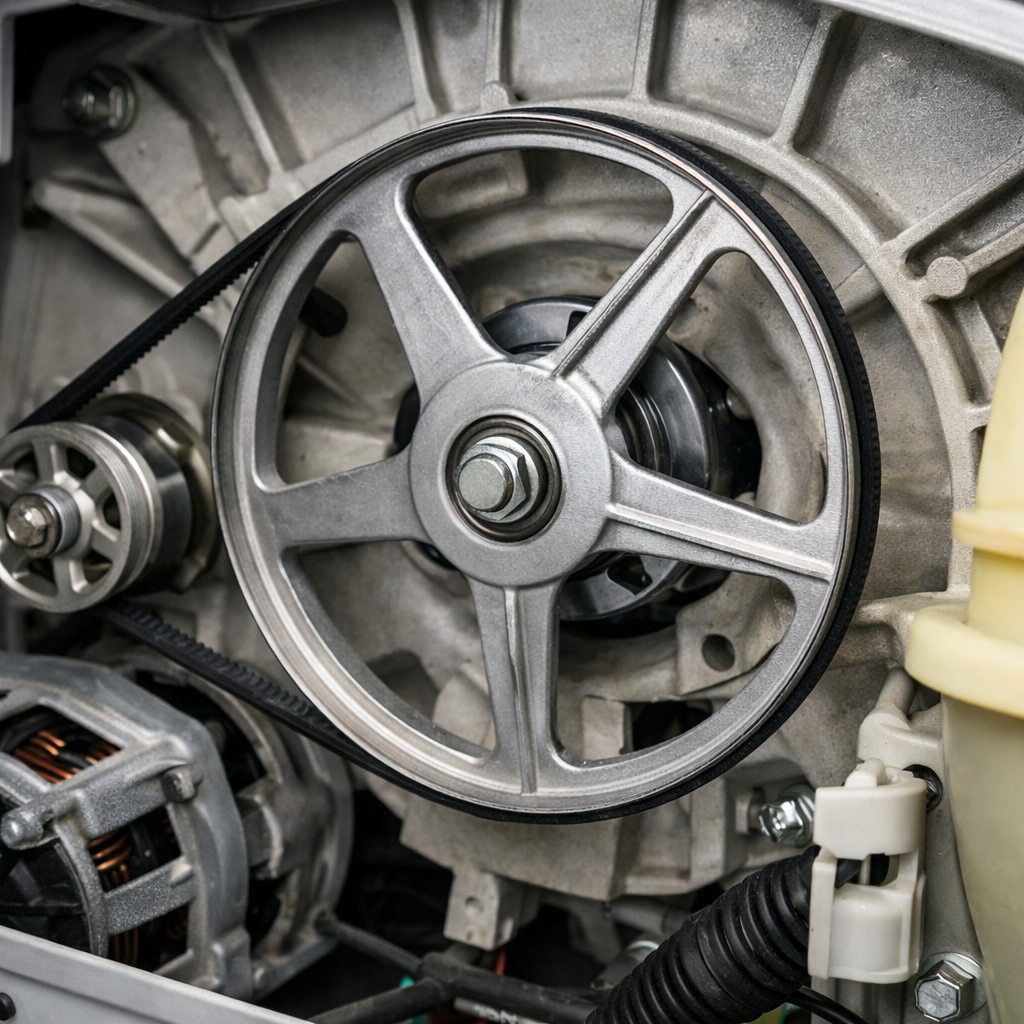
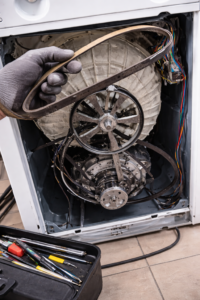
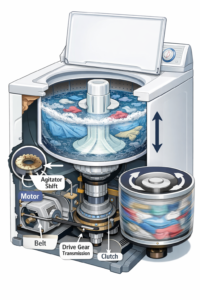
In most belt-driven washing machines, the drive pulley serves as a critical link between the motor and the drum. When the motor rotates, it turns the pulley, which moves the drive belt. That motion is then transferred to the drum, allowing it to spin and agitate clothes during the wash cycle. Although the system is mechanically simple, it depends heavily on proper alignment and consistent tension.
The pulley itself does not generate power. Its function is to guide and transfer motion smoothly across the drive system. If it becomes worn, loose, or uneven, the entire system can begin to behave unpredictably. You may still hear the motor running normally, but the drum may fail to respond as expected or operate inconsistently.
Many washers include multiple pulleys working together, such as the motor pulley, drum pulley, and sometimes an idler or tension pulley. These components maintain belt tension and alignment. When one pulley develops a fault, it often affects the performance of the entire drive system, leading to broader washing machine drive pulley problems
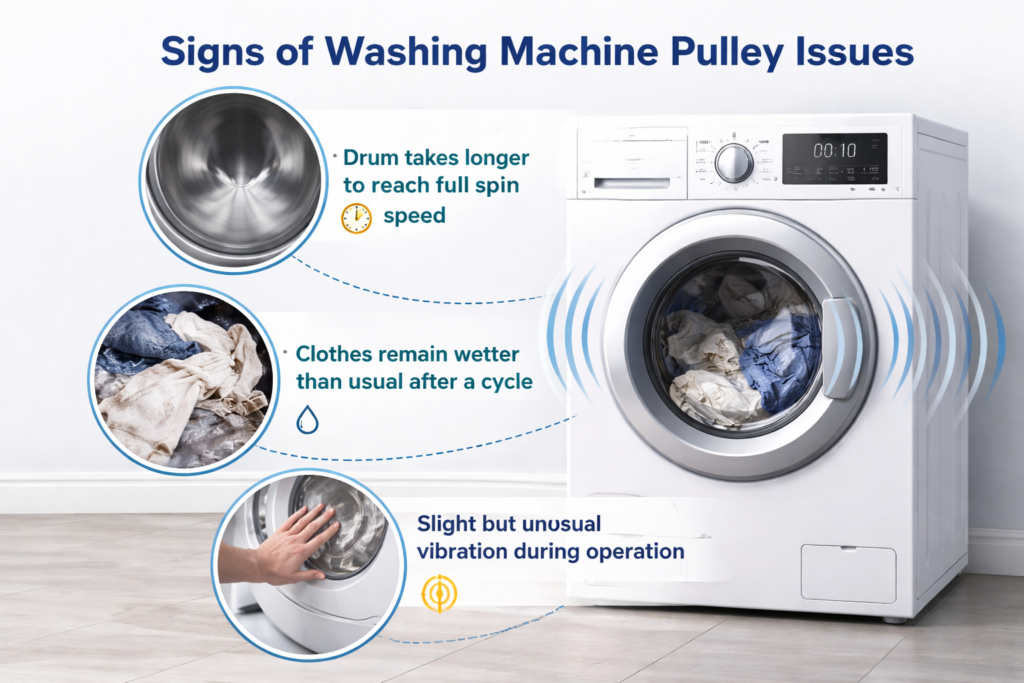
Most users do not pay attention to the drive pulley until the machine starts making unusual sounds. Early signs are often subtle and easy to overlook during regular use. A faint squeaking noise during the spin cycle may not seem significant at first. Over time, that sound can develop into grinding, rattling, or clicking noises. This gradual progression is one reason the issue often goes unnoticed until performance declines. In addition to noise, there are several early warning signs that indicate a developing pulley or belt problem.
You might notice
The drum takes longer to reach full spin speed
Clothes remain wetter than usual after a cycle
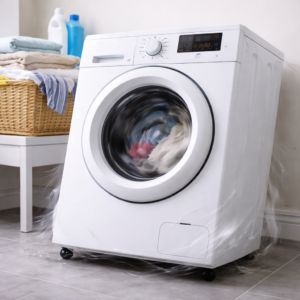
Slight but unusual vibration during operation
These symptoms often point to early-stage washing machine drive pulley problems, even if the machine still completes its cycles. For example, someone may hear a rapid ticking sound during spinning, ignore it, and continue using the washer. Within days or weeks, the machine may struggle to spin entirely.
Why These Problems Develop in the First Place
Mechanical wear is a normal part of any appliance’s lifespan. The drive pulley, however, experiences constant stress because it manages both motion and tension within the system. Over time, several factors contribute to its deterioration. Continuous friction plays a major role. During every wash cycle, the belt moves against the pulley’s groove. Gradually, this contact can wear down the surface, reducing grip and increasing the likelihood of slippage. As grip decreases, efficiency drops and noise may begin to develop.
Load imbalance is another common factor. When laundry is unevenly distributed, it creates shifting weight inside the drum. This uneven force transfers directly to the pulley system, placing additional strain on the shaft and belt alignment. Repeated imbalance can accelerate wear.
Hardware loosening also contributes to washing machine drive pulley problems. The central mounting bolt can gradually loosen due to repeated vibration. Even a slight shift can cause misalignment, leading to noise and inefficient motion transfer. Environmental factors such as moisture, detergent residue, and lint buildup can further interfere with smooth rotation. Individually, these issues may seem minor, but together they gradually affect performance.
When the drive pulley begins to fail, the visible symptoms reflect a deeper mechanical imbalance within the washer. A loose pulley may start to wobble during rotation. This instability affects how the belt moves, often causing it to slip or shift position. As a result, the motor continues to run, but the energy it produces is not transferred efficiently to the drum. This is why the machine may sound active while the drum barely moves or fails to spin altogether. The issue is not always immediately obvious without inspection.
If the pulley becomes cracked or excessively worn, the belt may lose proper contact during certain parts of the cycle. This can lead to intermittent spinning, where the drum starts and stops unpredictably. In more advanced cases, increased friction generates heat, which may produce a noticeable burning smell. These conditions explain why washing machine drive pulley problems often feel inconsistent. A machine may function normally during one cycle and struggle during the next, depending on load and internal alignment at that moment.
Diagnosing the Issue Without Guesswork
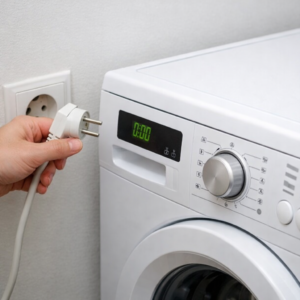
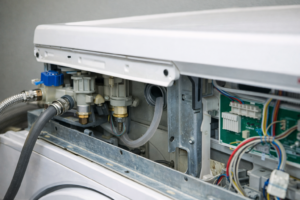
Accessing the internal components of a washing machine may seem difficult, but the process is generally straightforward when approached carefully. After disconnecting the power supply, the rear or bottom panel can be removed to expose the drive system.
Once inside, the pulley and belt are usually clearly visible. A systematic inspection can help identify the problem without unnecessary part replacement. Rotating the pulley by hand allows you to check for resistance or rough movement. A properly functioning pulley should move smoothly without noise.
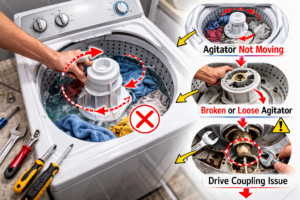
It is also important to check whether the pulley is securely mounted on the shaft. Any looseness may indicate a shifting or worn connection. Visual inspection can reveal cracks, uneven edges, or signs of wear along the belt groove. Observing how the belt sits within the pulley can also indicate alignment issues. A common scenario involves a washer that hums but does not spin. Many assume a motor failure, but inspection often reveals a loose or worn pulley causing the belt to slip. This overlap in symptoms highlights the importance of careful diagnosis when dealing with washing machine drive pulley problems.
Practical Ways to Fix the Problem
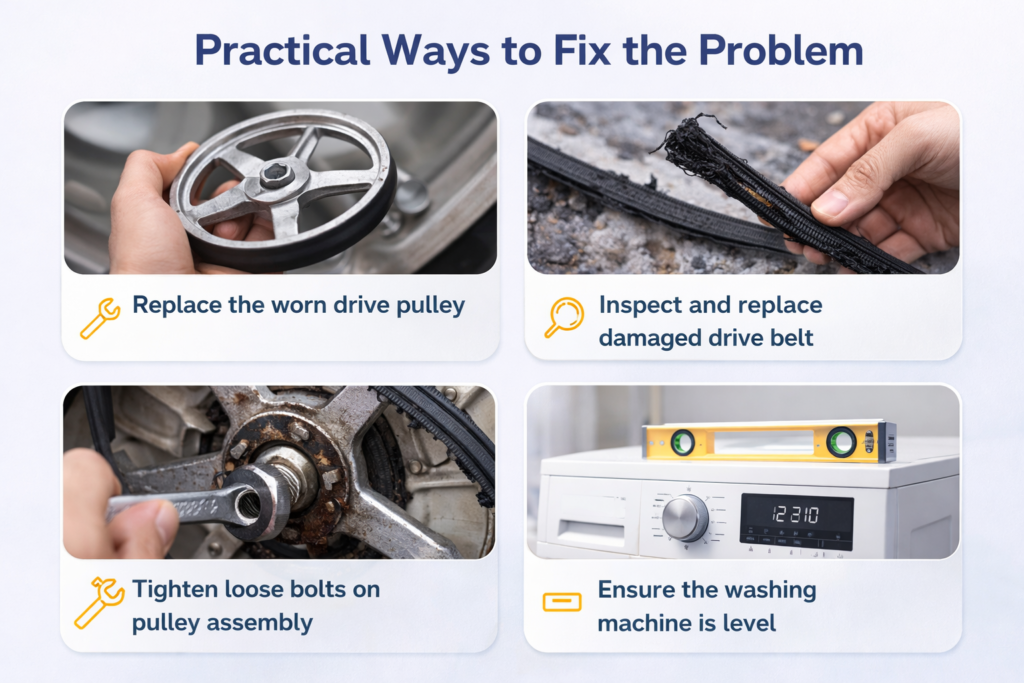
Not all pulley-related issues require full replacement. In many cases, targeted adjustments can restore normal operation. The appropriate solution depends on the condition of the pulley, belt, and surrounding components. If the pulley has shifted, tightening the central bolt can stabilize it and reduce noise. Ensuring the pulley is properly seated on the shaft often improves performance immediately. In cases where residue has built up, cleaning the pulley groove can restore proper belt grip and reduce slipping.
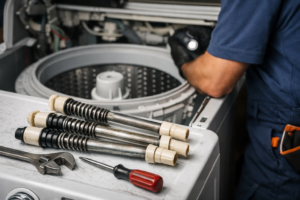
A worn or stretched drive belt can also cause performance issues, even if the pulley appears intact. Replacing the belt is a relatively simple fix that can resolve many spinning problems. If the pulley itself is cracked, warped, or wobbling, replacement becomes necessary. Installing a new pulley involves removing the belt, detaching the old component, and fitting the replacement securely in alignment. Careful reassembly ensures proper belt tension and smooth operation. Addressing the root cause rather than assuming failure helps avoid unnecessary repair costs.
It is common to attribute all spinning issues to the drive pulley, but its role has clear limits. The pulley is part of a larger mechanical system and cannot compensate for unrelated failures. For example, it cannot correct a failing motor, damaged drum bearings, or faults in the electronic control system. It also cannot resolve severe imbalance caused by overloading the washer. These issues require separate diagnosis and repair.
Some advice found online suggests that any unusual noise during spinning must originate from the pulley. This assumption oversimplifies the problem. Noise can also come from worn bearings, suspension components, or other moving parts within the machine. Recognizing these limitations helps prevent incorrect repairs and unnecessary part replacement. Understanding the broader system is essential when dealing with washing machine drive pulley problems.
Safety and Practical Considerations
Working on a washing machine involves both electrical and mechanical risks. Even basic inspection requires careful handling to avoid injury or further damage to the appliance. Disconnecting the power supply is essential before beginning any work. The motor can engage unexpectedly if the machine remains connected, creating a potential hazard. Using proper tools instead of improvised methods helps ensure safe and effective repairs. Forcing components that are stuck or corroded can lead to additional damage.
It is also important to keep track of how parts are removed during disassembly. This makes reassembly more accurate and prevents alignment issues. Ensuring the belt is properly positioned and tensioned is critical for smooth operation. Taking time to perform each step carefully often prevents recurring problems. Rushed repairs may temporarily fix symptoms but can introduce new mechanical issues over time.
When to Call a Professional
If your washing machine still doesn’t work after basic fixes, or you notice burning smells, motor issues, or severe vibration, it’s better to contact a professional technician to avoid further damage.
There is a common assumption that replacing a faulty pulley will restore an older washing machine to like-new condition. In practice, this expectation is often unrealistic. While a new pulley improves motion transfer, it does not reverse wear in other internal components.
If the washer has aging bearings, a weakening motor, or general wear across multiple parts, those issues will still affect performance. The pulley is only one element within a larger system. Repairing it restores function but does not eliminate all signs of age. Overestimating the impact of a single repair can lead to frustration. A more accurate approach is to view pulley replacement as part of ongoing maintenance rather than a complete solution. This perspective helps set realistic expectations and supports better long-term decision-making.
Washing machine design continues to evolve, and newer models may use different drive systems. Some modern washers rely on direct-drive motors, eliminating the traditional pulley and belt arrangement entirely. This shift changes how mechanical issues develop and how they are diagnosed.
At the same time, improvements in materials and manufacturing processes have increased the durability of many components. Modern pulleys may resist wear more effectively or behave differently under stress compared to older designs. As a result, troubleshooting methods are not always universal. What applies to one model may not apply to another. Understanding the specific configuration of your machine remains important when addressing washing machine drive pulley problems.
Still facing washing machine issues? Explore our complete repair guides and fix your appliance step-by-step with easy and practical solutions.
Living With the Machine Day to Day
Most people rarely think about the internal components of their washing machine until a problem interrupts normal use. A sudden noise during a cycle or a load that remains unusually wet tends to draw attention quickly.
In everyday use, small habits can make a meaningful difference. Distributing laundry evenly, avoiding overloading, and paying attention to unusual sounds can reduce strain on the drive system. These simple practices support smoother operation over time. Consistent attention to minor changes can help identify early signs of wear. Addressing these signs early often prevents more significant issues from developing and extends the overall lifespan of the appliance.
Mechanical systems rarely fail without warning. Instead, they shift gradually through small changes in sound, movement, and performance. These changes can often be noticed with regular use and observation. Washing machine drive pulley problems are part of this gradual process. They typically begin as minor issues and develop over time rather than appearing suddenly. Recognizing these early signals allows for timely and effective intervention.
A practical approach to maintenance involves understanding how the machine behaves and responding to changes as they occur, rather than reacting only when a major failure happens
ARTICLE AUTHOR
Muhammad Khalid
Founder of FixAppLab • Appliance Troubleshooting Writer
Muhammad Khalid is the founder of FixAppLab, a website dedicated to explaining common appliance problems and practical troubleshooting solutions. His work focuses on helping homeowners understand how washing machines, dryers, refrigerators, and dishwashers operate and why common mechanical or electrical issues occur in everyday use.





Pingback: 7 Causes of Washing Machine Clicking Noise Problem (+ Easy Fixes) - fixapplab.com