Washing Machine Bleach Dispenser Not Working: 9 Easy DIY Fixes
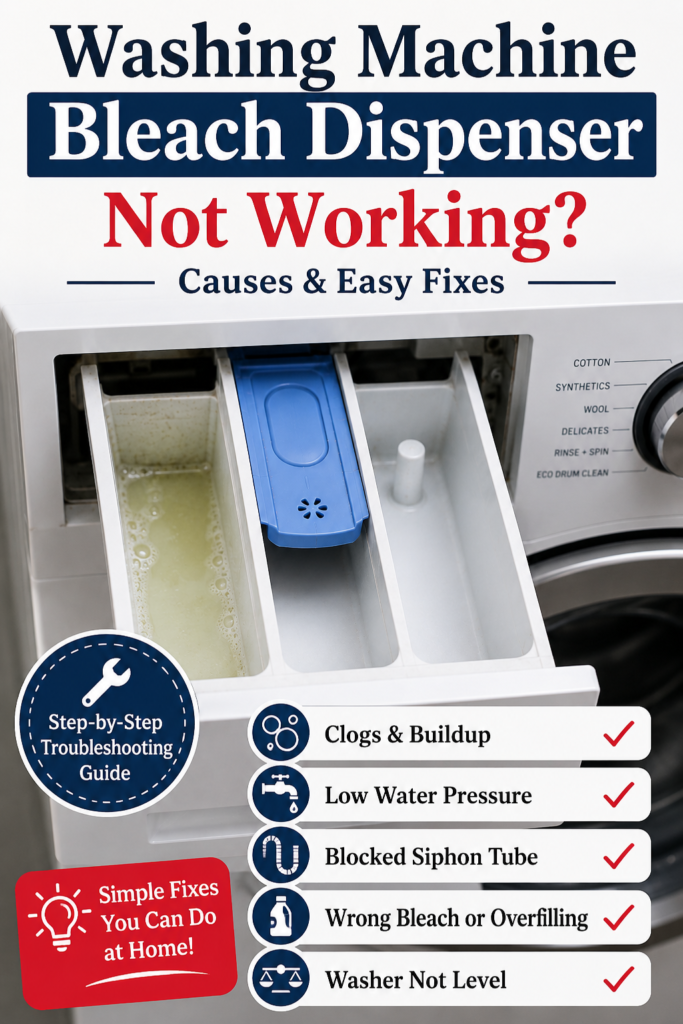
Washing Machine Bleach Dispenser Not Working? If your washing machine bleach dispenser is not working, you’re not alone. This common washer problem is usually caused by a clogged dispenser, blocked siphon tube, low water pressure, or a faulty water inlet valve. In this guide, you’ll learn the most common causes, step-by-step DIY fixes, and simple maintenance tips to restore proper bleach dispensing.
If your washing machine bleach dispenser is not working, you’re dealing with one of the most common laundry appliance complaints out there. The good news? In nearly every case, this is a fixable problem you can solve yourself, without scheduling a service call or replacing your machine.
Maybe bleach is sitting untouched in the tray after a full cycle. Maybe the compartment fills with water that never drains. Or maybe bleach never seems to reach your clothes at all. Whatever the symptom, the underlying cause is usually mechanical, and usually simple to diagnose once you know what to look for.
This guide walks you through exactly how a bleach dispenser is supposed to work, the most common reasons it stops working, and a complete step-by-step process to get it running properly again.
Quick Troubleshooting Guide
| Problem | Quick Check |
|---|---|
| Bleach stays inside dispenser | Clean the dispenser and siphon tube. |
| No bleach reaches clothes | Verify the wash cycle supports bleach dispensing. |
| Water remains in bleach compartment | Inspect the siphon tube for blockages. |
| Dispenser works inconsistently | Check water pressure and inlet valve screens. |
Why a Working Bleach Dispenser Actually Matters

It’s tempting to shrug off a dispenser issue, but it’s worth taking seriously. A bleach dispenser exists for one critical reason: keeping concentrated bleach away from your fabric until it’s been properly diluted with water.
When the washing machine bleach dispenser is not working correctly, two things can go wrong:
- Bleach sits undiluted against fabric, causing yellow or white blotching, weakened fibers, and even holes over time.
- Bleach never gets dispensed at all, meaning you lose out on the whitening and sanitizing benefits you were counting on.
Either way, a malfunctioning dispenser turns a simple laundry task into a frustrating. and sometimes costly. problem.
How the Bleach Dispenser Is Designed to Work
Most washing machines, whether top-load or front-load, include a small bleach compartment built into the main detergent drawer or positioned near the top of the tub. During a normal cycle, this compartment holds the bleach until a specific point in the wash. usually the first rinse. when water is directed in to flush the bleach into the tub. Understanding how the system works makes diagnosing a washing machine bleach dispenser not working much easier.
Depending on your machine, this process relies on one of three mechanisms:
- A siphon tube that pulls bleach out once water reaches a certain level
- Water pressure flushing the compartment directly
- A timed electronic valve that opens at a programmed point in the cycle
When everything works as intended, the bleach is diluted before it ever touches your clothes. But if any single part of this system fails. clogging, low water pressure, a faulty valve. the whole process breaks down. Understanding this basic mechanism is the first step toward figuring out why your dispenser has stopped cooperating.
Common Causes of a Washing Machine Bleach Dispenser Not Working

In my experience, these eight issues account for the overwhelming majority of dispenser complaints. Most of them have nothing to do with a “broken” machine. they’re maintenance issues that build up gradually.
1. Detergent and mineral residue buildup. This is by far the most frequent cause. Dried detergent, fabric softener, and hard water minerals accumulate inside the dispenser tray and siphon tube over time, blocking the small channels that water needs to flush the bleach out.
2. A clogged or disconnected siphon tube. Many machines use a small rubber or plastic tube to connect the bleach compartment to the wash tub. If it’s kinked, clogged with lint, or came loose during a previous cleaning, the bleach has nowhere to go.
3. A faulty water inlet valve. This valve controls water flow into each compartment of the dispenser drawer. If it’s weak, clogged, or electrically faulty, the bleach compartment may never get enough pressure to trigger the siphon.
4. A washer that isn’t level. An unlevel machine can cause water to splash or pool unevenly inside the dispenser drawer, disrupting the siphoning action even when every other part is working fine.
5. The wrong cycle selected. Not every cycle activates the bleach dispenser. Many washers only release bleach on Normal, Whites, or Heavy Duty settings .a Quick Wash or Delicate cycle may simply never trigger it.
6. An overfilled compartment or the wrong bleach type. Exceeding the MAX fill line, or using a thick gel-style bleach instead of standard liquid chlorine bleach, can interfere with the siphon. These mechanisms are engineered for a specific viscosity and volume.
7. A misaligned drawer. On machines with a pull-out dispenser drawer, the bleach compartment needs to sit flush against the internal water jets. A drawer that isn’t fully seated can cause the flushing water to miss it entirely.
8. A control board malfunction. In more advanced washers, an electronic board manages the timing of water flow into each compartment. A failing relay can prevent the dispensing signal from firing, even when every mechanical part is in good shape.
Quick Diagnostic Checklist
Before replacing any parts, run through this short diagnostic process. It takes about 15 minutes and will usually point you straight to the cause.
- Run an empty test cycle. Add only water and a measured amount no clothing. If your machine has a clear lid or door, watch the dispenser at different stages to see whether it drains as expected.
- Pull and inspect the dispenser. Remove the drawer or bleach cup and check it under good lighting for cracked plastic, dried residue, or a disconnected siphon tube.
- Check the inlet valve screens. Look behind the dispenser housing for small mesh filters. these clog easily, especially with hard water or older plumbing.
- Confirm your cycle selection. Make sure you’re running a cycle that actually activates the bleach dispenser, such as Normal or Whites.
If you’ve gone through this checklist and still aren’t sure what’s wrong, the step-by-step fixes below will help you narrow it down further.
Step-by-Step Fixes
Most cases of a washing machine bleach dispenser not working can be fixed without replacing expensive parts.
Clean the Dispenser Thoroughly
Remove the bleach compartment or drawer following your manufacturer’s instructions. Soak it in warm water mixed with a small amount of white vinegar for about 20 minutes to break down mineral deposits and detergent film. Use an old toothbrush to scrub the siphon holes and tubing connections, then rinse thoroughly and let it dry fully before reinstalling.
Clear the Siphon Tube
If your machine has a visible tube connecting the bleach cup to the tub, detach it carefully and run water through it to flush out any blockages. While you’re at it, check for kinks or pinching that may have happened during a previous reassembly, and make sure both ends reconnect securely
Inspect and Clean the Water Inlet Valve Screens

Turn off the water supply, then disconnect the inlet hoses at the back of the washer. Use needle-nose pliers to gently remove the small mesh screens inside the valve openings, rinse away sediment under running water, and reinstall carefully. This single step resolves a surprising number of cases where the washing machine bleach dispenser is not working properly.
Check Your Water Pressure
Make sure both the hot and cold water supply valves behind the machine are fully open, and that the inlet hoses aren’t kinked. Low water pressure can prevent the dispenser from being flushed with enough force to trigger the siphon.
Use the Correct Bleach
If you’ve been using a thicker or gel-based bleach, switch to a standard liquid chlorine bleach formulated for washing machines. This small change resolves siphoning issues caused by excess viscosity more often than you’d expect.
Level the Washer
Use a bubble level or a smartphone leveling app to confirm your washer sits evenly front-to-back and side-to-side. Adjust the leveling feet at the base as needed. an unlevel washer is one of the most overlooked causes of dispenser problems.
Realign or Replace the Drawer
Check the drawer rails for debris or damage, and make sure the dispenser slides in fully and sits flush. If the drawer itself is cracked or warped, replacement parts are typically inexpensive and available through the manufacturer or third-party appliance suppliers.
Reset the Control Board
If you’ve ruled out every mechanical cause, unplug the washing machine for several minutes to reset the control board. If the dispenser still won’t activate afterward, you may be dealing with a failing solenoid or board component that needs professional diagnosis
Common Mistakes to Avoid
- Do not pour bleach directly onto clothing inside the drum.
- Avoid overfilling the bleach dispenser beyond the MAX line.
- Do not use thick gel bleach unless your washer specifically recommends it.
- Never mix bleach with vinegar, ammonia, or other household cleaners.
- Do not force the dispenser drawer if it feels stuck—remove and clean it carefully.
- Always reinstall the dispenser correctly after cleaning to ensure proper water flow.
When to Call a Professional
Most cases of a washing machine bleach dispenser not working come down to buildup, misalignment, or a simple blockage. all things you can fix yourself with basic cleaning. But it’s time to call in a licensed technician if:
- You’ve already cleaned the dispenser, siphon tube, and inlet valve screens
- You’ve confirmed you’re using the right bleach and the right cycle
- The dispenser still won’t release or drain properly
At that point, the issue likely involves the water inlet valve or control board itself. components that require electrical testing and replacement parts. This is especially true if your washer is still under warranty, since DIY repairs on electrical components can sometimes void coverage.
Preventing Future Dispenser Problems
Once your dispenser is working again, a little routine maintenance goes a long way toward keeping it that way: Regular cleaning is the best way to prevent a washing machine bleach dispenser not working in the future.
- Clean monthly, even on cycles when you’re not using bleach. regular detergent and softener residue builds up just as easily.
- Measure carefully using the marked fill lines rather than estimating. Overfilling is one of the most common causes of siphon failure.
- Address hard water with a water softener or periodic descaling treatment if mineral buildup is a recurring issue throughout your machine, not just the dispenser
Learn More About Washer Maintenance
A clogged or faulty bleach dispenser is often related to water flow, detergent buildup, or routine maintenance. For additional washer care and maintenance recommendations, you can also explore the official Whirlpool Washer Care Resources for general appliance maintenance tips and best practices.
Final Thoughts
A washing machine bleach dispenser not working is rarely a sign that your appliance is on its way out. In the vast majority of cases, it’s a straightforward maintenance issue. residue buildup, a clogged siphon tube, or a drawer that isn’t seated correctly. Work through the diagnostic checklist and fixes above, and there’s a good chance you’ll have it dispensing properly again before your next load of whites. With a bit of regular upkeep after that, your bleach dispenser should keep doing its job reliably for years to come. If your washing machine bleach dispenser not working problem continues after trying every fix, professional diagnosis may be required.
About the FixAppLab Editorial Team
This article was researched, reviewed, and published by the FixAppLab Editorial Team, a resource dedicated to helping homeowners diagnose and solve common appliance problems using clear, practical, and easy-to-follow repair guides.
Every guide is carefully written to simplify appliance troubleshooting for beginners while following current repair best practices. Our goal is to help readers identify common faults, understand possible causes, and decide whether a DIY repair or professional service is the better option.
Why Readers Trust FixAppLab
- Step-by-step appliance troubleshooting guides.
- Practical repair advice written in simple language.
- Content reviewed for clarity, accuracy, and user experience.
- Regular updates to keep information current and helpful.
- Focused on real-world appliance problems for homeowners.
FixAppLab provides educational appliance repair information only. Always disconnect power before inspecting or repairing any appliance, and consult a qualified technician for complex electrical or mechanical repairs.


Comments