Dryer Not Heating Up But Runs? Diagnose and Fix It in 8 Easy Steps
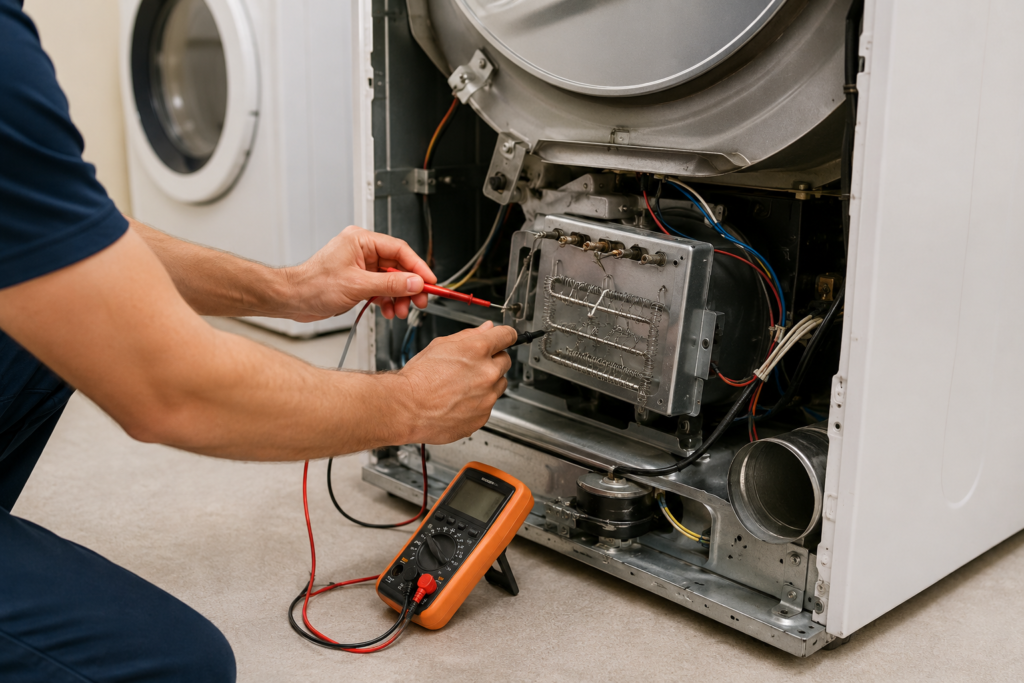
Dryer not heating up but runs? This is one of the most common dryer problems homeowners face. If your dryer tumbles normally but produces no heat, the issue is usually related to the heating system rather than the motor or drum.
When your dryer is not heating up but runs normally, the problem almost always comes down to one of a few specific components. a blown thermal fuse, a clogged vent, a failed heating element, or a thermostat issue. The good news is that the mechanical side of your dryer is completely fine. The fault is isolated to the heating system, and in most cases, you can fix it yourself for under $30
Table of Contents
Quick Key Takeaways
- Your dryer’s motor can run normally even when the heating system has failed.
- The most common causes include a blown thermal fuse, clogged vent, failed heating element, faulty thermostat, or tripped breaker.
- Always check airflow before replacing heating components.
- Many heating problems can be diagnosed using a basic multimeter.
- Cleaning the dryer vent regularly helps prevent future heating failures.
Why Your Dryer Not Heating Up But Runs
This is actually one of the more straightforward appliance problems to diagnose, and here is why: a dryer has two entirely separate systems running at the same time. The motor, drum, belt, and controls make up the mechanical side. The heating element or gas burner. along with the thermostats and thermal fuse that protect it. make up the heating side. If your dryer not heating up but runs, the fault is usually limited to the heating system rather than the motor or drum.
When a dryer is not heating up but runs, the mechanical system is working exactly as it should. Something within the heating system has failed. That narrows your search down to a handful of components, most of which are inexpensive and easy to replace
The Most Common Reasons a Dryer Runs But Won’t Heat
1. Blown Thermal Fuse
This is the number one cause of a dryer not heating up but still running, and it is the first thing worth checking. A blown thermal fuse is one of the most common reasons a dryer not heating up but runs.
Every dryer is legally required to carry a thermal fuse. a small, one-time safety device designed to permanently cut power to the heating circuit if the dryer overheats. Once it blows, your dryer keeps tumbling as though nothing happened. There is no error code, no warning light, no obvious sign. Your clothes just come out wet.
Where it is located: On the exhaust duct or blower housing near the back of the dryer cabinet.
How to test it: Unplug the dryer and remove the back panel. Set a multimeter to continuity mode and touch the probes to each terminal on the fuse. A working fuse beeps. No beep means it has blown and needs to be replaced.
How to fix it: Replacement fuses cost $5 to $15 and are available at any hardware store or online. Before you install a new one, though, figure out why the old one blew. A thermal fuse blows because the dryer overheated. and the most common reason for that is a clogged vent. Replace the fuse without fixing the underlying airflow problem, and it will blow again within weeks
2. Clogged or Restricted Dryer Vent

A blocked exhaust vent is the root cause behind a large percentage of dryer heating failures. When lint or debris restricts airflow through the exhaust duct, heat builds up inside the cabinet with nowhere to go. The thermal fuse and thermostats respond exactly as designed. they shut off the heat to prevent a fire. A clogged vent can easily leave your dryer not heating up but runs because heat cannot circulate properly.
Beyond being the most common reason your dryer is not heating up but runs, a clogged vent is a genuine safety hazard. Clothes dryers are one of the leading causes of residential fires, and restricted venting is consistently at the top of the list.
How to check the vent: Disconnect the exhaust hose from the back of the dryer. Start a heated cycle and hold your hand at the opening. You should feel strong, steady airflow. Weak airflow. or none at all. points directly to a blockage.
How to clear it: A dryer vent cleaning brush kit works well here. The flexible, long-handled brush pushes lint through the duct from the dryer end out to the exterior wall cap. Clean the entire length of the duct, not just the first section. Also check that the exterior vent flap swings open freely when the dryer is running. a stuck or bird-nested cap is a surprisingly common culprit.
Clean your dryer vent at least once a year. If your household does heavy laundry. lots of towels, bedding, or athletic wear. bump that up to every six months.
3. Burned-Out Heating Element (Electric Dryers)

Electric dryers use a coiled resistance wire to generate heat, similar in principle to a much larger toaster element. Over months and years of regular use, that coil can develop a hairline crack, snap in two, or burn through entirely. When it does, you have a dryer that runs perfectly but generates zero warmth. A damaged heating element is another common reason a dryer not heating up but runs.
How to test it: Unplug the dryer and access the heating element. usually behind a rear panel or at the base of the cabinet. Visually inspect the coil for any visible breaks or dark burn marks. Then confirm with a multimeter by testing for continuity across the element terminals. No continuity means it is done.
How to fix it: Heating elements typically run $20 to $60 depending on your dryer brand and model. Replacing one is a beginner-to-intermediate DIY repair on most machines. remove the panel, disconnect two wires, swap the element, and reassemble. Model-specific video tutorials make this even easier to follow along with
4. Tripped Circuit Breaker (Electric Dryers)
Before opening your dryer or ordering any parts, spend 30 seconds at your electrical panel. This fix costs nothing and works more often than most people expect.
Electric dryers operate on a 240-volt circuit built from two separate 120-volt legs. One leg runs the motor and controls. The other runs the heating element. If only one leg trips at the breaker, the drum keeps spinning and the dryer appears to run normally .but the heating element is completely without power. It is a very common scenario and a very easy fix.
How to fix it: Locate the dryer’s double-pole breaker in your home’s electrical panel. Flip it fully off, then firmly back on. Even if the breaker does not look tripped, do this step anyway. breakers can partially trip without visibly shifting position, and a firm reset clears it
5. Failed Gas Igniter (Gas Dryers)
Gas dryers work differently from electric ones. Instead of a heating coil, they use a gas burner that is lit by an igniter. a component that glows intensely hot to ignite the gas as it flows into the burner chamber. A radiant sensor monitors whether ignition actually happened before allowing gas to keep flowing.
Igniters degrade over time. An aging igniter might still glow, but it no longer reaches the temperature threshold needed to trigger the gas valve to open. The result is a gas dryer not heating up but running normally in every other way.
How to test it: Open the burner access panel and watch the igniter during the first minute of a heated cycle. It should glow bright orange. If it glows faintly and then goes dark without the burner lighting, the igniter has weakened beyond the point of usefulness.
How to fix it: Gas igniters cost $15 to $35 and are one of the more straightforward gas dryer repairs. If you are not comfortable working around gas components, this is a fast and inexpensive job for a technician
You May Also Like
If your dryer is not heating up but still runs, these repair guides can help you diagnose related problems and fix your appliance faster.
6. Faulty Gas Valve Solenoids (Gas Dryers)
Working alongside the igniter, gas valve solenoids are small electromagnetic coils that physically open the gas supply valves when the igniter reaches temperature. Most gas dryers have two or three of these solenoids in sequence. If even one fails, gas cannot reach the burner and the dryer stops heating entirely.
How to test them: Use a multimeter to check each solenoid for continuity. A failed solenoid shows no continuity.
How to fix it: Solenoid valve kits are sold as a complete set for most dryer models, typically $20 to $40. Replacing them as a group makes sense. if one has failed, the others are usually not far behind
7. Defective High-Limit Thermostat

The high-limit thermostat sits near the heating element and monitors temperatures to prevent the dryer from getting dangerously hot. Under normal conditions, it stays closed (allowing current to flow). If temperatures spike, it opens the circuit to cut off heat. The problem is that these thermostats can fail in the open position. cutting power to the heater permanently, even when the dryer is running at a perfectly normal temperature.
How to test it: Unplug the dryer, locate the thermostat on the heating element housing, and test it with a multimeter at room temperature. It should show continuity. No continuity at room temperature is a clear sign of failure.
How to fix it: High-limit thermostats cost $10 to $25 and are simple to swap out.
8. Failed Cycling Thermostat
The cycling thermostat is what regulates temperature during a normal drying cycle, switching the heating element on and off to maintain the target heat level inside the drum. When this thermostat fails in the open position, the heating element never gets the signal to turn on. and your dryer runs cold for the entire cycle.
How to test it: The same multimeter continuity test applies here. No continuity at room temperature means it has failed.
How to fix it: Cycling thermostats are typically $10 to $20. Because the thermal fuse, high-limit thermostat, and cycling thermostat are all inexpensive and tend to fail in the same circumstances, many experienced repair technicians replace all three as a set when any one of them has given out
⚠ Safety Note
Always disconnect the dryer from the power outlet before removing any panels or testing electrical components. For gas dryers, shut off the gas supply before performing inspections. Never bypass a thermal fuse or safety thermostat, as these components help protect your home from overheating and potential fire hazards.
How to Diagnose a Dryer Not Heating Up But Runs: Step-by-Step
Work through this sequence before spending money on parts. Start with the free checks. Follow these steps if your dryer not heating up but runs before replacing expensive parts.
- Reset the circuit breaker — Flip it fully off and back on. Do this first, always, on electric dryers.
- Check the cycle setting — Confirm you are not on Air Fluff, No Heat, or Eco mode. These settings tumble without activating the heater.
- Clean the lint screen and inspect the vent — Pull out the lint trap, clean it, and check the exhaust duct for blockages. Fix any airflow restriction before moving on.
- Test the thermal fuse — Use a multimeter. If it is blown, replace it and address the vent situation at the same time.
- Inspect the heating element (electric) or igniter (gas) — Look for visible damage, then confirm with a continuity test.
- Test the thermostats — Check both the high-limit and cycling thermostats for continuity at room temperature.
- Test the gas valve solenoids (gas dryers only) — Replace as a complete kit if any one has failed.
- Consider the control board as a last resort — If every component tests fine, a faulty timer or electronic control board may be at fault. This is the most expensive repair and the least common cause.
One Mistake That Makes This Problem Worse
A lot of homeowners replace the thermal fuse, get heat back, and consider the job done. A week or two later, the fuse blows again. Many homeowners with a dryer not heating up but runs replace the thermal fuse without fixing the blocked vent.
The fuse itself is never the real problem. it is a symptom. It blew because the dryer overheated, and that almost always comes back to restricted airflow. Replacing a blown fuse without also cleaning the vent is a temporary fix at best. Always address both at the same time
Expert Tip
Before purchasing replacement parts, locate your dryer’s model number and verify compatibility with the manufacturer’s parts list. Many dryers use similar-looking components that are not interchangeable, and ordering the correct part the first time saves both time and money.
If multiple heating components fail continuity tests after an overheating event, inspect the vent system thoroughly before replacing parts. Restoring proper airflow is often the key to preventing repeat failures.
When to Call a Professional
Most dryer heating repairs are genuinely DIY-friendly. A multimeter, basic hand tools, and a model-specific parts list are usually all you need. That said, there are times when bringing in a technician is the right call:
- Any suspected issue with the gas supply line itself. this is always a job for a licensed professional
- A circuit breaker that keeps tripping after you reset it, which can indicate a wiring fault that an electrician should diagnose
- A failed control board on an older dryer, where the repair cost starts to approach the price of a replacement machine
- A dryer still under manufacturer warranty, where DIY repairs could void your coverage
How to Prevent a Dryer Not Heating Up But Runs Problem
Once you have resolved the heating issue, a little routine maintenance goes a long way toward keeping it from happening again. Regular maintenance is the best way to prevent a dryer not heating up but runs in the future.
Clean the lint screen after every single load. not occasionally, not when you remember, but every time. A clean lint trap dramatically reduces heat buildup and protects your thermal components. Clean the full exhaust duct at least once a year using a dryer vent cleaning brush kit. Do not stuff the drum past about three-quarters full, since overloading restricts airflow just as a clogged vent does. And check the exterior vent cap seasonally to make sure it opens freely and is clear of debris.
These small habits protect the thermal fuse, keep your thermostats from failing prematurely, and significantly reduce the risk of a dryer fire
Learn More About Dryer Safety
Regular dryer maintenance not only improves drying performance but also reduces the risk of overheating and house fires. For additional dryer safety recommendations and maintenance guidance, review the official dryer safety information provided by the National Fire Protection Association (NFPA).
Final Thoughts
A dryer not heating up but running is one of those problems that sounds serious but is usually straightforward to fix. The heating and mechanical systems are separate, so the drum spinning tells you your motor, belt, and controls are all in good shape. The heat issue almost always traces back to a blown thermal fuse, clogged vent, failed heating element, tripped breaker, or a thermostat that has given out.
Work through the diagnostic steps in order, fix the root cause alongside the failed part, and invest a few minutes in regular maintenance going forward. In most cases, you can have hot, dry laundry again the same afternoon. If your dryer not heating up but runs, start with the simple checks before replacing costly components.
Related reading: If your dryer is heating but still leaving clothes damp, the issue is likely airflow rather than the heating system itself. worth checking the vent capacity and load size first.
About the Author
FixAppLab Editorial Team publishes practical appliance repair guides designed to help homeowners diagnose and solve common appliance problems safely. Every article is carefully researched, written in clear language, and reviewed to provide accurate troubleshooting steps for washing machines, dryers, refrigerators, and other household appliances.
Our goal is to save readers time and unnecessary repair costs by providing reliable DIY repair advice, preventive maintenance tips, and easy-to-follow solutions for everyday appliance issues.


Comments